
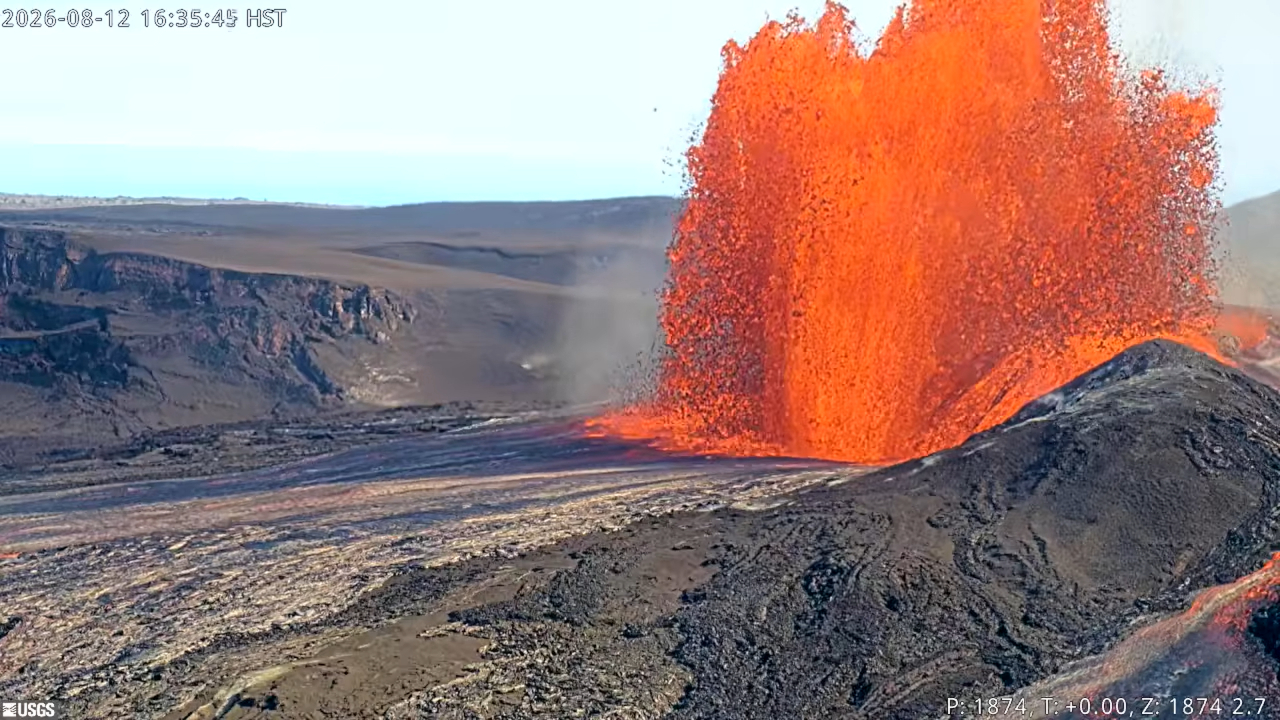

(BIVN) – Episode 53 in the ongoing eruption at the summit of Kīlauea got underway on Wednesday afternoon.
The lava eruption transitioned from precursory activity at the north vent to high lava fountains at 3:45 p.m. HST on August 12, 2026.
Winds are blowing from the northeast direction, which suggests that volcanic gas emissions and volcanic material may be distributed to the southwest direction from Halemaʻumaʻu, scientists say.
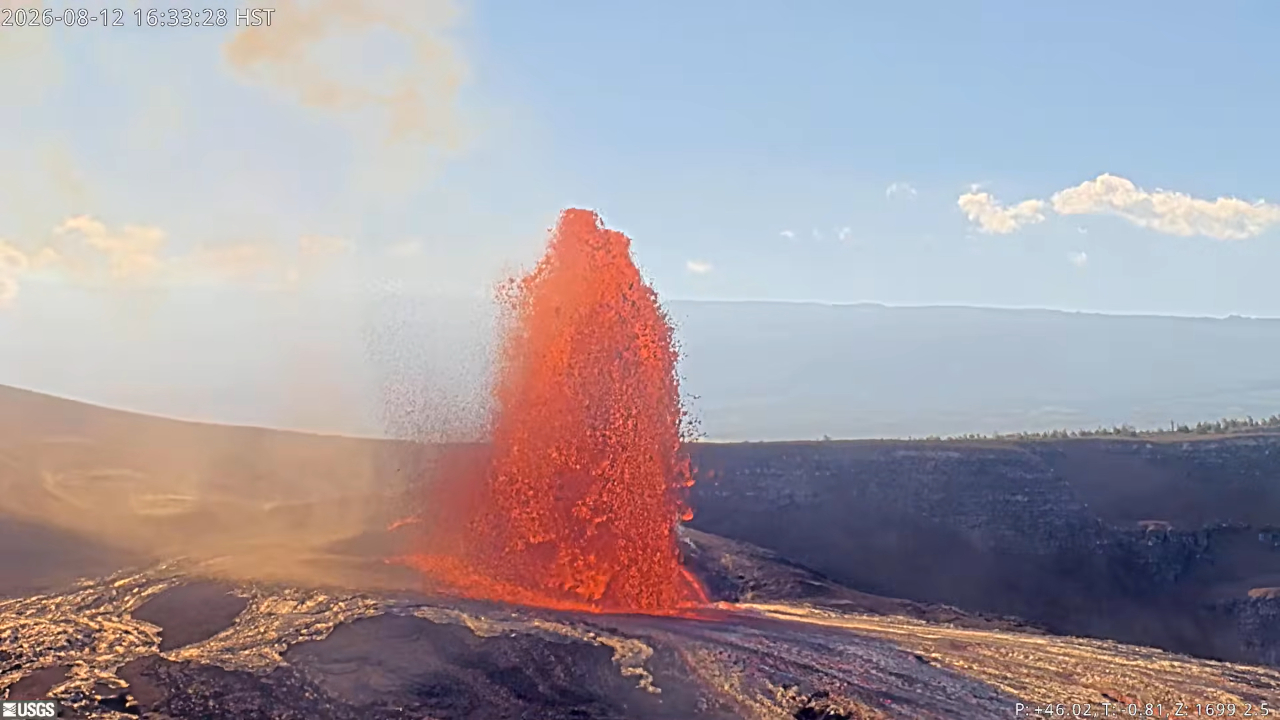
From the USGS Hawaiian Volcano Observatory Volcanic Activity Notice issued at 3:53 p.m. HST:
Fountain activity transitioned gradually from precursory lava flows from the north vent. Small glimpses of spatter were seen after 10:00 a.m. HST but spatter was not consistently visible until 11:04 a.m. HST. This was followed by a series of short-lived lava overflows that began at 11:20 a.m., 11:35 a.m., 11:45 a.m., and 12:23 p.m. HST, each lasting 1-4 minutes. A fifth sluggish flow began around 1:00 p.m. HST and became sustained, gradually growing for about 45 minutes. At 1:45 p.m. HST, there was a dramatic increase in output correlated with a switch to deflationary tilt. A double dome fountain formed and began feeding a broad overflow that rapidly extended more than 2000 feet (600 meters) from the vent. Large overflows from the south vent began at 3:26 p.m. and 3:38 p.m. HST and lasted approximately 5-6 minute each. A small flow was also visible from the collapse crater behind the south vent beginning at 3:31 p.m. HST.
Ground-level sensors near the eruptive vents indicate that winds are blowing from the northeast direction, which suggests that volcanic gas emissions and volcanic material may be distributed to the southwest direction from Halemaʻumaʻu. Winds above the inversion layer are more easterly and expected to carry tephra westward, if the fountains are high enough. The volcanic gas plume is currently 6,000 ft above ground level.
From a Special Weather Statement by the National Weather Service:
…KILAUEA EPISODE 53 STARTED THIS AFTERNOON…
WHAT…An episodic fountaining eruption is occurring within the Kilauea summit caldera. Fountaining episodes typically last less than 12 hours but ash can remain in the air longer depending on wind and weather.
IMPACTS…Varying levels of ash, Pele`s hair, and other lightweight tephra may fall downwind of the eruption. Smaller particles can travel farther from the eruption site and may affect communities at greater distances. Low level winds will carry any tephra to the west or southwest of the summit. If the eruption is strong enough to loft tephra above the trade wind inversion, tephra may be carried to the north or northeast.
PRECAUTIONARY/PREPAREDNESS ACTIONS…
If you live downwind of the Kilauea summit, or plan to visit the summit area, stay informed about current volcanic activity and weather conditions. Be prepared to take precautions if needed, such as disconnecting water catchment systems. Follow all guidance from the National Park Service and the County of Hawaii. Be aware that road or park closures may occur.Avoid excessive exposure to ash which is an eye and respiratory irritant. Those with respiratory sensitivities should take extra precaution to minimize exposure.
This statement will be issued daily and updated as needed.
