
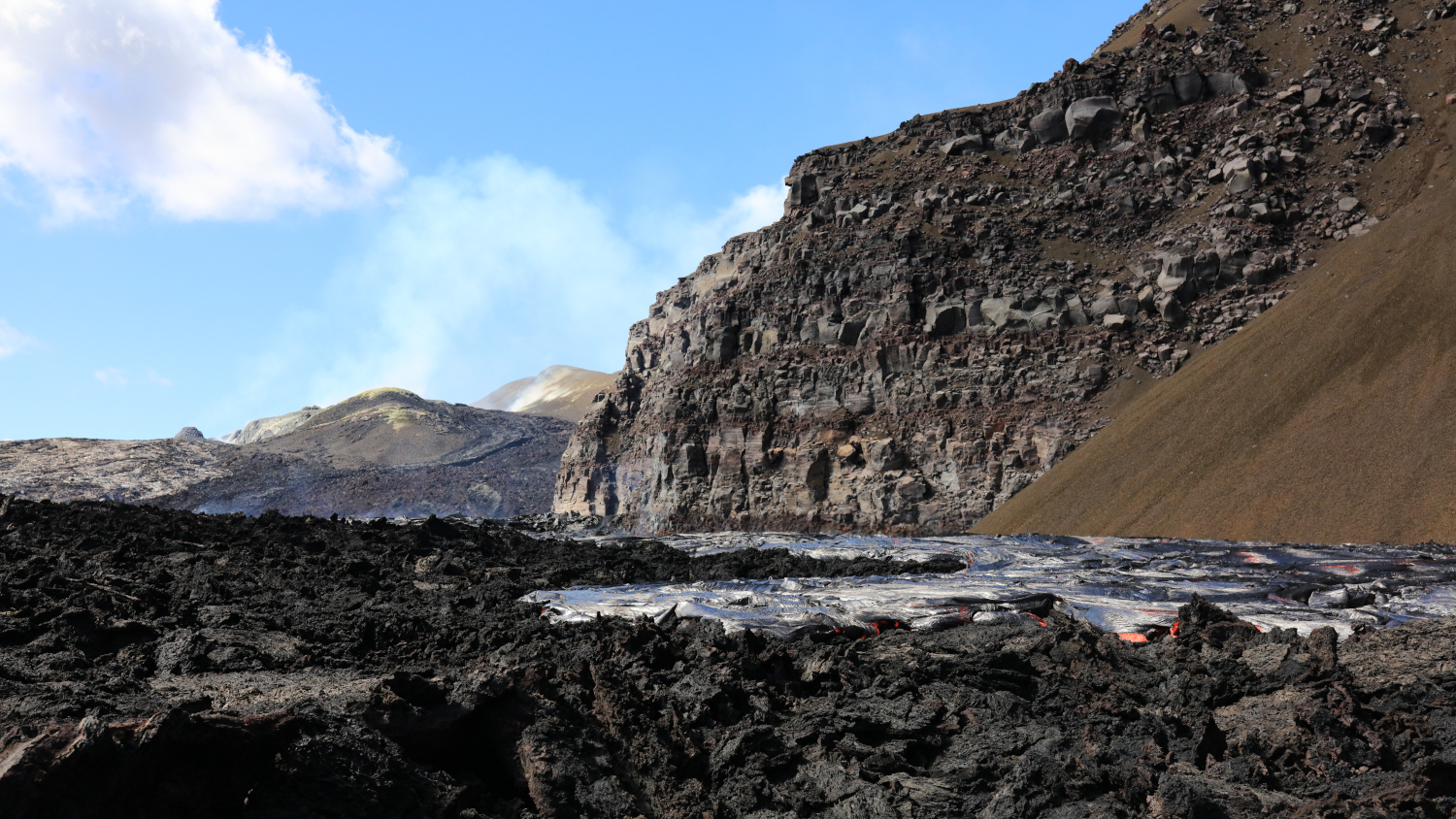

(BIVN) – There was a minor change in the ongoing Kīlauea summit eruption overnight, and scientists are keeping a close eye on the Hawaiʻi island volcano to see what happens next.
New vents opened last night and this morning, north of the established vent complex in Halemaʻumaʻu. The USGS Hawaiian Volcano Observatory has been expecting another episode of high lava fountaining to occur at any moment, based on ground deformation patterns at the summit. However, a high lava fountaining episode has yet to occur, and the summit has been in a prolonged state of precursory lava activity.
The summit remains highly pressurized. On Tuesday, scientists detailed the possible outcomes of this change in activity and continued high level of pressurization.
From the USGS HVO statue report issued at 2:11 p.m. on Tuesday:
Eruption History:
There have been 54 episodes of lava fountaining since the Halemaʻumaʻu eruption began in late December 2024 at the summit of Kīlauea. Each episode was preceded by a period of summit inflation as magma accumulated in the shallow chamber beneath Halemaʻumaʻu followed by rapid summit deflation during lava fountaining. New fountaining episodes usually occur when inflation recovers the amount lost in the previous fountaining episode indicating the system has repressurized. This repeating pattern coupled with uniform inflation as measured on summit tiltmeters has allowed the USGS Hawaiian Volcano Observatory to track the pressurization required to initiate fountaining episodes and issue forecast windows of several days for the onset of fountaining for about 50 of the episodes.
Description of Current Activity:
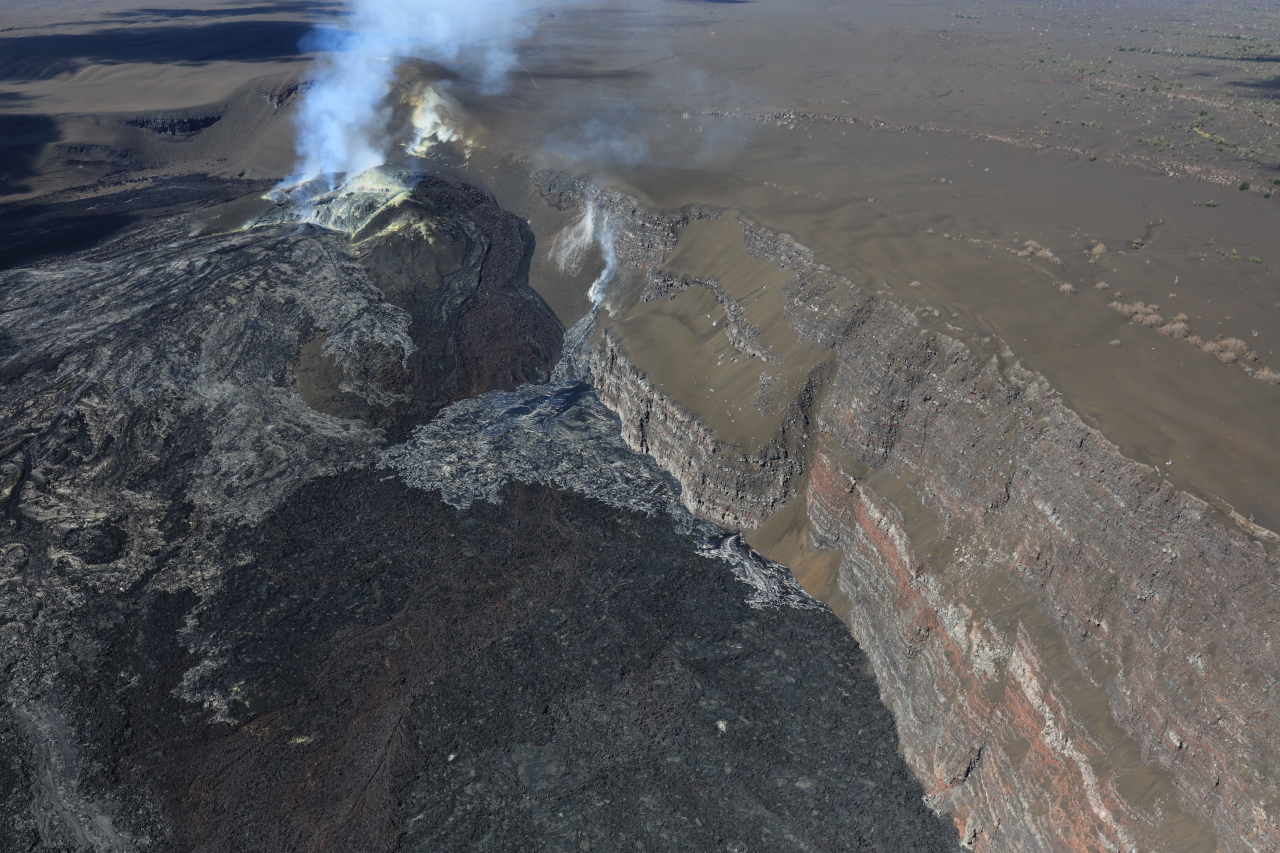
Data from summit tiltmeters and Global Positioning Satellite (GPS) instruments indicate that the summit region is highly pressurized. This pressurization may be due to the increased height, about 500 feet (150 meters), of the north-south-west vent complex since the start of the eruption on December 23, 2024. The opening of new vents last night and this morning north of the established vent complex in Halemaʻumaʻu appears to be a response to this pressurization. The new vents are about 150 feet (45 meters) below the level of the north vent. The new vents opened without significant seismicity, although they are in the region where a short-lived swarm of shallow earthquakes took place from about 9:15 to 9:25 p.m. HST on the night of September 13.
Current summit reinflation leading up to this change in activity has been very irregular since lava fountaining episode 54 on August 25 and difficult to model due to repeated deflations and periods of no inflation. On September 7, summit tiltmeters indicated that the Halemaʻumaʻu magma chamber surpassed the amount of pressurization typically observed to start a fountaining episode. Since September 7, the number of small magnitude earthquakes began to increase in the Kīlauea summit region, likely related to the general increase in pressure in the Halemaʻumaʻu magma chamber. Nearly 100 earthquakes have been located since September 7, in three general areas: about 1.5 km (0.9 miles) below Halemaʻumaʻu including the northwest side where the new vents occurred, about 3 km (1.8 miles) deep just south of Halemaʻumaʻu, and 1.5 km (0.9 miles) deep beneath Keanakākoʻi crater on the southeast side of the caldera. Most earthquakes have been smaller than magnitude-2, though the largest event was M2.6 on September 11.
Lava has not yet erupted as high fountains, but smaller, precursory lava flows have erupted from the north vent over 104 times between September 7–12. Since then, intermittent spatter bursts on September 13–15 have built a small spatter cone around the north vent that was measured as 36-39 feet (11-12 meters) tall September 14 afternoon. Last night, September 14, cracks on and near the base of the northwest wall of Halemaʻumaʻu crater erupted lava just north of the vent complex beginning just before 9:00 p.m. HST. No fountaining was associated with the new vents, which continue to feed a small flow today in the northwest corner of the crater floor. Precursory flows have been ongoing for 8 days now, the longest period recorded during this eruption.
No unusual activity has been detected in the Southwest or East Rift Zones of Kīlauea. All activity has been confined to the summit region of Kīlauea in Hawaiʻi Volcanoes National Park.
Interpretation:
The magma plumbing system connecting the eruptive vents in Halemaʻumaʻu to the shallow magma chamber below has been remarkably stable throughout most of this eruption. During the start of episode 30 lava fountaining on August 6, 2025, earthquakes and ground deformation in an area on the south rim of Halemaʻumaʻu crater were associated with the opening of a new fissure on the south side of the crater, which erupted briefly only during episode 30. Earthquakes occurred minutes to hours before the new fissure began erupting in this area. That vent opened about 10 minutes prior to the onset of fountaining and stopped erupting about 2 hours into the fountaining episode. Kīlauea summit rapidly deflated during lava fountaining episode 30, and the fissure on the south side Halemaʻumaʻu did not erupt again.
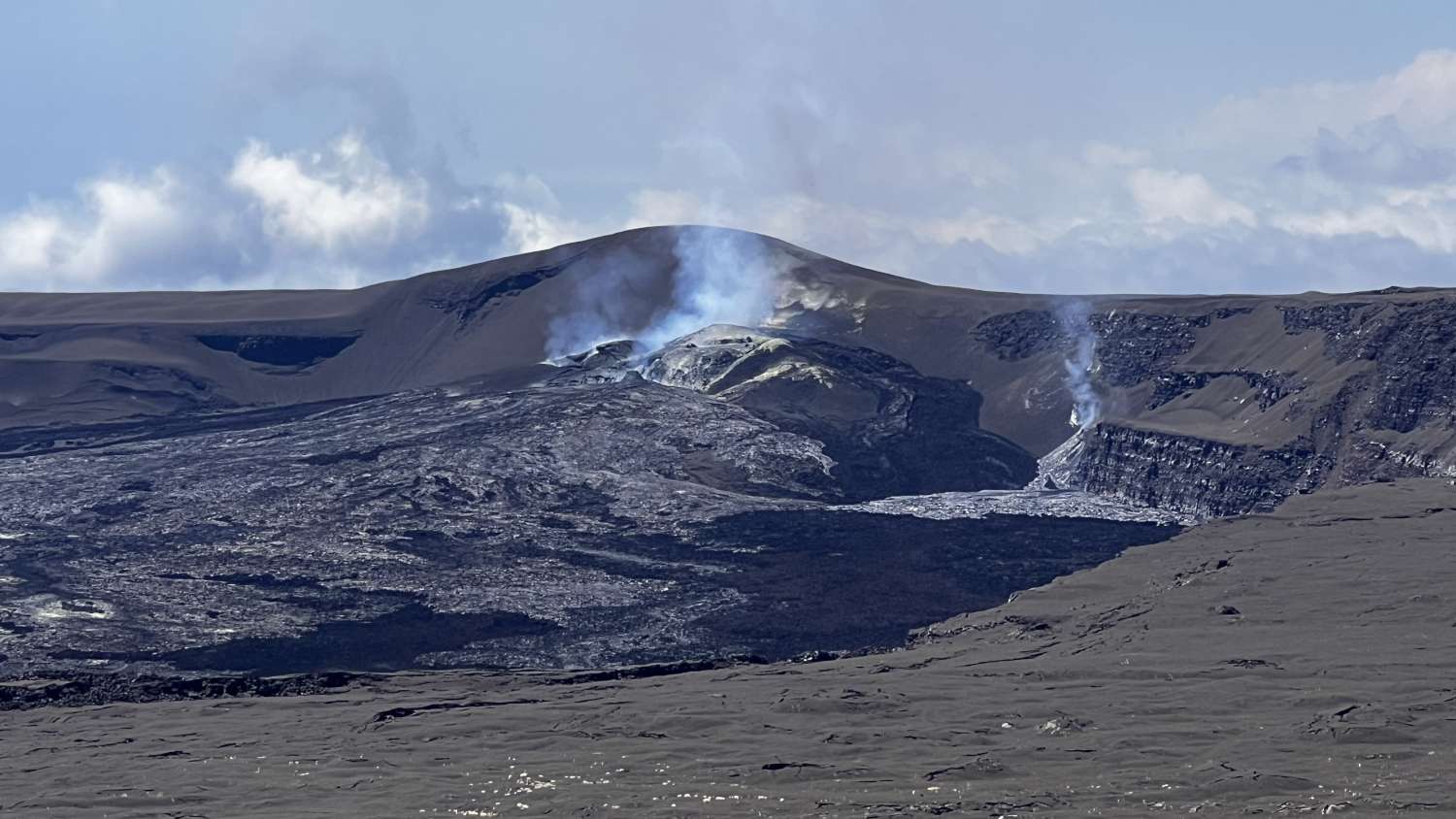
Overnight glow and spatter visible in the north/south/west vents indicate that the conduits remain intact and connected to the underlying chamber despite the opening of new vents nearby last night. Volcanic tremor, which has been the major seismic signal during this eruption, has also continued. While many lava fountaining episodes are preceded by lava flows or visible spatter, this period of precursory activity is now the longest since high fountains began after episode 4 from January 15–18, 2025. The rate of earthquakes has decreased slightly in the past day but the summit region of Kīlauea summit remains at a high level of pressurization despite the opening of new vents last night. The new vents are at a lower elevation than the main eruptive vent complex in Halemaʻumaʻu, which could sustain prolonged continuous eruption of lava. However, the continued high level of pressurization could also potentially result in additional changes outlined below.
Possible Outcomes
The impact of Kīlauea summit increased pressurization and earthquakes on the next episode of lava fountaining, if any, is unknown at this time. It is not possible to forecast an exact outcome of this activity. However, some potential scenarios are described below based on past episodic eruptions of Kīlauea (1983 Puʻuʻōʻō and the 1969 Maunaulu eruptions). These past eruptions both continued after lava fountaining episodes ended, with fissures opening nearby that erupted more continuous lava flows.
Eruption becomes continuous at the new vents: Lava could continue to erupt from the vents in Halemaʻumaʻu, as lava flows or spatter bursts, for an unforeseeable amount of time. The prolonged nature of low-level activity since September 7 and opening of new vents could be signs of a transition to lava erupting more continuously within Halemaʻumaʻu from existing vents. The only similar scenario is the onset of episode 48 during the Puʻuʻōʻō eruption where pressure built up to a new fountaining episode, but instead of fountaining a new fissure opened up down rift of Puʻuʻōʻō and began erupting continuously.
Eruption returns to fountaining: Alternatively, a fountaining episode from an existing vent in Halemaʻumaʻu could begin at any point during this period of increased pressurization. Prior to episode 35 of the Puʻuʻōʻō eruption, a fissure erupted uprift of the vent before fountaining began and continued for 2 weeks after the end of the fountain episode. Normal fountain episodes resumed after the end of this extended excursion.
Formation of new vent(s) in summit region: Magma could form a new shallow pathway toward the surface, potentially resulting in other new vents erupting lava within the summit caldera. In this scenario, we would expect earthquakes, potentially with tightly clustered locations, along with changes in the patterns of ground deformation indicative of shallow crack formation, similar to what occurred in the new vent formation during episode 30 on August 6, 2025, when a crack in the southwest wall of Halemaʻumaʻu briefly erupted.
Intrusion into the upper parts of the Southwest Rift Zone or East Rift Zone: Magma could migrate into the upper portion of the Southwest Rift Zone or the East Rift Zone in Hawaiʻi Volcanoes National Park. In this scenario, we would expect an extended period of increased rates of earthquakes migrating from the summit towards a rift zone, along with ground deformation indicative of summit magma chamber deflation.
HVO Actions
Kīlauea’s summit region is monitored with a dense network of instruments recording seismic activity, ground deformation, visual and thermal imagery, and volcanic gas emissions. HVO staff closely monitor these various datasets for changes. Kīlauea Daily Updates are published each morning with a summary of the past 24 hours of activity, and we will issue additional messages as needed based on any significant changes detected. Should volcanic activity change significantly, a Volcanic Activity Notice will be issued. HVO is in frequent communication with Hawai‘i Volcanoes National Park and Hawai‘i County Civil Defense to keep them apprised of Kīlauea’s activity.
