
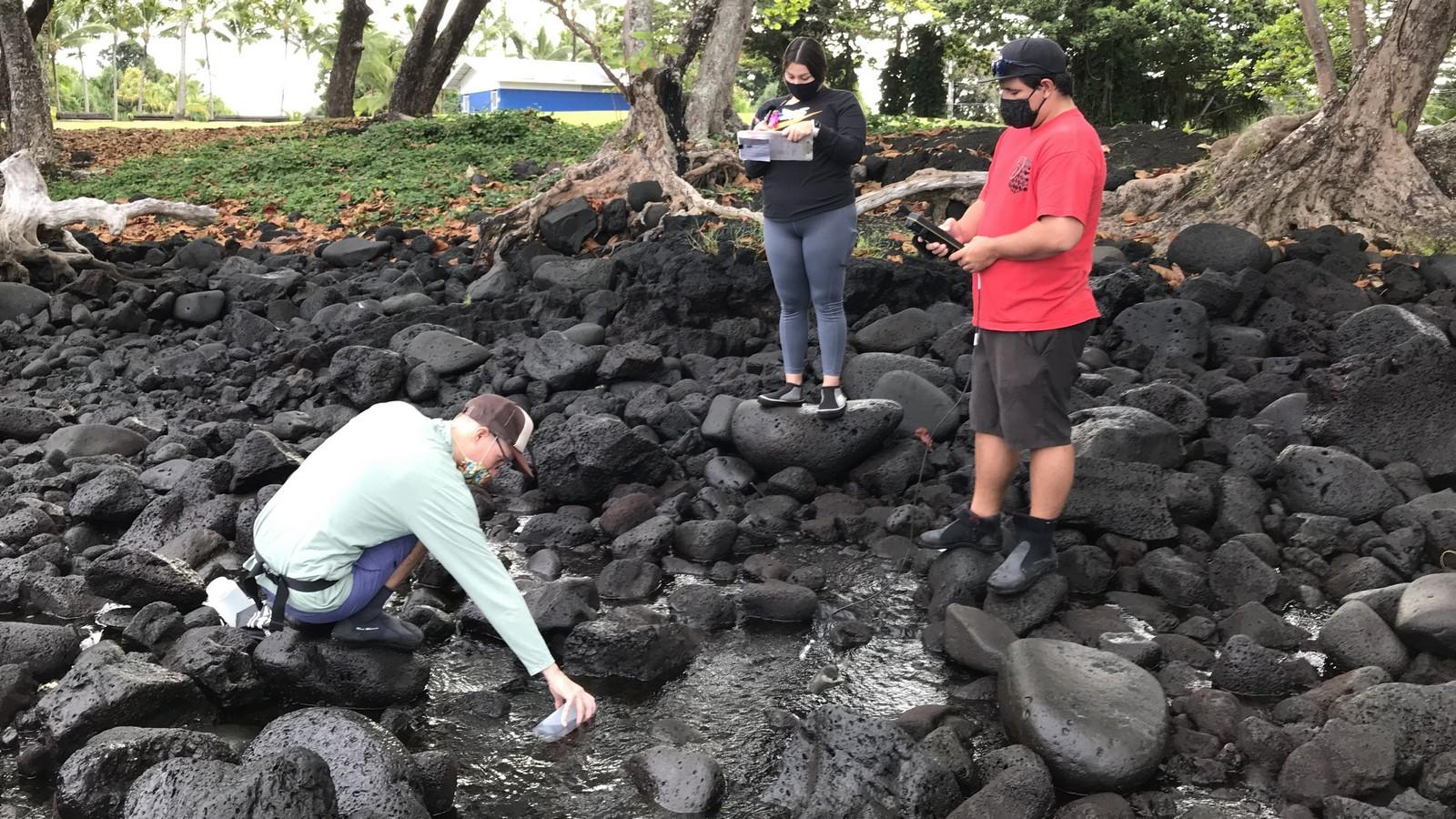

(BIVN) – Sewage pollution along the Hilo coastline is being tracked by a team from the University of Hawaiʻi at Hilo.
According to a UH news release, the study is the first to map wastewater pollution hotspots from King’s Landing in Keaukaha to Honoliʻi Beach Park north of Hilo Bay.
The findings could help prioritize cesspool replacement near existing sewer lines and guide upgrades to Hilo’s wastewater treatment system, the University says.
“Growing up in Hilo, these aren’t just study sites, they’re places I’ve spent my whole life fishing, surfing, and spending time with family and friends,” said UH Hilo graduate Joseph “Crispin” Nakoa, who led the research conducted in 2020-22. “Being able to answer questions that so many of us have had about the health of these waters has been one of the most rewarding parts of this project.”
From the University of Hawaiʻi:
Tracing the sources
Researchers sampled 16 locations monthly, measuring bacteria associated with fecal contamination, nutrients and chemical signatures of nitrogen in water and limu (seaweed). These measurements helped trace wastewater from cesspools and Hilo’s wastewater treatment plant.
Wastewater was detected at every site, though most pollution indicators were found at low concentrations. Fresh groundwater flowing into the ocean diluted those signals, making contamination harder to detect.
Researchers combined their measurements with nearby cesspool densities to identify hotspots that water testing alone could miss.
Depending on the location, wastewater accounted for 8% to 49% of nitrate, a nutrient, in the water. Groundwater remained the largest source of nitrate.
Supporting community solutions
The study also showed that rivers carry wastewater to the coast.
“We talk a lot about the importance of removing cesspools from near the shoreline, but it’s also important to remove those near our rivers and streams,” said UH Hilo marine science Professor Steven Colbert.
Published in Marine Pollution Bulletin, the findings supported a companion study that traced sewage from homes to shoreline springs within hours to days.
“The goal with this data is to empower the communities…so that they can seek funding for solutions to improve water quality, to make it safe for everybody in the community to be able to use these waters,” said UH Hilo marine science Professor Tracy Wiegner.
