
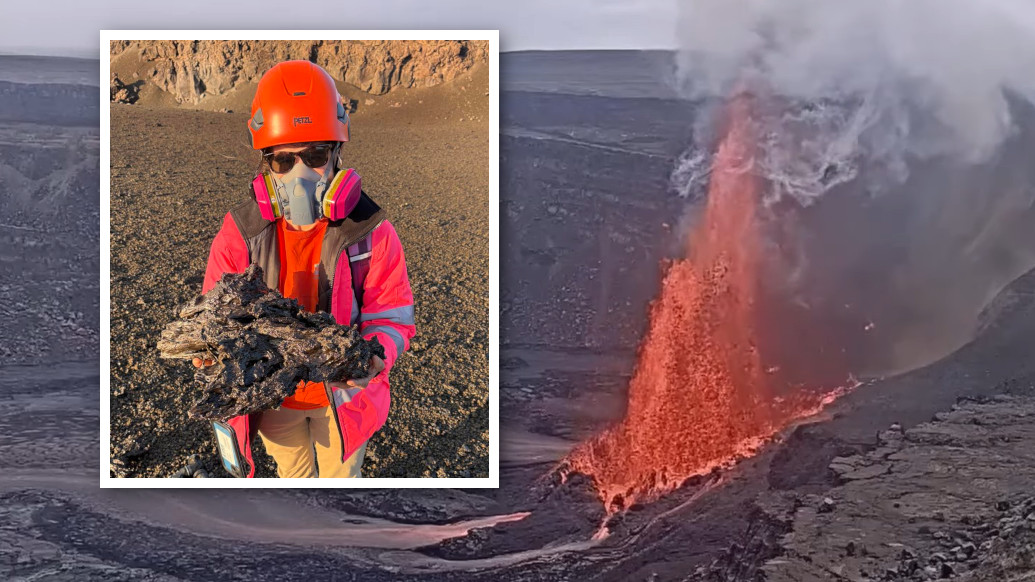

(BIVN) – The ongoing eruption at the summit of Kīlauea remains paused following the end of the most recent lava fountaining episode.
The USGS Volcano Alert Level remains at WATCH.
During Episode 12, which ended Wednesday morning after just under 22 hours of activity, lava fountains reached up to 600 feet high.
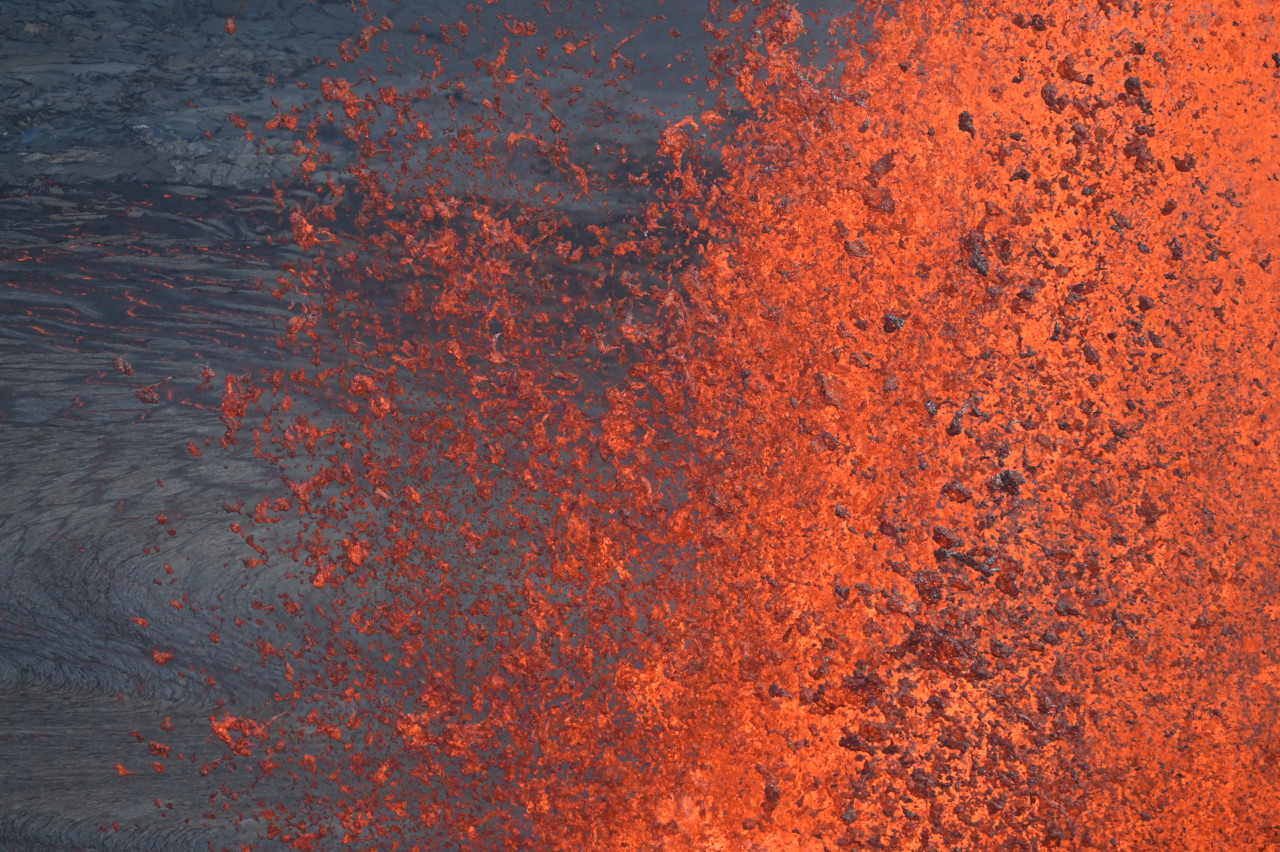
“In the fountain you can see the formation of both cinder and spatter,” the USGS Hawaiian Volcano Observatory wrote about the photo above. “Cinders are glassy, vesicular, pyroclastic fragments that fall to the ground in an essentially solid condition. These are the smaller, darker particles in the figure. Spatter is similar to cinder, except that it is partially molten when it falls to the ground. The left of the image shows a lava flow that is emanating out of the vent complex. The wavy configuration of the plates is caused by lava from the north and south vents flowing alongside one another, similar to how arms of a glacier meet when flowing down a mountain.”
Tephra particles from the lava fountains were deposited on the crater rim, in a closed area of Hawaiʻi Volcanoes National Park. Some of those tephra clasts were over a foot long.
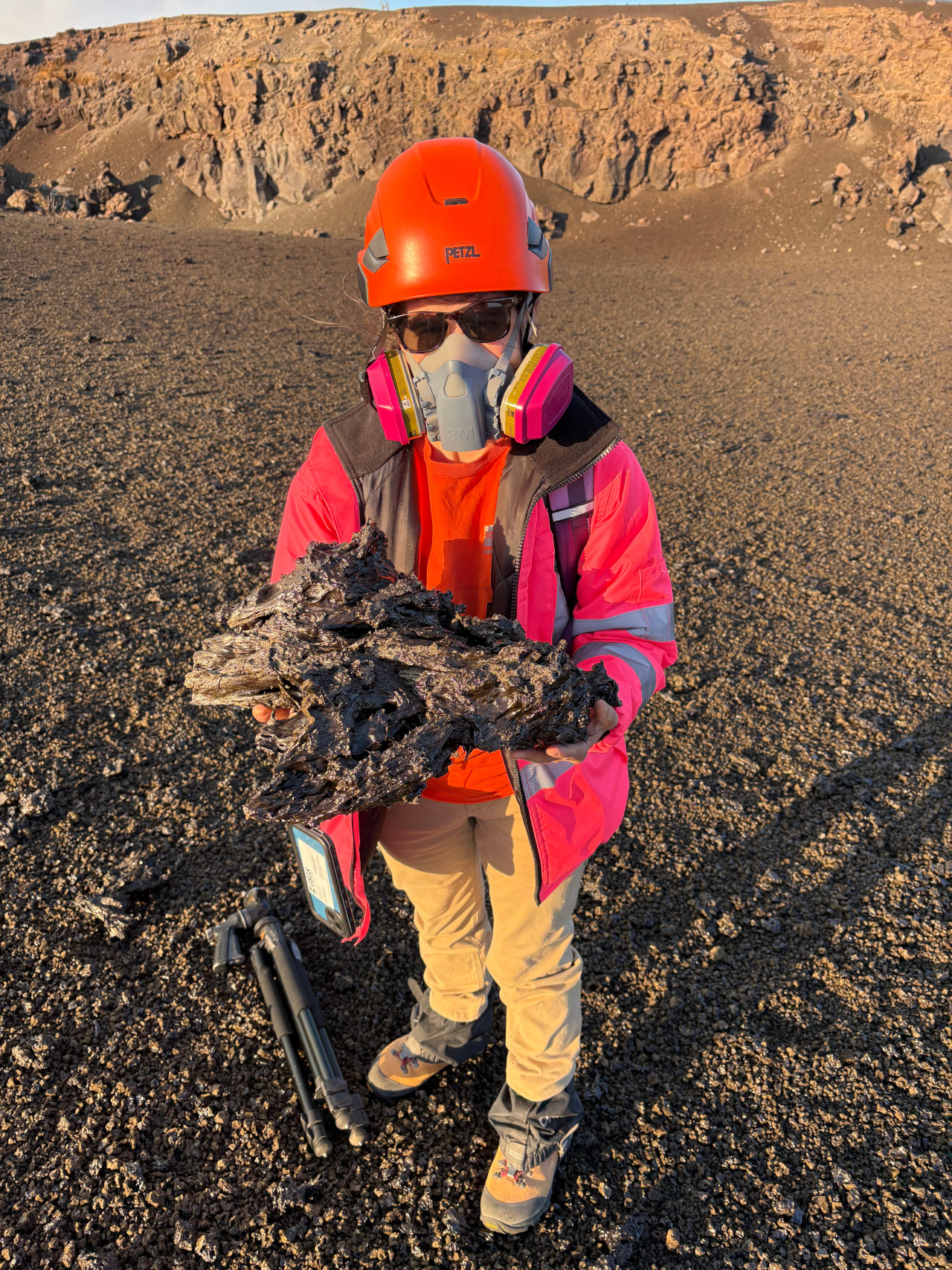
Pele’s hair is also produced by these high lava fountains.
“Pele’s hair are strands of volcanic glass often produced by lava fountaining activity,” the USGS HVO explained. “Strong winds may waft these light particles to greater distances downwind. Pele’s hair can sometimes cluster and tangle together on the ground, giving it the appearance of a tumbleweed. The extent of Pele’s hair is dependent on lava fountaining activity and current wind conditions. Residents and visitors should minimize exposure to these volcanic particles, which can cause skin and eye irritation.”
Pauses between episodes during this summit eruption have lasted from 24 hours to 12 days.
