
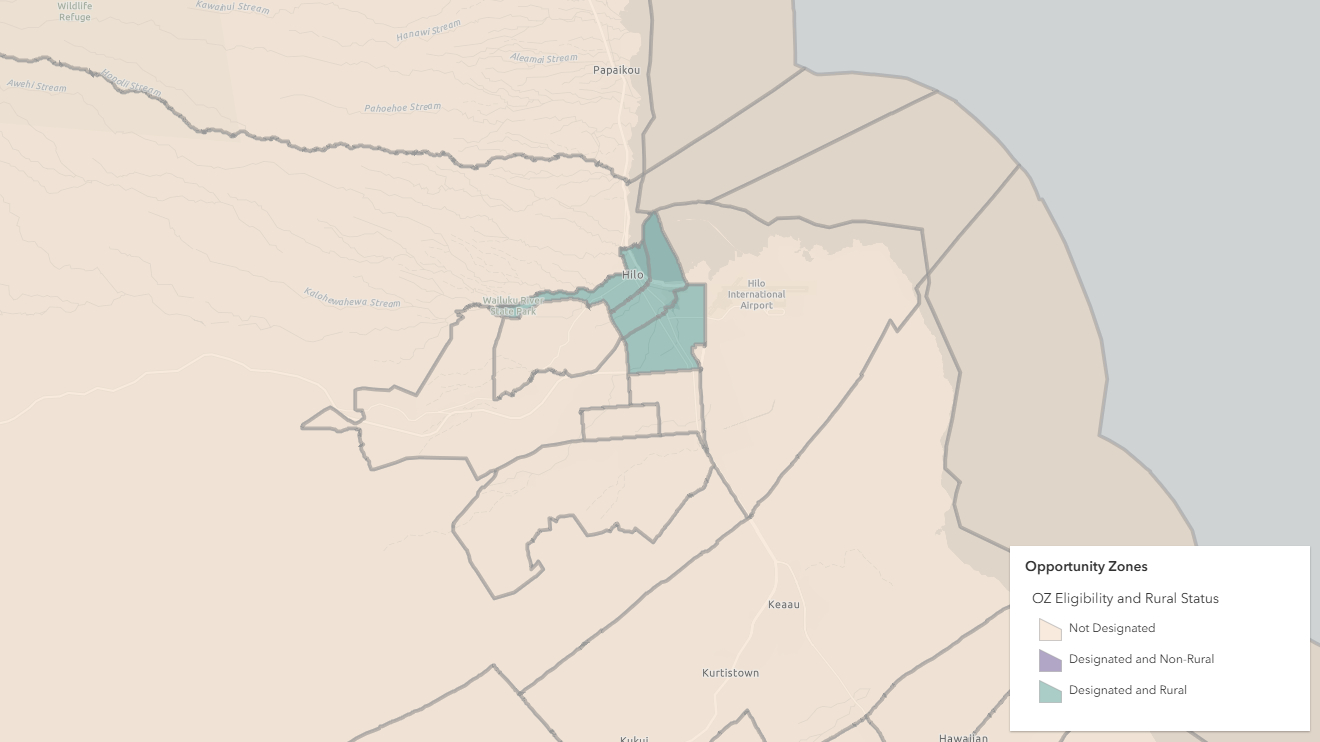

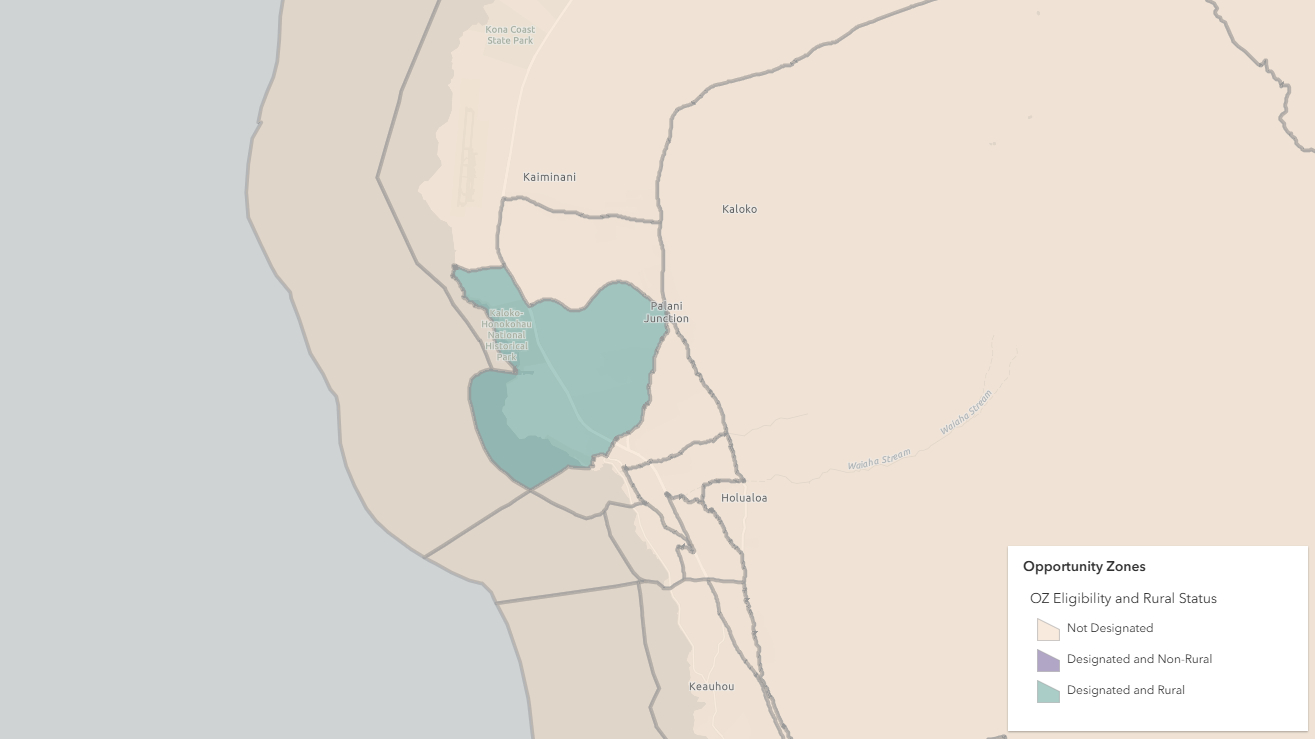
(BIVN) – A recent designation of 25 census tracts in the State of Hawaiʻi under the federal Opportunity Zones 2.0 program includes four locations on Hawaiʻi island.
According to a State news release, the Opportunity Zones 2.0 program “offers federal tax incentives to investors who put long-term capital into designated low-income communities, with additional benefits for eligible rural areas.”
“The program unlocks hundreds of millions of dollars in private investment across the state in economically depressed neighborhoods,” the State says.
The designated census tracts on Hawaiʻi island include three in Hilo, and one in Kona. They are:
- 203 Pu‘ueo-Downtown (Hilo)
- 204 Villa Franca-Kaikoʻo (Hilo)
- 205 University-Houselots (Hilo)
- 215.04 Kealakehe (North Kona)
“As a physician, I’ve spent my career in places where resources were scarce,” said Governor Josh Green, who announced the designations last week. “What I learned is that when you invest early and in the right places, you prevent a lot of pain down the road. That’s as true for our communities as it is for our patients. These designations will catalyze investments to build a healthier and more affordable Hawaiʻi for our local people.”
The 25 census tracts include 19 tracts on Oʻahu and two on Maui, including Lahaina’s Front Street census tract.
From the State of Hawaiʻi:
The designations follow months of engagement with county leadership, federal partners, national experts, community stakeholders and the private sector, led in partnership through the Office of the Governor, Department of Business, Economic Development, and Tourism and the Office of Planning and Sustainable Development.
“Opportunity Zones 2.0 puts Hawaiʻi on the map for investors looking to make a lasting difference,” said James Kunane Tokioka, director of the Department of Business, Economic Development and Tourism. “From housing and healthcare to film and agriculture, these designations will funnel capital into projects that build lasting value.”
The state selected tracts based on three key priorities.
Housing — Housing is the most pressing need in every county. Opportunity Zones 2.0 gives the state a new tool to attract private capital to build homes that local families can afford.
Clean energy — Hawaiʻi pays some of the highest energy costs in the nation; a burden on families and a drag on the economy. The designations can bring private capital into energy projects that lower costs, create local jobs and advance the state’s clean energy goals.
A more resilient economy — The state aims to strengthen and diversify Hawaiʻi’s economy through investment in healthcare, tourism, advanced manufacturing, agriculture, broadband and film.
“Our kids shouldn’t have to leave Hawaiʻi to find a good job or an affordable place to live,” said Governor Green. “Opportunity Zones 2.0 will help us build a stronger, more diverse economy so our people can stay, work and thrive right here at home.”
