
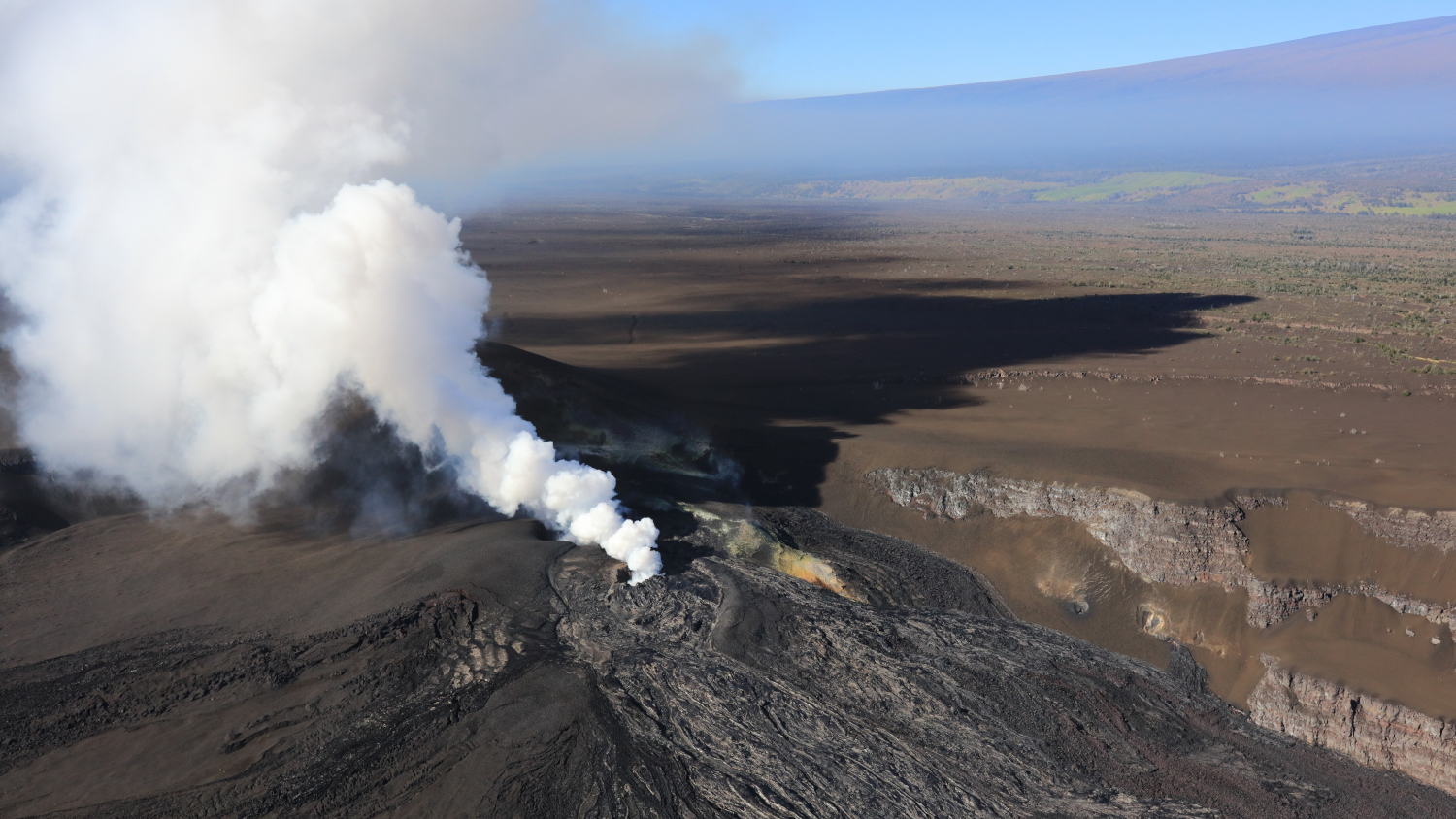

(BIVN) – The ongoing eruption at the summit of Kīlauea is paused following episode 57 of high lava fountaining on November 23rd. The summit has been inflating in the time since the episode ended.
On Wednesday, the USGS Hawaiian Volcano Observatory Preliminary reported forecast models suggest the next episode may occur as early as next week.
Scientists say episode 58 could begin sometime between next Thursday, December 3, and December 17.
From the Observatory update on Wednesday:
Summit Observations:
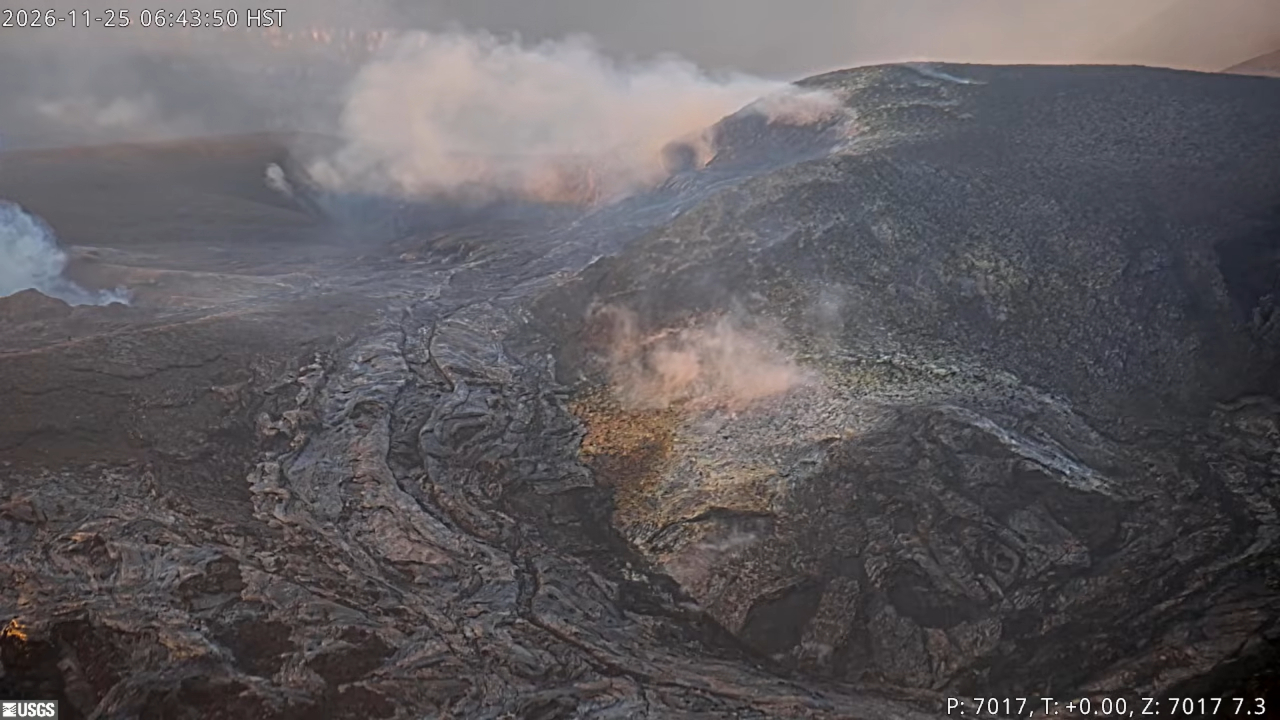
Summit webcams recorded moderate, consistent glow at the southwest vent and weaker, intermittent glow at the north vent overnight. Lava flows on the floor of Halemaʻumaʻu crater still exhibit scattered points of incandescence as they cool and solidify in the aftermath of lava fountaining episode 57; these points may remain visible for a couple more days and nights. Yesterday, tephra deposits on the southeast side of the eruptive vent complex, just below the southwest vent, began to slump in the early morning hours of November 24 exposing incandescent spatter and welded tephra. The slump created a secondary flow that was observed to still be creeping slightly downslope this morning. This movement is not expected to continue for much longer.
Since the end of lava fountaining episode 57 at 6:00 a.m. HST on November 23, the Uēkahuna tiltmeter (UWD) has recorded approximately 6.0 microradians of inflationary tilt, after recording approximately 18 microradians of deflationary tilt during the episode. Other summit tiltmeters also show a rapid change from deflationary tilt to inflationary tilt when lava fountaining concluded.
In the aftermath of lava fountaining episode 57, seismicity has followed a normal pattern by returning to low-level tremor with bursts every 5–10 minutes following the end of the episode. Only one earthquake was located within the summit region over the past day.
The Halemaʻumaʻu eruptive vents continue emitting a robust plume of volcanic gases. Winds have been light and variable over the past day, and they are expected to become more southwesterly as today progresses, eventually blowing the gas plume to the northeast. The Hawaiian Volcano Observatory’s array of gas instruments southwest of the eruptive vents measured a sulfur dioxide (SO2) emission rate of approximately 2,100 tonnes per day yesterday afternoon, November 24.
Rift Zone Observations:
Rates of seismicity and ground deformation remain low in the East Rift Zone and Southwest Rift Zone. SO2 emissions from the East Rift Zone remain below the detection limit.
Analysis:
Since the end of lava fountaining episode 57 on November 23, summit tiltmeters have recorded a typical post-fountaining recovery, with nearly continuous inflationary tilt. The abrupt switch from summit deflation to inflation at the end of the episode, continued glow from the eruptive vents, and the resumption of low-frequency seismic tremor bursts indicate that another lava fountaining episode is likely in the coming weeks. Preliminary forecast models suggest that the next episode may occur sometime between December 3 and 17; this window will be refined as more tilt data are incorporated into the models.
Kīlauea has been erupting episodically since December 23, 2024, from two primary vents (north and south) within Halemaʻumaʻu at the summit. Lava fountaining episodes generally last less than 12 hours and are separated by pauses of two or more weeks.
HVO continues to closely monitor Kīlauea and remains in contact with Hawaiʻi Volcanoes National Park and the Hawaiʻi County Civil Defense Agency regarding eruptive hazards.
