
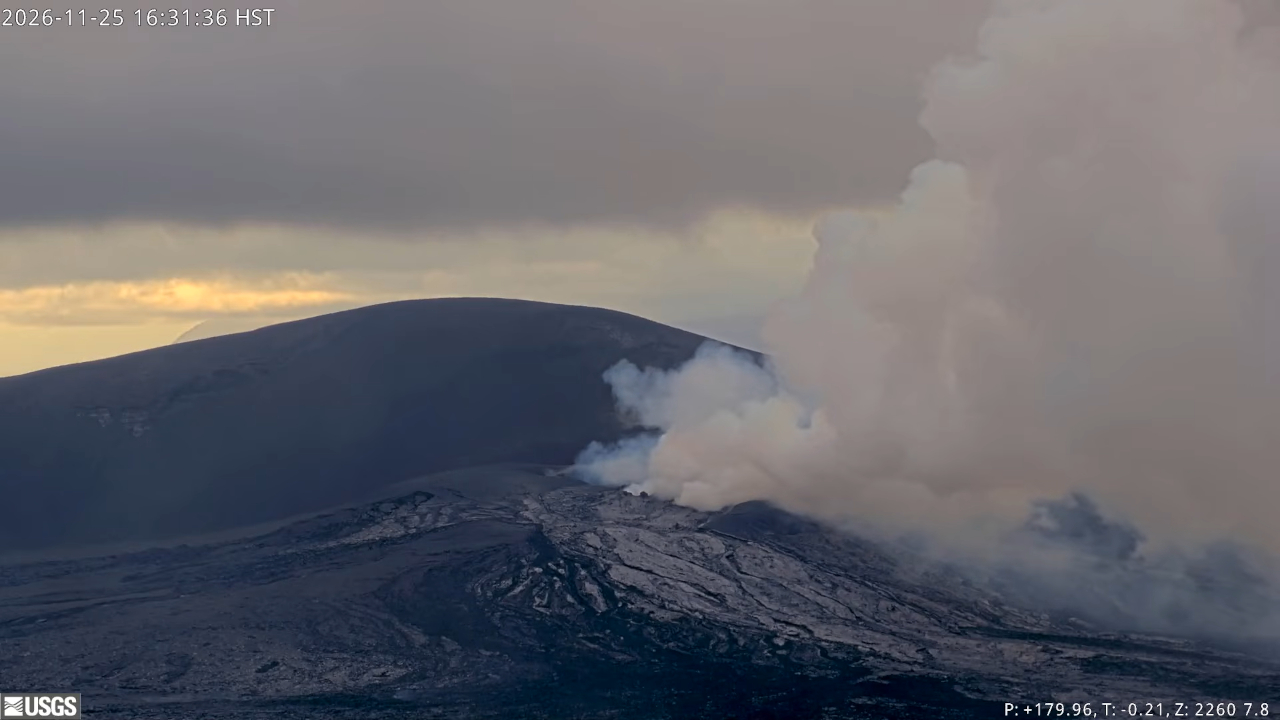

(BIVN) – The Hawaiʻi Department of Health on Wednesday issued a cautionary notice, warning residents and visitors of elevated volcanic gas emissions from Kīlauea.
The ongoing summit eruption is currently paused, however vog (volcanic smog) continues to be produced, resulting in poor air quality across the islands. The hazy conditions are often present in areas of West Hawaiʻi, and have been particularly noticeable in Hilo in recent days.
From the USGS Hawaiian Volcano Observatory on Thanksgiving Day:
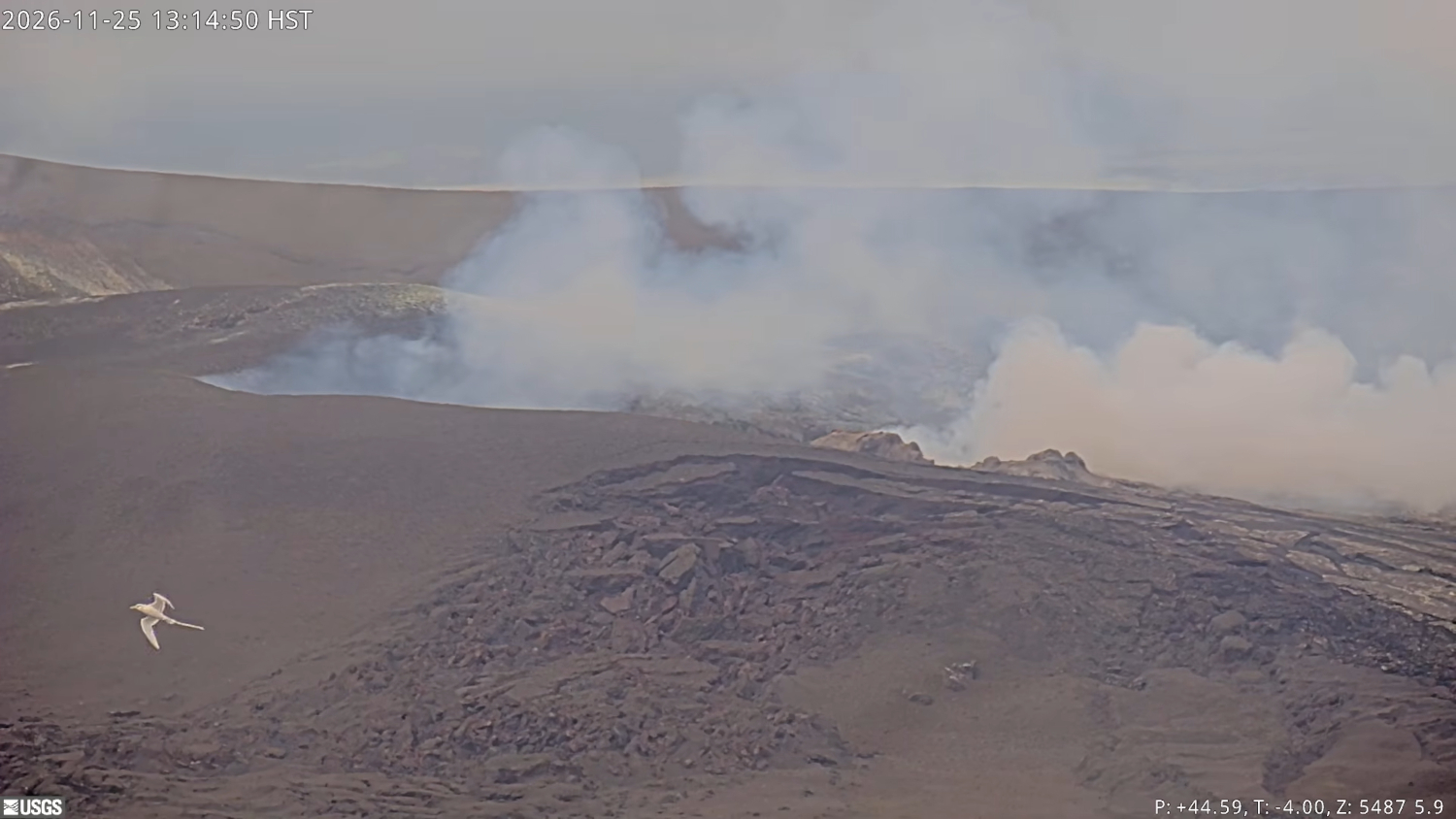
The Halemaʻumaʻu eruptive vents continue emitting a robust plume of volcanic gases. Winds have been light and variable over the past day, and they are expected to become more southwesterly as today progresses, eventually blowing the gas plume to the northeast. The Hawaiian Volcano Observatory’s array of gas instruments southwest of the eruptive vents measured a sulfur dioxide (SO2) emission rate of approximately 2,100 tonnes per day yesterday afternoon, November 24.
From the health department:
According to the U.S. Geological Survey, Kīlauea’s 57th episodic eruption ended Nov. 23. Although the eruption has paused, strong volcanic gas emissions continue from the north and southwest eruptive vents in Halemaʻumaʻu. High levels of volcanic gas can create vog conditions that affect areas far downwind of the summit and may be hazardous to human health, particularly for sensitive populations. Additional eruption hazards may include windblown volcanic glass, known as Pele’s hair, as well as volcanic rock fragments and ash that can affect surrounding communities. Air quality can change quickly depending on the amount of volcanic emissions, wind direction and other weather conditions.
Since the eruption sequence began Dec. 23, 2024, air quality readings at several monitoring stations on Hawaiʻi Island, Maui and Oʻahu have varied, with periodic increases in sulfur dioxide (SO₂) and fine particulate matter (PM2.5). While most stations have reported good or moderate air quality, monitoring stations in southern Hawaiʻi Island have at times recorded unhealthy air quality levels. Earlier today, the Hilo air monitoring station reported air quality in the “Unhealthy for Sensitive Groups” category. Winds have been light and variable and are expected to shift throughout the day, potentially carrying the volcanic gas plume toward the northeast.
Short-term exposure to elevated levels of SO₂ and PM2.5 may cause temporary eye, nose or throat irritation, coughing and increased mucus production. At higher concentrations or with prolonged exposure, particularly among sensitive populations, more serious respiratory symptoms, including difficulty breathing or worsening of existing lung conditions, may occur. For more information about the potential health effects of vog, visit Health Effects of Vog | International Volcanic Health Hazard Network.
Recommendations during vog conditions:
- Contact a healthcare provider if symptoms develop or worsen.
- Keep medications readily available.
- Reduce outdoor activities. Stay indoors and close windows and doors.
- Set air conditioners to recirculate indoor air.
- Use a high-efficiency particulate air (HEPA) cleaner, if available, to reduce indoor particulate matter. HEPA filters do not remove sulfur dioxide gas.
- The DOH does not recommend that members of the general public use respirators to protect against volcanic gases.
Especially vulnerable populations include:
- Individuals with preexisting respiratory conditions, such as asthma, bronchitis, emphysema and other chronic lung or cardiovascular diseases;
- Children and infants;
- Older adults;
- People who work or exercise outdoors; and
- Pregnant women.
