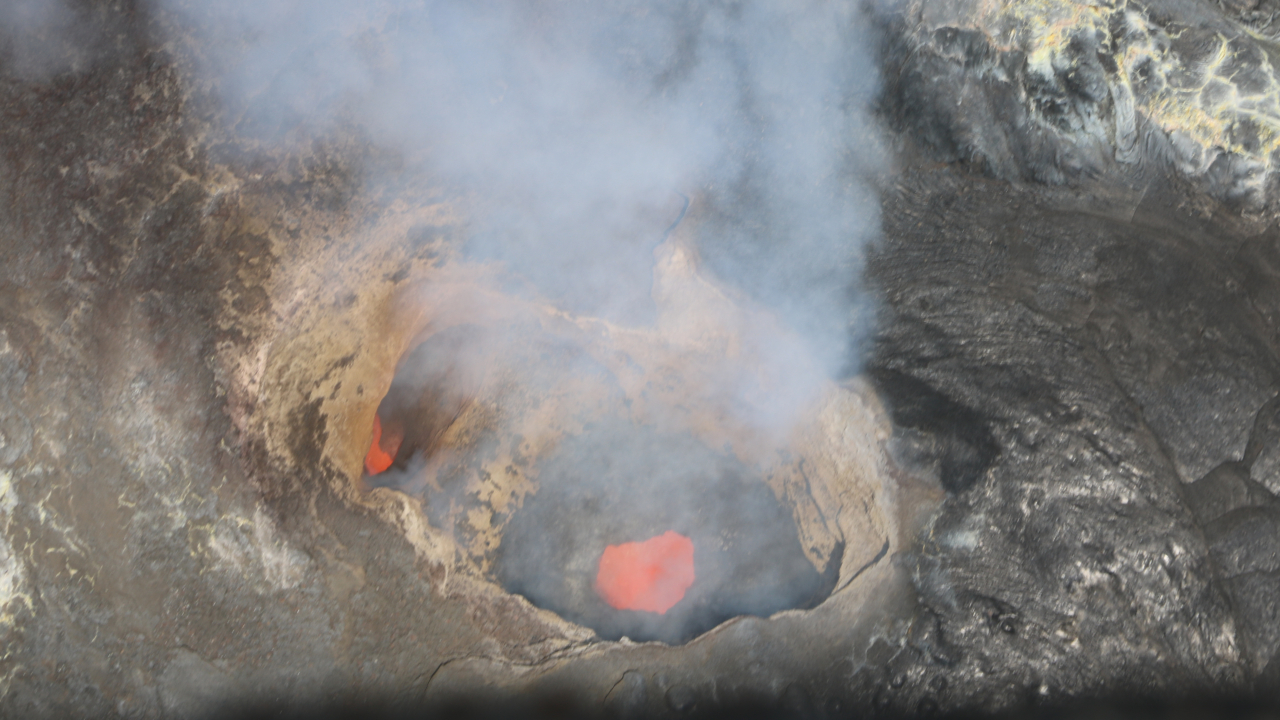

(BIVN) – Large flames have been observed at the Kīlauea summit vents in recent days, indicating magma is close to the surface, and the next episode of high lava fountaining is near.
A view by helicopter on Wednesday also revealed lava roiling in the north vent below.
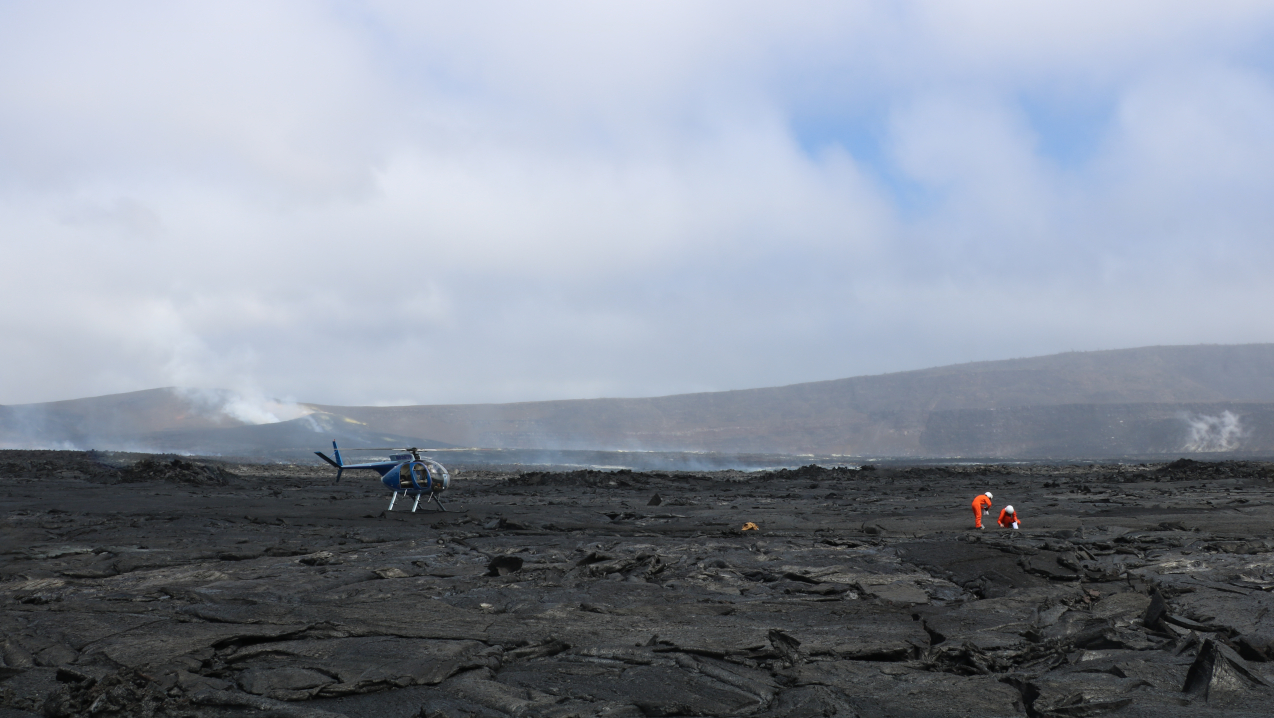
With permission from Hawaiʻi Volcanoes National Park, scientists with the USGS Hawaiian Volcano Observatory briefly landed on the crater floor to collect warm lava samples from episode 49. The samples will provide data on magma chemistry and underground storage conditions.
On Wednesday, the Observatory reported the onset of episode 50 is expected to happen sometime between tomorrow, June 25th, and Saturday, June 27th.
The most likely date for lava fountains to occur is on Friday.
Meanwhile, a magnitude-3.6 earthquake occurred Wednesday morning at 8:29 a.m., 9 miles south of Volcano Village.
The event occurred at a depth of 5 miles below sea level, and had no apparent impact on island volcanoes.
The Observatory says most earthquakes in this region are caused by motion of Kīlauea’s south flank, which moves to the southeast over the oceanic crust.
No damage to buildings or infrastructure was expected based on the earthquake’s intensity.
On Saturday, about thirty households within the Volcano-area that have been impacted by ongoing ash and tephra fallout from the Kīlauea eruption have received water catchment diverters.
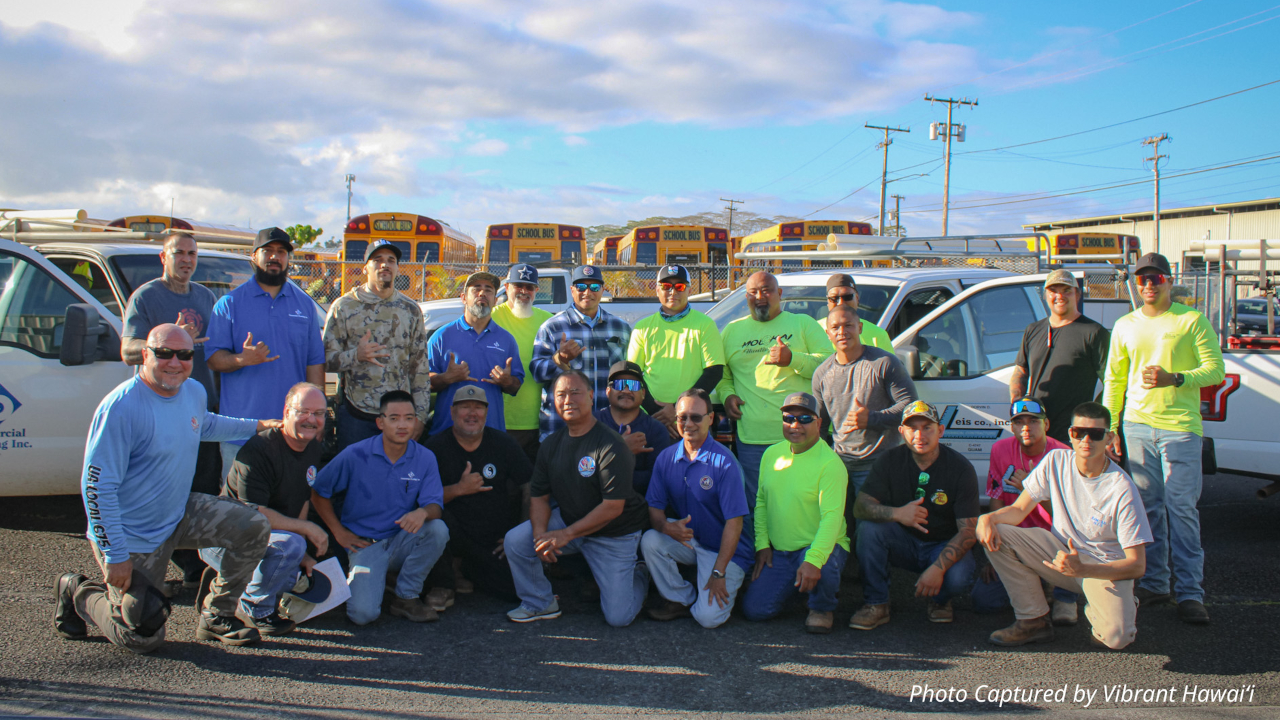
Professional volunteers recently installed the diverters at no cost, through a partnership between Vibrant Hawaiʻi, Plumbers and Fitters Local 675, the International Association of Plumbing and Mechanical Officials, local contractors, and Hawaiʻi Community Foundation.
The diverters allow homeowners to temporarily redirect rainwater away from their storage tanks when volcanic ash and tephra are present on rooftops, helping prevent contaminated runoff from entering household water supplies. Many Volcano residents use rainwater catchment systems as their primary water source.
“Because we’re on a volcano, we can’t put in county water,” explained Volcano-resident Sharron Faff back in January. “So, everybody up here has catchment tanks like this big one right behind me. When this happens, whenever we have an eruption, which has been happening every couple of weeks lately, what we’ve been doing is unattaching our water system coming from off of the roof because we don’t want it to get into the tank because we don’t want that to have to go through the filter system, that water with all the chunks and pieces and little pieces of hair of the Pele’s hair.”