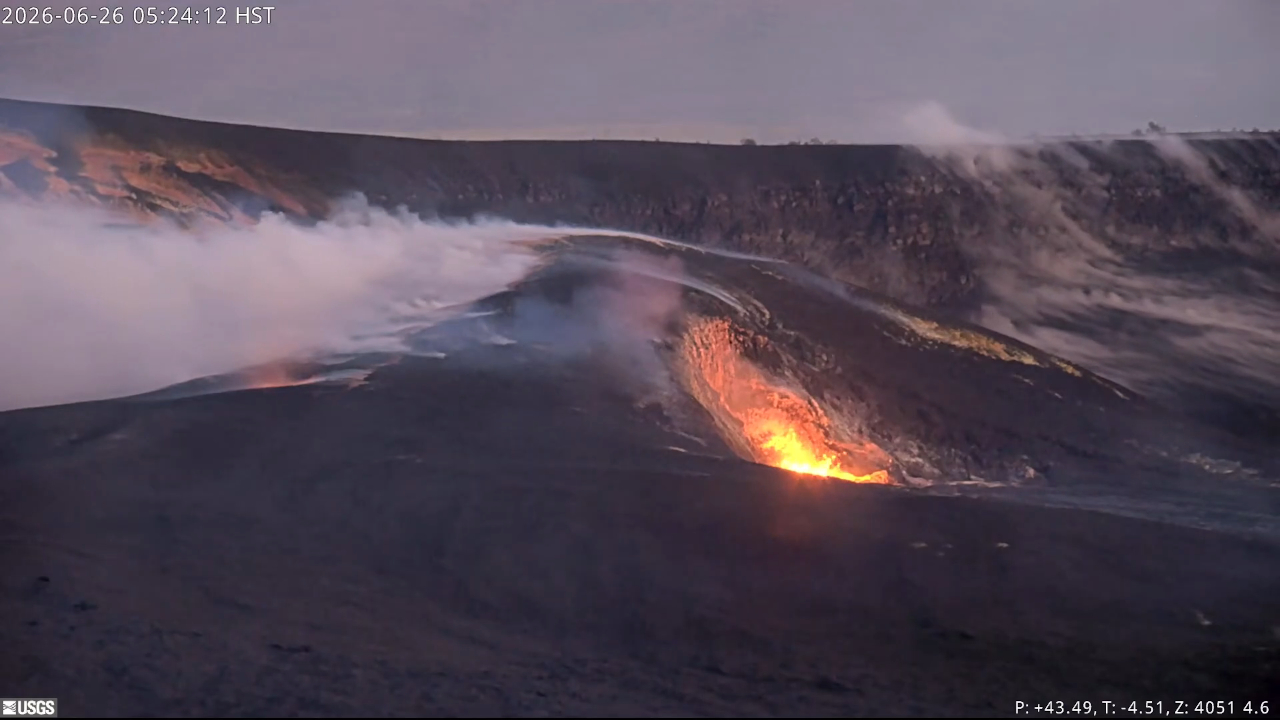

(BIVN) – Episode 50 in the ongoing Kīlauea summit eruption is likely to occur today at Hawaiʻi Volcanoes National Park.
Overnight, there was frequent gas jetting, large flames, and spatter at the vents, marked by large tremor spikes.
Precursory low-level activity increased just before 9 a.m.
Since then, the USGS Hawaiian Volcano Observatory raised the Alert Level for Kilauea from ADVISORY to WATCH, and the Aviation Color Code from YELLOW to ORANGE.
The National Weather Service has issued a Special Weather Statement ahead of the episode.
The Volcano Observatory says surface winds below the inversion level – which is about 8,000 feet or 2,400 meters above sea level – are forecast to be moderate to strong ]out of the northeast, which will move the lower part of the plume to the southwest. However, above that inversion layer, light winds from the south are forecast up to 16,000 feet, 5,000 meters, where they will turn to the southwest and strengthen. Higher level winds could push parts of the plume to the north over surrounding communities.
The Hawaiʻi County Civil Defense issued this radio message on Friday morning:
This is a Civil Defense message for Friday 06-26-2026 at 08:39 AM.
Hawaiian Volcano Observatory reports Kilauea Volcano Eruption Episode 50 will likely occur today. If the eruption occurs, varying levels of ash and tephra may fall downwind of the eruption. Low level winds will carry any tephra west of the summit, however, tephra may be carried north into communities along Highway 11.
If you live downwind of the Kilauea summit, be prepared to take precautions if needed, such as disconnecting water catchment systems.
Avoid the area if you have sensitivities or other respiratory conditions.
On roadways, beware of tephra, which may reduce visibility and increase traffic congestion. Take necessary precautions to limit your exposure.
There are no threats to the community at this time.
This is your Hawaii County Civil Defense Agency.
Kīlauea has been erupting episodically since December 23, 2024. When an episode occurs, high lava fountaining generally lasts for less than 12 hours.