
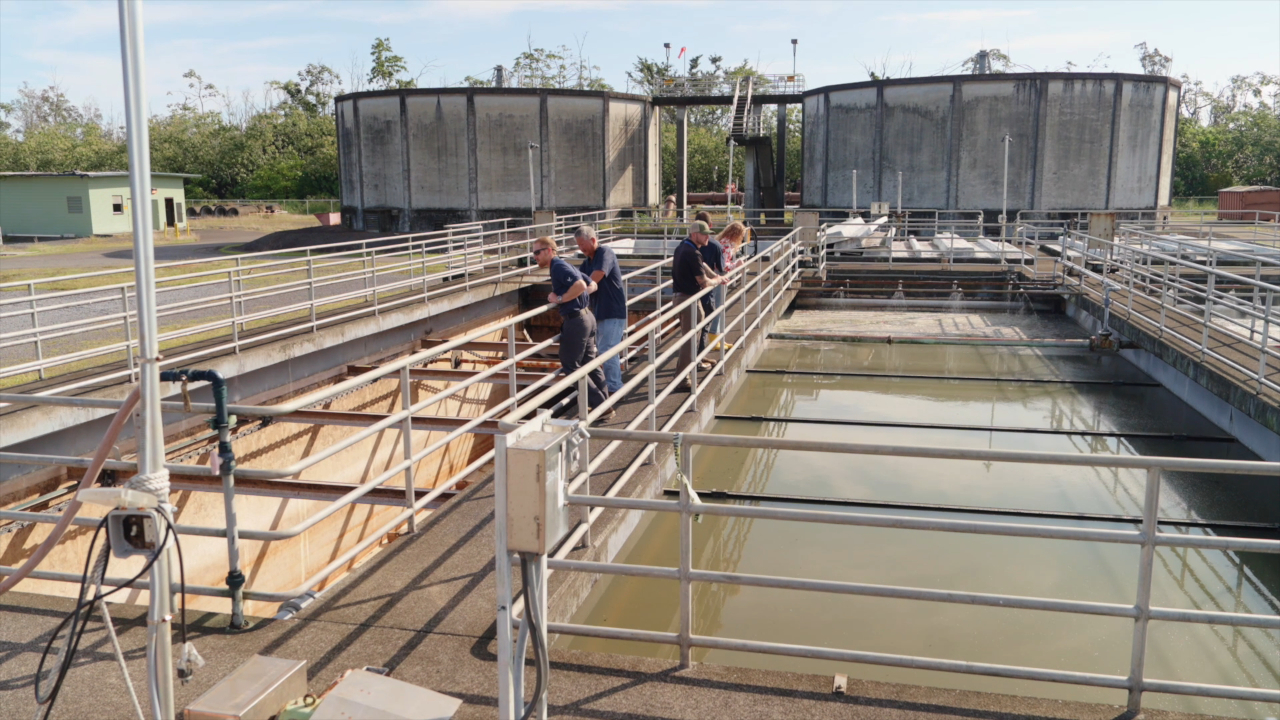

(BIVN) – Dengue virus has been detected in Hilo wastewater, although there are currently no active cases of dengue fever reported on Hawaiʻi island.
A sample collected from the Hilo wastewater treatment plant on August 24 tested positive for dengue virus, and the Hawaiʻi Department of Health was notified of the result August 31st. A follow-up sample was collected on August 31. Health officials say those results are pending.
Hawaiʻi island last faced an island-wide dengue fever outbreak in late 2015 to early 2016.
From the Hawaiʻi Department of Health:
Dengue virus is transmitted from an infected person to a mosquito and then to another person. While Hawaiʻi is home to mosquitoes that can carry dengue, the disease is not endemic, or established, in the state. All dengue cases reported in Hawaiʻi to date have been travel-associated. Of the seven dengue cases reported in Hawaiʻi in 2026, all have involved travel to Pacific Island countries and territories.
Dengue is a year-round risk in tropical and subtropical areas of Central and South America, including Brazil and Mexico; Asia, including the Philippines; the Middle East; Africa; and several Pacific islands, including American Samoa, the Federated States of Micronesia, the Republic of the Marshall Islands and the Republic of Palau. Many popular tourist destinations in the Caribbean, including Puerto Rico, are also affected. Some countries are reporting higher-than-usual numbers of dengue cases, including Bolivia, Colombia, Samoa, Tonga, New Caledonia, Cambodia, Malaysia, Vietnam, the Maldives, Sri Lanka and Kenya.
Travelers returning from areas with dengue risk should take precautions to prevent mosquito bites for three weeks. If dengue symptoms develop within two weeks of returning, travelers should seek medical evaluation.
Symptoms of dengue can range from mild to severe and include fever, nausea, vomiting, rash and body aches. Symptoms typically last two to seven days. While severe illness can occur, most people recover within a week. Individuals who have recently traveled and are experiencing these symptoms should contact their healthcare provider. Healthcare providers and individuals who suspect dengue infection are advised to call the Disease Reporting Line at 808-586-4586.
Hawaiʻi collects municipal wastewater samples each week and sends them to the State Laboratories Division (SLD) for dPCR testing, as well as to the University of Missouri for advanced sequencing to look for bacterial and viral genetic material associated with community infections.
Wastewater sampling is routinely conducted across Hawaiʻi to support infectious disease surveillance. This testing can identify viral genetic material shed by infected individuals, including those who may not yet have symptoms or have not sought medical care. A dengue signal in wastewater does not confirm a clinical case or indicate community transmission. Instead, it serves as an early indicator that can prompt awareness and monitoring for potential cases.
ABOUT DOH WASTEWATER TESTING
The SLD wastewater testing program is collaborating with a laboratory at the University of Missouri through a project that advances the detection of infectious disease pathogens in the environment. This national effort aims to strengthen environmental monitoring of air and water to detect, forecast and contain pathogen outbreaks and other biological threats. As part of the project, wastewater samples from sites across the country, including Hawaiʻi, are analyzed to characterize viruses present, including those that infect humans, animals, plants and microbes.
