
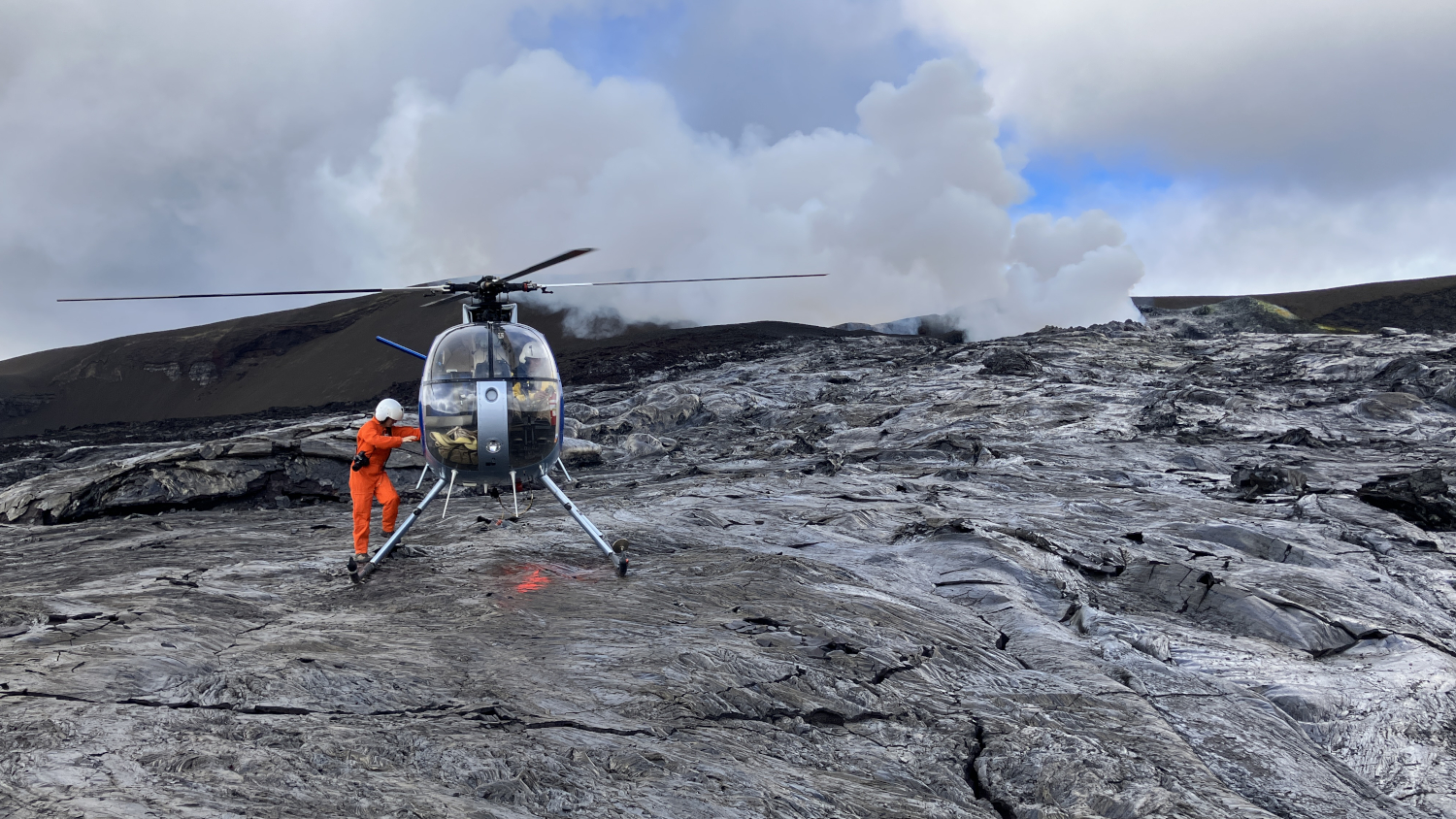

(BIVN) – The ongoing eruption at the summit of Kīlauea remains paused, with the next episode of high lava fountaining now expected in early November.
Scientists with the USGS Hawaiian Volcano Observatory have pushed the forecast for episode 56 back to between November 1st and November 7th, 2026.
There was a brief interruption in the inflationary tilt trend on Monday morning. Since then, summit inflation resumed. Data streams on the USGS HVO website shows the rate of inflation increased further at around noon.
The forecast assumes the inflation of the magma chamber under Halemaʻumaʻu is back to following similar patterns to those established during previous episodes.
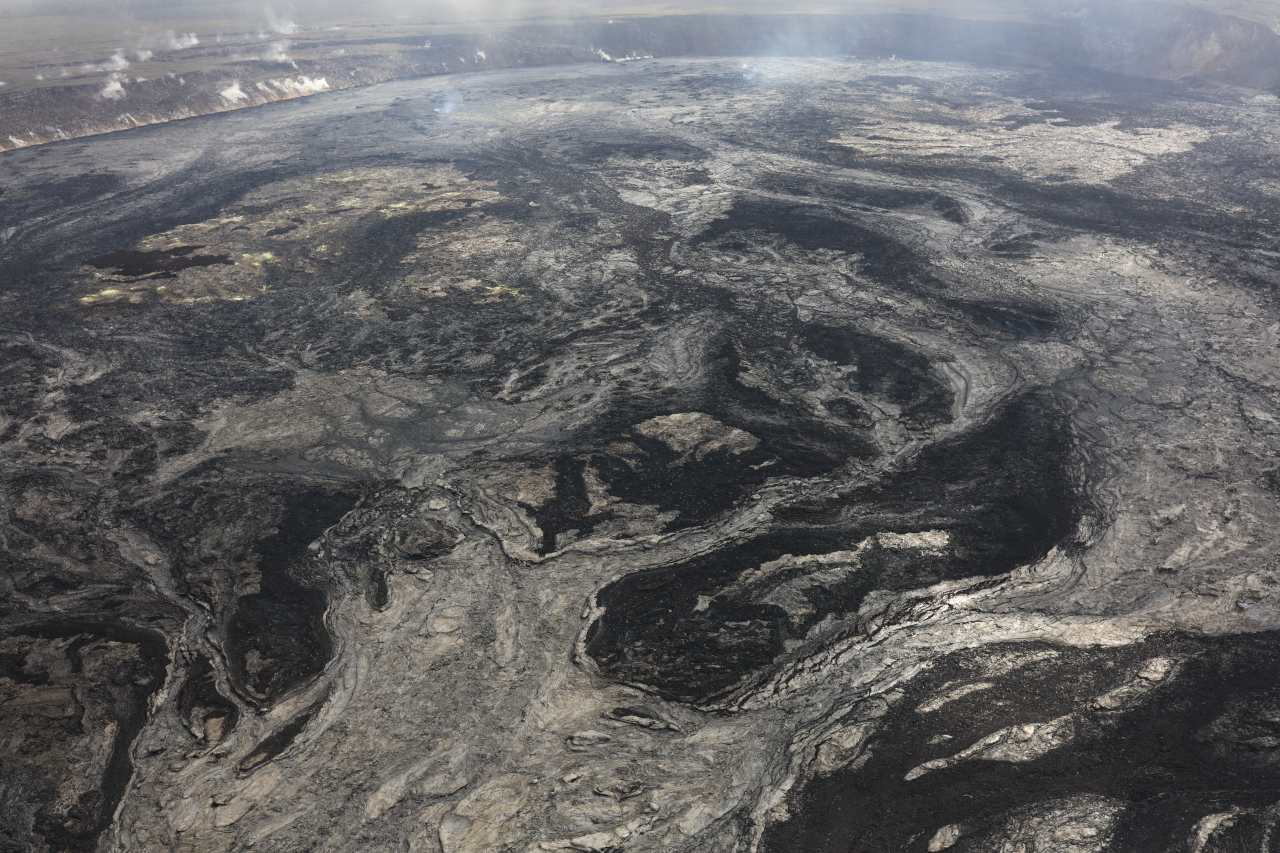
From the USGS Hawaiian Volcano Observatory on Tuesday morning:
Summit Observations:
Moderate-to-strong glow persisted at the west vent overnight, while the north vent exhibited weaker incandescence. The south vent remained dark after being buried beneath tephra during episode 55.
Seismic tremor continued throughout the past day, with relatively steady background amplitudes interrupted by occasional stronger pulses. These fluctuations are characteristic of the pauses between fountaining episodes. No earthquakes were observed at Kīlauea summit in the last 24 hours.
Summit tiltmeters have recorded an overall positive trend since the end of episode 55, with several small, short-term oscillations. Approximately 13.4 microradians of tilt have been recovered since the end of fountaining on October 17th, after a total of 21 microradians of rapid deflationary tilt was recorded during fountaining. The general pattern remains consistent with post-fountaining recovery observed during previous inter-episode pauses, although rate of recovery has varied over time. UWD has recorded ~0.7 microradians of gradual, inflationary tilt since 9:15 am HST yesterday.
Sulfur dioxide (SO₂) emission rates during inter-episode pauses typically range from 1,000 to 5,000 tonnes per day. Light easterly winds are expected to transport volcanic gases west across the Kaʻū Desert today.
Rift Zone Observations:
Rates of seismicity and ground deformation remain low in the East Rift Zone and Southwest Rift Zone. SO2 emissions from the East Rift Zone remain below the detection limit. No significant ground deformation was recorded in either rift zone.
Analysis:
Following episode 55 on October 17, 2026, summit tiltmeters initially recorded a typical post-fountaining recovery, with a steady upward trend that gradually slowed and was interrupted by several small fluctuations. Tilt has continued to increase gradually over the past 24 hours, following a brief negative trend on October 26. This interruption contributed to shifting the forecast window for episode 56 fountaining to November 1–7, 2026. Given the unusual buildup to episode 55, uncertainty remains as to whether summit deformation will follow a sufficiently consistent pattern to allow for precise forecasting of the next episode.
Kīlauea has been erupting episodically since December 23, 2024, from two primary vents (north and south) within Halemaʻumaʻu at the summit. Lava fountaining episodes generally last less than 12 hours and are separated by pauses of two or more weeks. The buildup to episode 55 differed substantially from previous episodes, with summit tiltmeters recording positive tilt beyond levels typically observed before fountaining, suggesting continued pressurization of the summit magma chamber. This prolonged buildup was punctuated by extended periods of negative or relatively stable tilt, rather than the more consistent upward trends observed before earlier episodes. Episode 55 was also preceded by 39 days of intermittent lava overflows, the longest period of precursory activity recorded before a fountaining episode in the current eruption. During this interval, several short-lived vents opened within Halemaʻumaʻu, and a shallow dike was emplaced beneath Kaluapele.
HVO continues to closely monitor Kīlauea and remains in contact with Hawaiʻi Volcanoes National Park and the Hawaiʻi County Civil Defense Agency regarding eruptive hazards. Kīlauea’s volcano alert level and aviation color code remain at ADVISORY/YELLOW.
