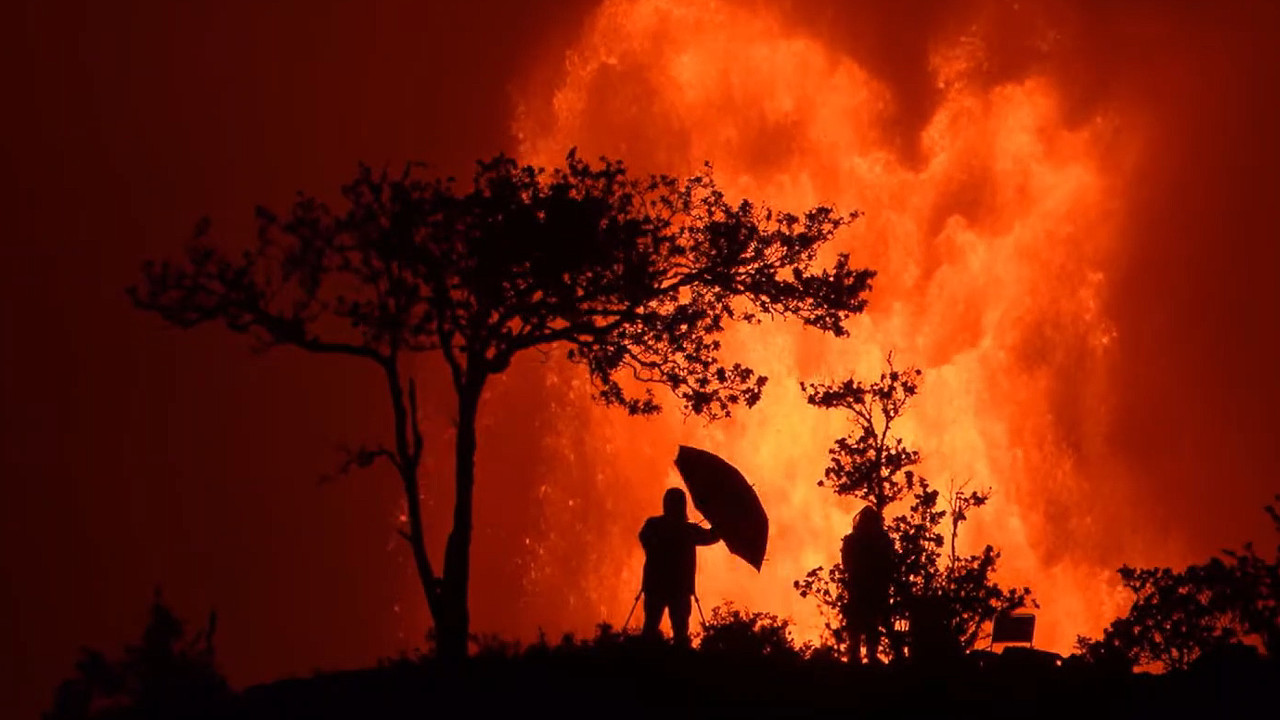

(BIVN) – Episode 26 in the ongoing eruption at the summit of Kīlauea was another thrilling spectacle for onlookers at Hawaiʻi Volcanoes National Park. The eruptive episode lasted about 8 hours, before ending on June 20th.
Scientists with the USGS Hawaiian Volcano Observatory have since confirmed that lava fountains from the north vent reached heights of up to about 1,250 feet – or 380 meters – which is a new fountain height record for this eruption.
To clarify, this record only pertains to the current eruption, which started on December 23, 2024. Lava fountains erupted during certain previous eruptions – like Kilauea Iki in 1959, for example – have reached greater heights.
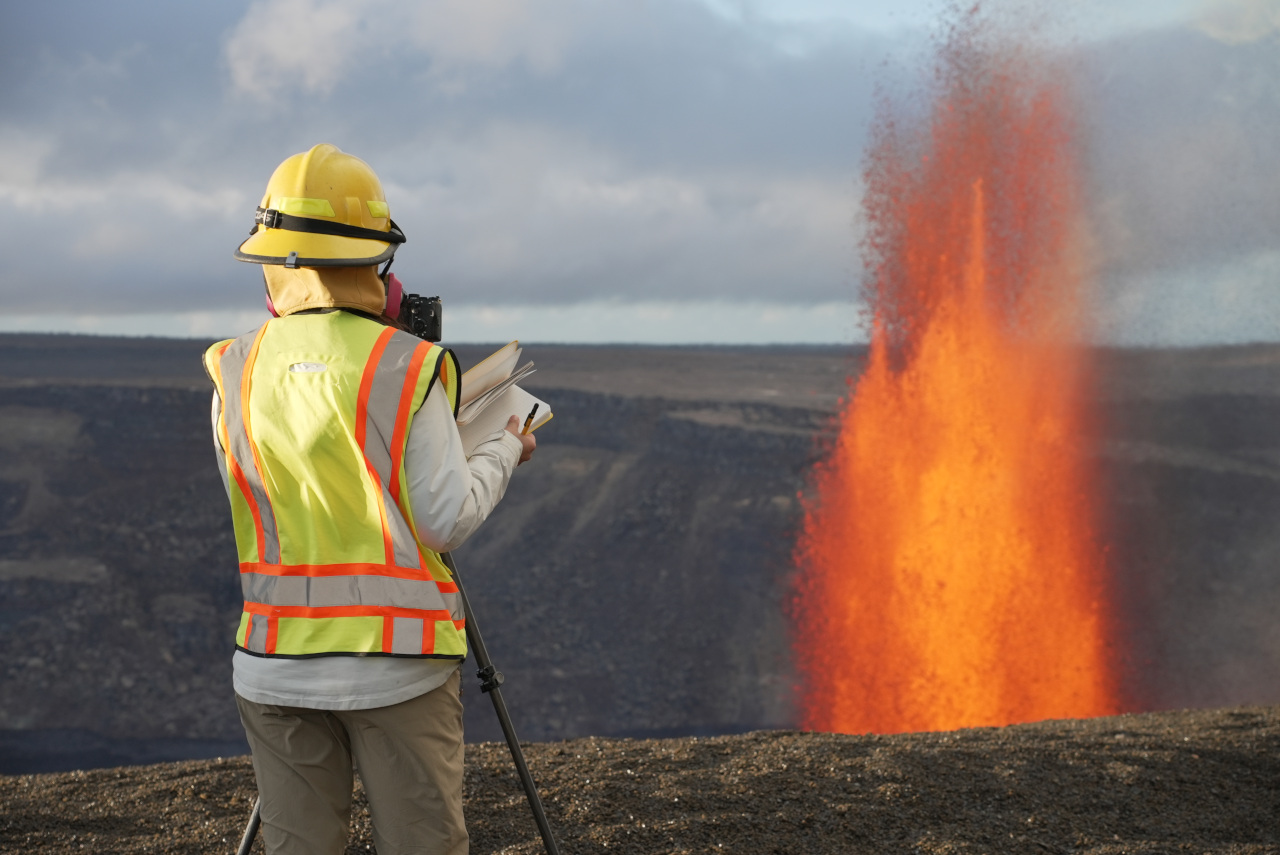
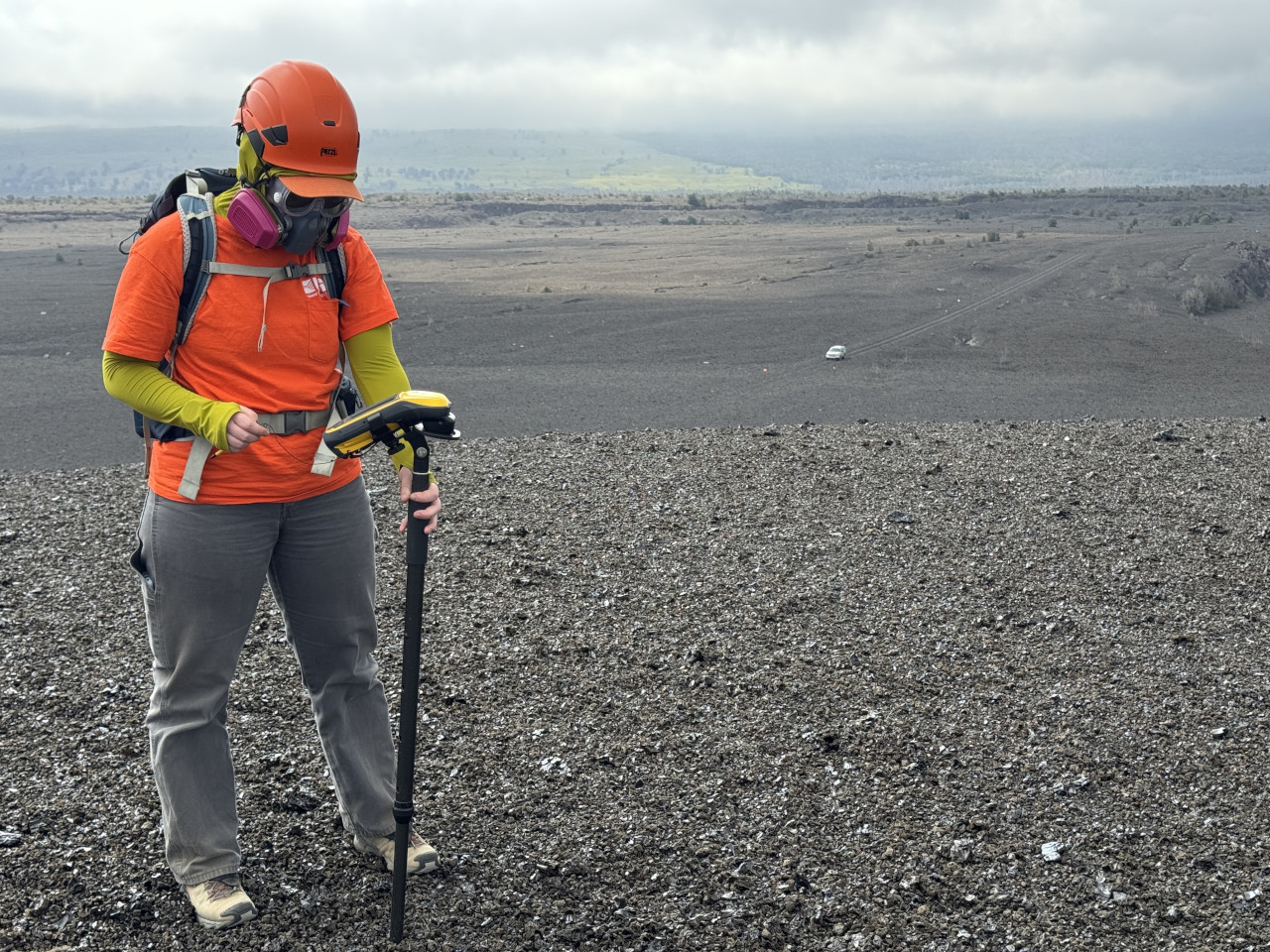
Tephra from these recent fountains have been covering the nearby land outside of the caldera. In this photo, a geologist surveys the new tephra cone that now covers part of the closed Crater Rim Drive. The cone is over 65 feet – or 20 meters – above the pre-eruption ground surface.
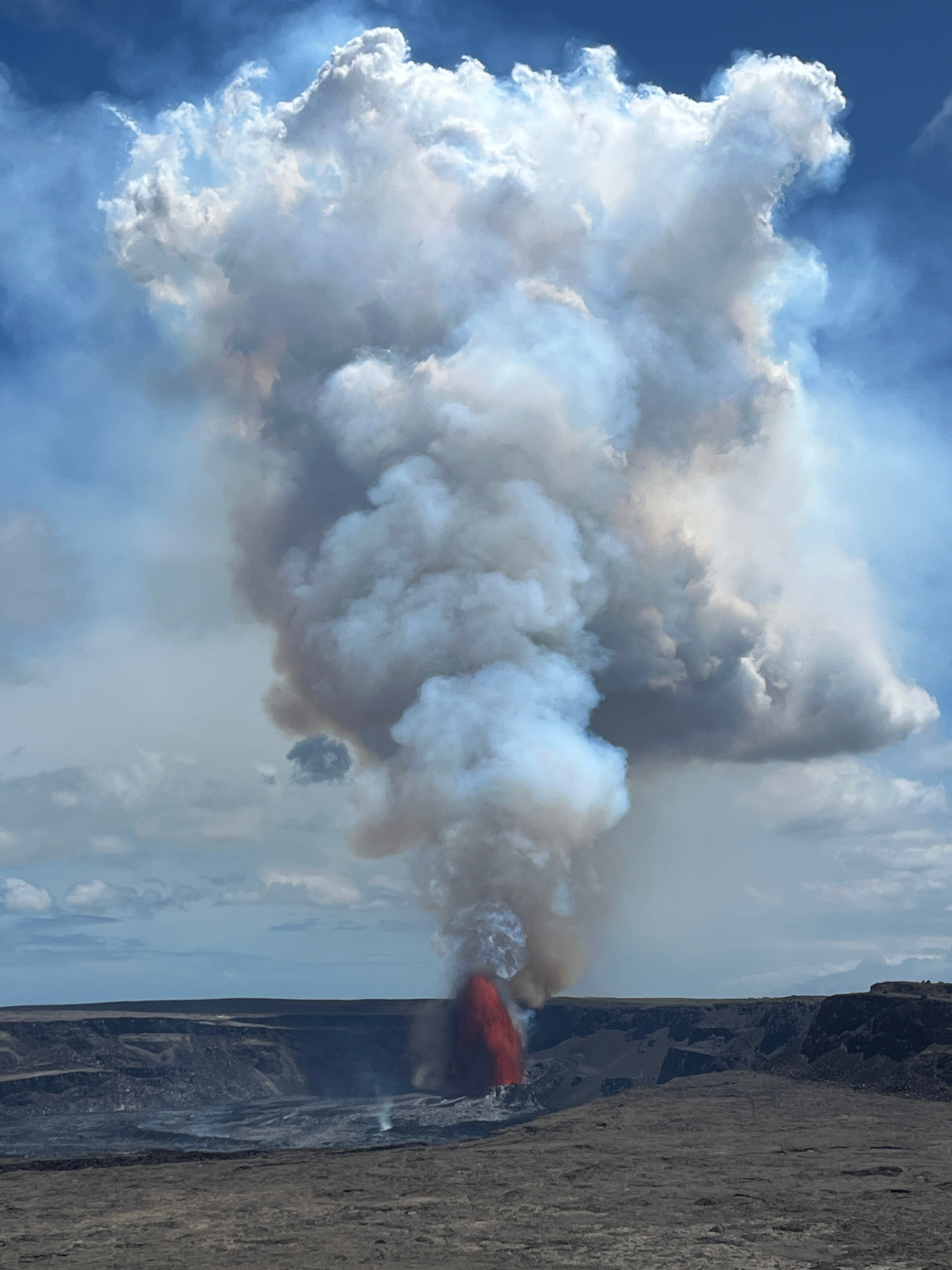
Recent plumes generated by these episodes have also reached heights of up to 20,000 feet, or over 6,000 meters. The burst of volcanic ash and gas associated with episode 26 was detected by local doppler radar, and prompted a Special Weather Statement from the National Weather Service. Residents downwind – including those in Pahala and Wood Valley – were warned of potential ash fallout.
Its important to note the difference between the plume and the lava fountain itself. As this photo shows, the plume is many times higher than the fountain. The plume usually contains high levels of water vapor, carbon dioxide, and sulfur dioxide.
A recent timelapse video produced by the Hawaiian Volcano Observatory shows the cyclic nature of this episodic eruption. Currently, there is another pause in activity, although all signs indicate another episode is likely to occur. Scientists say the preliminary forecast window for the start of episode 27 lava fountaining is between June 28th and the 4th of July.
The USGS Volcano Alert Level for Kīlauea remains at WATCH.