
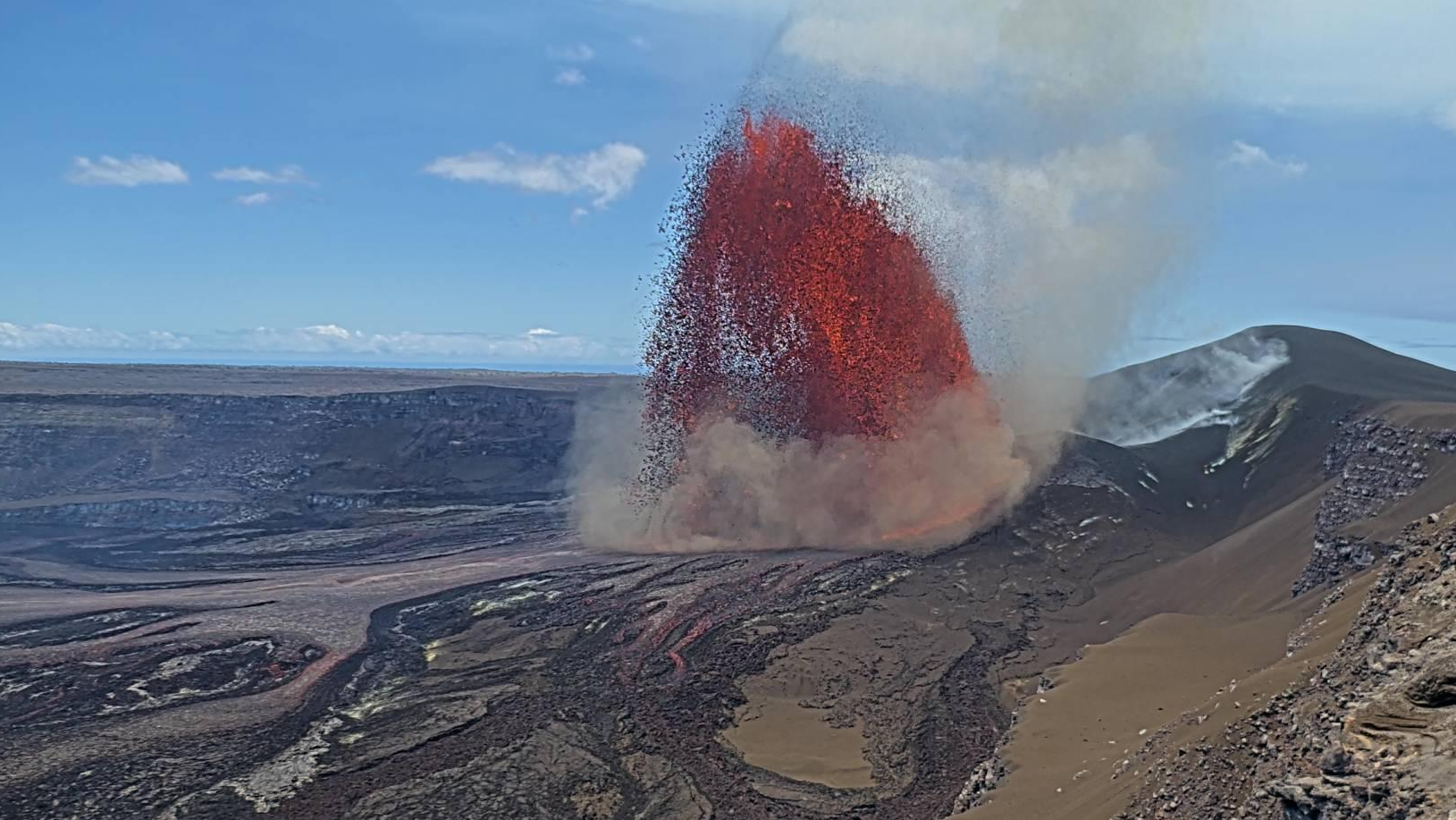

UPDATE – (4:30 p.m.) – Shortly after 3:30 p.m., the Hawaiʻi County Civil Defense issued a new radio message, reporting that “winds appear to have shifted, carrying the plume created by the Kilauea Volcano Eruption Episode 49 to the northeast and with it, possible light ashfall toward downwind communities.”
“Due to the shift in winds, residents downwind are encouraged to disconnect their catchment tank before the next rainfall, to avoid ashfall entering the catchment tank,” the emergency officials recommended. “Those with respiratory sensitivity should avoid exposure when possible.”
The USGS Hawaiian Volcano Observatory followed up with this update:
Episode 49 is continuing with lava fountains about 330 feet (100 m) high feeding a volcanic plume above the summit of Kīlauea volcano. The National Weather Service issued a Special Weather Statement at 2:55 p.m. HST indicating winds near the summit of Kīlauea are light and variable, which may possibly lead to trace amounts of fine ash and Peleʻs hair falling on areas surrounding the summit. Hawaiʻi County Civil Defense also issued a message alerting residents to possible ash fall with a reminder to close windows and disconnect water catchment systems to avoid ash if necessary. USGS HVO field teams just finished driving Highway 11 from the 36 mile marker west of Volcano sown to Ohia Estates. They reported finding no significant ash or Peleʻs hair fall at this time from any of the communities immediately surrounding the summit of Kīlauea at this time. Within Hawaiʻi Volcanoes National Park, scattered Peleʻs hairs were seen on cars near KMC, but nothing detectable was seen falling as field teams drove through the area. While no significant ash has been detected, fine ash and Peleʻs hair can remain suspended for several hours after the eruption ends. Current wind conditions near the vents as seen on our live stream cameras is from the southwest. If ash fall is reported, we will post messages on our website at the link below.
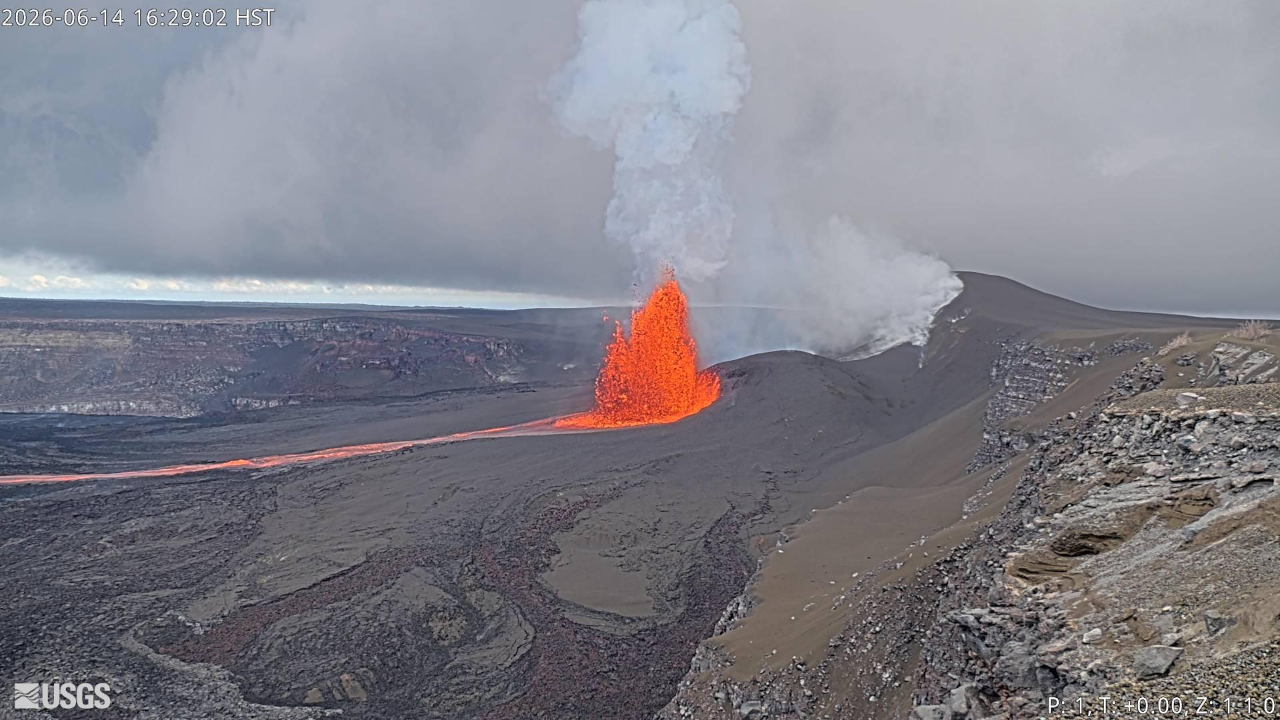
(BIVN) – Episode 49 in the ongoing eruption at the summit of Kīlauea volcano got underway on Sunday morning, after a short period of precursory activity.
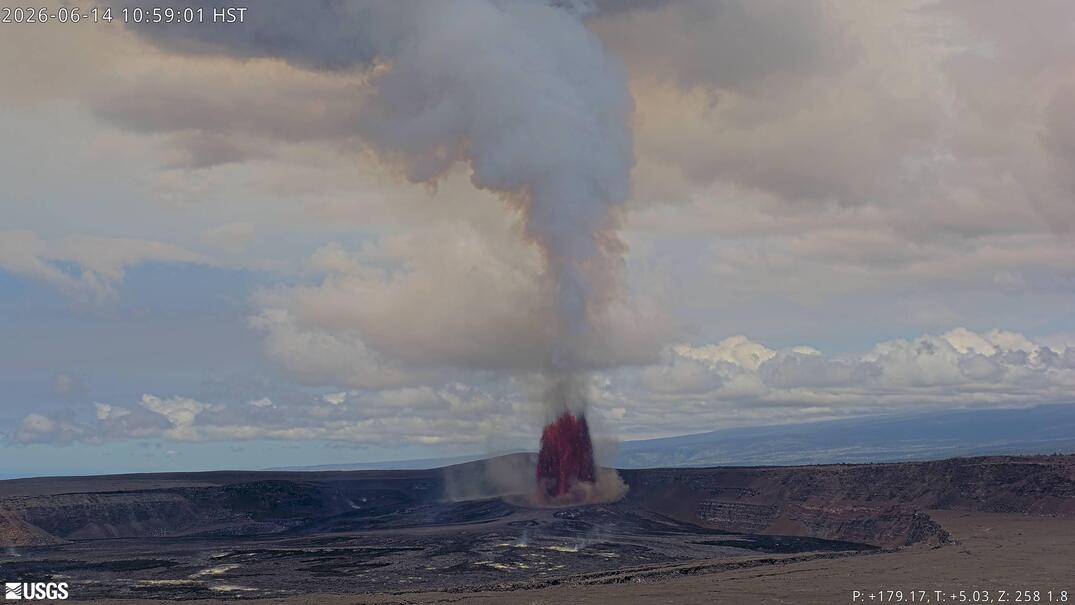
High lava fountains began to erupt from the north vent in Halemaʻumaʻu at 9:32 a.m. HST on June 14. By 10:45 a.m., fountains had grown to about 700 feet (210 m) high, and were creating an increasing amount of ash and tephra.
Hawaiʻi Volcanoes National Park said managers were not expecting temporary closures within the park as of 10:30 a.m., “but that could change based on wind direction, volcanic gas and tephra fallout.”
In an update from the USGS Hawaiian Volcano Observatory issued at 11 a.m., scientists reported the plume from this eruption was reaching 18,000 feet above sea level. “Ground-level sensors near the eruptive vents indicate that winds are blowing from the NE direction, which suggests that volcanic gas emissions and volcanic material may be distributed to the SW direction from Halemaʻumaʻu,” the Observatory stated.
From a National Weather Service “Special Weather Statement” issued at 10:26 a.m. HST:
Lava fountaining from Kilauea eruption episode 49 started this morning at 9:36 AM HST. The latest radar imagery shows the highest detectable ashfall (tephra) from the lava fountaining is currently rising to around 10,000 feet above ground level this morning. Low level trade winds continue to push the ashfall particles toward the southwest direction on radar, and any additional ash from this eruption will likely fall near the Kilauea eruption source and over portions of the Kaʻū District immediately southwest of Halemaʻumaʻu Crater.
Avoid excessive exposure to ash which is an eye and respiratory irritant. Those with respiratory sensitivities should take extra precaution to minimize exposure.
The USGS Volcano Alert Level for Kīlauea is at WATCH, and the Aviation Color Code is at ORANGE.
