
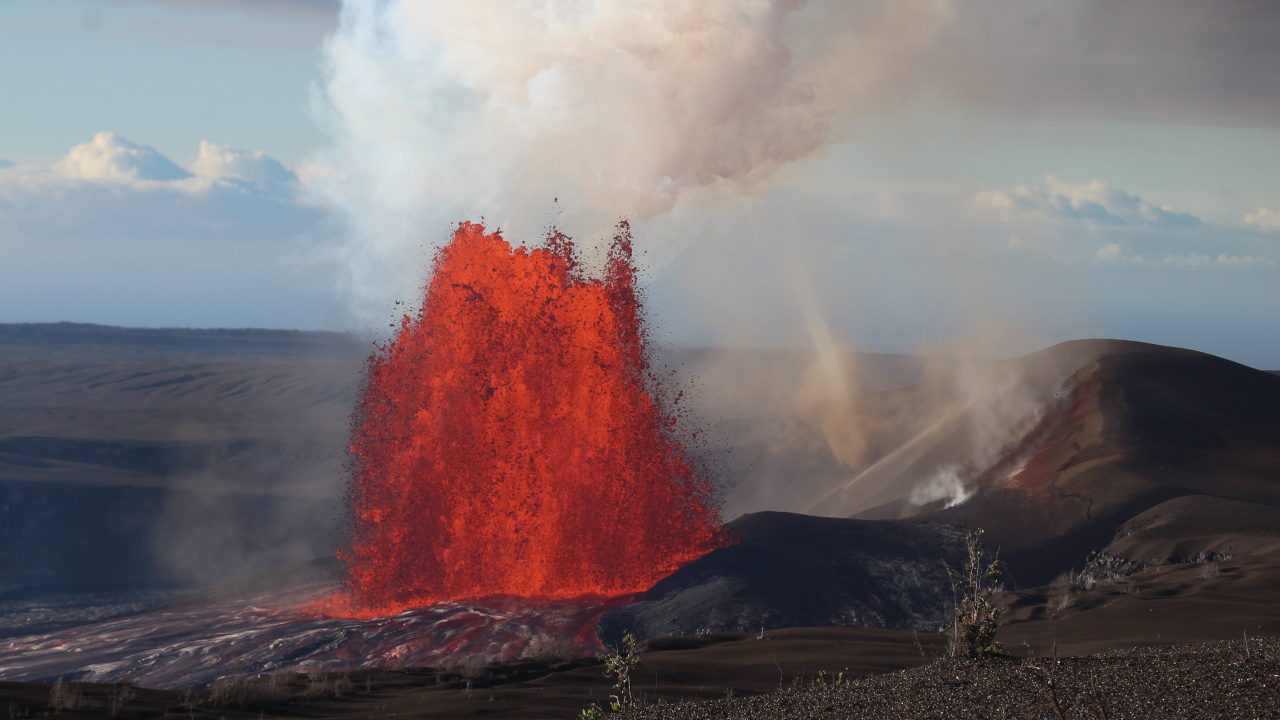

(BIVN) – A new paper led by the USGS Hawaiian Volcano Observatory tracks the geochemistry of Kīlauea summit lava fountains.
The study, Petrologic and geochemical characterization of the first year of the 2024–ongoing episodic Halema‘uma‘u eruption of Kīlauea (Episodes 1–39), takes a close look at the first 39 episodes in the ongoing eruption in Halemaʻumaʻu. The summit eruption began on December 23, 2024.
The ongoing eruption is currently paused, although scientists are forecasting another fountain event, episode 56, could occur between October 28 and November 5, 2026. Inflationary tilt leveled out on Wednesday morning, but inflation appears to have since resumed.
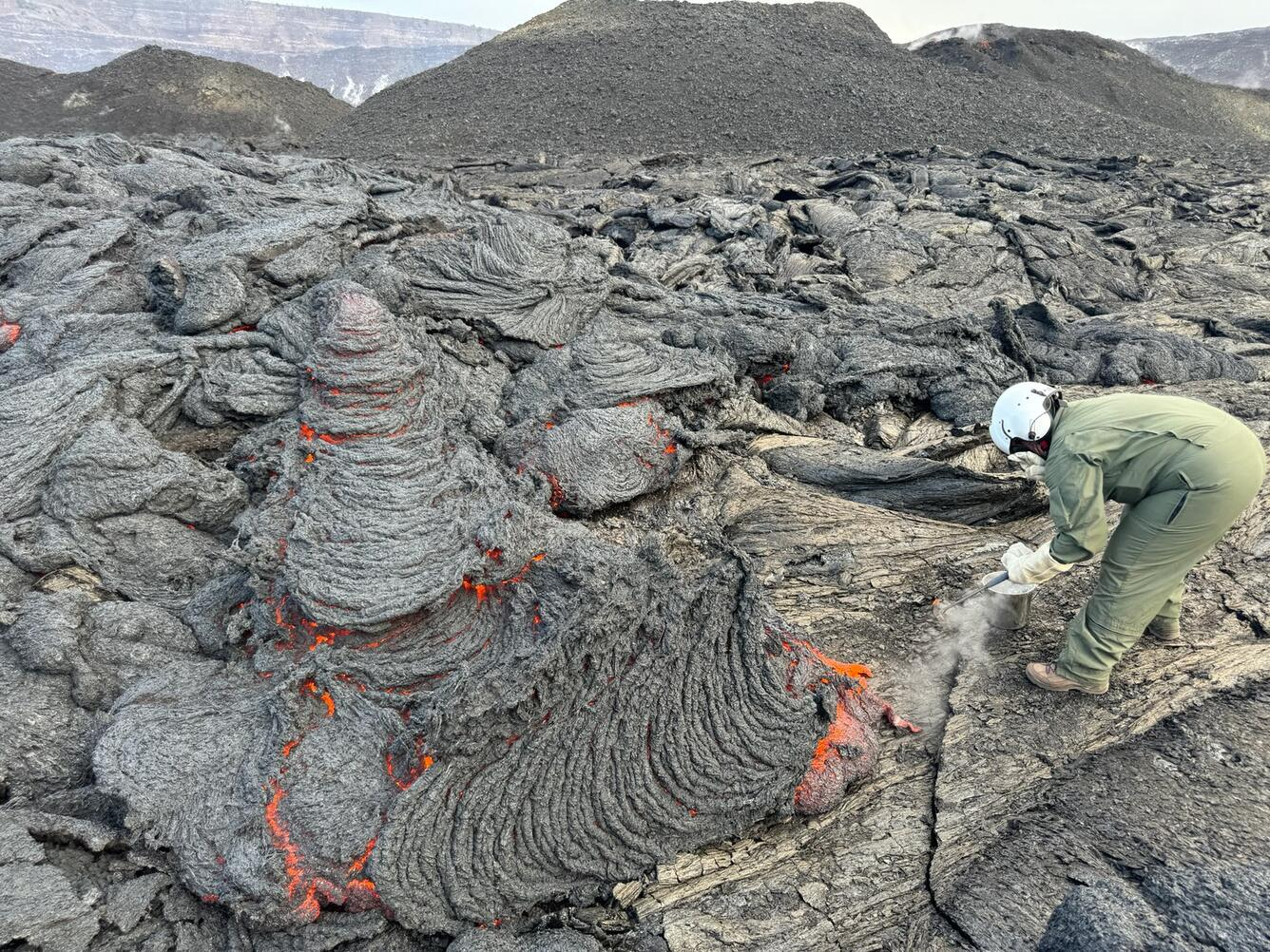
Some of the highlights found in the new USGS-led paper:
- There are no significant geochemical changes during episodes that might be related to the range of observed lava fountain heights or episode durations.
- There has been variable but clear geochemical and petrologic influence of the still-molten Halema‘uma‘u lava lake interior on the compositions of erupted lava fountain material.
- The magmas driving this eruption were stored and sourced from the shallow 1–2 km Halemaʻumaʻu reservoir.
- A new magma composition arrived within a few weeks of the eruption onset, with elevated incompatible elements in addition to a higher MgO (Magnesium oxide) signature.
- Kīlauea’s shallow reservoir system is heating up, with higher bulk MgO and systematically increasing olivine Fo (forsterite) contents in the low-Fo population.
The USGS Volcano Alert Level for Kīlauea is currently at ADVISORY.
