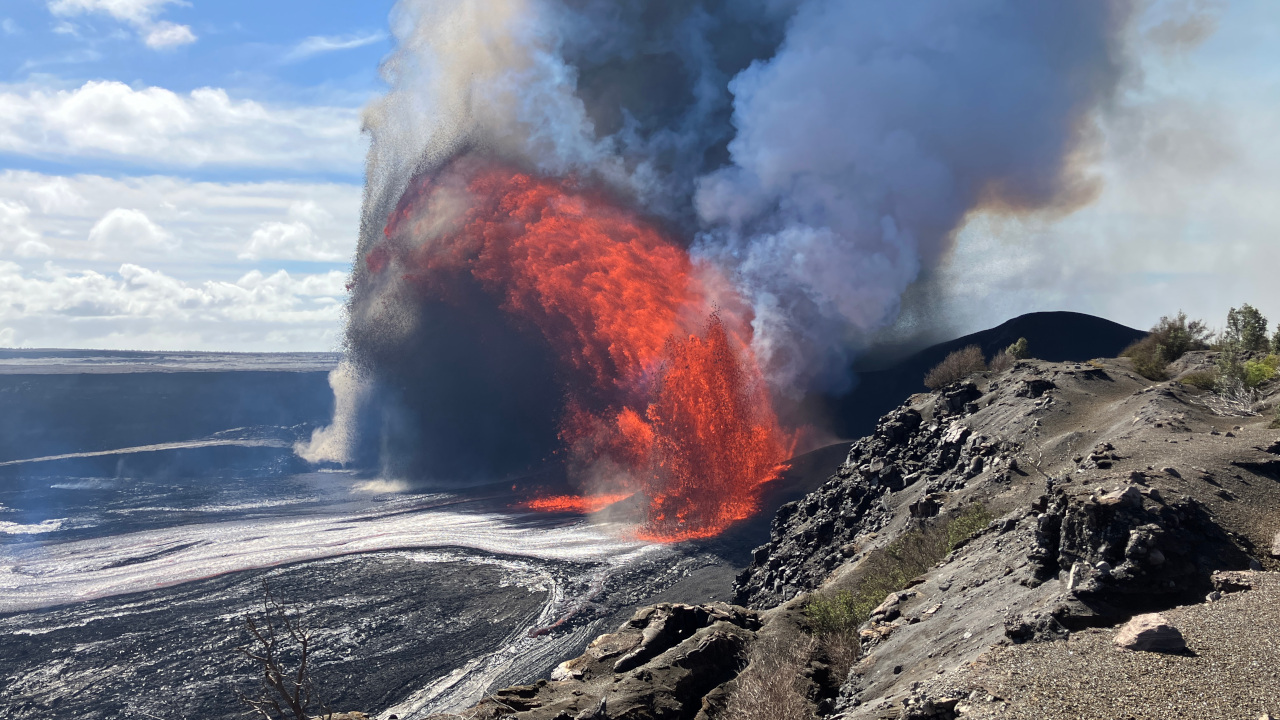
(BIVN) – The eruption at the summit of Kīlauea volcano is paused, following Saturday’s dramatic, 12-hour Episode 38 at Hawaiʻi Volcanoes National Park.
During the episode, lava fountains reached up to 1,200 feet high and erupted at an incline across Halemaʻumaʻu crater. Hot pumice and molten spatter from the fountain destroyed one of the USGS Hawaiian Volcano Observatory webcams, as it was livestreaming from the caldera rim.
All images and video are courtesy the U.S. Geological Survey. A synthesized text-to-video voiceover was used in the narration for this story.
Episode 38 ended abruptly at 8:52 p.m. HST on December 6.
The summit vents produced an estimated 16 million cubic yards (12 million cubic meters) of lava during the episode.
Scientists say the combined average lava fountain eruption rate was over 250 cubic yards per second (190 cubic meters per second).
The episode reached an instantaneous effusion rate of 1,300 cubic yards per second (1,000 cubic meters per second) just after 9:45 a.m., when a giant explosion of lava burst from the south vent.
Volcanic gas was also a concern during this episode. From the USGS HVO:
Volcanic gas emissions have greatly decreased with the end of the eruption. Earlier today the gas plume reached over 20,000 feet (6000 meters) above sea level. Tephra including Pele’s hair and fine ash carried in lower levels of the plume fell in the town of Pahala and other communities southwest of the vents. Satellite imagery showed the upper regions of the gas and ash cloud moved due east of the summit across lower Puna and well out to sea before turning south. Reticulite pieces up to the size of a baseball fell along Chain of Craters Road east of Kīlaueaʻs summit transported by the high eastern plume. The extremely high effusion rates early in the eruption provided the gas and heat that drove this enormous plume.
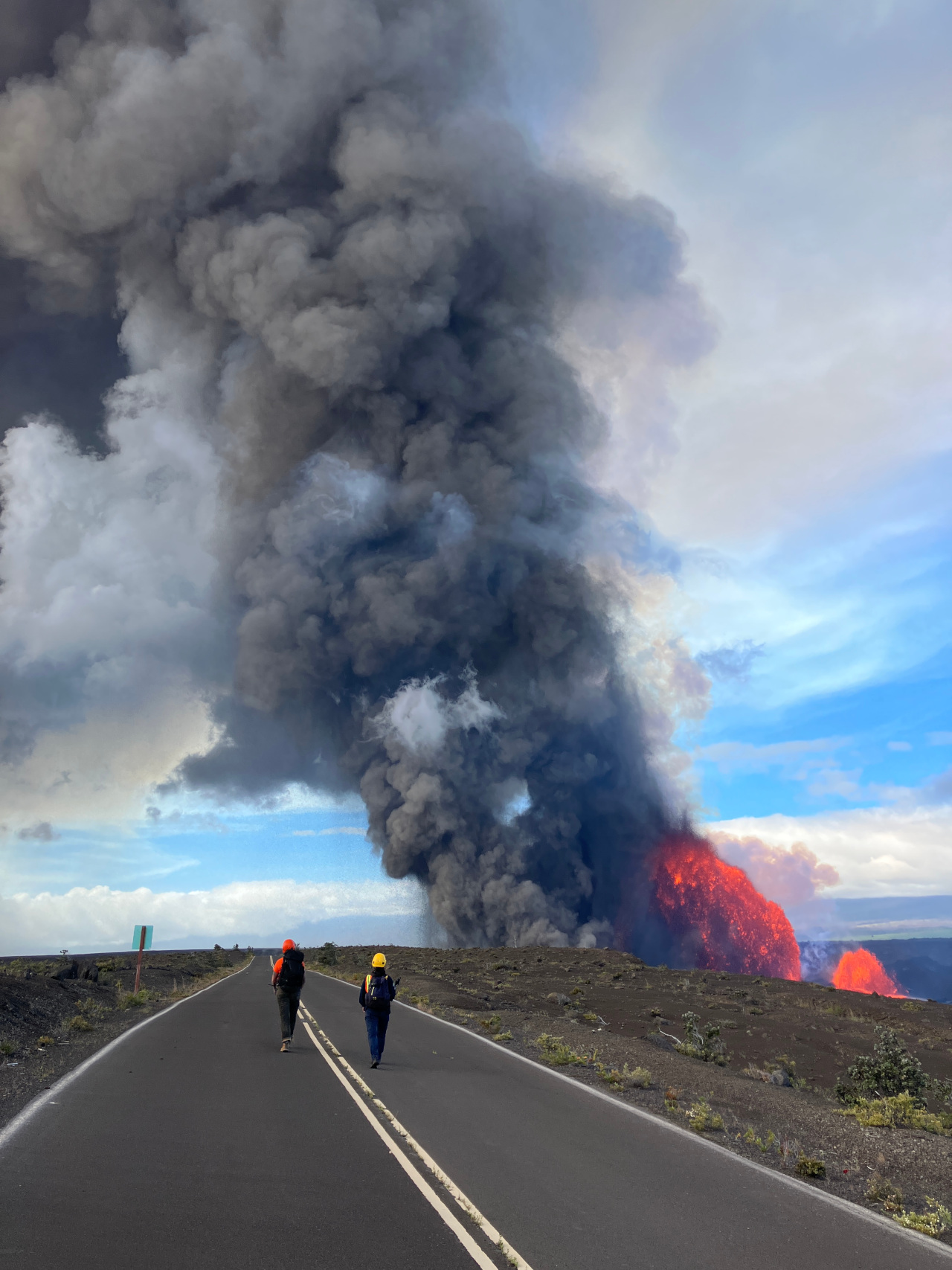
USGS: “In the late morning of December 6, a crew of USGS Hawaiian Volcano Observatory scientists walked to the southern rim of Halemaʻumaʻu to watch Kīlauea summit eruption episode 38. Along the way they had dramatic views of the eruptive plume, which reached an altitude of over 20,000 feet (6,000 meters) above sea level during this episode.” (USGS photo by M. Zoeller)
The Uēkahuna tiltmeter recorded about 33.1 microradians of deflationary tilt during this episode, the largest recorded drop in the nearly year-long eruption. When the episode ended, deflation switched to inflation.
“Moderate glow from both vents overnight, rapid rebound of summit inflation, and continued tremor indicate that another fountain episode is likely,” the Observatory stated on Sunday. “The onset of another episode is at least 2 to 3 weeks away.”

by Big Island Video News
on at
STORY SUMMARY
HAWAIʻI VOLCANOES NATIONAL PARK - The summit tiltmeter recorded 33 microradians of deflationary tilt during this episode, the most of the nearly year-long eruption.