(BIVN) – Today’s Volcano Watch article is written by USGS Hawaiian Volcano Observatory geologist Katie Mulliken:
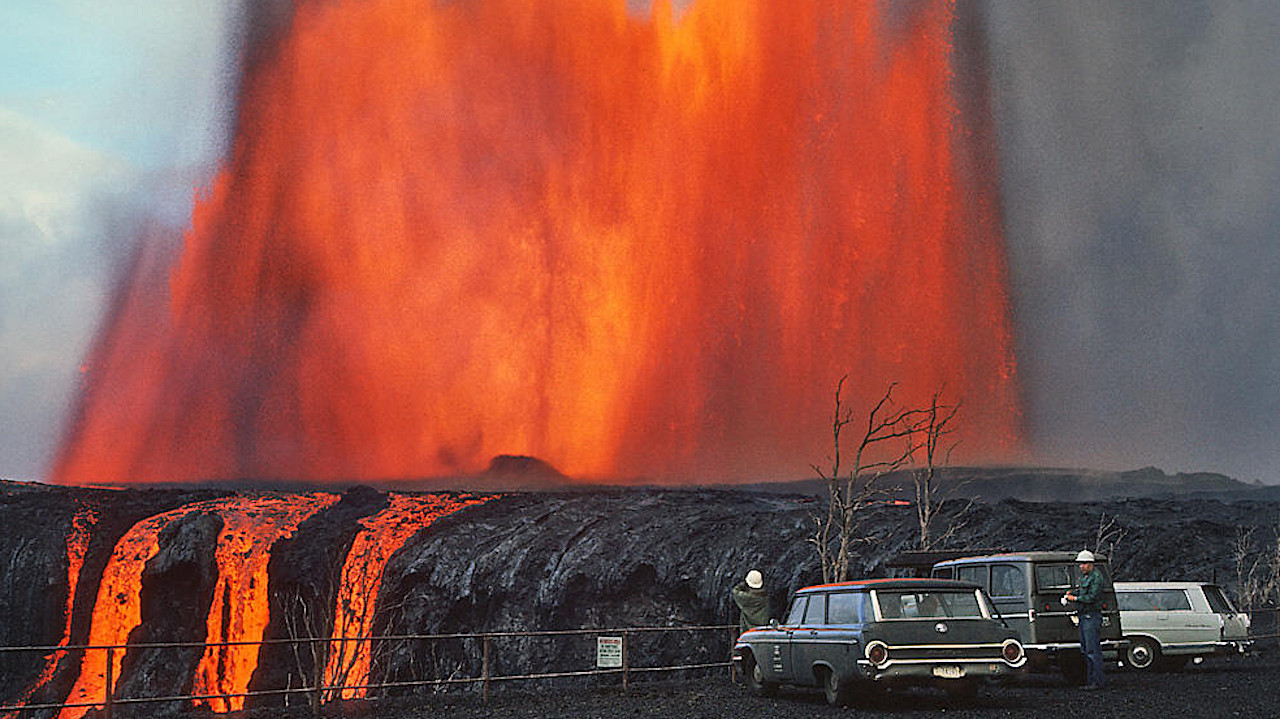
Last week’s “Volcano Watch” article reviewed the lava fountaining eruption of Kīlauea Iki in 1959. This week, we’ll continue looking back in time at the next episodic lava fountaining eruption in Kīlauea’s history: the Maunaulu eruption that occurred a decade later, in 1969.
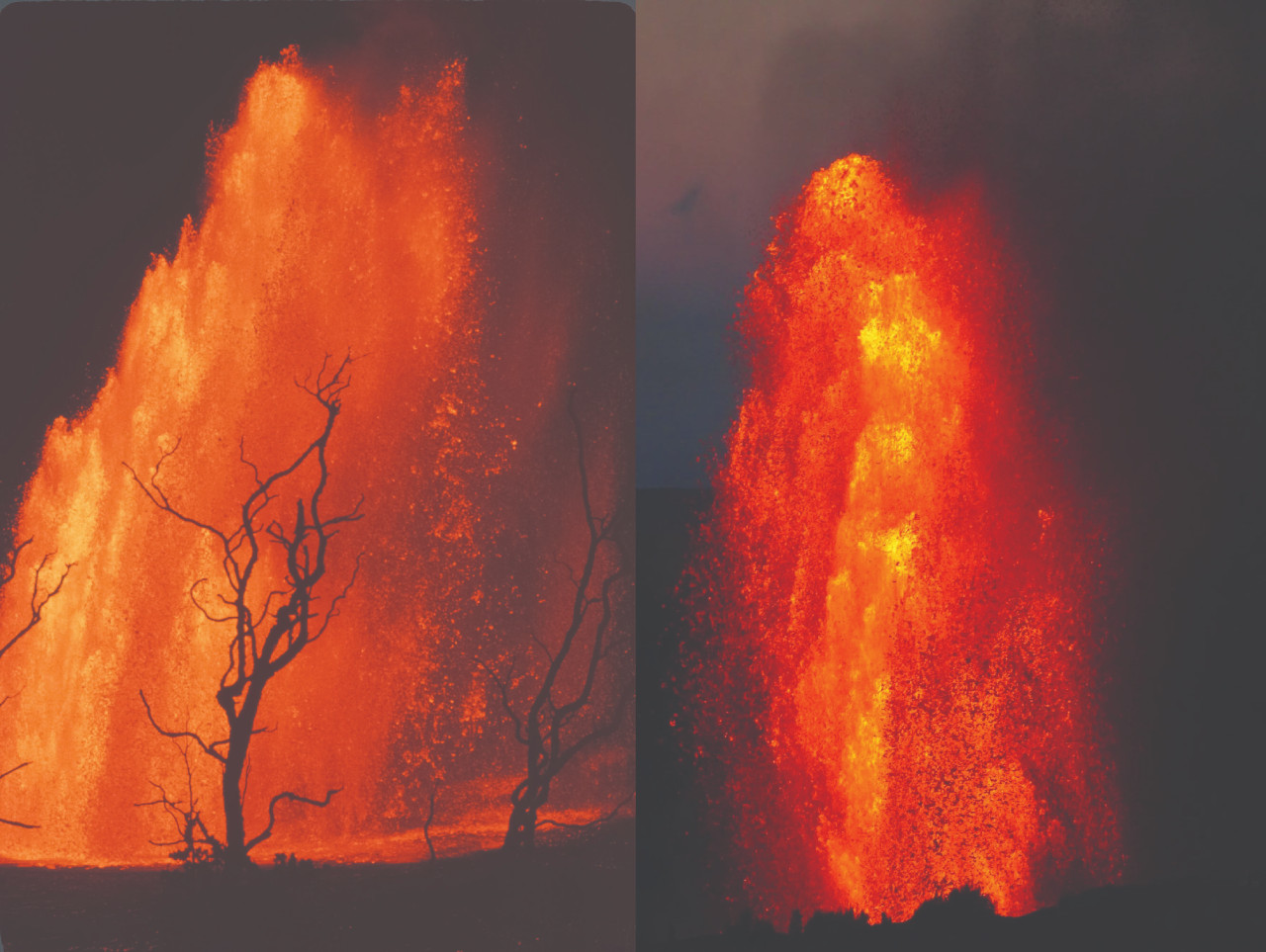
Left: Lava fountains on September 6, 1969, during the Maunaulu eruption. Right: Lava fountains on July 9, 2025, during the Halemaʻumaʻu eruption (episode 28). USGS photos.
The Kīlauea Iki eruption took place just east of Kaluapele (Kīlauea summit caldera). The Maunaulu eruption, however, happened a little farther away in an area on the flank of Kīlauea called the upper East Rift Zone. It is where the Koaʻe Fault System and East Rift Zone meet. Many pit craters around this junction show that it is a region of magma movement and storage, while lava flows on the surface show that eruptions occur here often.
In February of 1969, a short eruption (less than a week) happened in this area of the upper East Rift Zone, near Aloi and Alae Craters. Kīlauea summit region showed increasing swelling in the months after that, and earthquakes happened in the upper East Rift Zone days before the Maunaulu eruption began at 4:45 a.m. on May 24, 1969. Initially, fountains of lava up to 165 feet (50 meters) high erupted from a linear fissure system about 2.5 miles (4 km) long, feeding lava flows into Aloi and Alae Craters. This first episode ended the evening of May 25.
During episode 2 (May 27–29), activity focused on two vents (eastern and western), similar to how the activity in Halemaʻmaʻu quickly focused on two vents (north and south). These two vents would erupt together, with lava fountains up to 1230 feet (275 meters) until episode 6 in August 1969, when only the western vent erupted. The western vent would continue to erupt another 6 times through December 1969, for a total of 12 fountaining episodes marking this first phase of the Maunaulu eruption.
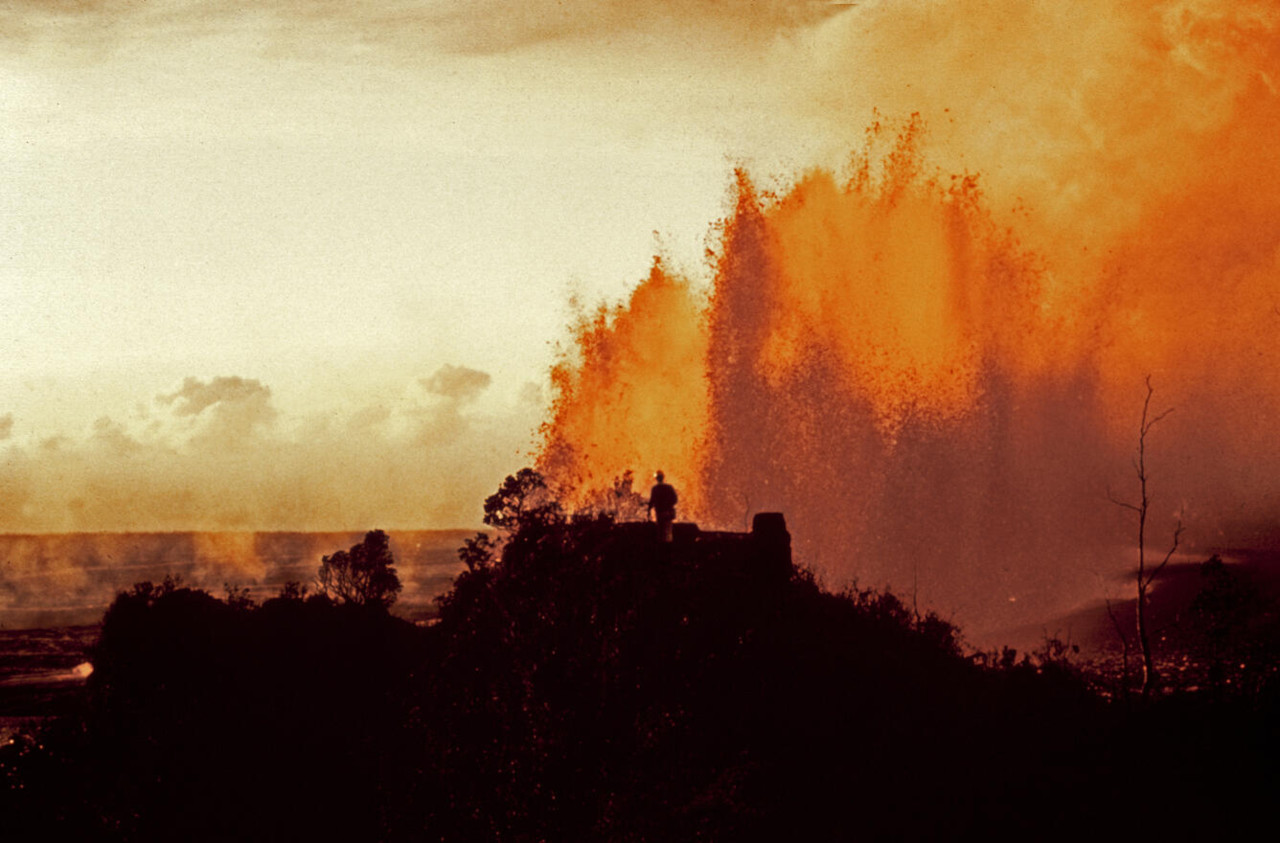
USGS: “Lava fountain of October 20, 1969 with viewing platform on top of Puʻu Huluhulu. The viewing platform has a stone wall facing the fountain; it can be reached by a national park trail. The platform was occupied by HVO geologists during fountaining episodes, from which the height of the fountains was measured and photos and movies taken. The distance from the fountain to the platform is about 800 m (2,600 ft). Even at that distance, radiant heat from the fountains was so intense that geologists had to hide behind the stone wall except when making measurements or taking photos. At times dry clumps of grass burst into flame next to the platform.” (USGS photo by Don Swanson)
Over the next several months, lava continued to rise and fall within the vent and the walls would periodically collapse, widening the vent. No lava fountains formed but lava did overflow from the vent, coating the tephra cone that had built up downwind and constructing a low and broad shield shape around the vent reaching 262 feet (80 meters) high.
In early April 1970, new fissures formed near the base of Maunaulu. The crater in Maunaulu continued to host a circulating lava lake but lava flows were only erupted by the flank fissures for the next year. These flows advanced downslope, with a couple even making it to the ocean 7.5 miles (12 kilometers) away. After mid-June 1971, activity gradually declined and active lava was no longer visible in the vent after October 15, 1971.
The highest Maunaulu lava fountain reached 1770 feet (540 meters) during episode 9, a bit higher than the highest fountain in the ongoing eruption. Fountaining episodes at Maunaulu in 1969 lasted from 4.5 hours to 3 days long, and were separated by weeks of pauses. Gas-pistoning events—degassing driven rising and falling of lava within a conduit—were observed between episodes at Maunaulu, and this process has also been observed during pauses of the ongoing Halemaʻumaʻu eruption.
The Maunaulu eruption differs in several important ways from the ongoing Halemaʻumaʻu eruption, though. The vent location on the flank of Kīlauea allowed lava flows to travel downslope, covering parts of roads in Hawaiʻi Volcanoes National Park and sometimes entering the ocean. Thus, lava flows in the Maunaulu eruption covered a much larger area than that covered by lava flows contained in Halemaʻumaʻu during the ongoing eruption (12,355 acres or 50 square kilometers compared to just under 1000 acres or 4 square kilometers).
As the Maunaulu eruption waned, Kīlauea summit inflated and two brief eruptions occurred in the latter half of 1971—one in the summit caldera and one in the Southwest Rift Zone. In February 1972, eruptive activity resumed at Maunaulu.
While the Kīlauea Iki eruption ended after fountaining episodes stopped, the Maunaulu eruption demonstrates that these eruptions can also transition to more effusive activity, like the lava flows from the base of Maunaulu once the fountaining episodes had stopped. The Maunaulu eruption also shows that long-lived vents can be re-occupied by lava even after multi-month hiatuses.

by Big Island Video News
on at
STORY SUMMARY
HAWAIʻI VOLCANOES NATIONAL PARK - Scientists compare the lava fountains from the Maunaulu eruption to the fountains produced at the summit today.