(BIVN) – It has been nearly a week since episode 41 in the ongoing Kīlauea summit eruption sent volcanic material far out over East Hawaiʻi. In the latest Volcano Watch article, U.S. Geological Survey Hawaiian Volcano Observatory scientists and affiliates take a closer look at the event.
Large lava fountains streamed from both the north and south vents reaching heights of at least 1475 feet (450 meters) during episode 41 of Kīlauea’s summit eruption on January 24, 2026. Strong updrafts coupled with light winds blowing to the east and north sent lava fragments from the fountains, called tephra, over much of the District of Puna and into South Hilo and the eastern edge of Kaʻū.
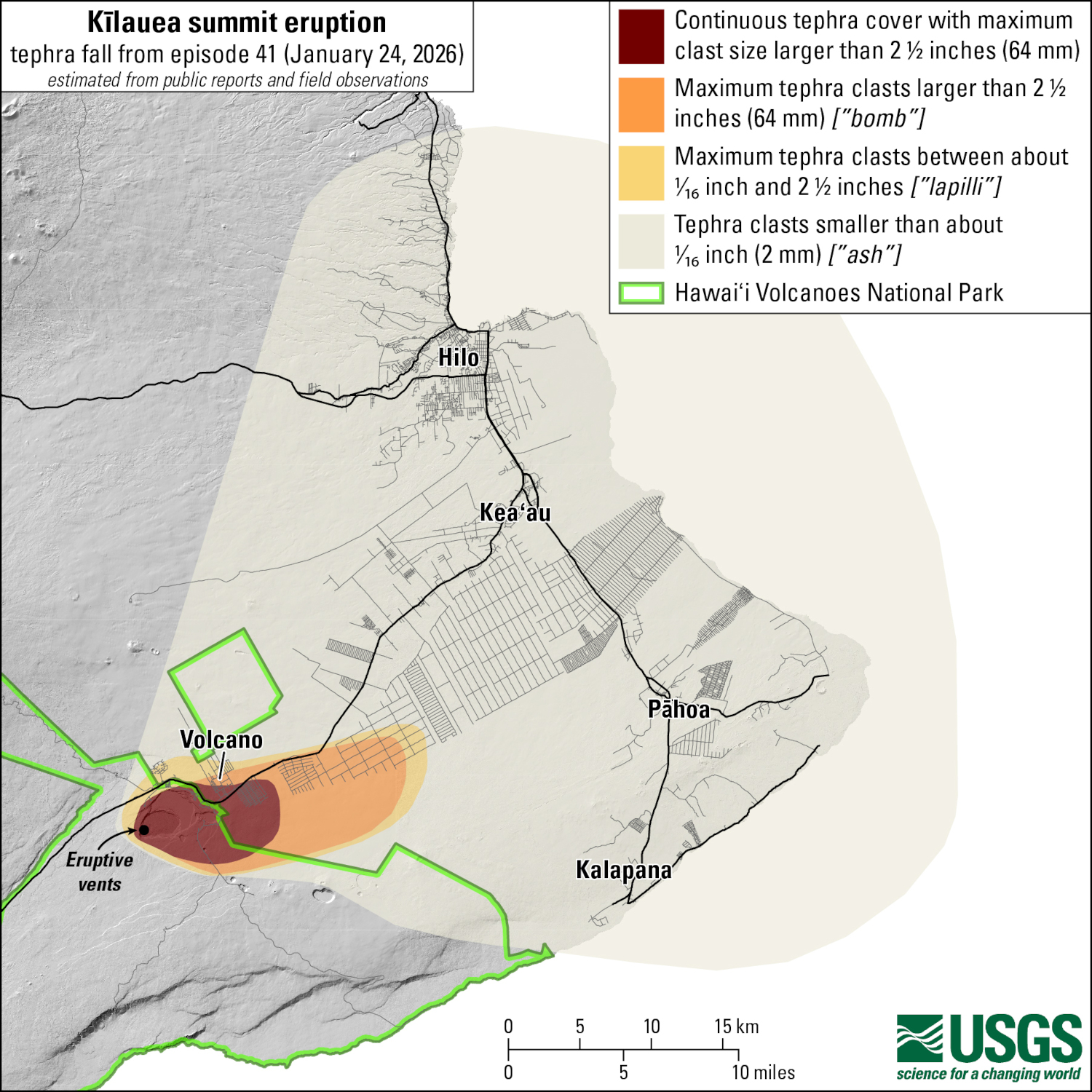
USGS: “This map shows the tephra fall associated with episode 41 of Kīlauea’s episodic summit eruption, on January 24, 2026. Tephra is a generic word for any material erupted by a volcano that travels through the air before landing on the ground. During episode 41 on January 24, lava fountains from the north and south vents in Halemaʻumaʻu at the summit of Kīlauea reached up at least 450 m (1475 feet). Weak surface winds in combination with stronger upper-level winds blowing to the east and north resulted in widespread tephra fall in communities to the northeast and east within the Districts of Kaʻū, Puna, and South Hilo.”
Tephra fragments ranged in size from small strands of Pele’s hair to larger pieces of frothy and lightweight reticulite that were up to a foot (30 cm) in diameter. They cooled quickly as they traveled through the air and many broke or shattered upon impact with hard surfaces. Others drifted down and landed intact on softer surfaces, like grass, while some pieces remain suspended in the branches of trees and ferns.
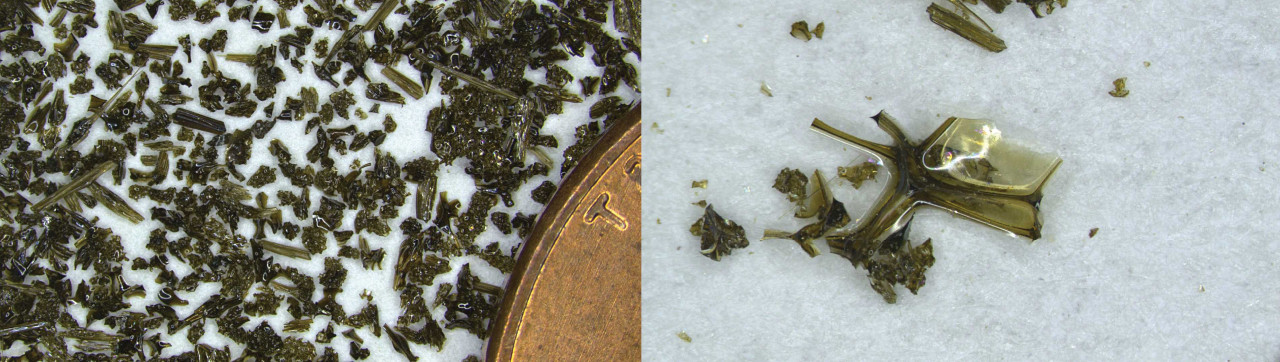
USGS: “Tephra is a word that describes any material erupted by a volcano that travels through the air before landing on the ground. Volcanic ash is tephra particles that are less than 2 mm in size (less than 0.08 in). Volcanic ash fell over much of the District of Puna and part of South Hilo during episode 41 of lava fountaining at the summit of Kīlauea on January 24, 2026. The lefthand photo shows many of these volcanic ask particles that were collected from a residence in Orchidland Estates that is about 33 km (20.5 miles) away from where lava fountains reaching heights of 450 m (1475 ft) were erupting from the north and south vents in Halemaʻumaʻu crater at the summit of Kīlauea. These volcanic ash particles include long, but thin and pointy, strands of Pele’s hair, as well as small, blocky particles and broken pieces of reticulite with flat flakes that were bubble walls and jagged, spiked triple junctions (look similar to a jacks game set). The righthand photo is zoomed in on one of these broken reticulite particles, with its jagged, points and with a bit of bubble wall still attached that is reflecting the light. These volcanic ash particles are compared to a penny for size and most around about the size of the letter “T” in the words along the circumference of the penny, which is about 1 mm (0.04 in tall).” (USGS photos)
Farther away, parts of the Volcano Golf Course Community, Ohia Estates, Royal Hawaiian Estates, and Fern Forest received tephra fall ranging from Pele’s hair and ash to pieces of reticulite that were up to several inches (64 mm) in diameter.
Communities even farther away, in the District of Puna and parts of South Hilo, saw light fall or a dusting of fine-grained ash and Pele’s hair, extending from Pepeekeo to Kalapana.
What made this tephra fall pattern from episode 41 so different from earlier episodes?
Several past episodes have had lava fountains reaching similar heights, but never from both vents at the same time. And most past eruptive episodes were erupted during trade wind conditions.
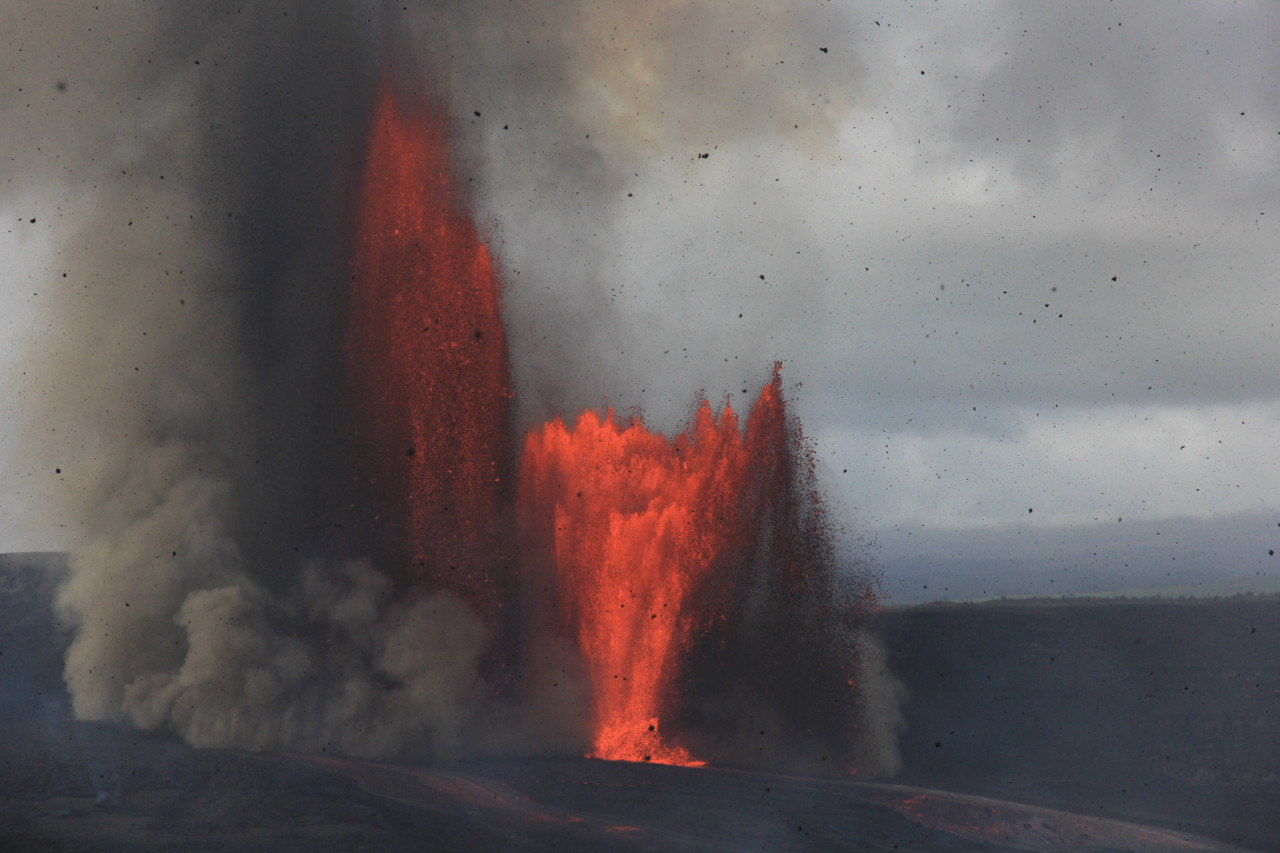
USGS: “USGS Hawaiian Volcano Observatory scientists observed and documented episode 41 of the episodic Kīlauea summit eruption in Halema‘uma‘u. This photograph, taken from the Keanakāko‘i Overlook in Hawaiʻi Volcanoes National Park, shows lava fountains from both the north and south vents, with tephra falling in the foreground.” (USGS photo by H. Winslow)
Trade winds blow from northeast to southwest. When there are lava fountaining episodes at the summit of Kīlauea during trade winds, tephra is transported to the southwest. Much of the larger pieces land in the closed area of Hawaiʻi Volcanoes National Park but communities in the District of Kaʻū, including Pāhala, Nāʻālehu, and Ocean View, have experienced ash and Pele’s hair falling on them several times.
During episode 41, there were no trade winds. Winds at the ground level were weak. As the dual high fountains from the north and south vents erupted large volumes of lava, they released an immense amount of heat that rose upwards, lofting tephra ranging in size from fine ash and Pele’s hair to the larger frothy reticulite being formed by the lava fountains. At upper levels, these lightweight clasts encountered stronger winds blowing to the east and northeast, transporting them in that direction.
Tephra landed on Highway 11 as vehicles were driving on it, creating hazardous conditions. The County of Hawaiʻi temporary closed Highway 11 in two locations on either side of the entrance to Hawaiʻi Volcanoes National Park. Within Hawaiʻi Volcanoes National Park, visitors were pelted by falling tephra as rangers temporary closed the public overlooks around the caldera. Episode 41 started at 11:10 a.m. on January 24, and the most intense period of tephra fall happened in the hours immediately after the episode started. Lighter tephra fall continued until the episode ended more than 8 hours later, at 7:26 p.m.
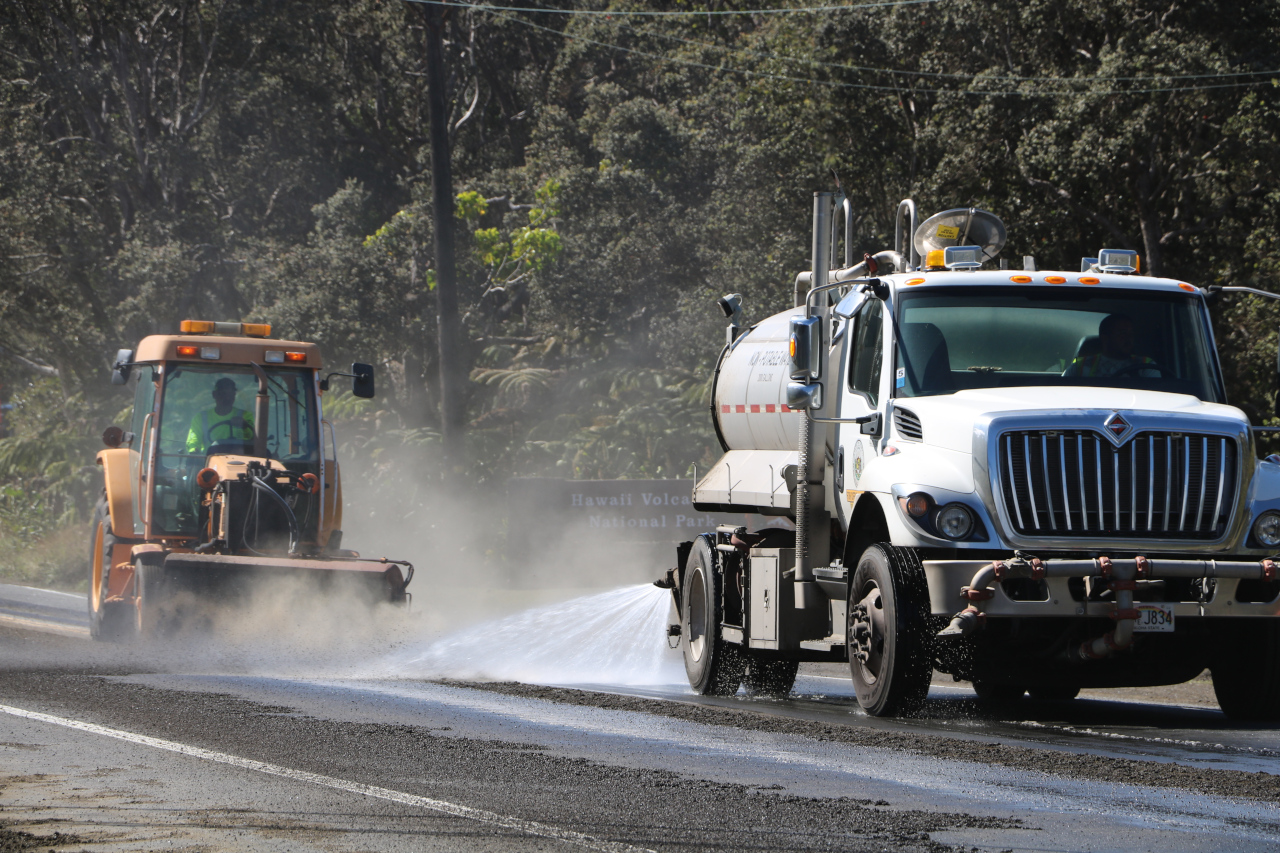
USGS: “Tephra clean-up efforts on Highway 11, near the entrance to Hawaiʻi Volcanoes National Park, on January 26, 2026. Water was sprayed on the pavement before machinery scrubs the pavement to remove the tephra particles. Water helps to prevent some of this lightweight material from wafting upwards when it is scrubbed, but some material is still visibly resuspended in this photo. The Hawaiʻi Volcanoes National Park sign is visible in the background between the two pieces of equipment.” (USGS photo by K. Mulliken)
In the days since, clean-up efforts on roadways and roofs have been underway. The County of Hawaii Civil Defense Agency has numerous resources available to residents affected by this episode (here).
Has a tephra fall event like this happened before in Hawaii?
Yes. In January and March of 2025, lava fountaining episodes in Halemaʻumaʻu deposited Pele’s hair in communities around Kīlauea summit. More than 40 years ago, the Puʻuʻōʻō vent on the East Rift Zone of Kīlauea erupted its 30th episode of lava fountaining on February 4, 1985. Tephra up to several inches in diameter (64 mm) fell in Hawaiian Acres and Pele’s hair fell as far away as Hilo.
What do episodes in January/March 2025, and episode 41 in the ongoing Kīlauea eruption have in common with episode 30 of the Puʻuʻōʻō eruption? They all occurred during the winter months, a time of year when we do not reliably have trade winds in Hawaii.
What is important to remember moving forward? The episodic lava fountaining eruption at the summit of Kīlauea is not over. Episode 42 is forecast to occur between February 9 and 20th. A combination of fountaining dynamics and wind conditions determines where tephra fall may occur for any given episode of this eruption.
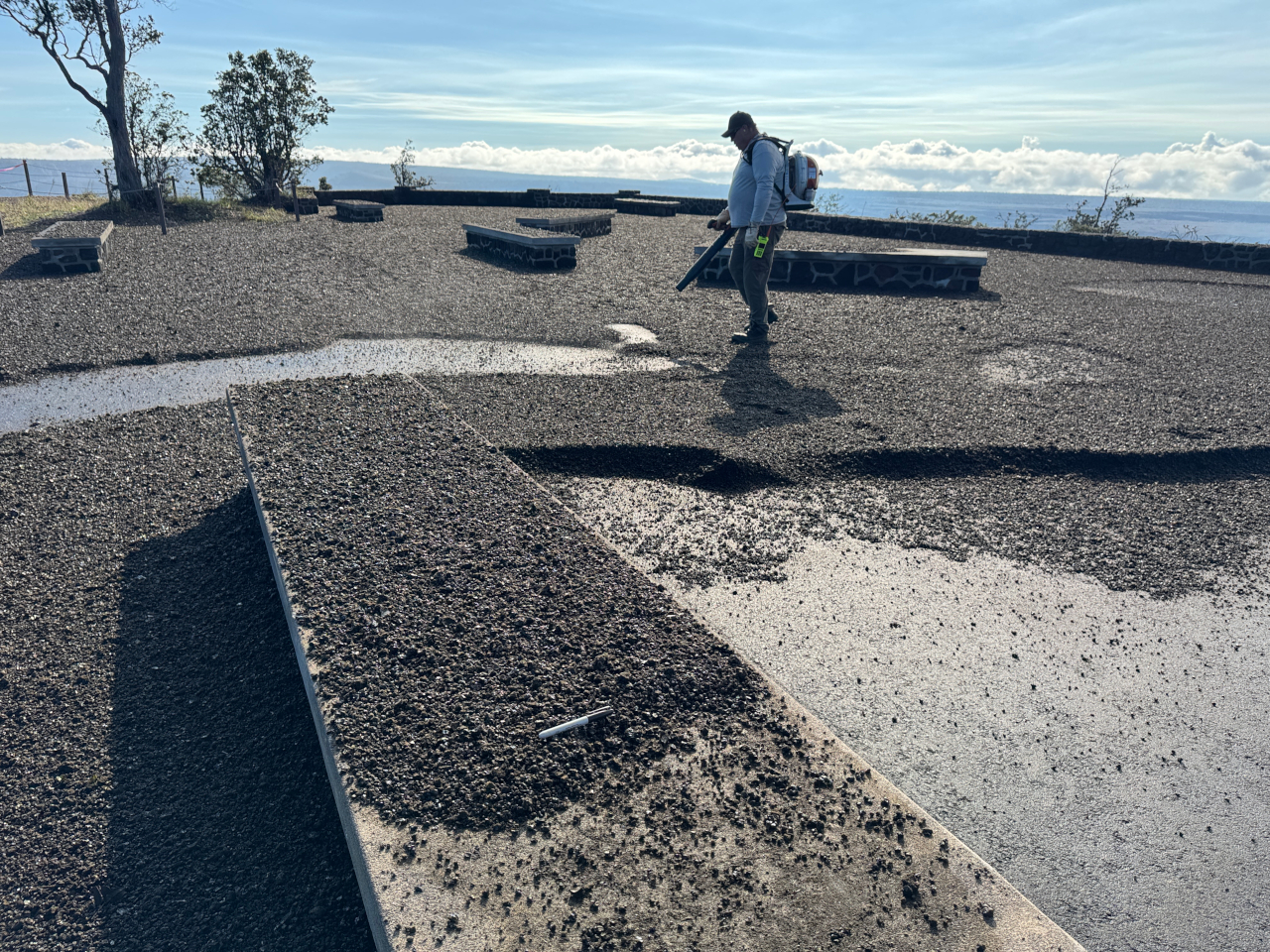
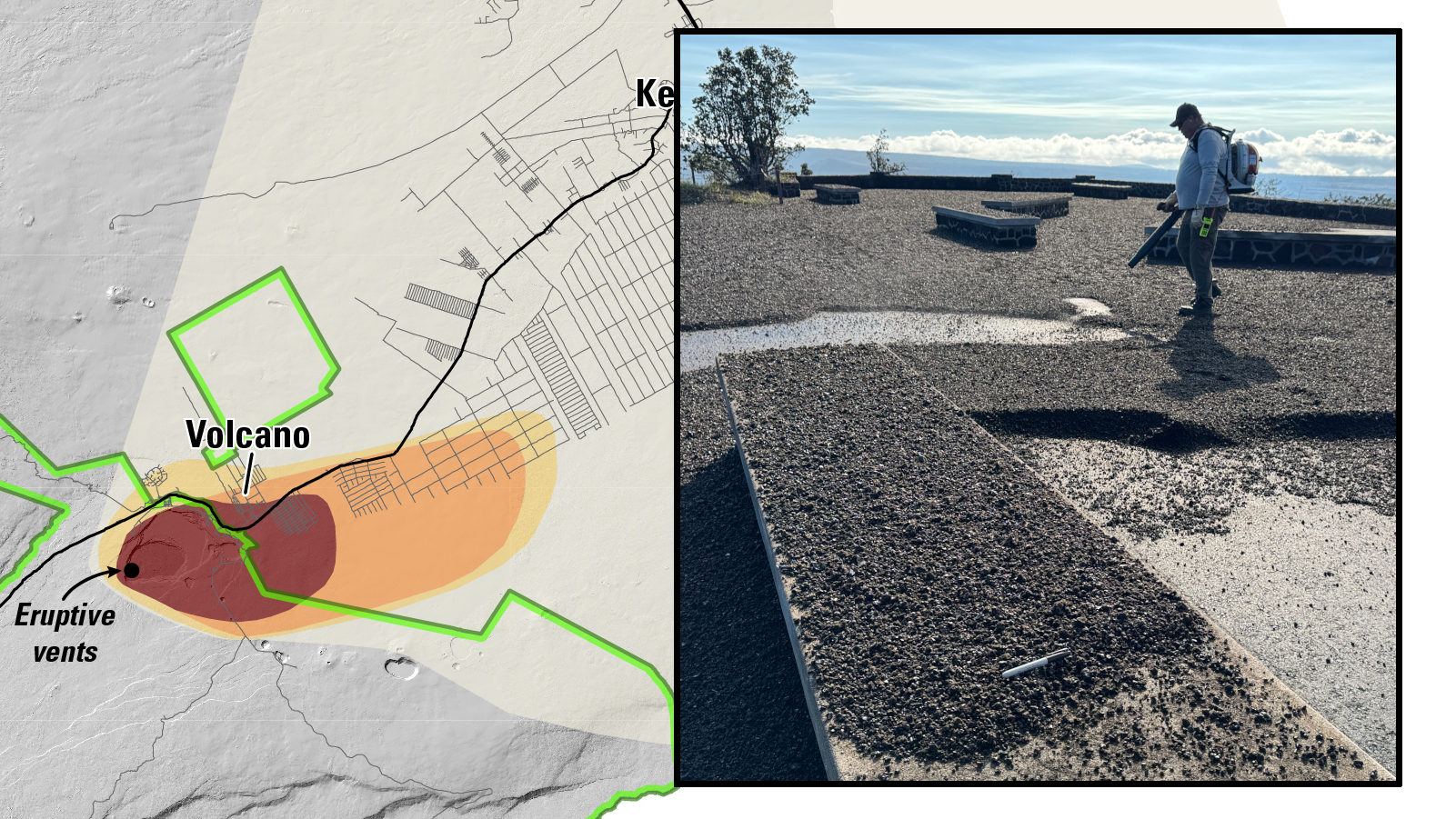
USGS: “Tephra fall from episode 41 of lava fountaining at the summit of Kīlauea at the former Jaggar Museum Overlook near Uēkahuna in Hawaiʻi Volcanoes National Park. Hawaiʻi Volcanoes National Park staff wear personal protective equipment, including masks, gloves, eye protection, covered shoes, a hat, and long pants/long-sleeve shirt as they use blowers to clear the lightweight tephra from the ground and benches.” (USGS photo by K. Mulliken)

by Big Island Video News
on at
STORY SUMMARY
HAWAIʻI ISLAND - Scientists with the Hawaiian Volcano Observatory detail the recent tephra and ashfall event that impacted a large area of East Hawaiʻi.