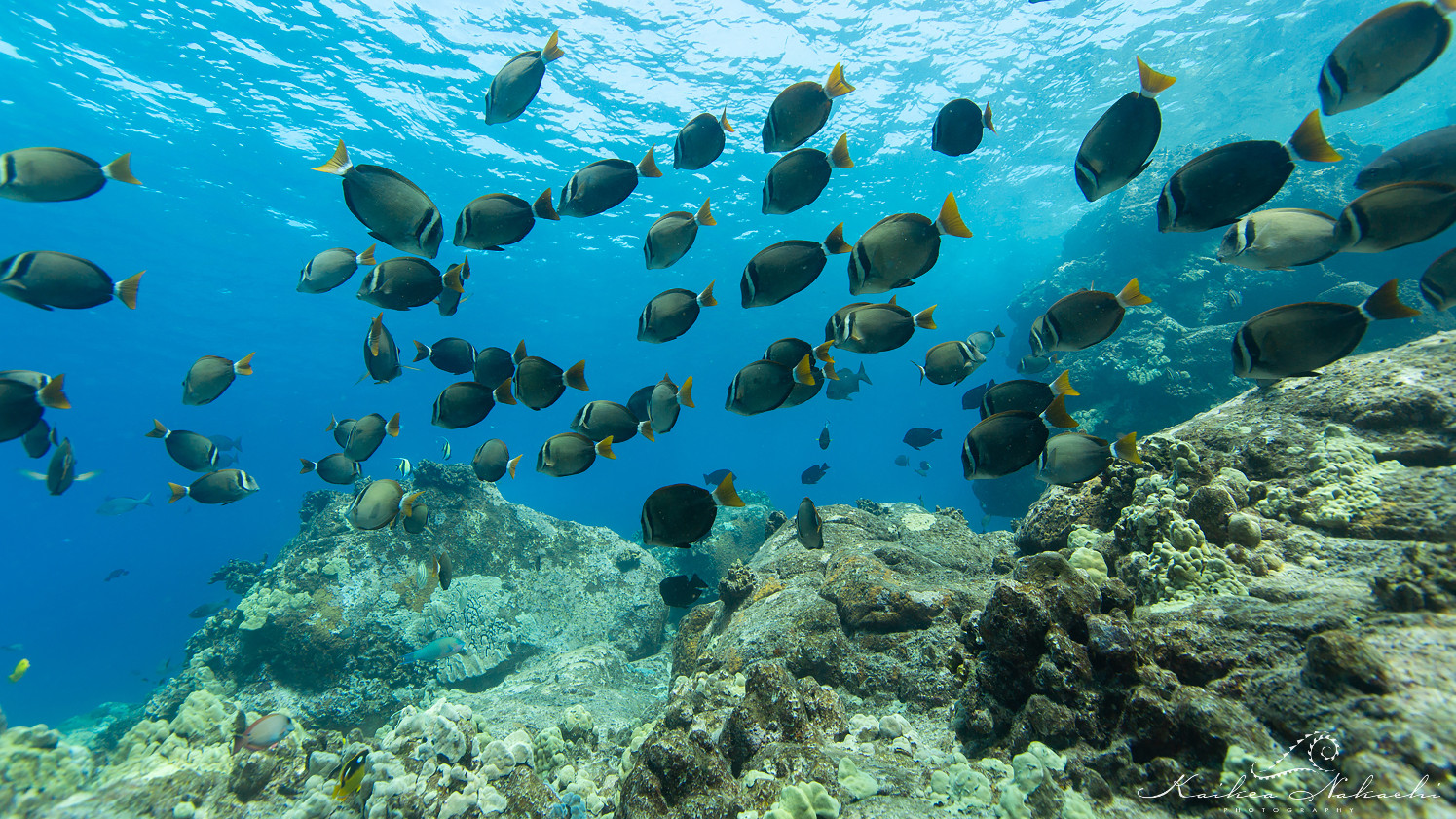
(BIVN) – The State of Hawaiʻi will soon be holding public hearings on a plan to manage the Kaʻūpūlehu fishery, nearly a decade after the “Try Wait” rest period was enacted.
The Hawaiʻi Board of Land and Natural Resources on Friday voted to approve a request from the DLNR Division of Aquatic Resources (DAR) to go forward with public hearings on administrative rules to support the Kaʻūpūlehu Fisheries Management Plan (FMP) to ensure a sustainable harvest, once the rest period ends.
Item F-3 in the February 27, 2026, Board of Land and Natural Resources Meeting (livestream via YouTube)
As the DLNR DAR detailed in its land board submittal, the Kaʻūpūlehu Marine Reserve (KMR) was created by the State in July 2016, with “overwhelming community support” in favor of enacting a 10-year rest period for nearshore harvest of marine life along the 3.6 miles of coastline of the original Kaʻūpūlehu Fish Replenishment Area (KFRA), from Kīkaua Point to Kalaemanō. The KMR was established “to give the marine life time to replenish from decades of observed decline.”
The KMR fishing closure is in effect until June 30, 2026, “or until the effective date of rules implementing a comprehensive fisheries management plan as developed by the department in consultation with the Kaʻūpūlehu community and other interested parties, whichever occurs later,” the submittal stated.
“Within the first few years of Try Wait, kūpuna and kamaʻāina observed abundance returning to the reef, and fishers who knew the area commented that it looks like how it used to be a long time ago,” The Nature Conservancy wrote in testimony supporting the public hearings.
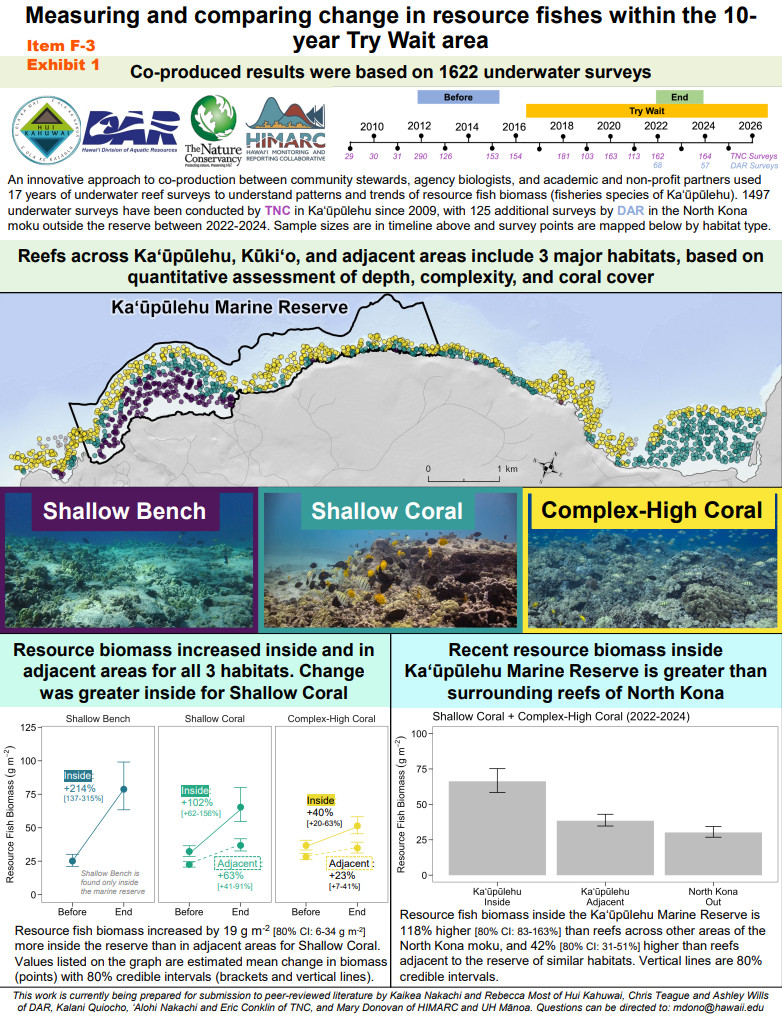
Exhibit 1 in the DLNR DAR submittal to the land board, showing an increase in biomass in the Kaʻūpūlehu Marine Reserve during the 10-year “Try Wait” period.
“Continuous and consistent monitoring created one of the strongest nearshore datasets in Hawai‘i,” which TNC says “reinforced kūpuna observations that fish abundance was returning to these reefs. Altogether, this was evidence that the rest period achieved its ecological goals and that management must now ensure continued ecological integrity.”
The proposal set to go to public hearing would revert the Kaʻūpūlehu Marine Reserve back to a Fish Replenishment Area, and establish the Kaʻūpūlehu Fisheries Management Plan.
A community‑led nonprofit, Hui Kahuwai, formed in 2023 to help develop the management plan.
Since the work on the Kaʻūpūlehu Fisheries Management Plan started in 2023, “Hui Kahuwai and DAR have spent many hours collaboratively refining the management plan based on extensive constructive feedback collected from targeted and public scoping meetings,” the submittal reports. “The plan incorporates cultural, social, and biological information to manage nearshore fishery resources in a way that maintains enough of the gains of the rest period to allow for long-term sustainable harvest within the proposed Kaʻūpūlehu FMA. It also includes strategies for collaborative co-management through outreach, education, enforcement, fisher engagement, and continued monitoring and assessment.”
Some of the proposed regulations of the Kaʻūpūlehu Fisheries Management Plan are detailed in a Hui Kahuwai summary and FAQ.
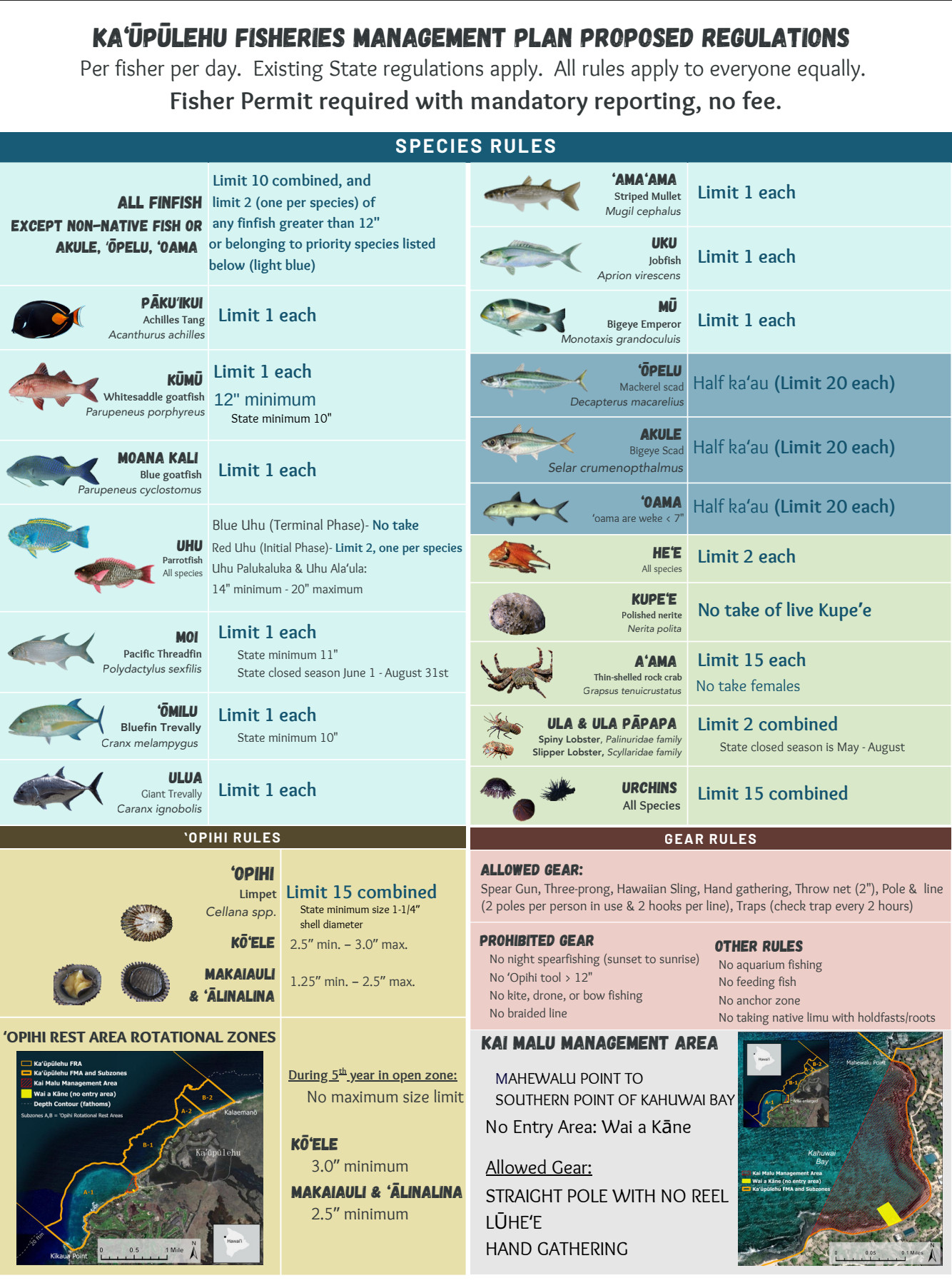
information from a Hui Kahuwai summary of the Kaʻūpūlehu FMP
Testimony submitted by the Hawaiʻi Wildlife Fund in support of the FMP lists some of the proposed regulations:
- Bag limits of 10 fish per person per day, with stricter limits of 1 fish per person for priority species (including Achilles tang, kūmū, ʻōmilu, ulua, and moi), protecting the species most vulnerable to overharvest.
- Gear restrictions including no night spearfishing, no braided line, no kite or drone fishing, and trap check requirements — minimizing ecological impact while preserving traditional fishing methods.
- A Kai Malu Management Area: encompassing the ecologically rich Kahuwai Bay, which restricts fishing to low-impact methods only (straight pole with no reel, lūheʻe, and hand gathering) to protect critical nursery habitat and the culturally sacred spring, Wai a Kāne.
- Rotational ʻopihi harvest zones with bag limits of 15 combined and minimum size requirements, allowing limpet populations to recover while ensuring continued subsistence access.
- Exemptions for invasive species — roi, taʻape, toʻau, and kanda are explicitly excluded from bag limits to actively incentivize their removal and support reef health.
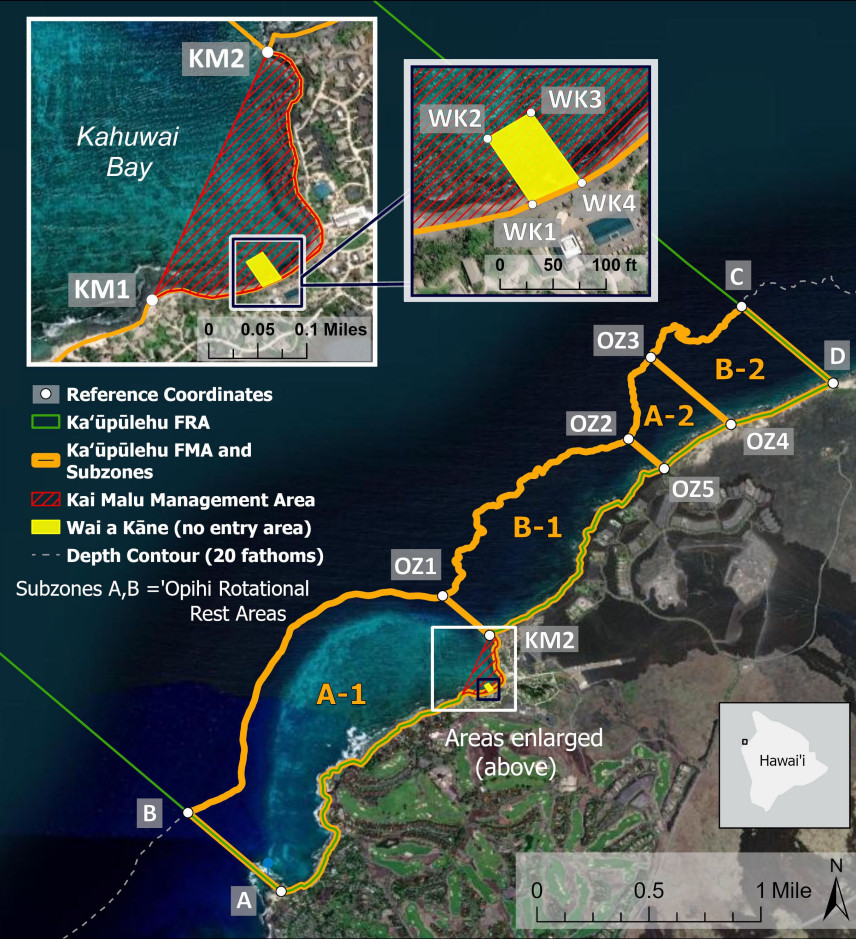
From the DLNR DAR submittal to the land board.
Phil Fernandez, a Hawaiʻi Commissioner to the Pacific States Marine Fisheries Commission, testified at the Oʻahu meeting, saying some of the regulations need to be adjusted.
“The gear restrictions that are in the plan should be removed,” said Fernandez. “State rules already specify: no use of drones or small mesh throw nets and others. With existing state bag limits and size limits, gear restrictions do not make sense. It doesn’t make a difference whether you have two poles or six hooks if the bag limit is two fish. How you catch it is not a difference.”
Fernandez also requesting removing the bag limits on species like uku, ulua, ʻōmilu, ʻōpelu, and akule. “These species are not resident species,” Fernandez said. “Ulua and ʻōmilu are known to travel hundreds of miles based on tag and recapture studies.”
“Having different bag limits in Kaʻūpūlehu does not make sense for boaters as they move up and down the entire coastline and fish along the way,” Fernandez added.
The land board voted to approve the request to hold public hearings on the proposed rules. Board members also requested DAR and Hui Kahuwai collaborate with other resource users before the proposed regulations are finalized prior to the public hearings.

by Big Island Video News
on at
STORY SUMMARY
KONA, Hawaiʻi - As the end of the 10-year “Try Wait” fishing rest period at Kaʻūpūlehu nears, the State plans to create a Fisheries Management Plan for the area.