(BIVN) – The following is a transcript for the above video:
The ongoing eruption at the summit of Kīlauea volcano on Hawaiʻi Island remains paused, but inflation continues, slowly building to the next episode of high lava fountaining, which at this point is probably over a week away.
The latest forecast from the USGS Hawaiian Volcano Observatory has episode 44 likely occurring sometime between April 6th and April 14th.
The rate of summit inflation has been relatively slow since episode 43 occurred on March 10th, which produced lava fountains up to 1,770 ft high (540 meters), a record height for this eruption that began back in December 2024.
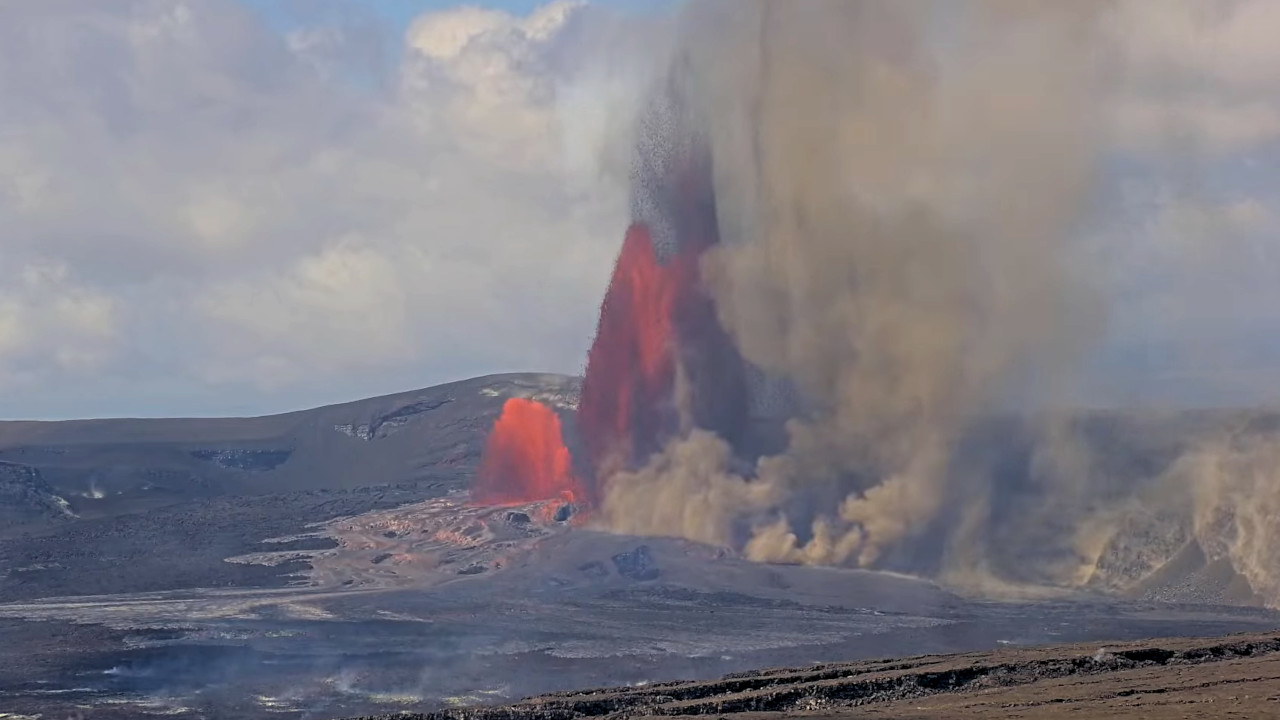
USGS webcam shows episode 43 in the Kīlauea eruption
During this time of repose, scientists have been working to repair webcams that were damaged either during the eruptive activity or during the recent kona low storm that brought flooding rain and damaging winds to the islands. As of today, all three livestreaming webcams are back in operation.
In this week’s Observatory Volcano Watch article, geologist Kendra Lynn wrote about how the temperature in the shallow magma system under the summit has slowly been getting hotter. The article says it’s possible that the increasing temperatures observed for the current eruption might have to do with its prolonged episodic nature.
The last episode covered the summit area inside Hawaii Volcano’s National Park with terra and also spread light ash and Pele’s hair all the way up into the South Hilo district. Whether or not episode 44 produces a similar tera fallout pattern will depend not only on lava fountain heights, but more importantly the weather conditions on the day that it occurs, which includes the direction of the wind.
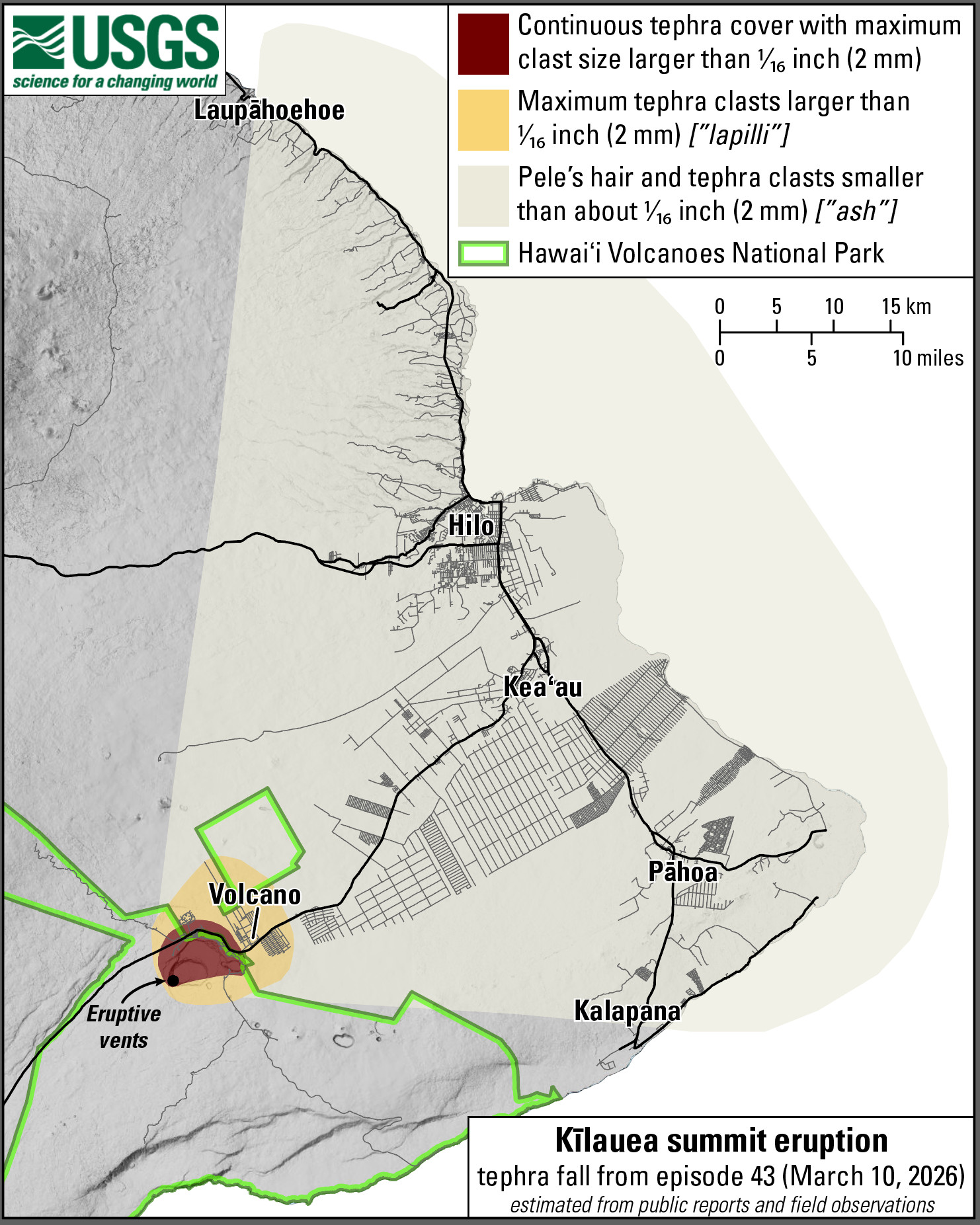
USGS: “This map shows the tephra fall associated with episode 43 of Kīlauea’s episodic summit eruption, on March 10, 2026. Tephra is a generic word for any material erupted by a volcano that travels through the air before landing on the ground. Most tephra fall from past lava fountaining episodes has landed in the closed area of Hawaiʻi Volcanoes National Park, southwest of the eruptive vents, with several instances of tephra fall documented at communities in the District of Kaʻū. During episode 43 on March 10, lava fountains from the north and south vents in Halemaʻumaʻu at the summit of Kīlauea reached up at 540 m (1770 feet). Southwesterly winds blowing to the northeast resulted in widespread tephra fall in communities to the northeast and east within the Districts of Kaʻū, Puna, South Hilo, and North Hilo.”
We should also note that a cluster of earthquakes was recorded Thursday on the flank of Maunaloa volcano in the Hāmākua district.
The cluster prompted an information statement from the Hawaiian Volcano Observatory. The geologists said these tectonic events were not related to magma movement. Similar clusters have been recorded over the past 25 years. Maximum magnitudes have been in the 3 range, with most earthquakes less than magnitude 2. The observatory wrote, “the depth of these earthquakes put them beneath the Maunakea edifice and into the underlying Kohala volcano, whose rift zone extends all the way to the submarine Hilo Ridge. These earthquakes appear to be related to periodic release of stress in the elongated Kohala edifice. Stress gradually accumulates over time and is most likely due to the weight of the island. They do not appear to be directly related to the older submarine Laupahoehoe slump or a flectoral bending of the underlying oceanic lithosphere.
The volcano alert level for Kīlauea remains at WATCH, and there are no signs of eruptive activity occurring outside the summit caldera in Hawaiʻi Volcanoes National Park.

by Big Island Video News
on at
STORY SUMMARY
HAWAIʻI VOLCANOES NATIONAL PARK - The USGS Hawaiian Volcano Observatory says models indicate that episode 44 is likely to start between April 6 and April 14.