

(BIVN) – The plan to replace and widen the Four Mile Creek Bridge is moving forward, as the final environmental assessment for the project has been published with a Finding of No Significant Impact.
The 307-page Final EA was posted in the May 23 issue of The Environmental Notice.
According to a summary of the document:
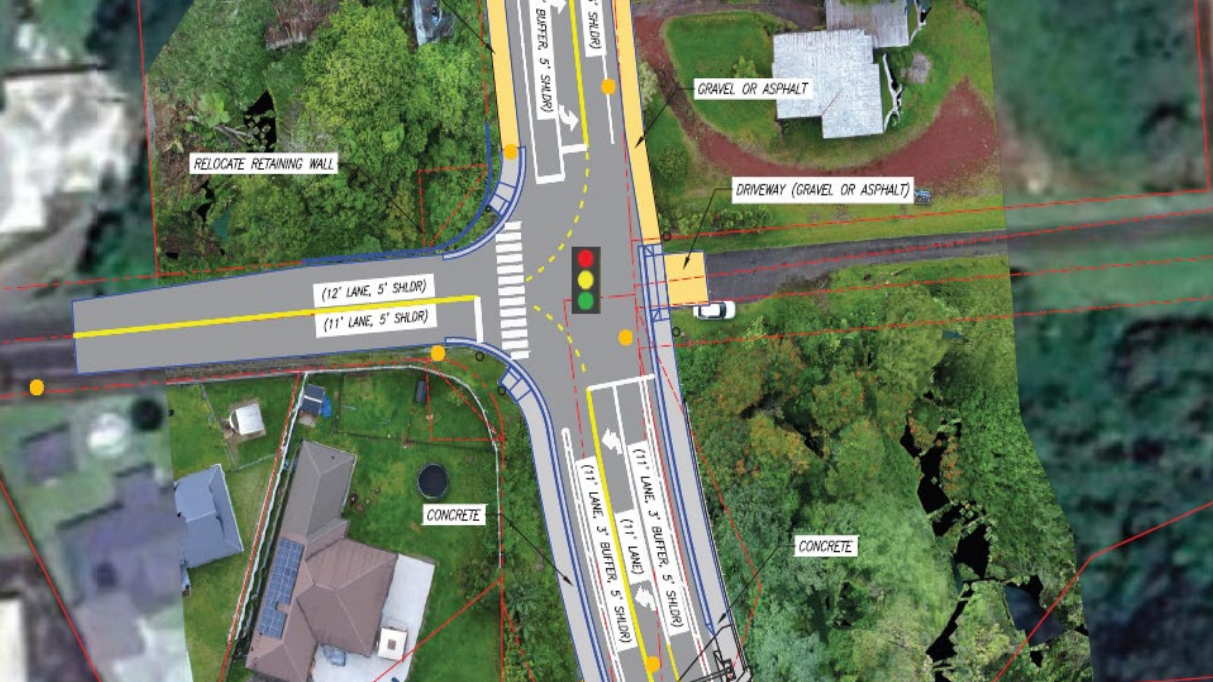
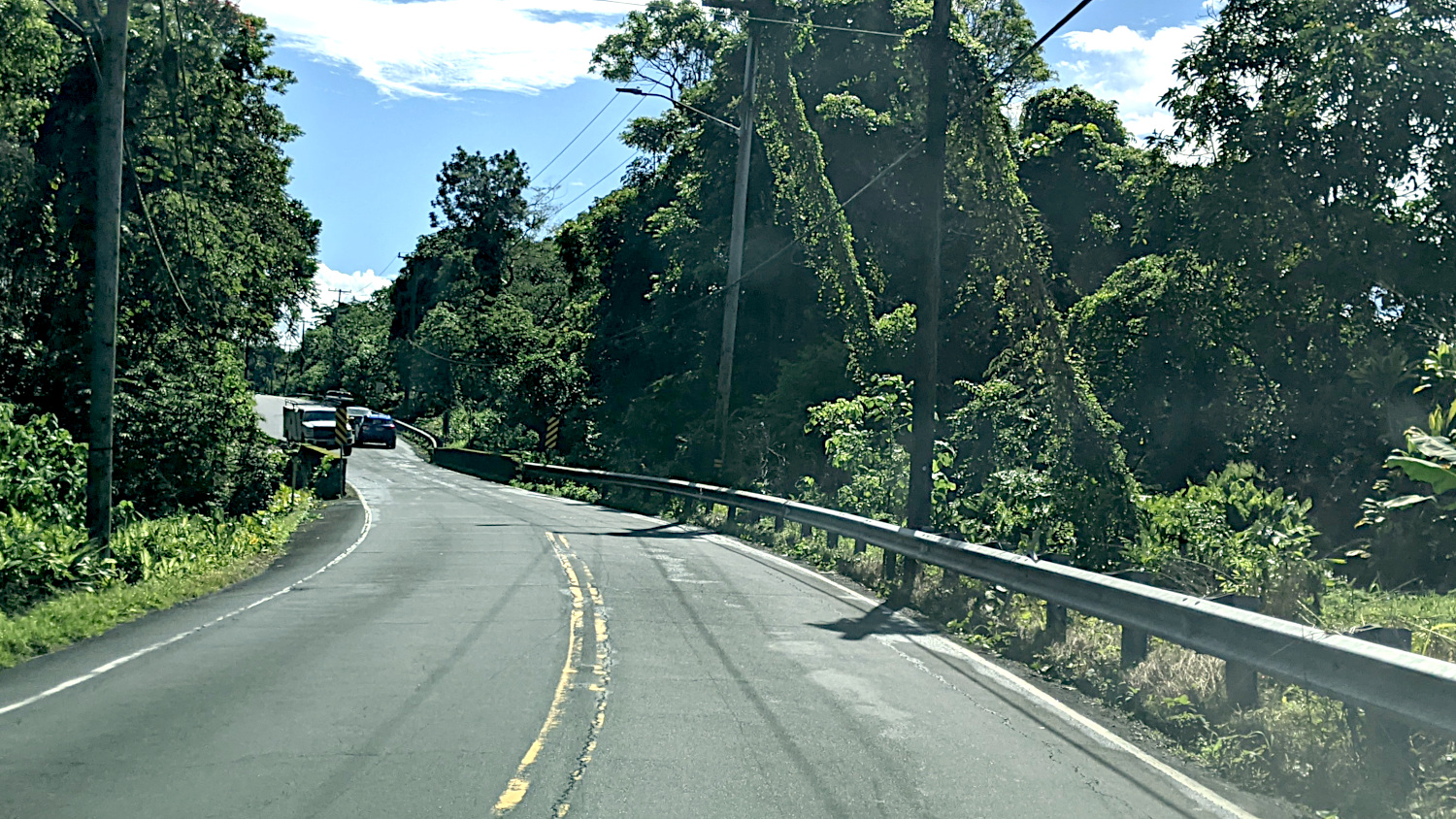
The County of Hawaii Department of Public Works, in coordination with the State of Hawaii Department of Transportation, proposes to replace, raise, and widen the Four Mile Creek Bridge to accommodate roadway and pedestrian facility improvements and improve overall safety along the adjacent segments of Kilauea Avenue and Haihai Street. The one-lane Four Mile Creek Bridge was constructed in 1916 and altered to its current configuration in 1964. The existing bridge and superstructure will be removed in its entirety and replaced with a single-span concrete girder bridge that is more than three times wider and more than twice in length. The widened bridge will accommodate north- and south-bound through lanes, one left turn lane (westbound onto Haihai Street), bike lanes/shoulders, raised sidewalks, and buffers on both sides of the road. At the Kilauea Avenue and Haihai Street intersection, a traffic signal will be installed, the east side of the intersection will be widened to accommodate the addition of the northbound and westbound left turn lanes, and Americans with Disabilities Act-accessible curb ramps will be installed. The project does not have federal funding and utilizes County and State of Hawaii funds.
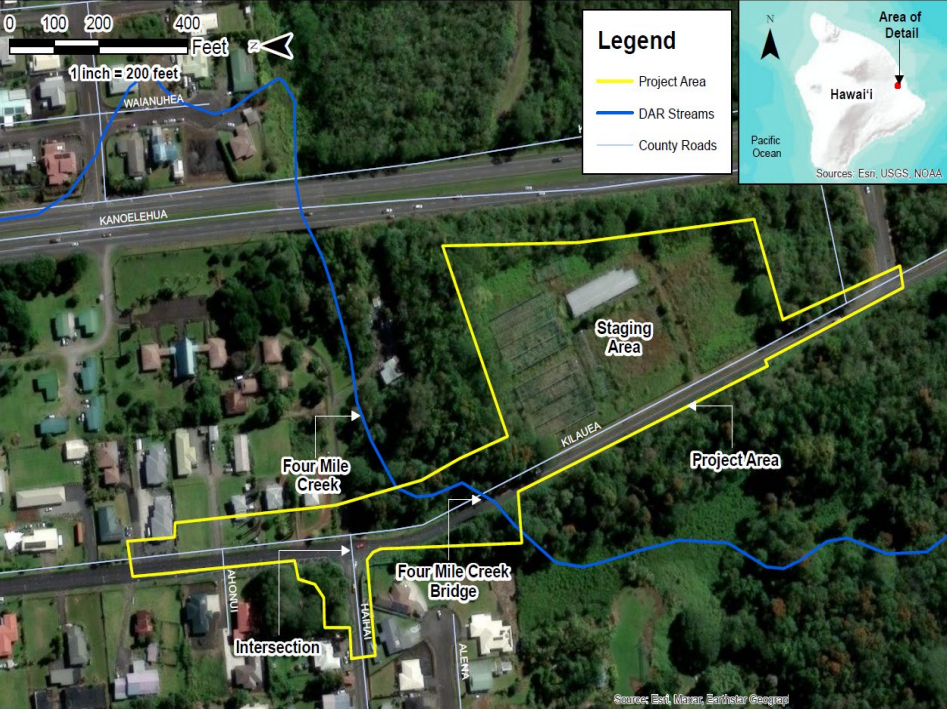
The coast of the project was estimated to be $18 million, funded by a $6 million County appropriation and $12 million from the State.
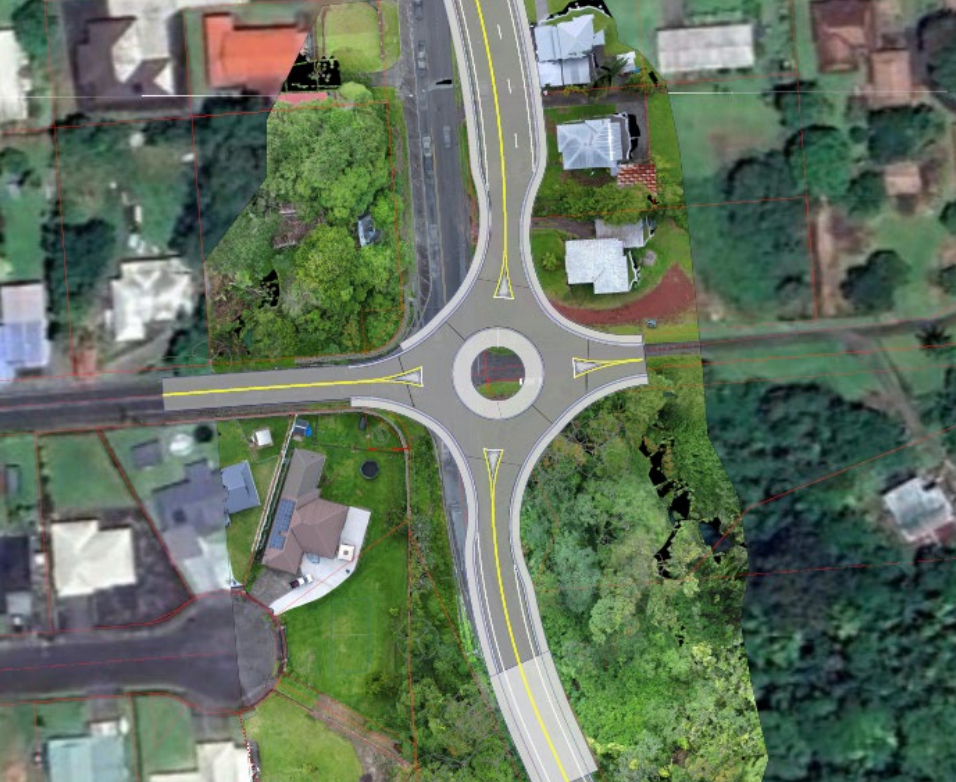
At one point, a new roundabout was considered for the Kilauea Avenue and Haihai Street intersection.
From the Final EA:
A Traffic Impact Analysis Report conducted for the project found that both a traffic light and roundabout would improve the flow of traffic flow through the Kilauea Avenue – Haihai Street intersection, with slightly better results for the roundabout (Appendix A). However, turn radius requirements and geographic constraints make a roundabout impractical as considerable areas of property, including one to three houses north of the roundabout, would need to be acquired (Figure 5). Therefore, a roundabout was removed from further consideration as an alternative.
Construction of the new bridge is expected to take approximately two years to complete.
“The start of construction will depend on permitting approvals, the project design timeline, and agency consultations, and is tentatively planned start in the winter of 2026,” the Final EA reports.
