
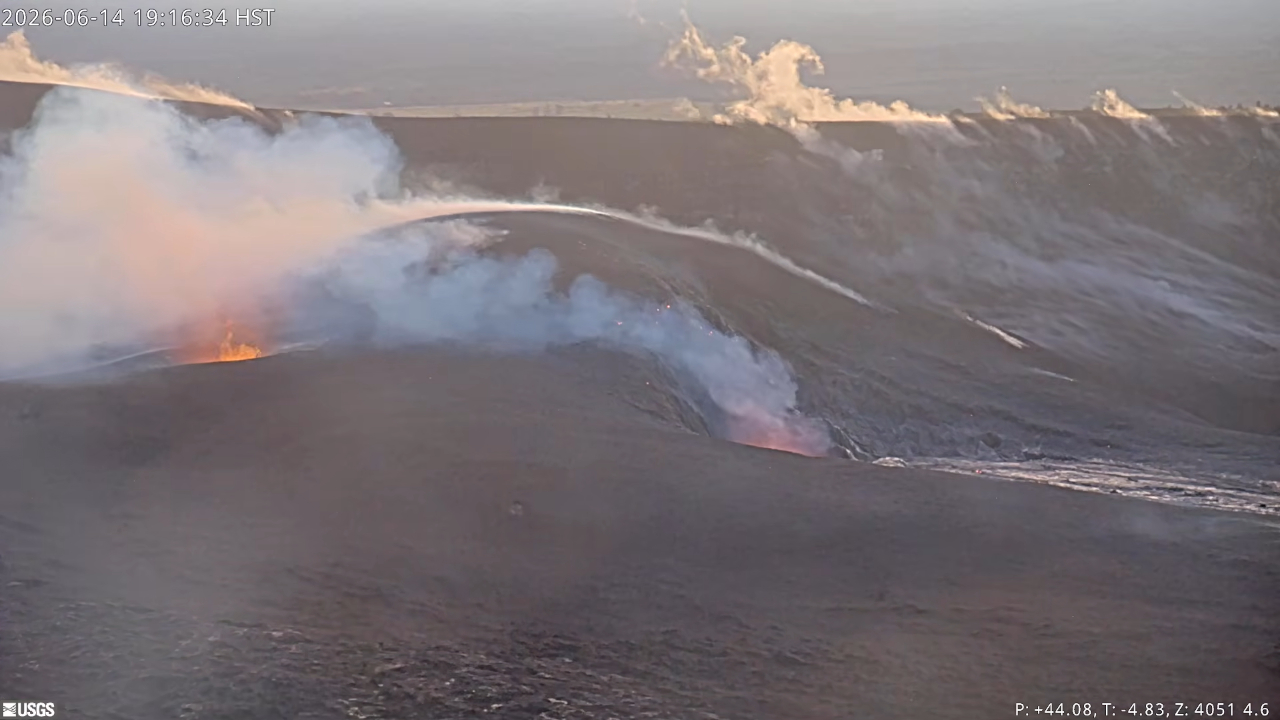

(BIVN) – Episode 49 of the ongoing Kīlauea summit eruption ended at 5:05 p.m. HST on Sunday, June 14, after 7.5 hours of continuous lava fountaining from the north vent.
The USGS Volcano Alert Level for Kīlauea has returned to ADVISORY and the Aviation Color Code is back to YELLOW.
Despite the reported shift in wind direction in the afternoon, tephra fall was restricted to the closed are of Hawaiʻi Volcanoes National Park to the southwest of the active Halemaʻumaʻu vents. “No significant tephra or ash fall was reported from open overlooks in Hawaiʻi Volcanoes National Park or in the surrounding communities at this time,” the USGS Hawaiian Volcano Observatory stated.
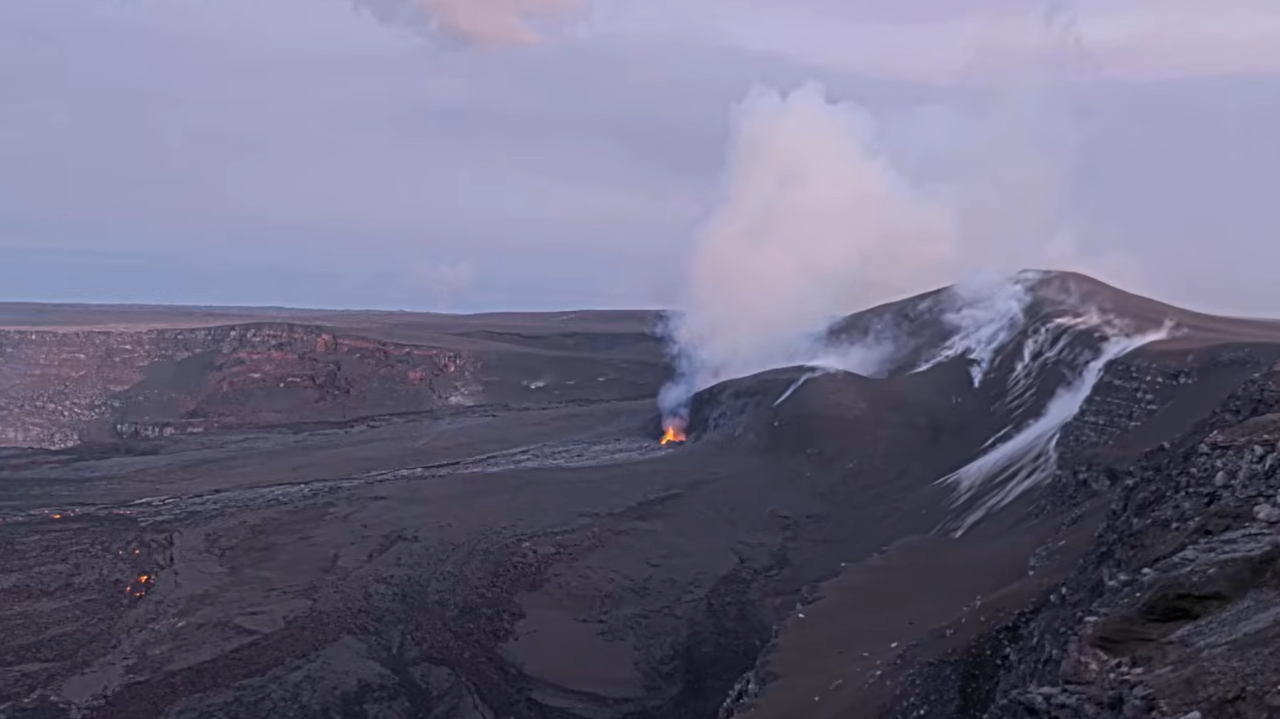
The Observatory provided this “Episode 49 Chronology”:
Lava fountaining episode 49 in Halemaʻumaʻu at the summit of Kīlauea began at 9:36 a.m. HST on June 14 and stopped abruptly at 5:05 p.m. HST, after just under 7.5 hours of continuous fountaining from the north vent. The last 2-3 minutes was marked by gas jetting from the north vent. The south vent never fountained during this episode, but it periodically spattered or jetted, sending spatter no more than 150 feet (50 meters) into the air. The instantaneous effusion rate peaked at about 415 cubic yards (320 cubic meters) per second between 10:30 and 11:00 a.m. HST, with an average effusion rate of 260 cubic yards (200 cubic meters) per second for the entire fountaining episode. An estimated 6.5 million cubic yards (5 million cubic meters) of lava erupted and covered about 40-50% of the Halemaʻumaʻu crater floor. The Uēkahuna tiltmeter (UWD) recorded about 15.5 microradians of deflationary tilt during episode 49. Seismicity followed the normal change in tremor patterns seen after most fountain episodes. There were no locatable earthquakes associated with the end of the eruption.
Episode 49 lava fountaining began a little over 5 hours after the onset of precursory lava overflows at 4:10 a.m. HST from the north vent on the morning of June 14. The initial overflow lasted about 20 minutes and was followed by another north vent overflow from 5:59 to 7:04 a.m. HST. North vent dome fountaining restarted at 8:14 a.m. HST then steadily escalated in vigor and height until it transitioned to episode 49 fountaining at 9:36 a.m. HST. The south vent first overflowed at 6:34 a.m. HST while the north vent was overflowing. Intermittent overflows continued from south vent until 9:12 a.m. HST. There were eight south vent overflows in total, each lasting no longer than 7 minutes. Tremor dropped during the south vent overflows and all ended with drain back events that produced noticeable tremor bursts, a pattern typical of gas pistoning. Meanwhile, the north vent lava fountain grew steadily until reaching a maximum height of about 700 feet (210 meters) by around 10:30 a.m. HST. Over the next several hours the fountain height gradually declined, and it was estimated about 300 feet (90 meters) high about 1 hour before the episode ended at 5:05 p.m. HST on June 14.
The north vent lava fountain produced significant heat and ash, feeding a plume that reached a maximum height of about 18,000 feet (5,500 meters) above sea level based on radar data and verified by webcam images. Winds were out of the northeast for most of the eruption causing the plume to move to the southwest during the most energetic part of the eruption. The plume track largely remained within Hawaiʻi Volcanoes National Park with most tephra fall in the closed area. The more distal part of the plume track roughly followed the Southwest Rift Zone and USGS field crews did not find tephra in the Pahala community. At 2:55 p.m. HST, the National Weather Service updated their Special Weather Statement to include the areas adjacent to the summit of Kīlauea as having potential for ash fall due to a switch to light and variable winds in the area. USGS HVO field crews drove Crater Rim Drive, Highway 11, and into surrounding communities (Volcano, Mauna Loa Estates, and Ohia Estates) without finding any significant ash fall around 3:30 p.m. HST. No ash fall was reported within Hawaiʻi Volcanoes National Park, except for very sparse Peleʻs hairs found on parked cars near KMC.
