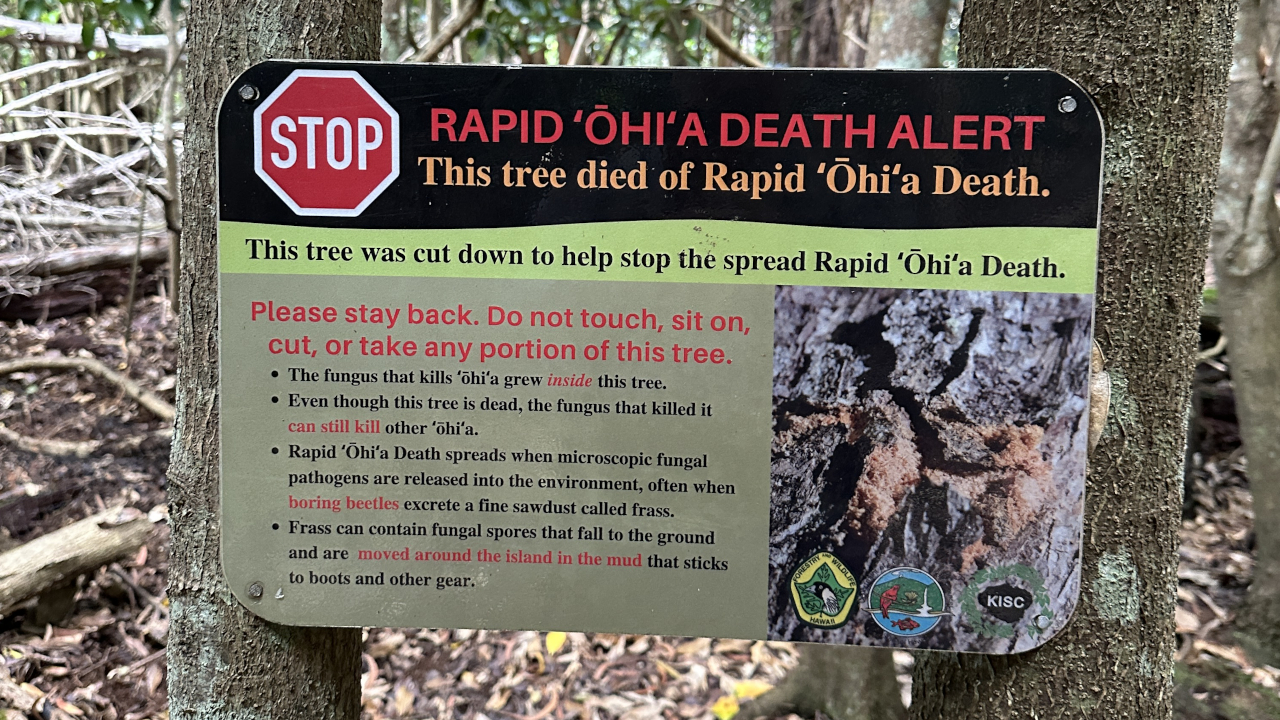
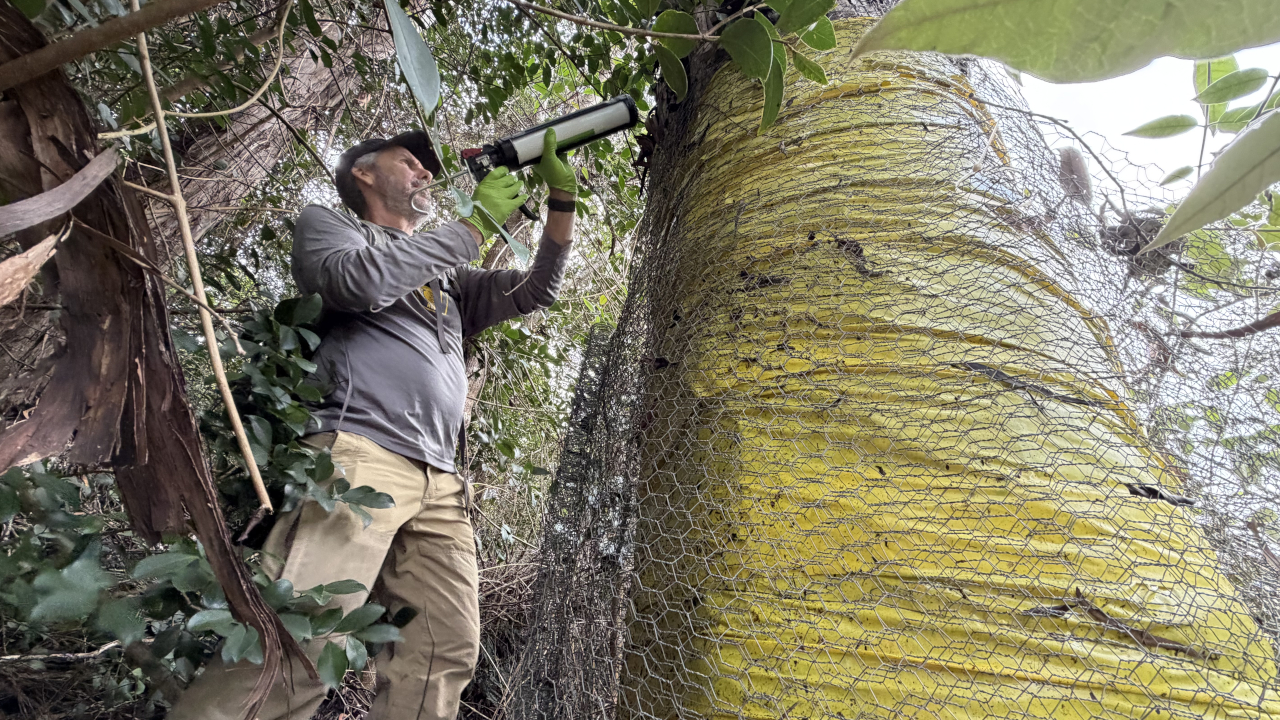

(BIVN) – There is a new tool being used to slow the spread of Rapid ʻŌhiʻa Death, or ROD, in Hawaiʻi forests.
Last week, the Hawaiʻi Department of Land and Natural Resources reported that it had deployed the beetle repellent SPLAT® Verb to dead ʻōhiʻa trees in the Kōkeʻe State Park area of Kauaʻi. The repellent has been shown to repel the ambrosia beetles that directly spread ROD through their frass, the DLNR says. Frass is the chewed, undigested wood and solid excrement left behind by beetles and their larvae.
The DLNR says the repellent “interrupts the beetle disease cycle by emitting a pheromone that discourages the beetles from burrowing into diseased and stressed trees, preventing the release of active fungal pathogens into the environment.”
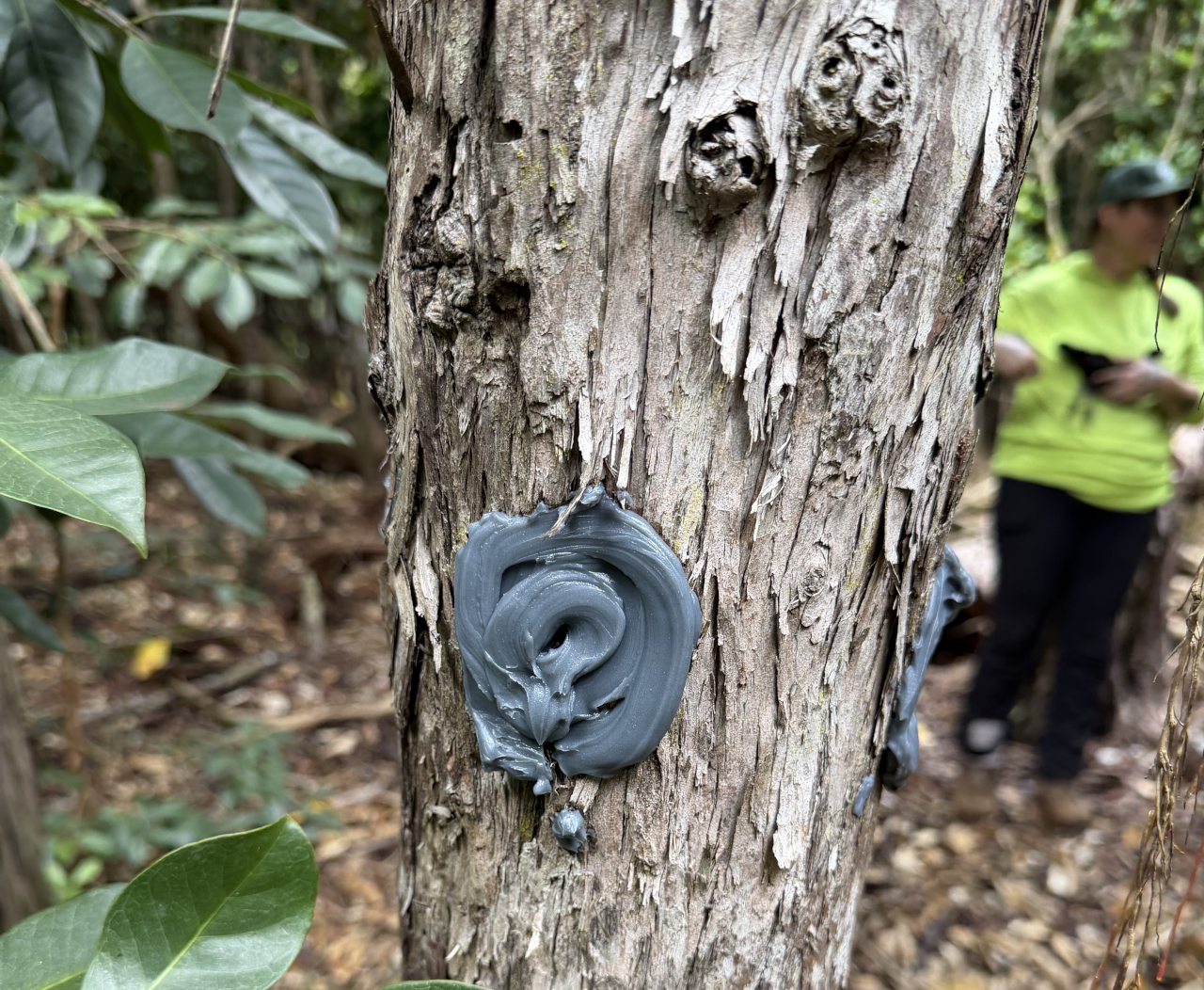
The DLNR Division of Forestry and Wildlife (DOFAW) partnered with the United States Forest Service to utilize the SPLAT® Verb repellent. This follows more than five years of work led by Kylle Roy, a Forest Entomologist with the USFS Forest Health Protection Branch, based at the Institute of Pacific Islands Forestry (IPIF) in Hilo.
“It’s exciting to see this dream come to fruition,” said Roy. “SPLAT® Verb is the only tool that can both protect healthy trees from succumbing to ROD and slow the spread of ROD. The formulation can be easily applied using a caulking gun and is environmentally friendly, biodegrading in the field after about four months.”
“This is a significant step forward in mitigating the spread of ROD,” said DOFAW State Protection Forester Robert Hauff in a DLNR news release. “For the first time we have conservation professionals in the field using a beetle repellent as a preventive tool to help protect healthy ʻōhiʻa by keeping ROD from spreading in areas where the disease has already been detected. Thanks to the State Department of Agriculture and Biosecurity’s Pesticide Branch, SPLAT® Verb has been registered for use in Hawaiʻi to protect ʻōhiʻa trees and is also approved for use against pests on coffee plants and macadamia nut trees, when used according to label.”
The DLNR says it is estimated more than a million trees on Hawaiʻi Island have died due to Rapid ‘Ōhi‘a Death. It first began killing trees in the Puna district more than 15 years ago.
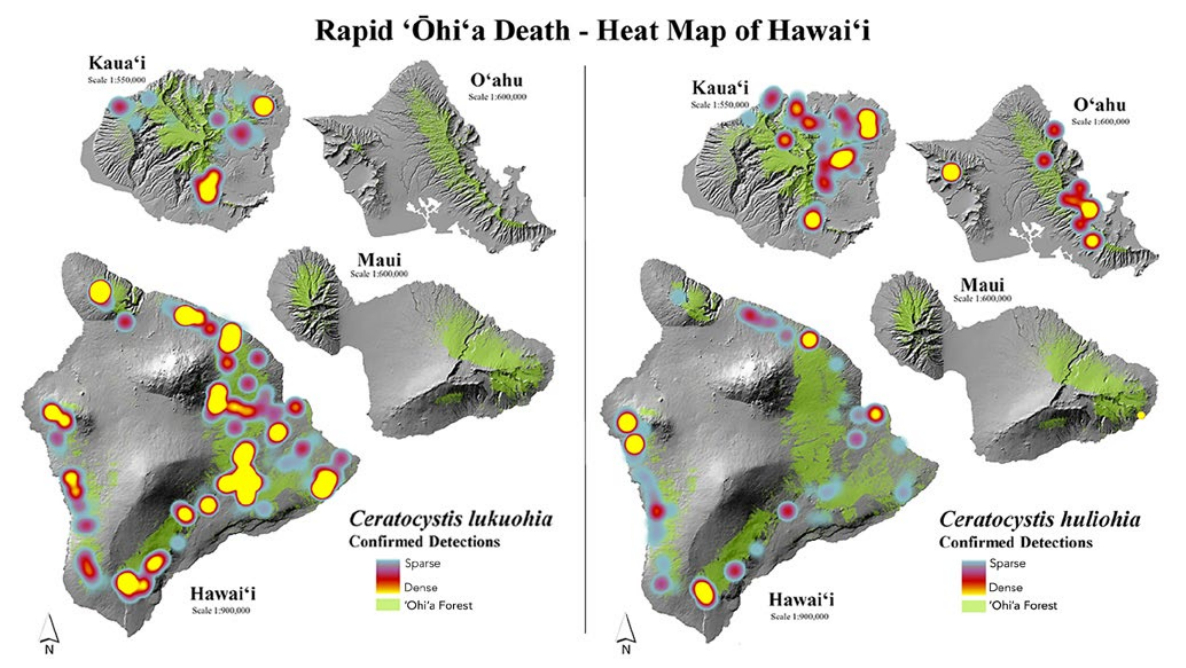
The DLNR says everyone can help protect ʻōhiʻa forests by taking the following actions:
- Avoid injuring ʻōhiʻa: Open wounds on ʻōhiʻa are an entry point for disease spores. ROD can also spread from tree to tree on machetes or other tools.
- Don’t transport any part of ʻōhiʻa between islands.
- Don’t move ʻōhiʻa wood or vegetation, especially from areas known to have ROD.
- Clean hiking boots/gear/tools. Before hiking or entering a wooded area, scrub off all dirt and spray boots and tools with 70% rubbing alcohol. Wash your clothes in hot water and use a dryer to ensure the disease is not spread on clothing.
- Wash your vehicle: If driving near ʻōhiʻa forests. The disease can remain alive and infectious in soil, so wash all dirt off vehicles.