
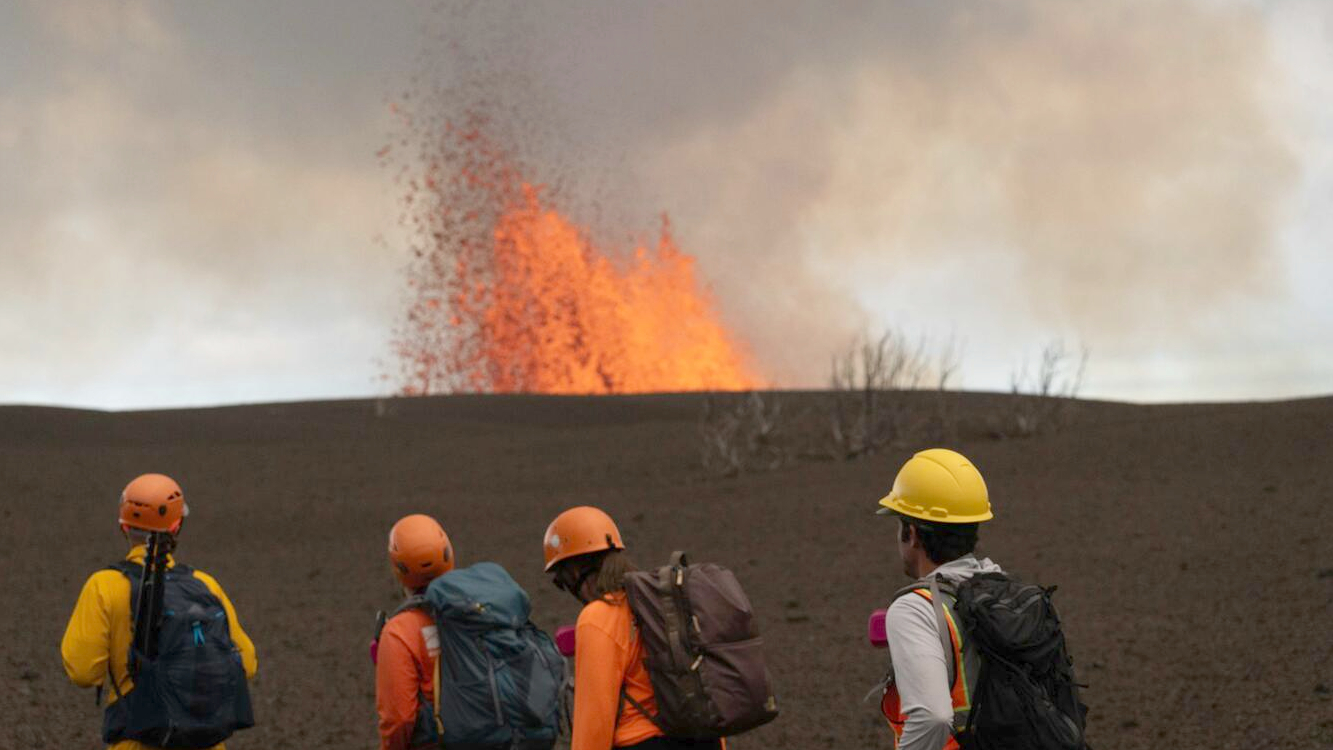

(BIVN) – The ongoing eruption at the summit of Kīlauea is paused, with the next episode of lava fountaining – episode 50 – expected to occur next week.
What is the difference between an eruption and an episode? The latest Volcano Watch article, written by U.S. Geological Survey Hawaiian Volcano Observatory scientists and affiliates, examines the terminology:
Over the last year and a half, the historic episodic eruption at the summit of Kīlauea has had 49 episodes of lava fountaining, with episode 50 in the forecast for next week. But why are these individual fountaining events considered episodes instead of separate eruptions, and what’s the difference?
Since December 23, 2024, there have been unique repeated cycles of behavior at the volcano. These have started with precursory spatter and overflows from one or both vents (which occurred before nearly every episode) in Halemaʻumaʻu crater, lasting hours to days. The cycle then moves into lava fountaining from one or both vents lasting from 4.5 hours to over 8 days, and finally, there is a pause in surface lava activity.
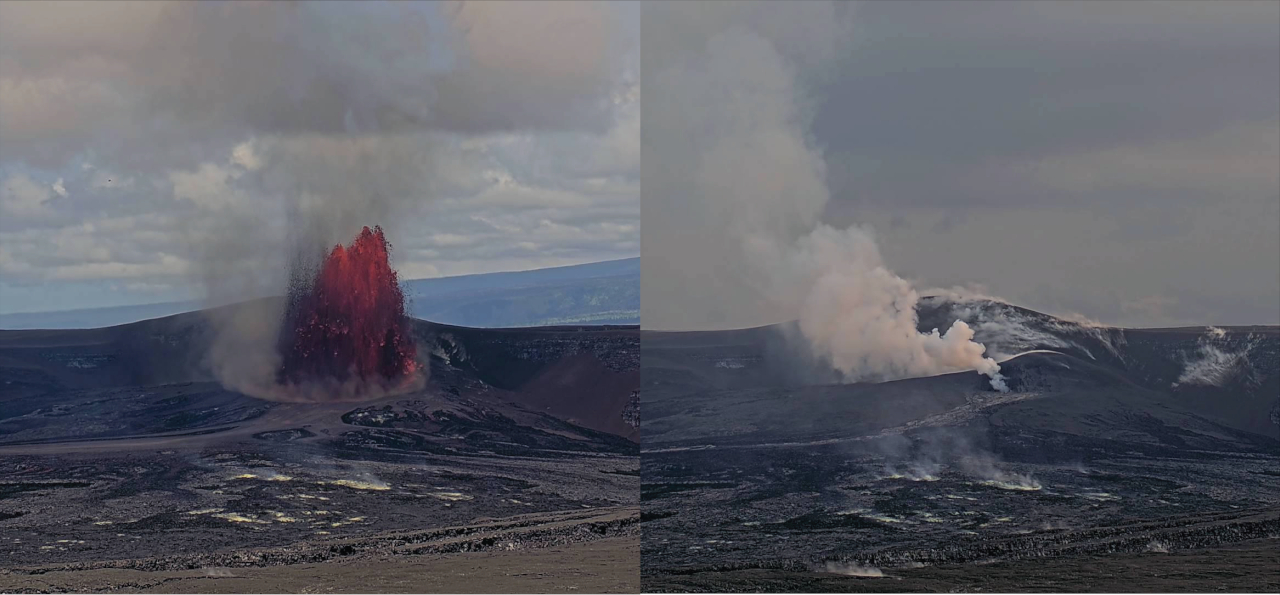
An eruption occurs when magma rises from below ground and reaches the surface, typically as effusive lava flows, lava fountains, or an explosive eruption column. In some eruptions there can be short breaks, or pauses, of lava erupting at the surface, even as magma continues to accumulate or move underground. Because lava fountains have repeatedly erupted from one or both of the same two main vents (north and south) since December 2024, the USGS Hawaiian Volcano Observatory (HVO) distinguishes these periods as episodes within an overall eruption that is taking place within Halemaʻumaʻu .
For past eruptions, when pauses in activity at Kīlauea last more than 90 days, there will usually be a longer period of quiescence or a new eruption will start in a different region of the volcano. Despite having breaks in activity during the ongoing eruption at the summit of Kīlauea, monitoring data indicates that activity is still elevated and the eruption is not over, even if we don’t always see lava at the surface. The ongoing episodic eruption continues to display moderate to high levels of activity during pauses, including ground deformation, seismic tremor, and volcanic gas emissions.
Kīlauea’s summit tiltmeters record deflationary tilt during the fountaining episodes, as magma is removed from the magma chamber and erupted at the surface. At the end of each episode there is an abrupt change from deflation to inflation as the summit begins to repressurize. This repetitive behavior of deflation during episodes and inflation during the pauses is the primary way that the HVO staff are able to forecast when the next episode could take place based on the volume erupted and the rate of repressurization.
During lava fountaining episodes, strong volcanic tremor (a signal associated with fluid movement) is recorded on seismic stations at and around Kīlauea summit. The tremor during pauses is generally at a lower intensity but it persists at varied levels that are influenced by volcanic gas, the depth of magma in the vents, and other factors.
Gas emission rates at Kīlauea summit also remain elevated during the periods between fountaining episodes, with sulfur dioxide emissions typically ranging between 1,000 to 5,000 tonnes per day. These levels are much higher than the sulfur dioxide emission rates recorded prior to the onset of the ongoing eruption, which were less than 120 tonnes per day.
Episodes and pauses aren’t unique to just this eruption—for example, during the first 3.5 years of the Kīlauea middle East Rift Zone eruption at Puʻuʻōʻō, there were also episodic fountaining events similar to the current summit eruption. The pauses, or repose periods, between those episodes were longer on average than we are seeing now, with the longest lasting for 65 days.
As of now, these short pauses between episodes (generally lasting days to weeks) have included elevated seismic tremor, volcanic gases, and deformation—which often transitions to low-level eruptive activity preceding sustained fountaining—all indicating that there will be another fountaining episode. HVO keeps a close eye on monitoring data for any indication of magma movement into a different region of the volcano; this might mean a change in the ongoing eruption and perhaps eventually a new eruption beginning in a different location. We don’t know when or how this eruption will end, but each time we see expected patterns in monitoring data after a fountaining episode ends, there’s a good chance that another fountaining episode from the north and/or south vents in Halemaʻumaʻu is on the way.
