
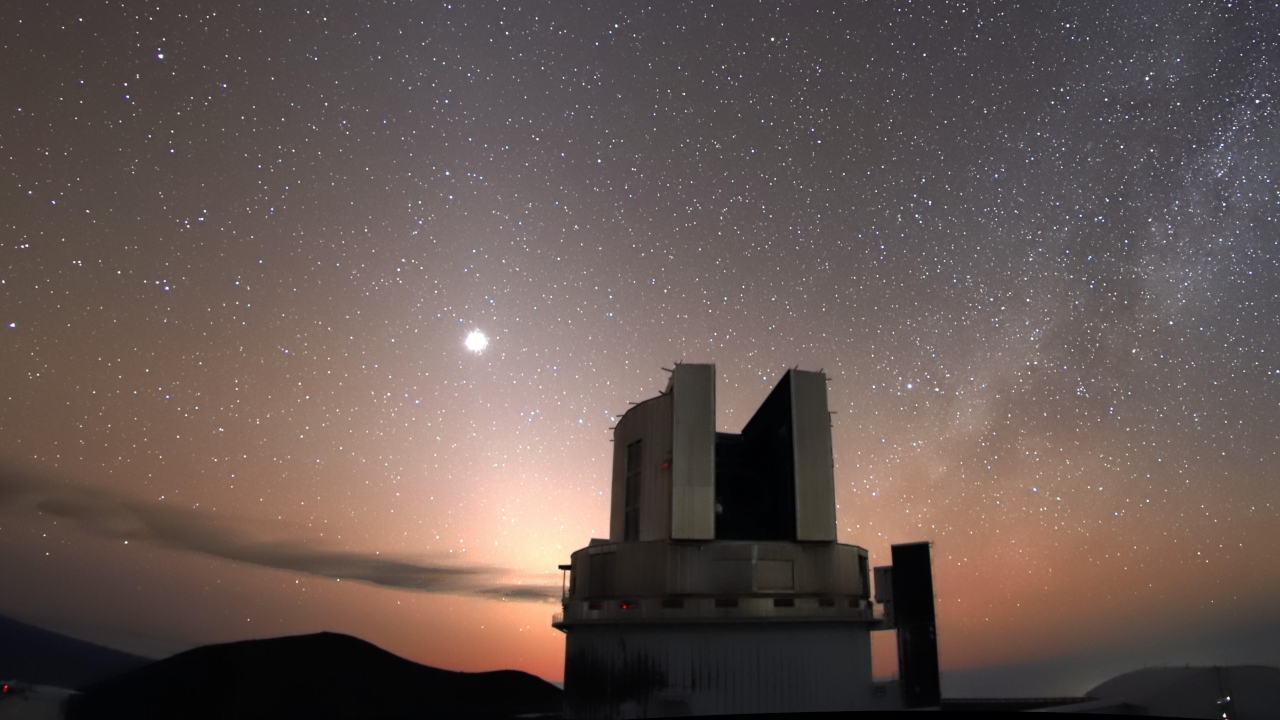

(BIVN) – The Subaru Telescope on Maunakea is entering into an international partnership with NASA’s Nancy Grace Roman Space Telescope, and will contribute 100 nights of observations to the joint effort.
NASA’s Nancy Grace Roman Space Telescope was launched from Florida on August 30. The 2.4-meter space observatory designed to conduct wide-field surveys of the Universe in optical and infrared wavelengths. Its major science goals include investigating dark energy and cosmic structure, surveying planets throughout the Milky Way and demonstrating technology for directly imaging planets around other stars.
From a Subaru Telescope news release:
Together with Subaru, (the Roman space telescope) will help scientists investigate some of humanity’s most fundamental questions: How did the Universe begin and evolve? What are dark matter and dark energy? How common are planets beyond our Solar System—and could some of them support life?
For Hawaiʻi, the partnership highlights the continuing scientific importance of Maunakea and the role Hawaiʻi Island plays in international space research.
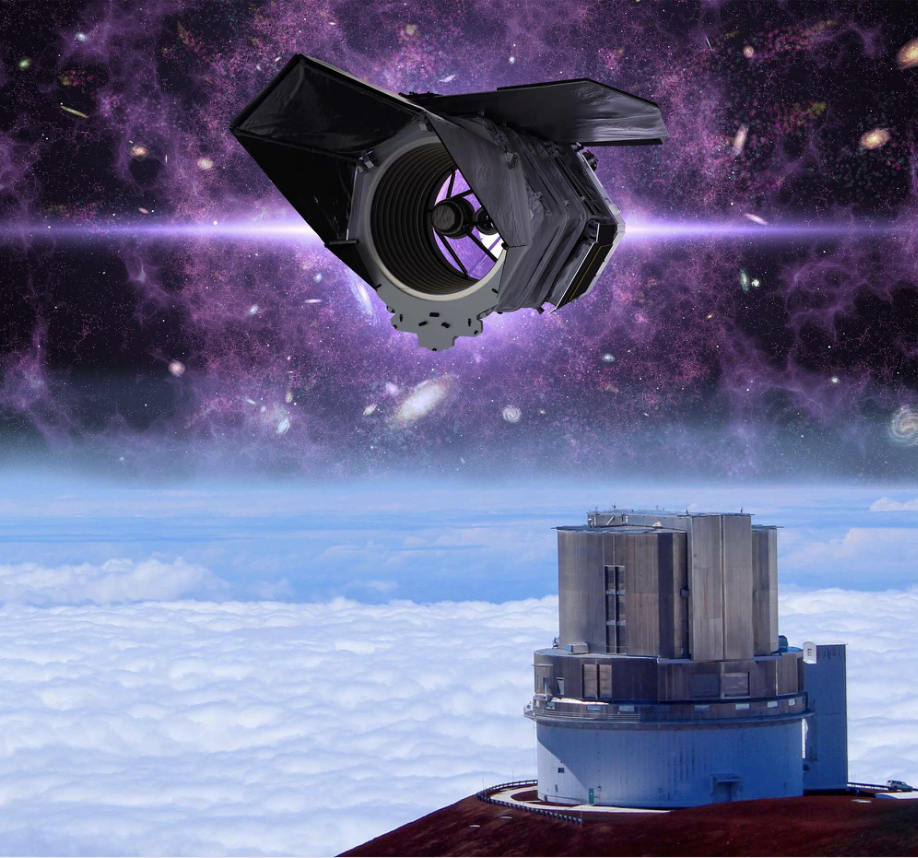
Two Telescopes, One Bigger Picture
Roman and Subaru will observe the Universe from very different locations, using complementary capabilities.
Roman’s position above Earth’s atmosphere will allow it to conduct sensitive infrared surveys across enormous areas of the sky. Subaru’s 8.2-meter mirror and wide-field instruments can provide complementary information about selected objects, including their distances, composition and motion.
Subaru’s ʻŌnohiʻula Prime Focus Spectrograph can observe approximately 2,400 objects at once. This will allow astronomers to follow up on large numbers of galaxies and other objects identified by Roman.
Subaru also operates SCExAO, an advanced system that combines adaptive optics and coronagraph technology to block the bright light of stars and search for much fainter planets and material around them. SCExAO plays an important role in identifying suitable targets for the Roman Coronagraph’s technology demonstration. It also serves as a testbed for developing and validating high-contrast imaging technologies for future space telescopes to directly image Earth-like planets.
By combining observations from space and from Maunakea, scientists can learn more than either telescope could reveal alone. Roman may identify distant galaxies and other objects; Subaru can help determine what they are, how far away they are and how they fit into the larger story of the Universe.
Specific observing programs and instruments for the collaboration are still being developed by researchers in Japan and the United States. Coordinated observations are expected to begin in 2027 or later.
Why This Research Matters
Astronomy is not only about studying distant objects. It helps answer questions that are central to our understanding of existence.
By studying other planets, scientists can learn how planetary systems form and how common Earth-like conditions may be. While no evidence of life beyond Earth has yet been found, examining planets around other stars is one of the most promising ways to understand whether Earth is unique—or one of many worlds capable of supporting life.
Observations of distant galaxies also allow scientists to look back through cosmic history and learn how stars, galaxies and the Universe itself developed. Research into dark matter and dark energy may reveal why the Universe has the structure it does and why its expansion is accelerating.
Why Maunakea Matters
The partnership demonstrates why space telescopes and ground-based observatories work best together.
Maunakea’s high elevation, dry atmosphere, dark skies and location above much of Earth’s weather make it one of the world’s premier sites for astronomy. From approximately 10,000 feet above sea level, Subaru can gather information that complements observations made by a spacecraft in orbit.
For more than 25 years, Subaru Telescope has explored the Universe from Maunakea. Its 100-night commitment to the Roman partnership represents a significant contribution to a major international research effort.
Maunakea is also a place of profound cultural and natural significance to Hawaiʻi. The collaboration reflects both the mountain’s importance to Hawaiʻi and its exceptional role in helping humanity understand the cosmos.
Subaru’s summit facility and its base facility in Hilo connect Hawaiʻi Island to an international network of scientists, engineers and technical professionals working at the forefront of astronomy.
Together, Roman and Subaru will provide a more complete view of the Universe—and help scientists explore one of humanity’s oldest questions: Are we alone?
