
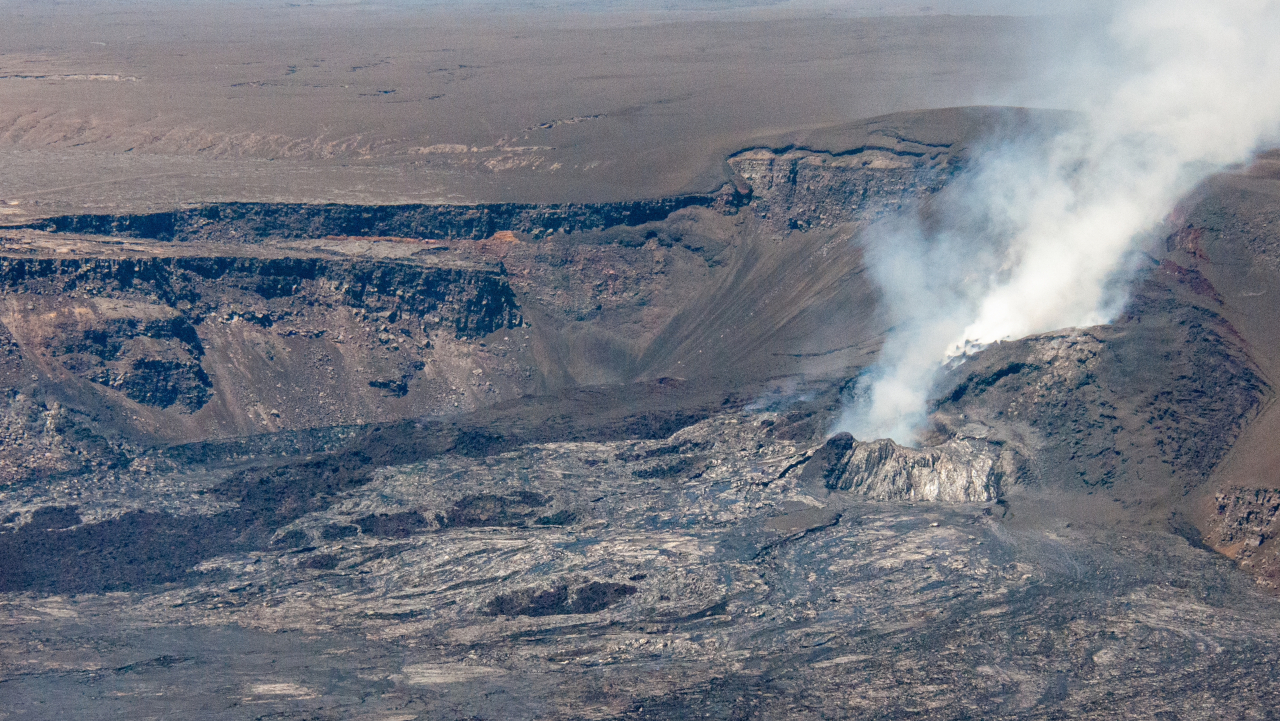

(BIVN) – Scientists with the USGS Hawaiian Volcano Observatory have posted photos from a recent Kīlauea summit overflight, as the ongoing eruption in Hawaiʻi Volcanoes National Park remains paused.
The next episode of activity could start sometime this weekend or early next week, scientists say, based on current models. Current inflation rates have slowed to under 1.5 microradians a day.
“Only a few periods of weak glow were visible at the south vent overnight, the north vent and the rest of the flow field remained dark,” the USGS HVO wrote on Wednesday. “Low-frequency tremor bursts characteristic of gas pistoning of magma continue, suggesting the lack of glow may be due to lava residing deep within the vent or the vent may have developed a shallow blockage. Images from an overflight on August 6th showed that episode 30 flows had covered nearly 80% the Halemaʻumaʻu crater floor, which now includes the old down dropped block.”
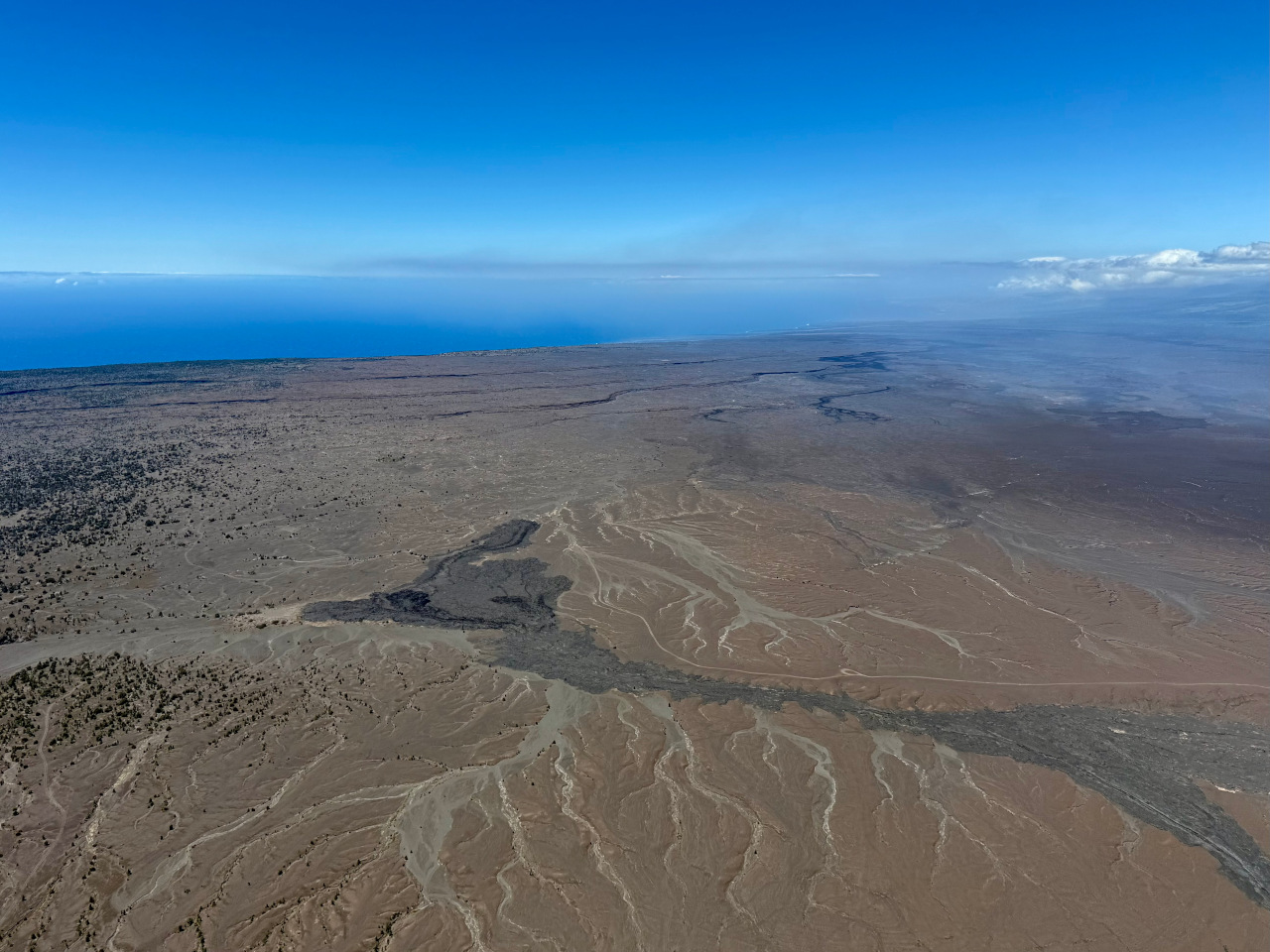
“Rates of seismicity and ground deformation remain very low in the East Rift Zone and Southwest Rift Zone, with no significant earthquake activity in the past 24 hours outside of the summit,” the Observatory stated. “Sulfur dioxide (SO2) emissions from the East Rift Zone remain below the detection limit.”
From the USGS HVO analysis posted on August 13:
Current inflation rates have slowed to under 1.5 microradians a day as expected during the repose period. Models show the possible onset of the next eruption either this weekend or early next week depending on the model. Changes in inflation rate will affect the models. Periods of no inflation to negative inflation, as seen prior to episode 30, cannot be forecast and will delay the onset of the next episode.
The injection of a shallow dike resulted in the new southern fissure vent at the onset of episode 30. Dike emplacement in the south caldera suggests that eruptive pressure continues to increase as the vent elevation gets higher and magma can be injected into weak areas of the surrounding summit. It is possible this could result in permanent change in the vent locations and eruptive behavior. Currently, there are no indications that any eruptive activity would occur outside of the summit region. Kīlaueaʻs East Rift Zone continues to contract, indicating no magma is entering that part of the system.
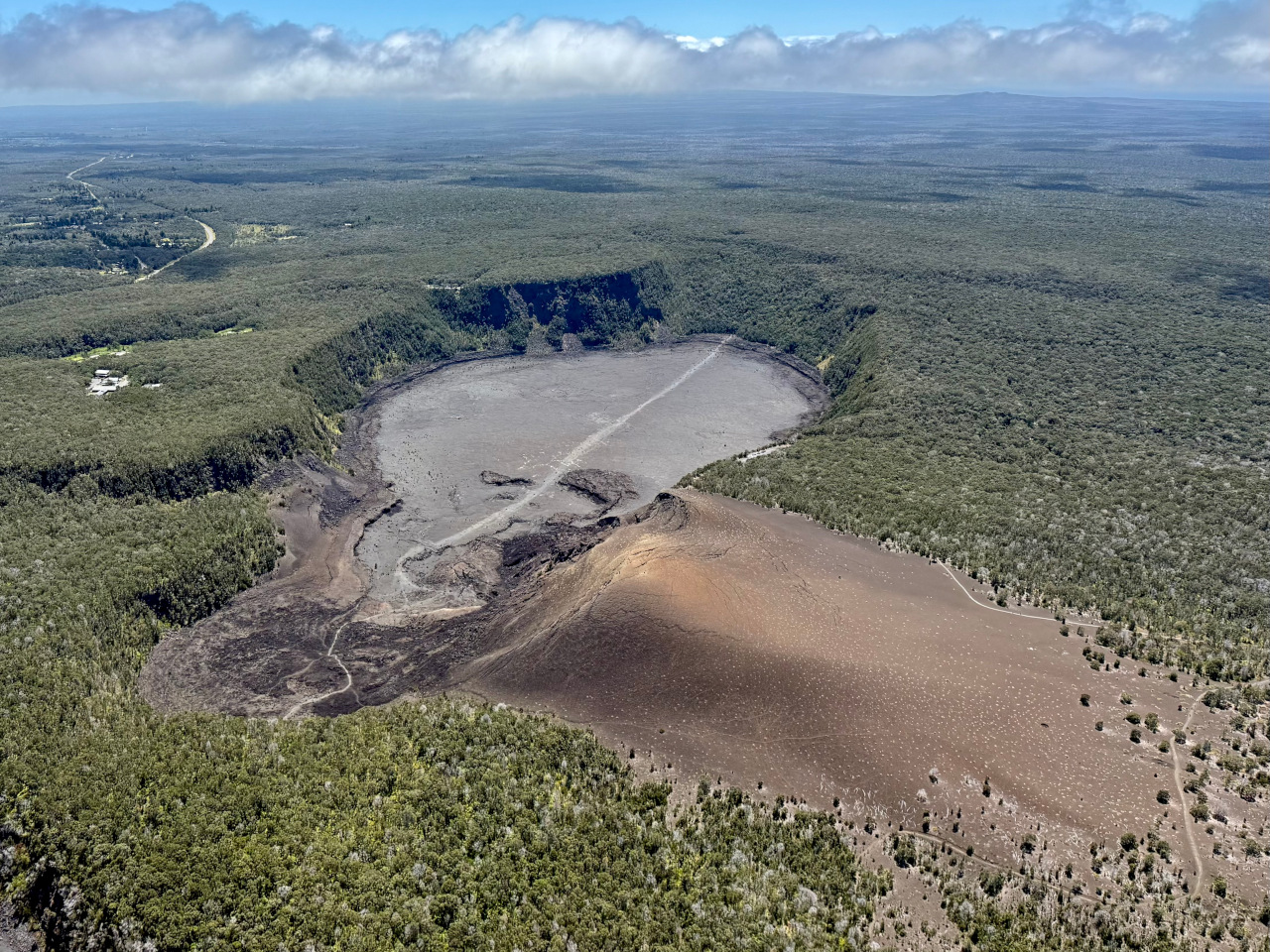
The current eruption has been characterized by episodic lava fountaining not seen in any eruptions since the 1983–86 episodic fountains at the beginning of the Puʻuʻōʻō eruption. Lava fountains and flows have erupted from two vents within Halemaʻumaʻu crater that we refer to as the north vent and south vent. Each of the previous fountaining episodes lasted from a few hours to over a week and was accompanied by strong deflation of the summit region. Pauses between the fountaining episodes have been marked by an immediate switch from deflation to inflation as the magma chamber recharges and repressurizes. Fountaining episodes have occurred approximately once per week since the start of the current eruption on December 23, 2024.
HVO continues to closely monitor Kīlauea and is in contact with Hawai‘i Volcanoes National Park and the Hawai‘i County Civil Defense Agency about eruptive hazards.
The USGS Volcano Alert Level for Kīlauea remains at WATCH.
