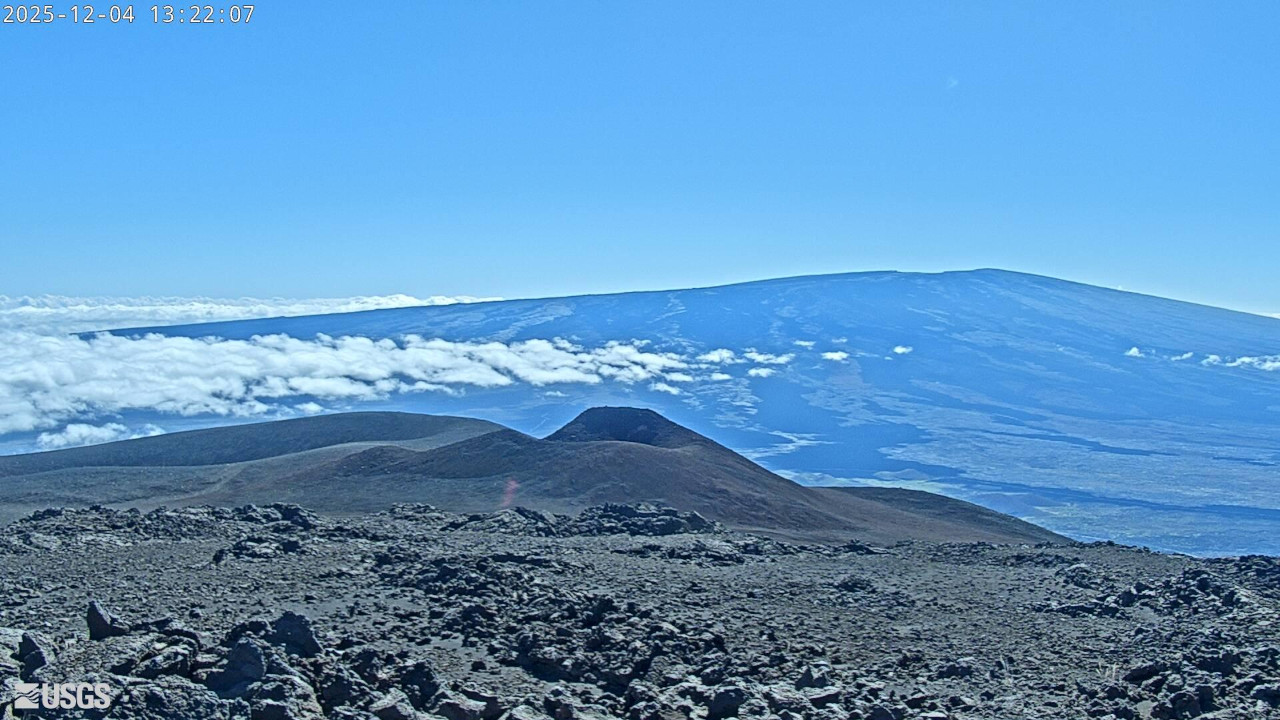
(BIVN) – The USGS Hawaiian Volcano Observatory published its Mauna Loa update for the month of December, as the enormous Hawaiʻi island volcano remains at an Alert Level of NORMAL.
Higher rates of seismicity were observed from late-October to early November, but that has since returned to long term background levels. The uptick in seismicity was “much lower than unrest prior to the 2022 eruption”, the scientists noted.
There was also a slight increase in inflation beneath the summit starting in mid-November, scientists observed.
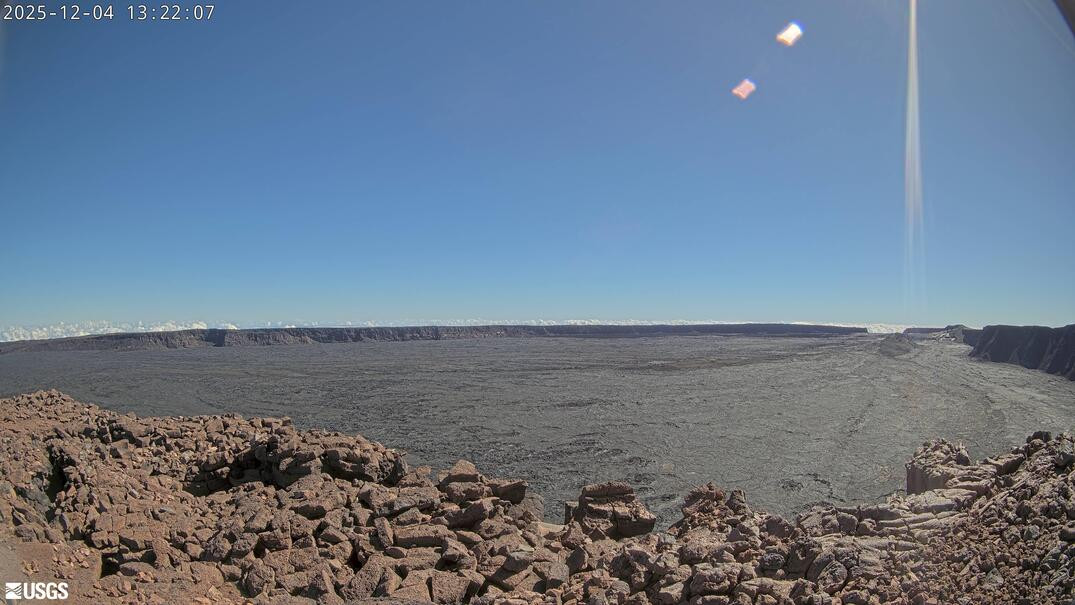
USGS webcam shows the Mauna Loa summit caldera, Mokuʻāweoweo
From the full USGS HVO update posted on Thursday, December 4th:
Mauna Loa seismicity rates returned to long term background levels in late November similar to seismicity rates during the prior months. A total of 147 M3+ and smaller earthquakes were detected beneath Mauna Loa’s summit region in the November reporting period, while the prior month had 123 earthquakes. Modestly higher rates of seismicity were observed from late-October to early November with 8-16 earthquakes per day in earliest November. Recent seismicity is much lower than unrest prior to the 2022 eruption and has returned to 3-6 earthquakes per day.
Data from Global Positioning System (GPS) instruments on Mauna Loa show a slight increase in inflation beneath the summit starting in mid-November. These rates are normal as the volcano recovers from the 2022 eruption and magma replenishes the reservoir system. Recent data indicate that the center of deformation has shifted to the southern caldera region, indicating refilling of a south caldera magma chamber.
Gas and temperature data from a station on Mauna Loa’s Southwest Rift Zone indicate these values are at background levels, with little change relative to previous months.
HVO continues to closely monitor Mauna Loa and will issue another update in one month, or earlier, should conditions change significantly.
Mauna Loa last erupted in late-2022.

by Big Island Video News
on at
STORY SUMMARY
ISLAND OF HAWAIʻI - Mauna Loa seismicity rates returned to long term background levels in late November.