
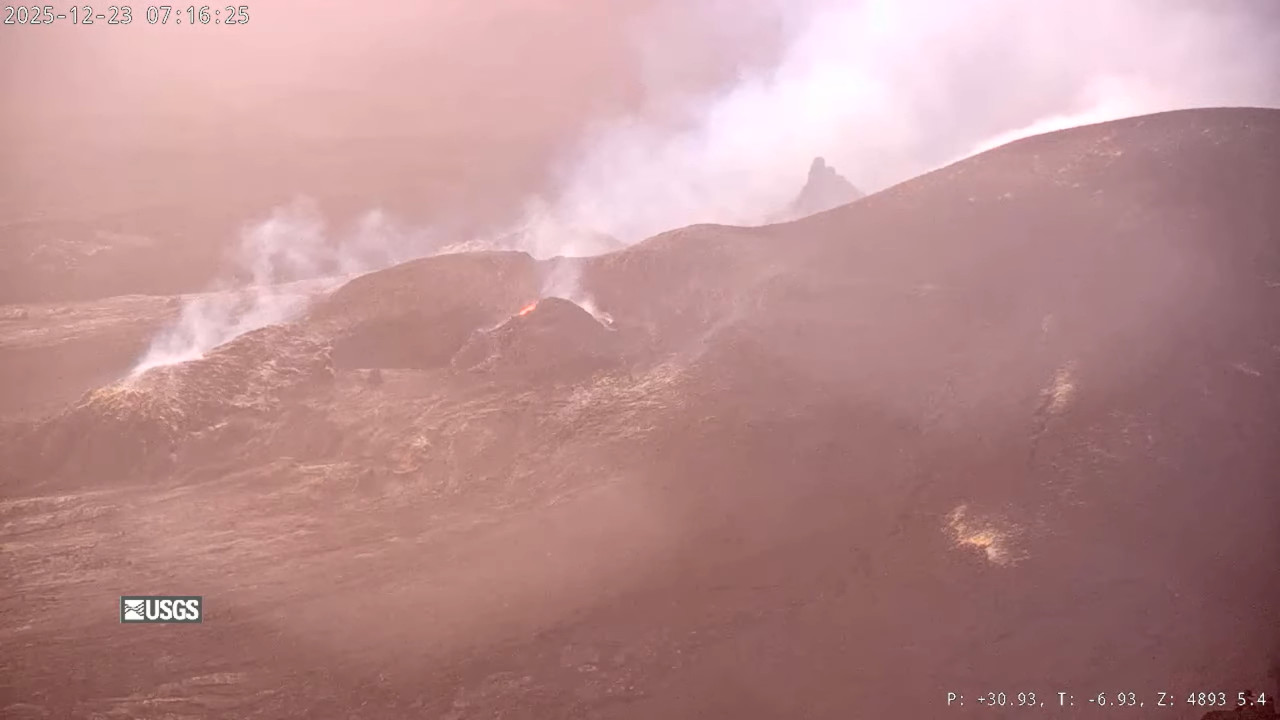

(BIVN) – The elevated volcanic gas emissions produced by the episodic eruption of Kīlauea volcano on Hawaiʻi island have prompted an advisory from the Hawaiʻi Department of Health (DOH).
Health officials on Monday urged residents and visitors to take precautions as the increased gas emissions continue to produce vog, or volcanic smog, that can result in poor air quality across the islands.
The eruption is currently paused, although the next episode is expected to occur soon.
Last week, the USGS Hawaiian Volcano Observatory measured volcanic gas emissions at 3,400 tonnes per day of SO2. “This rate is somewhat elevated relative to emission rates of 1,200 to 1,500 tonnes per day typically observed during previous eruptive pauses,” the observatory wrote. “In addition, this rate is elevated relative to non-eruptive background levels (around 100 tonnes per day).”
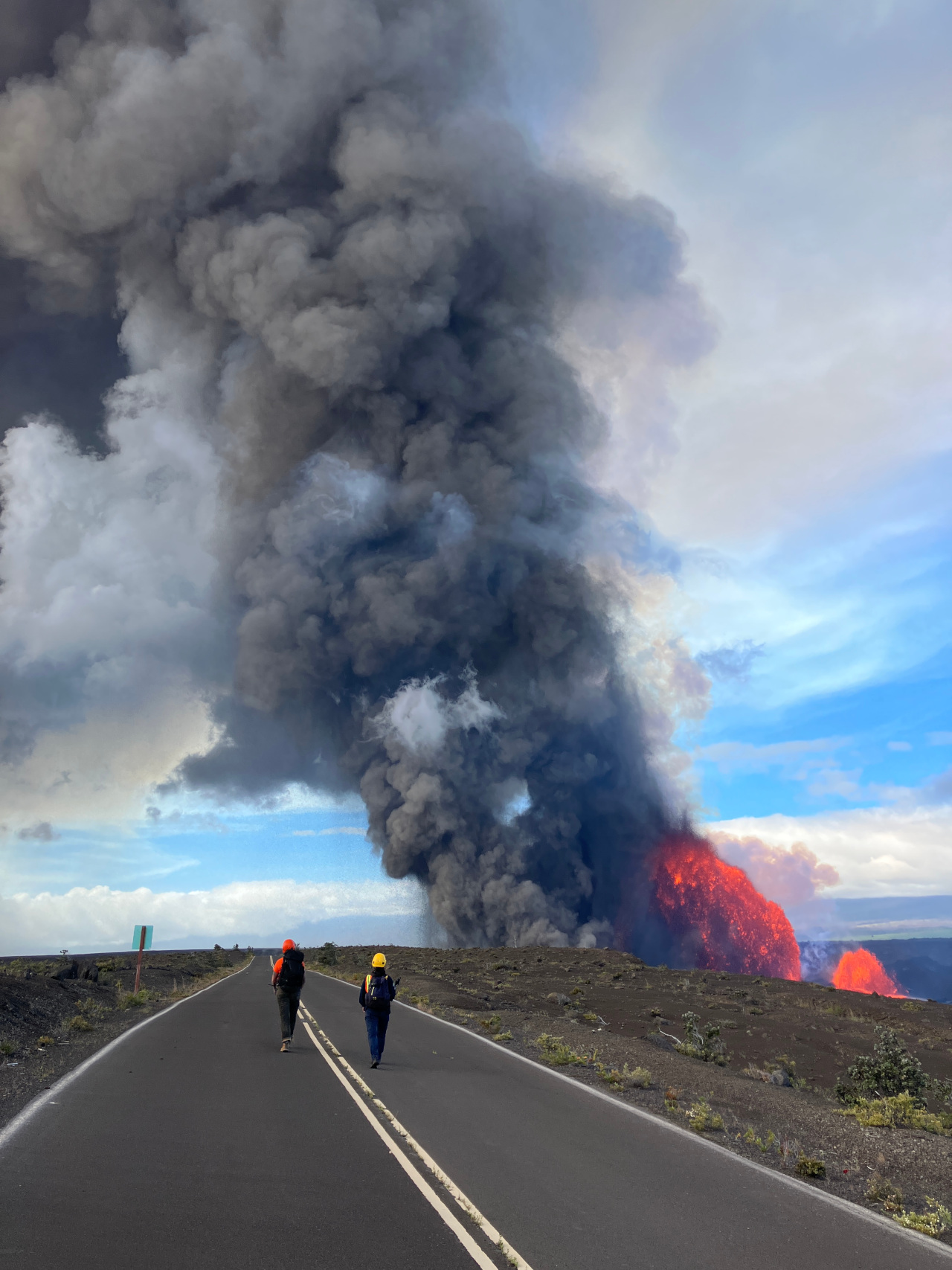
Over the course of the year-long summit eruption, “air quality levels at several air monitoring stations on Hawaiʻi Island, Maui and Oʻahu have varied, with periodic increases in both sulfur dioxide (SO2) and fine particulate matter (PM2.5)”, the health department says.
“While most station readings have indicated good or moderate air quality levels, air monitoring stations located in the southern part of Hawaiʻi Island have at times shown unhealthy air quality levels,” the DOH reported.
From the Hawaiʻi DOH:
Short term exposure to elevated levels of SO2 and PM2.5 may cause temporary eye, nose, or throat discomfort, coughing, or increased mucus production for some individuals. At higher concentrations or during prolonged exposure, particularly among sensitive populations, more noticeable respiratory symptoms, including difficulty breathing or worsening of existing lung conditions, may occur.
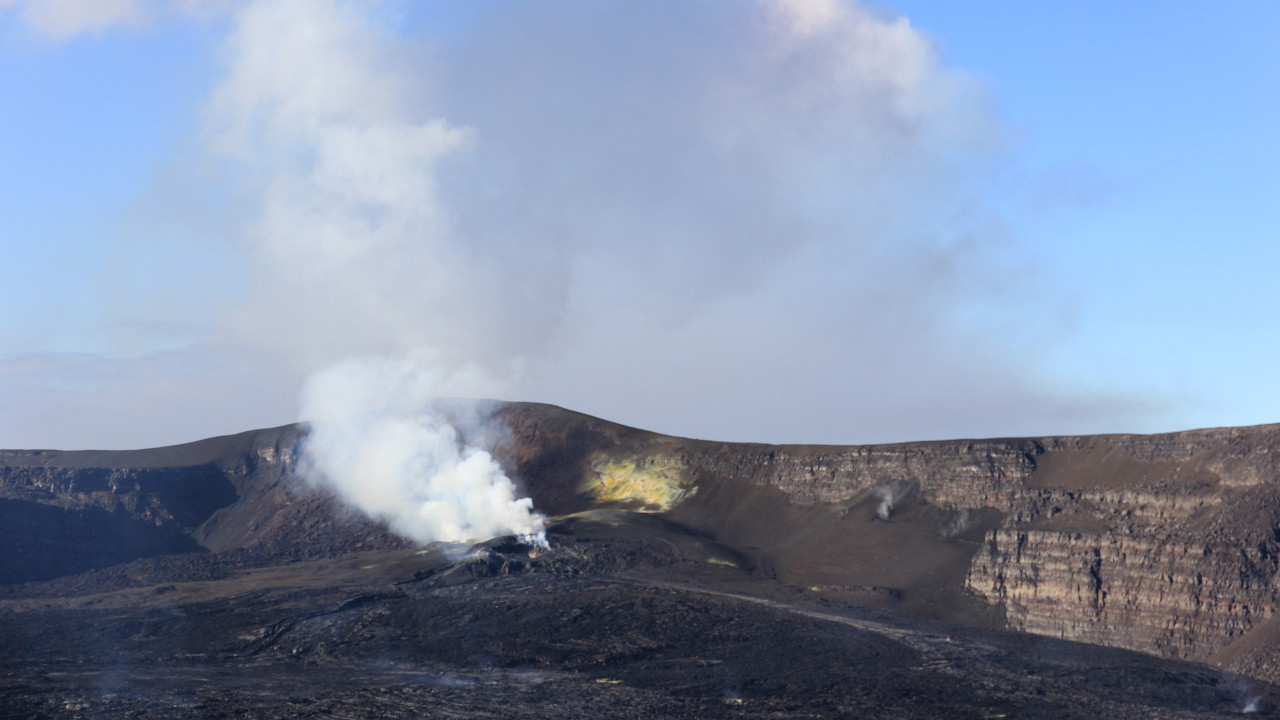
The health department provided this additional information:
Recommendations during vog conditions:
- Contact a medical provider if symptoms develop.
- Have medications readily on hand.
- Reduce outdoor activities; stay indoors and close windows and doors.
- Set air conditioners to recirculate air.
- The DOH does not recommend the use of respirators by the general public to protect against volcanic gases.
Especially vulnerable people include:
- Individuals with preexisting respiratory conditions such as asthma, bronchitis, emphysema and chronic lung or heart disease
- Children and infants
- Elderly individuals
- People who work or exercise outdoors
- Pregnant women
Guidance for short-term cleanup activities
If you reside in an area that has received ash, Pele’s hair, or tears from an eruptive event, the DOH recommends using a well-fitting N95 (or equivalent) mask to help protect against volcanic ash during cleanup, as well as the use of heavy-duty gloves, long clothing (e.g., long sleeves and pants), shoes and eye protection. Masks are designed to filter particles and do not provide protection against toxic gases such as SO2. Avoid sweeping, blowers, or other mechanical devices that may stir ash back into the air.
