(BIVN) – From this week’s Volcano Watch article written by U.S. Geological Survey Hawaiian Volcano Observatory scientists and affiliates:
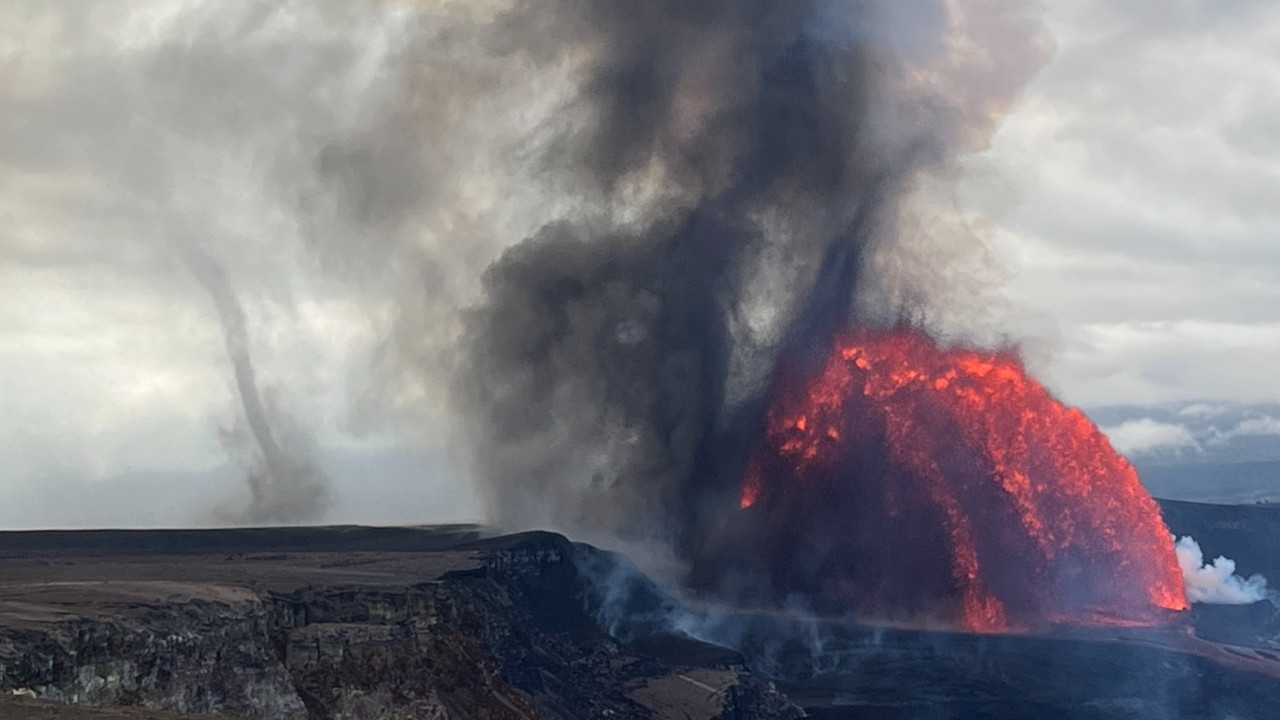
Despite the popularity of “Wicked” lately, we’re not talking about that particular twister. We’re talking about the tornado- or whirlwind-like phenomenon that has shown up frequently over the past year of eruptive episodes at Kīlauea’s summit.
Often spotted by onlookers in Hawaiʻi Volcanoes National Park, or even by YouTube livestream viewers, the long, ashy gray or brown, ropy cloud-like structures tend to appear near or downwind of active lava fountains. But what is it that we’re actually seeing? Twisters? Tornadoes? Whirlwinds? Lava-nadoes? Vol-nadoes? Tephra-nadoes?
In ʻŌlelo Hawaiʻi, or the Hawaiian language, we might call them puahiohio, or whirlwinds. In meteorological terms, these small twisters are technically dust devils, or more precisely, ash devils, tephra devils, or lava devils, depending on the debris involved. Dust (and other, like snow and hay) devils are a subset of whirlwinds, or wind vortices.
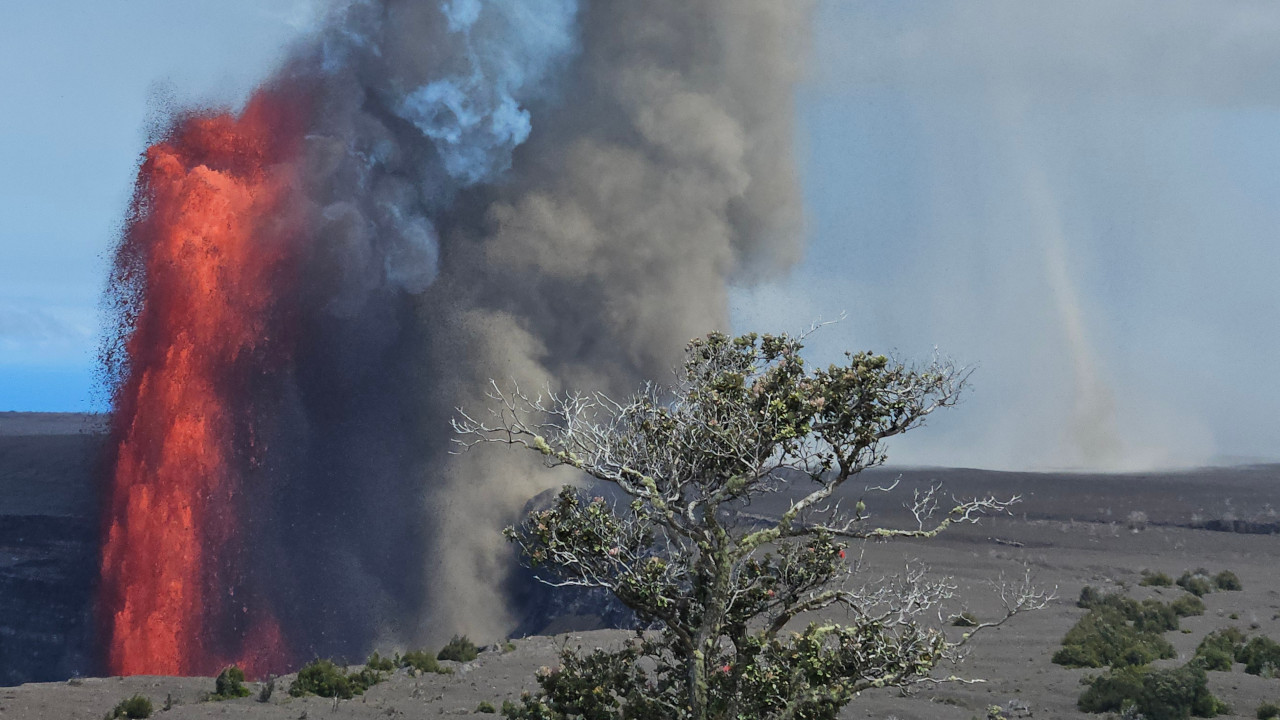
USGS photo of a light gray ash- and tephra-laden puahiohio downwind (to the right) of the episode 25 lava fountains on June 11, 2025.
Tornadoes and other larger whirlwinds are the stronger cousins of dust devils, and are generated by severe storms, like supercell thunderstorms and even hurricanes. Tornadoes can have winds more than 300 miles (480 km) per hour and tracks that go on for tens of miles (tens of km).
Dust devils are at the smaller end of the scale when it comes to whirlwinds and do not form in connection with stormy weather. Rather, dust devils often form in nice weather, with sunny, clear skies that allow for heating of a relatively flat ground surface. Hot air near the ground then rises, which causes convergence, or pulling in, of that rising air. If the rising air happens to have any rotation initially, that pulling in will enhance the rotation even more, much like a figure skater that spins faster when they pull their arms in close to their torso. Those swirling winds then stir up debris from the ground below. It’s this rise, convergence, and spin—plus debris—that create the visible swirling column that we see as a dust devil.
Here in Hawaii, we don’t necessarily need the sun to heat the ground to form these devilish whirlwinds—we have volcanoes that do plenty of their own heating. In these cases, the heat of lava or fresh tephra can be enough to cause surface-level air to warm and rise into cooler air above.
Some of you may remember impressive footage of swirling lava above the main lava channel in Kīlauea’s lower East Rift Zone in 2018—considering there wasn’t any dust involved, we could perhaps call that a lava devil. Similar whirlwinds were also spotted above lava during the June 2023 Kilauea eruption and the 2022 Mauna Loa eruption. Over the June 2023 lava lake at Kīlauea summit, the puahiohio could be seen ripping up slabs of the cooled surface of the lake to expose bright orange lava. Over the 2022 Mauna Loa flow, the whirlwinds often formed where the main flow had breakouts, which exposed hotter lava that supplied the heat needed to drive the twisters.
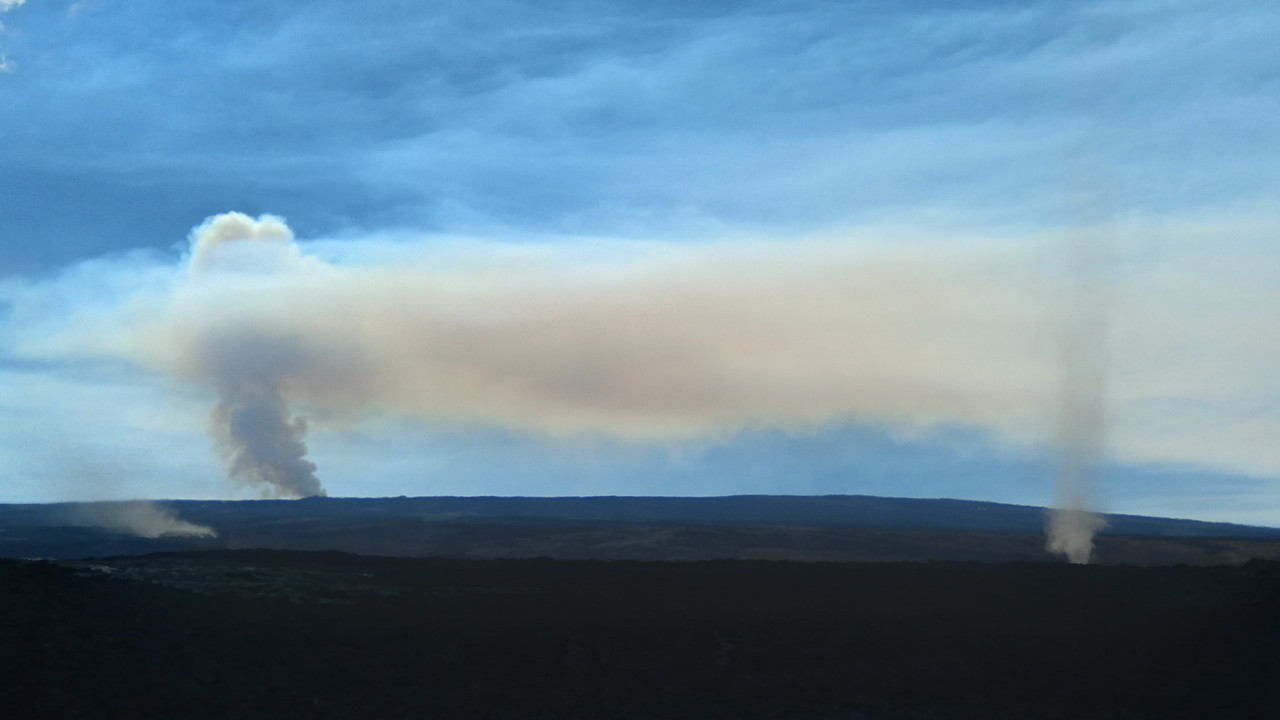
USGS photo shows a dusty lava puahiohio (at right in frame) above the main 2022 Mauna Loa lava flow on December 2, 2022, with the eruptive plume further in the background (at left in frame).
We’ve also seen what we might call ash devils at Kīlauea following the 2018 summit collapse events—dusty white whirlwinds entraining the light-colored ash produced during the collapses. In this case, without volcanic heat directly involved, these would have formed more like a traditional dust devil, via heating of the mostly flat ground by the sun.
The most recent puahiohio that we’ve seen at Kīlauea are probably best described as tephra devils, as they appear to consist mostly of low-density tephra produced by the ongoing episodic lava fountains. In this case, between the intense thermal input from the fountains, and the heat from the lava flows, tephra, and spatter covering the caldera floor, any of these could trigger the whirlwinds.
While dust devils and other volcano-related puahiohio are smaller, weaker, and often more short-lived than true tornadoes, it’s important to remember that they still generate relatively strong, concentrated winds capable of carrying debris. This means you wouldn’t ever want to be caught in one, especially if the swirling debris is hot! This also means they could potentially damage USGS Hawaiian Volcano Observatory instrumentation in the field—though the eruptions themselves have already wreaked plenty of havoc on instruments without any help from puahiohio!
We hope this bit of information on our volcanic puahiohio has been helpful. It seemed only fitting for closing out a 37-episode (plus two more in 2024!) whirlwind of a year!
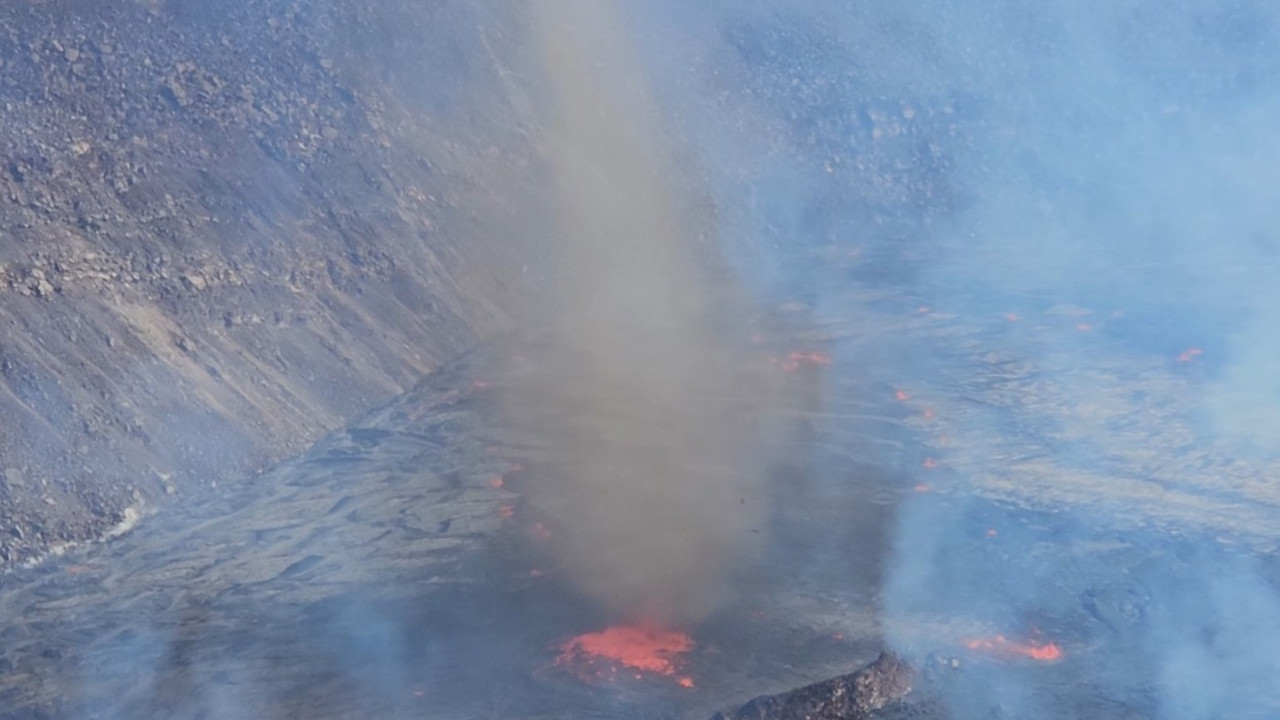
USGS photo of a lava puahiohio as it rips up the crust of the Kīlauea summit lava lake on June 7, 2023.

by Big Island Video News
on at
STORY SUMMARY
HAWAIʻI VOLCANOES NATIONAL PARK - This week, the USGS Hawaiian Volcano Observatory writes about the "twisters" seen during recent eruptive episodes.