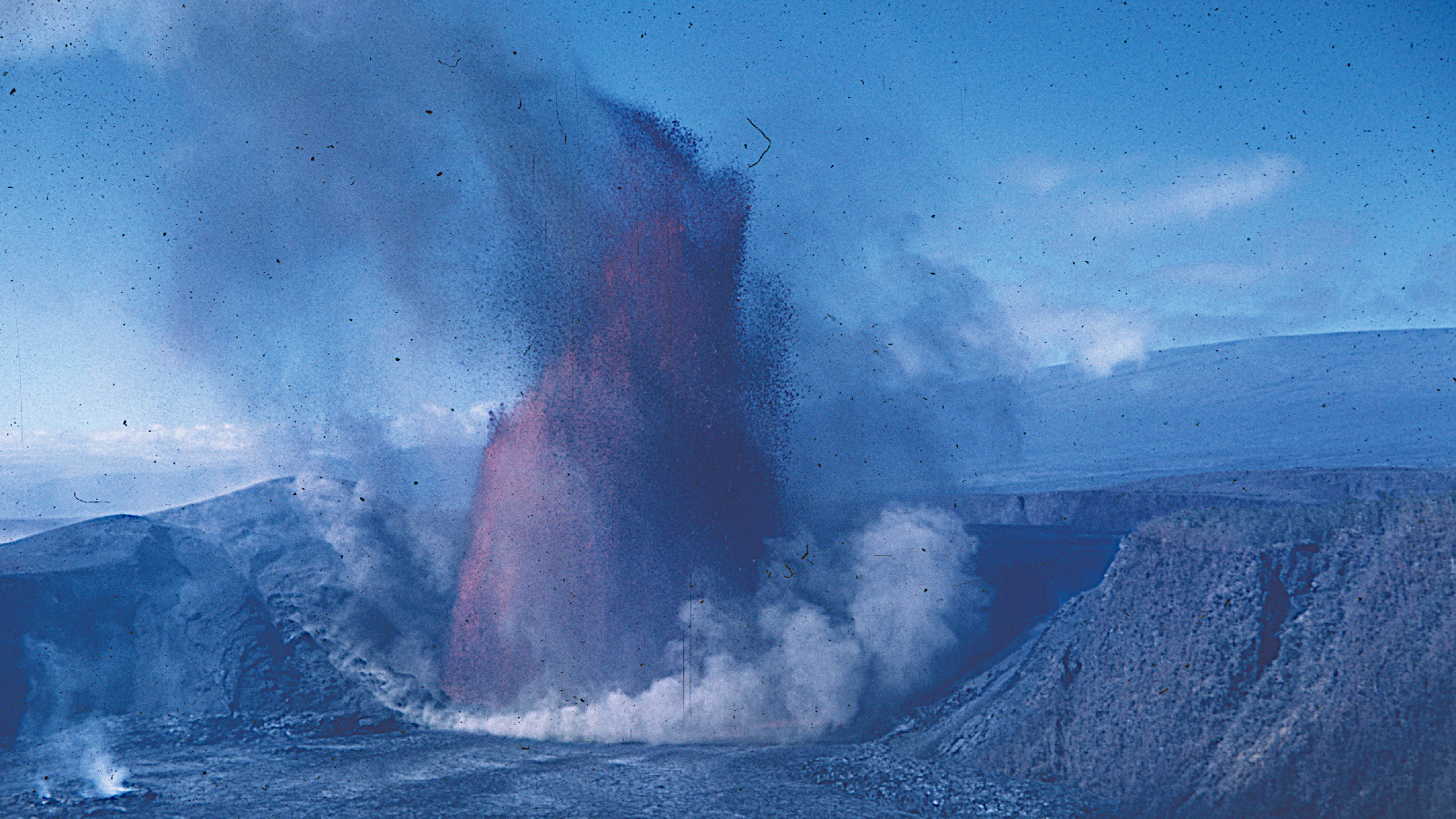
(BIVN) – High lava fountains are expected at the summit of Kīlauea as early as this weekend, as part of the ongoing eruption at Halemaʻumaʻu within Hawaiʻi Volcanoes National Park.
In this week’s Volcano Watch article, USGS Hawaiian Volcano Observatory geologist Katie Mulliken compared the present day lava display to what was seen during the eruption of Kīlauea Iki in 1959:
A series of lava fountains building a cone perched on the crater rim…sounds like the ongoing eruption in Halemaʻumaʻu at the summit of Kīlauea, but this description could also fit the Kīlauea Iki eruption in 1959. Let’s compare these two episodic lava fountaining eruptions.
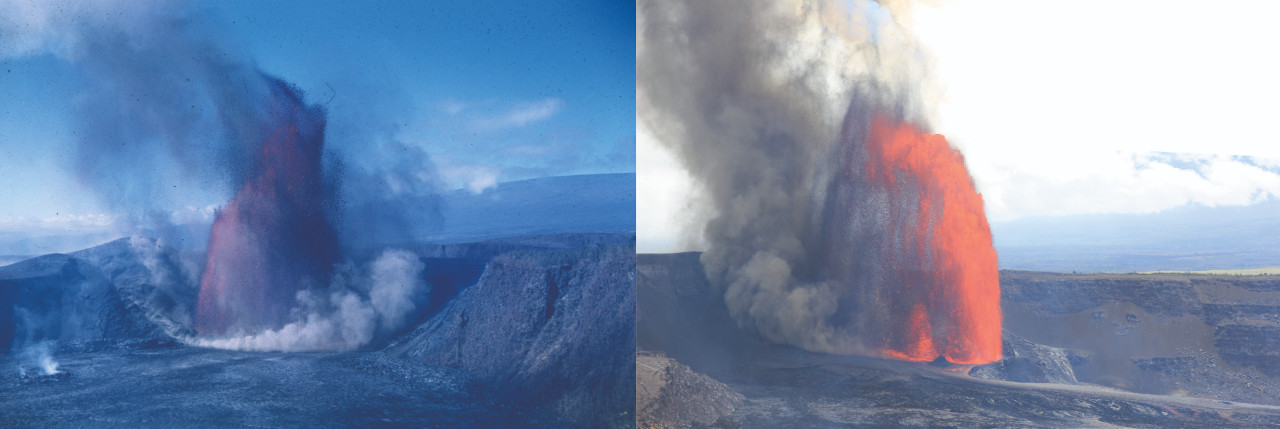
Left: Lava fountains on December 14, 1959, during the Kīlauea Iki eruption. Right: Lava fountains on June 11, 2025, during episode 25 of the Halemaʻumaʻu eruption. (USGS photos)
An earthquake swarm 35 miles (55 kilometers) beneath Kīlauea in August of 1959 was followed in October by ground swelling indicating that magma was accumulating within the volcano.
On November 14, Kīlauea summit region shook for 5 hours as magma made a path to the surface. The eruption began at 8:08 p.m. as a series of small lava fountains on the south wall of Kīlauea Iki Crater, east of Kaluapele (Kīlauea summit caldera). Gradually over the next day, eruptive activity became focused at one vent.
For the next week, this vent continued to erupt with lava fountains reaching up to 1,200 feet (380 meters) high. Fallout from the lava fountain—tephra, fragments from volcanic eruptions that are ejected through the air—landed on the crater rim to the southwest, while lava also accumulated within the crater, forming a lava lake.
On November 21, the lake of lava within the crater rose above the level of the vent. That evening, the vent abruptly stopped erupting and lava from the lake began to drain back. Over the next 5 days, pāhoehoe ooze outs and crustal overturns continued on the lava lake surface within the crater. The vent crusted over, but the eruption was not over.
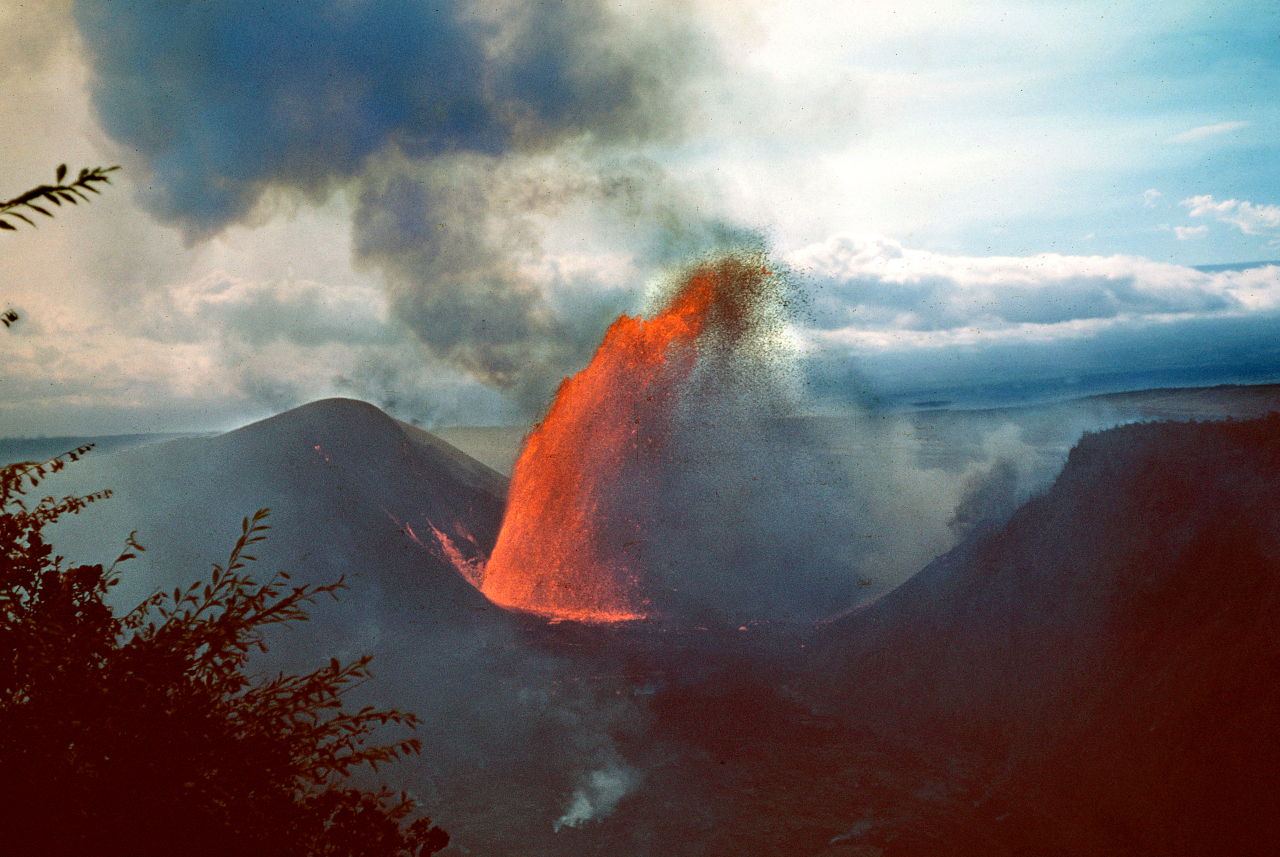
Lava fountain and the growing Puʻu Puaʻi cinder cone during the eruption of Kīlauea Iki in 1959 (USGS photo)
Just after midnight on November 26, the eruption resumed. Similar to how some episodes in the ongoing Halemaʻumaʻu eruption have been slow to start, episode 2 in 1959 started with low fountains as degassed lava that had drained into the vent was erupted out. Eventually, eruption of fresher and gassier lava was accompanied by higher lava fountains reaching 1,000 feet (305 meters). The second episode lasted less than 24 hours.
In total, 17 episodes of lava fountaining occurred at Kīlauea Iki over about a month in 1959. Episode 15 even saw the highest lava fountains ever recorded at Kīlauea: 1,900 feet (580 meters). Tephra fell up to 10 miles (16 kilometers) downwind. Puʻupuaʻi was built as 230 feet (70 meters) of tephra piled on the crater rim, while the crater was filled with 413 feet (126 meters) of lava. During the ongoing Halemaʻumaʻu eruption, 140 feet (43 meters) of tephra has accumulated on the crater rim and an average of 223 feet (68 m) of lava has been added to the crater floor.
When lava would drain back after an episode in 1959, it left a “black ledge”—like a bathtub ring—around the crater. During early episodes of the ongoing eruption in Halemaʻumaʻu drainback similarly occurred, but this no longer occurs because the vent topography is now much higher than the surroundings.
Following recent episodes in Halemaʻumaʻu, the cone on the crater floor and rim has developed large cracks as portions of the steep and unconsolidated slopes slump downward. This also occurred in 1959, with collapsed parts of the cone being rafted on the lava lake surface during subsequent episodes.
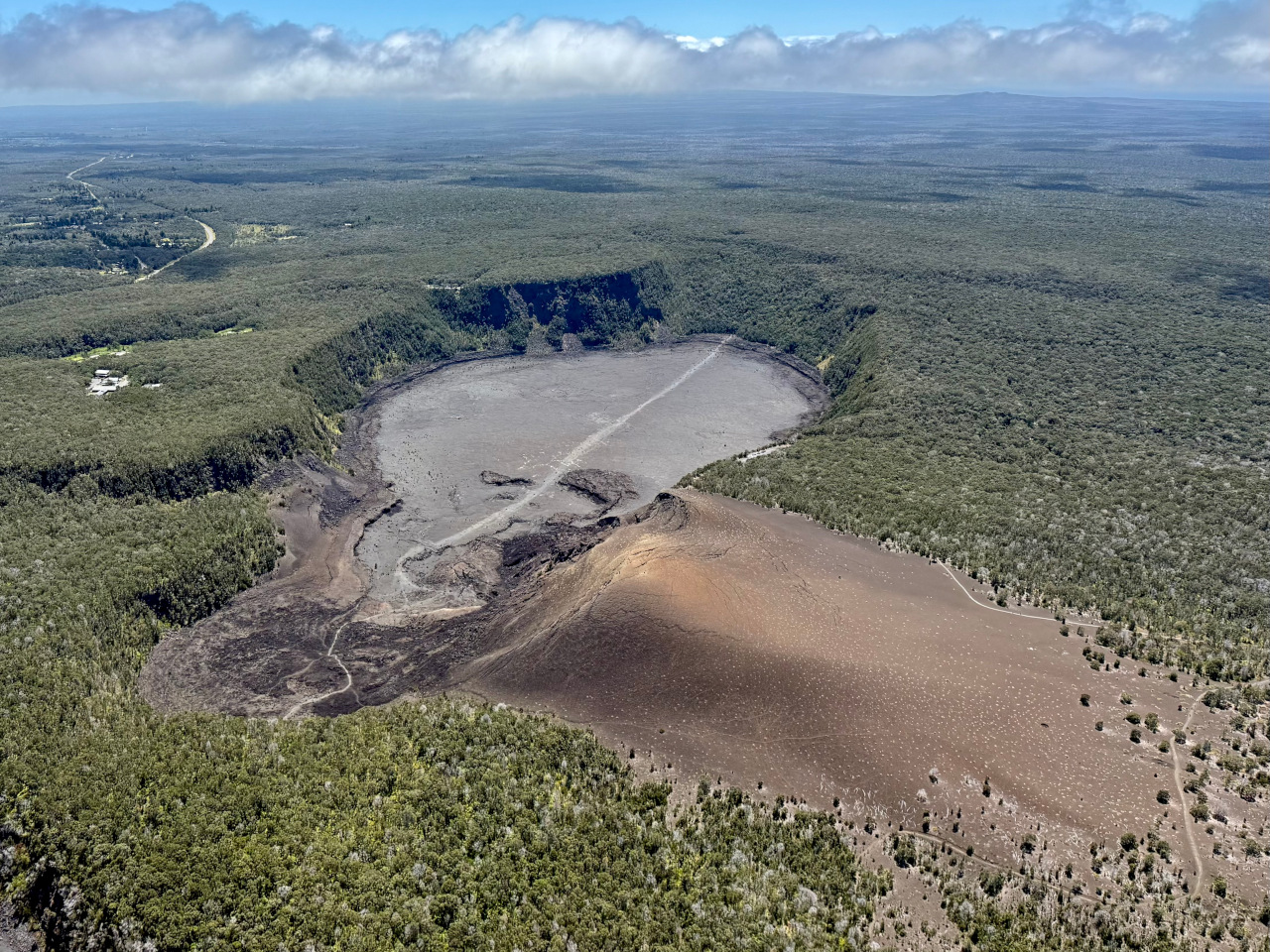
USGS: “An aerial view of Kīlauea Iki and Pu‘u Pua‘i taken during a USGS Hawaiian Volcano Obsrvatory monitoring overflight of Kīlauea summit on August 8. Pu‘u Pua‘i, the large cinder cone in the lower right of the image, was formed by tephra deposits from lava fountains similar to those that have been occurring in the last thirty episodes of the 2024-2025 summit eruption at Kīlauea. During the 1959 Kīlauea Iki eruption, fountains reached heights of 580 meters (1,900 ft), while the ongoing eruption has reached heights of 380 m (1250 ft). The Pu‘u‘ō‘ō vent, which was active from 1983-2018 (far, background), is visible in the distance.” (USGS photo by M. Decker)
During the month-long Kīlauea Iki eruption 1959, 13.2 billion gallons (50 million cubic meters) of lava erupted over 17 episodes. During the ongoing eruption in Halemaʻumaʻu, about four times that volume has been erupted—52.7 billion gallons (200 million cubic meters)—during a little more than twice the number of episodes, but over an entire year.
The ongoing Halemaʻumaʻu eruption has surpassed Kīlauea Iki in terms of longevity and erupted volume, but its lava fountains (at a maximum of 1,575 feet, or 480 meters) have not yet approached the highest observed during the Kīlauea Iki eruption.
The last two episodes of the Kīlauea Iki eruption occurred on the morning and evening of the same day. Episode 16 produced fountains up to 800 feet, while episode 17 only produced spatter reaching about 100 feet (30 meters). This quick drop off in activity is one scenario for how the current Halemaʻumaʻu eruption could end.
After the Kīlauea Iki eruption, the summit region was at a higher level of inflation than before the eruption started, leading to magma migration and an eruption on the East Rift Zone in early 1960. Currently, the USGS Hawaiian Volcano Observatory does not see any signs of change to the current eruption, and we continue to closely monitor Kīlauea.

by Big Island Video News
on at
STORY SUMMARY
HAWAIʻI VOLCANOES NATIONAL PARK - Scientists look back on the eruption of Kīlauea Iki, and compare it to the current eruption at Halemaʻumaʻu.