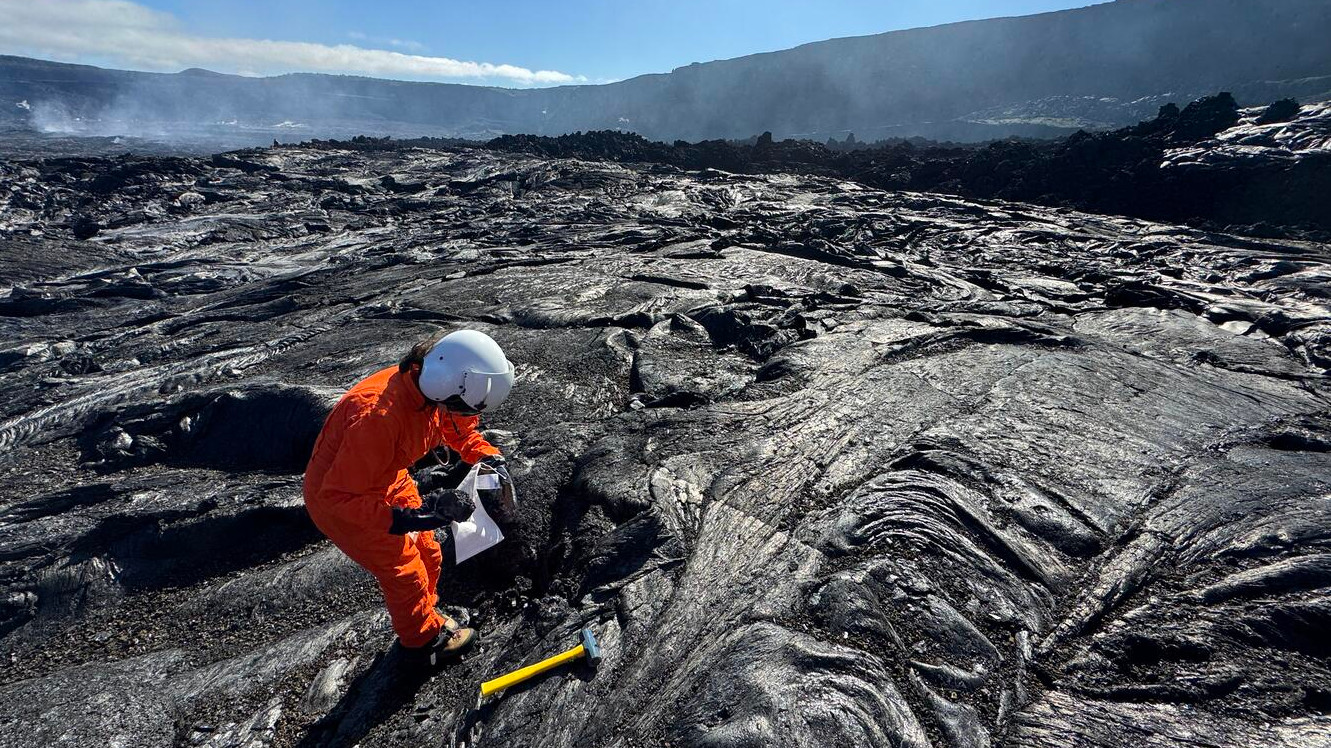
(BIVN) – The ongoing eruption at the summit of Kīlauea is paused, and unusual seismicity continues, as the next episode of lava fountaining nears.
On Thursday, the USGS Hawaiian Volcano Observatory reported episode 41 is forecast to start between January 23 and January 25, based on current inflationary tilt models.
The earthquake swarms that were recorded earlier this week have transitioned into longer periods of elevated “micro-seismicity”, which scientists say coincided with brief deflationary tilt of about 0.5 microradians. Still, since the end of episode 40, “the UWD tiltmeter has recorded 16.2 microradians of inflationary tilt, with net 1.8 microradians of inflation over the past 24 hours,” the Observatory says.
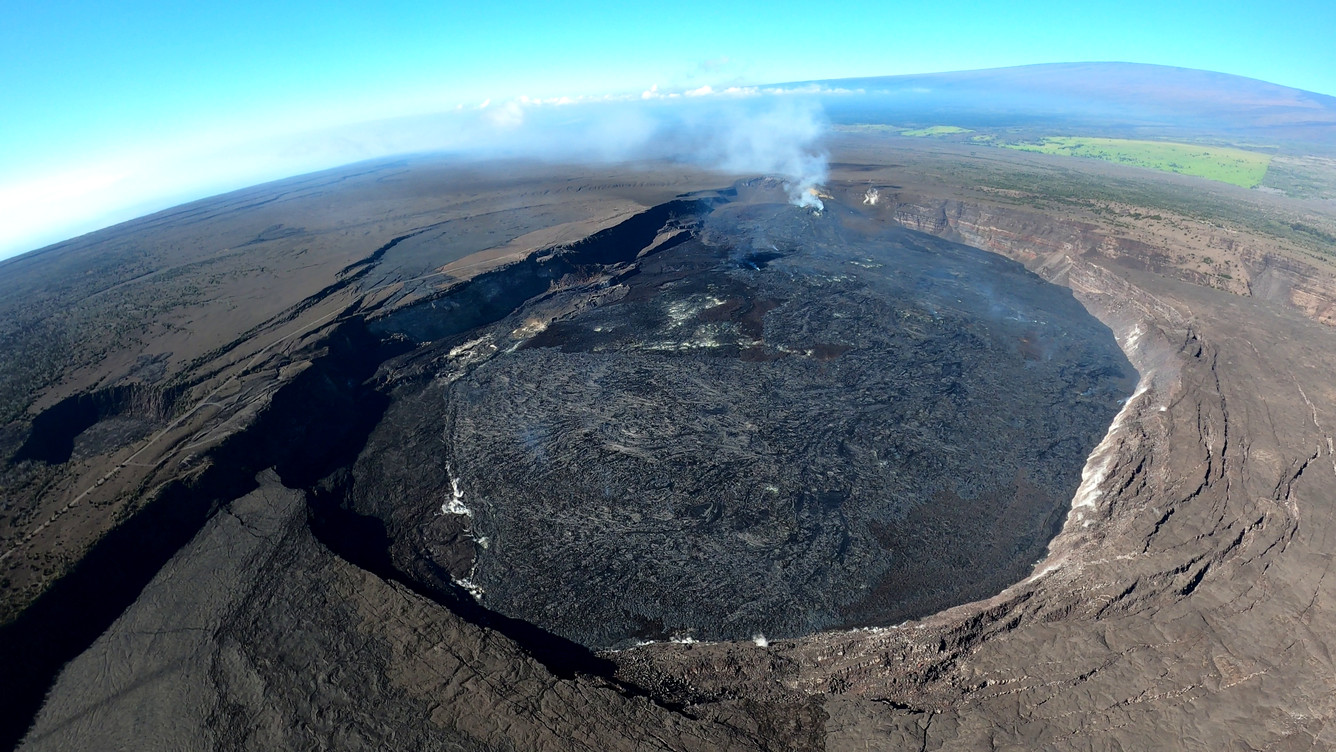
USGS: “On Friday, January 16, USGS Hawaiian Volcano Observatory geologists conducted an overflight of Kīlauea summit to map the effects of episode 40 and collect samples of the lava. This wide-angle photo shows the episode 40 flows reaching the crater wall in the foreground, with the vents in the distance. A passive outgassing plume originates from the vents and is carried southwest in the tradewinds. Mauna Loa is visible in the upper right portion of the photo.” (USGS photo by M. Patrick)
From the USGS HVO summit observations posted on Thursday:
Overnight webcam views of Halemaʻumaʻu showed consistent strong glow from both the north and south vents, with several brief instances of weak spattering from the north vent. Constant low-level tremor continues this morning.
Two multi-hour periods of elevated micro-seismicity occurred over the past day, the first starting around 6:00 p.m. HST yesterday evening and the second starting around 2:00 a.m. HST this morning. However, neither period saw earthquake activity as strong as the swarms earlier this week and only four earthquakes were large enough (all were about magnitude 1) to be located over the past 24 hours. Earthquake locations continue to be spread fairly widely beneath the southeast part of Halemaʻumaʻu, as the swarms are related to migrating magmatic pressure within the summit region. Their impact on the next episode of lava fountaining, if any, is unknown at this time. For more information see prior Daily Updates and this Information Statement for more details: USGS Volcano Notice – DOI-USGS-HVO-2026-01-15T06:34:34+00:00.
Since the end of episode 40, the UWD tiltmeter has recorded 16.2 microradians of inflationary tilt, with net 1.8 microradians of inflation over the past 24 hours. Both periods of elevated seismicity over the past day coincided with brief deflationary tilt of about 0.5 microradians each.
The sulfur dioxide (SO2) emission rate from the summit was last measured on January 14 at 1,550 tonnes per day, which is within the typical range of 1,000 to 5,000 tonnes of SO2 per day observed during previous eruptive pauses. This is considerably lower than rates observed during lava fountaining episodes.
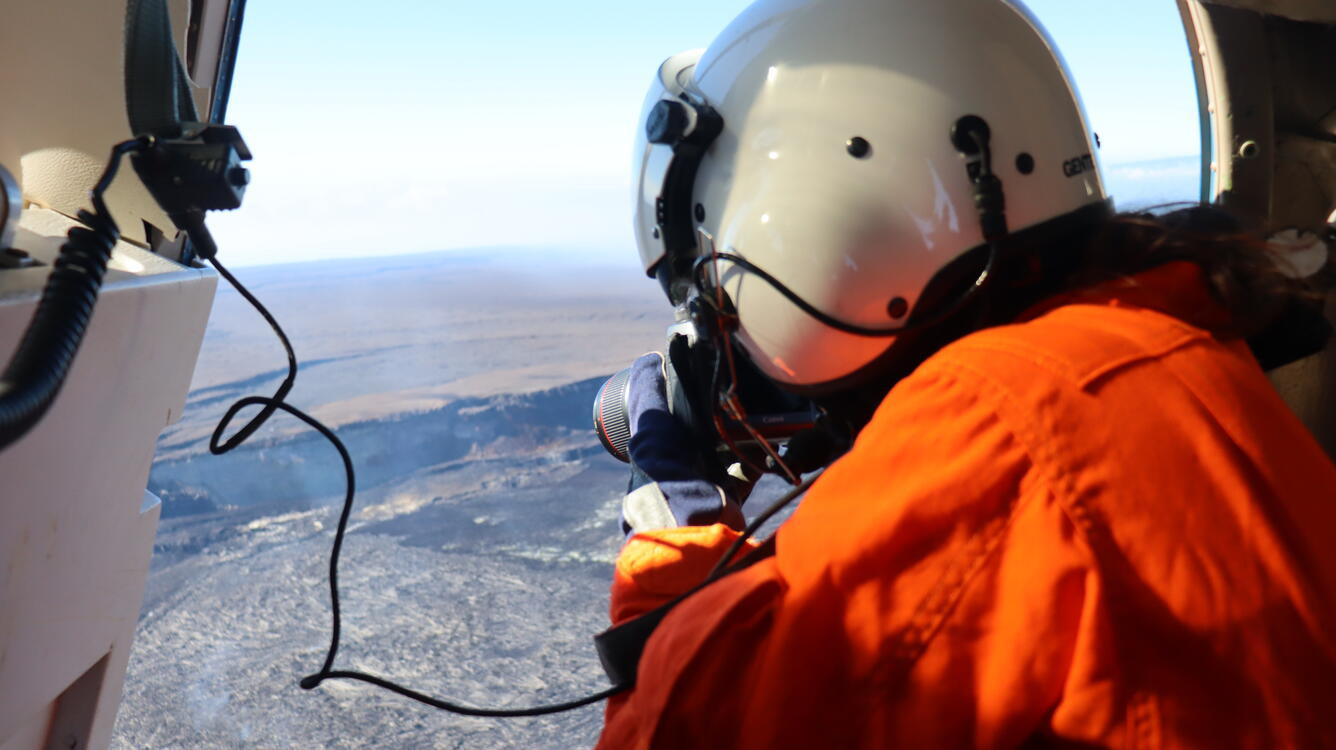
USGS: “A USGS Hawaiian Volcano Observatory geologist collects images for photogrammetric processing at the summit of Kīlauea following episode 40 lava fountaining. These surveys help determine the volume of lava erupted during each episode, and the crater infilling rates.” (USGS photo by T. Orr)
Analysis:
The rapid rebound of inflationary tilt, glow and spatter from the vents, and presence of low-level volcanic tremor after episode 40 indicate that another lava fountaining episode is likely. Overnight, UWD tilt recorded rapid inflation of the summit despite the cumulative tilt drop of 1 microradian associated with the swarms of micro-seismicity. Everything currently points to resumption of fountaining episodes rather than a change in vent location. The continued repressurization of the Halemaʻumaʻu magma reservoir, persistent glow, and the appearance of spattering from the north vent all indicate episode 41 fountaining will take place in the next few days. While seismic swarms continue, their intensity is reduced as well as their impact on reinflation of the summit. Models indicate the onset of episode 41 lava fountaining is likely to occur between January 23 and 25. This forecast is subject to change, as always, depending on changes in behavior of the volcano.
Kīlauea has been erupting episodically since December 23, 2024, primarily from two vents (north and south) in Halema‘uma‘u. Eruptive episodes, which generally last for less than 12 hours, are separated by pauses that can be as long as over two weeks.
HVO continues to closely monitor Kīlauea and is in contact with Hawai‘i Volcanoes National Park and the Hawai‘i County Civil Defense Agency about eruptive hazards.

by Big Island Video News
on at
STORY SUMMARY
HAWAIʻI VOLCANOES NATIONAL PARK - Short earthquake swarms have transitioned into multi-hour, elevated micro-seismicity events at the summit.