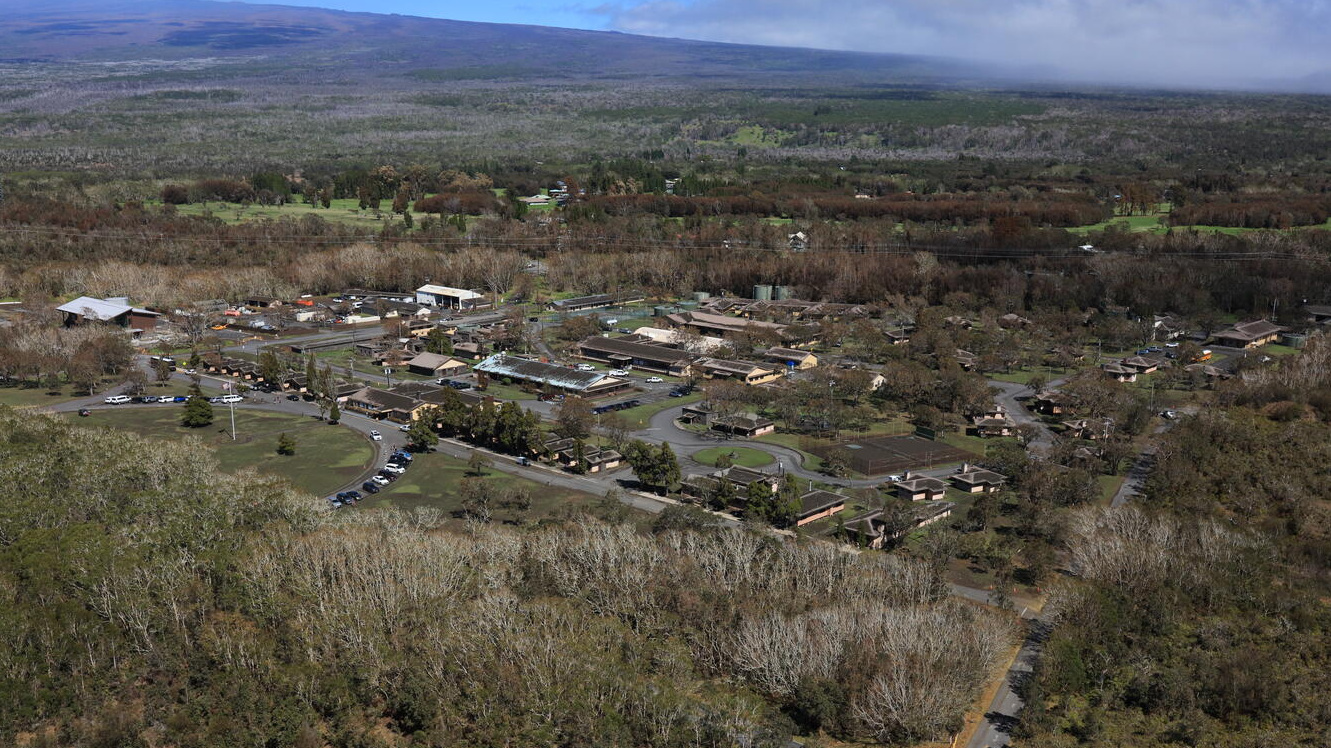
(BIVN) – The eruption at the summit of Kīlauea remains paused, and the USGS Alert Level for the Hawaiʻi island volcano is at WATCH.
Inflation continues at the summit, and scientists forecast episode 44 high lava fountains will occur sometime between April 6th and April 14th.
On Tuesday, March 31, USGS Hawaiian Volcano Observatory scientists completed a helicopter overflight of the Kīlauea summit, capturing photos of the eruptive vents in Halemaʻumaʻu, and the surrounding area, much of which remains covered with tephra from the episodic eruption.
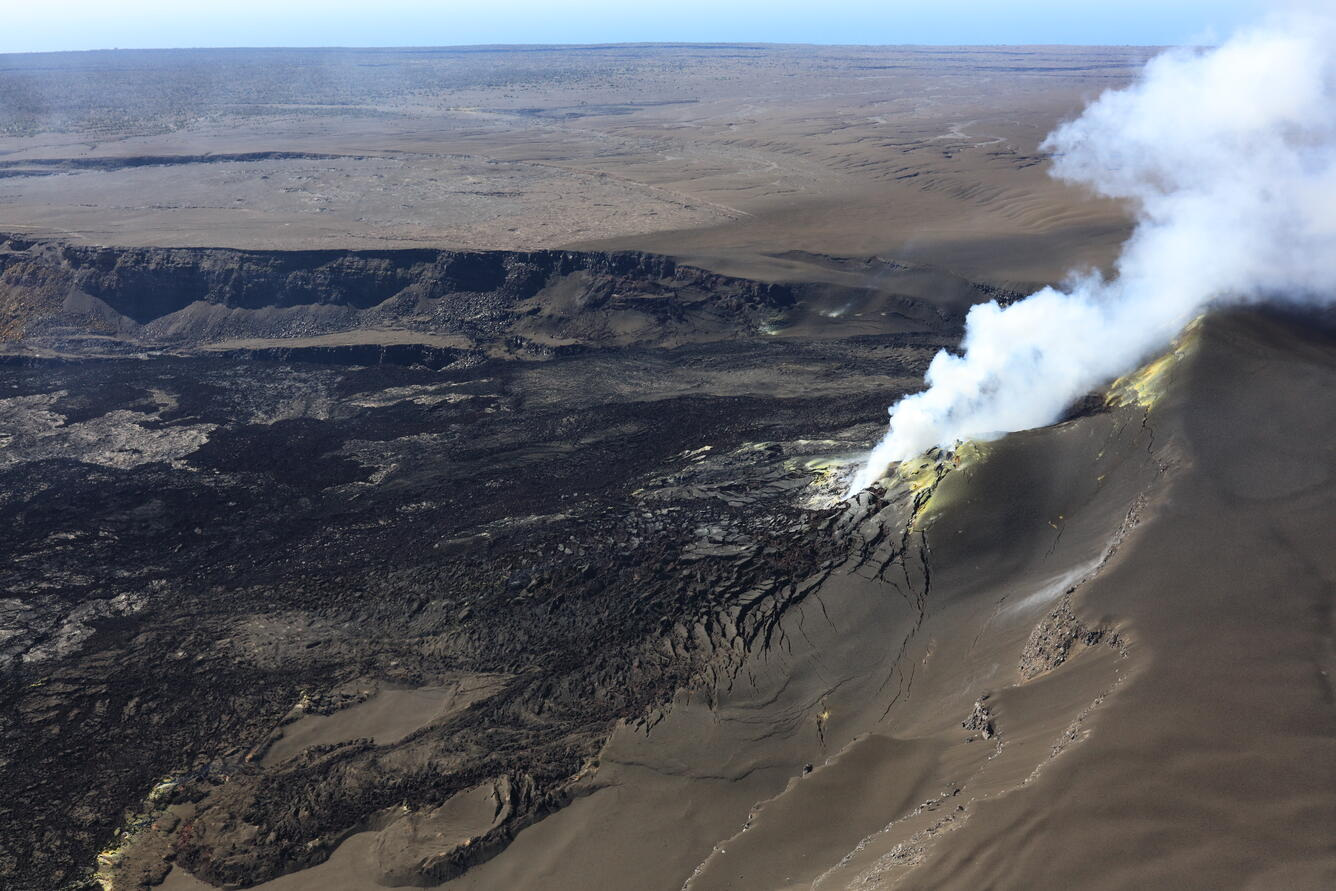
USGS overflight on March 31 shows vigorous degassing at both the north and south vents in Halemaʻumaʻu (USGS photo by M. Zoeller)
“Both the north and south vents were vigorously degassing at the time, and a low pass over the two revealed a weakly spattering lava pond about 30 meters (100 feet) down in the south vent,” the Observatory wrote.
On Wednesday, the Observatory reported seismic tremor is continuous with no bursts, and noted one earthquake was recorded at the summit during the past day.
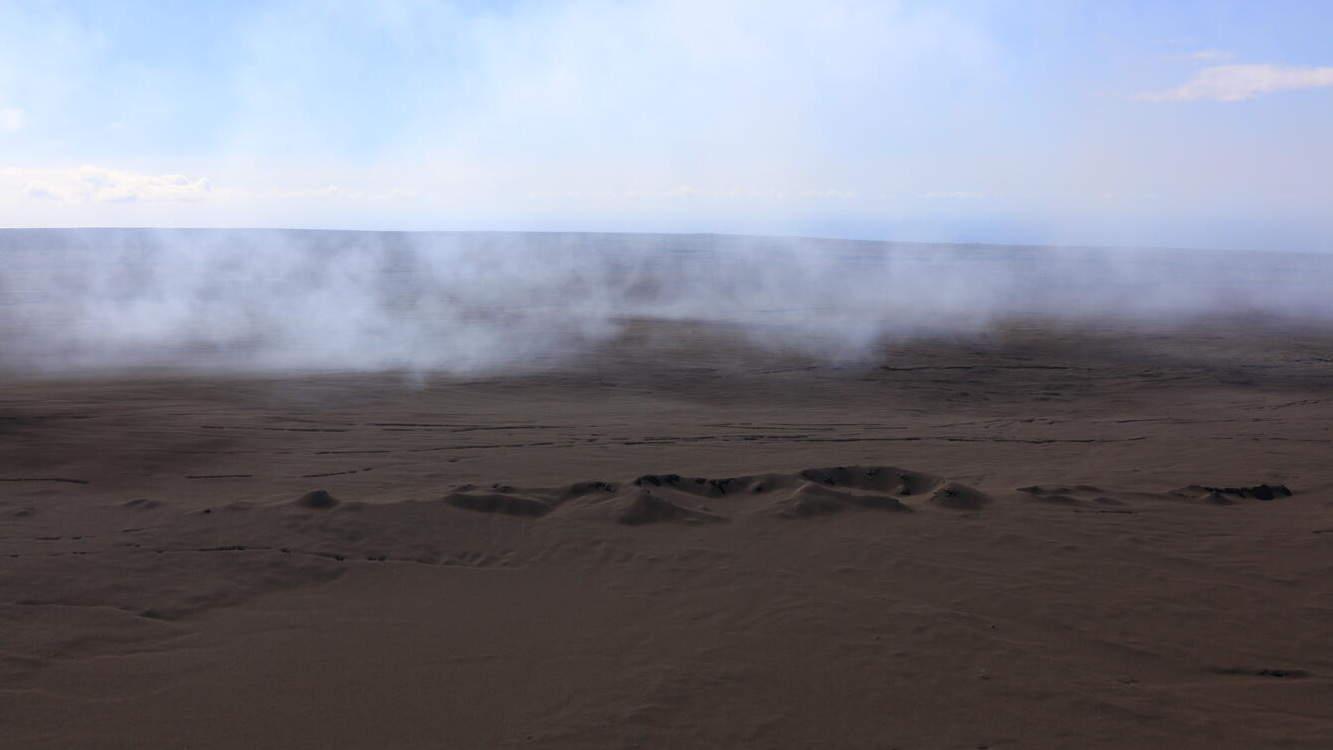
USGS: “The tephra deposit from the ongoing Kīlauea summit eruption has dramatically changed the landscape in the predominant downwind direction (southwest) of Halema‘uma‘u crater. In this photo captured during the USGS Hawaiian Volcano Observatory helicopter overflight on March 31, a 200–400-year-old spatter cone complex known as Cone Peak is seen blanketed in recent tephra fall with only a few jagged rocks peeking out. For scale, this complex spans about 650 meters (2,100 feet) from end to end in this view.” (USGS photo by M. Zoeller)
The episodic summit eruption at Kīlauea has been ongoing since December 23, 2024. The episodes generally last for less than 12 hours, and are separated by pauses that can be longer than two weeks.
In recent months, the episodes have been sending tephra – glassy volcanic fragments – into public areas within Hawaiʻi Volcanoes National Park, and into the nearby communities. Tephra can present a hazard. “These particles may be remobilized during windy conditions following recent eruptive episodes,” the Observatory says. “Residents and visitors should minimize exposure to these fragments, which can cause skin, eye, and respiratory irritation.”

by Big Island Video News
on at
STORY SUMMARY
HAWAIʻI VOLANOES NATIONAL PARK - Scientists continue to forecast episode 44 high lava fountains will occur sometime between April 6th and April 14th.