
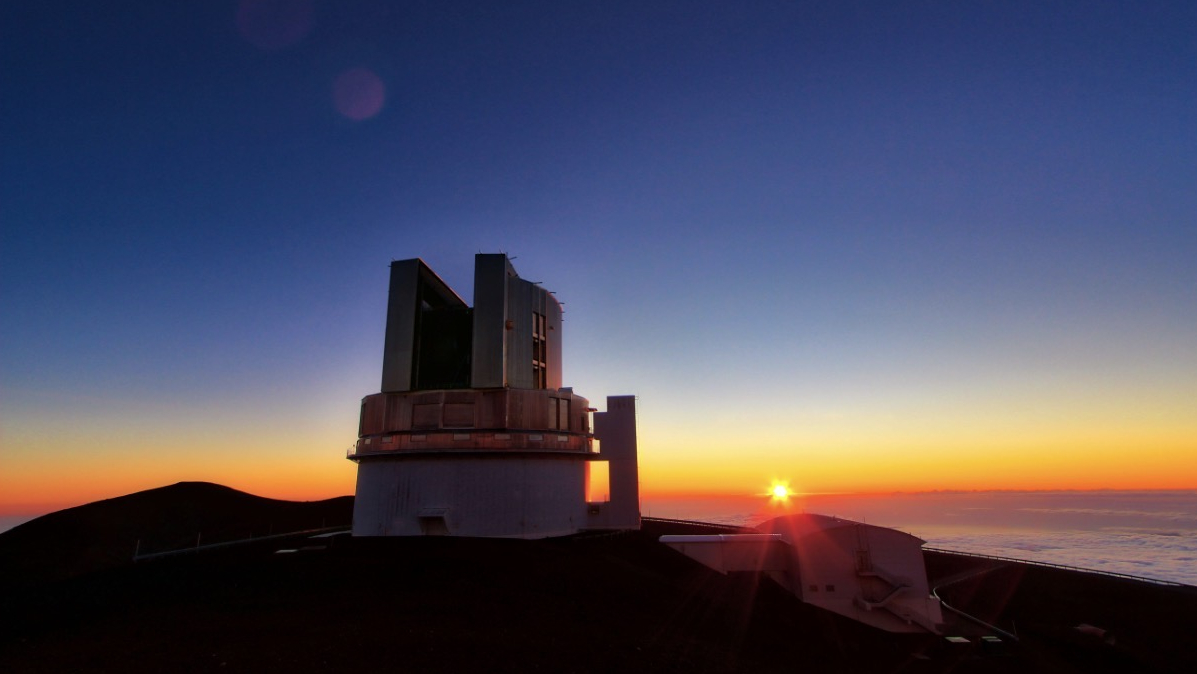

(BIVN) – The Subaru Telescope on Maunakea has found new clues about the makeup of Interstellar Comet 3I/ATLAS.
According to Subaru, observations made by astronomers from the facility atop the Hawaiʻi island mountain suggest that the comet’s chemistry changed as it passed near the Sun. The findings provide insight into how material in interstellar comets differs from the material in comets formed in our own Solar System.
Comet 3I/ATLAS is the third known interstellar object to be discovered. The first, ‘Oumuamua was discovered in 2017 by the Pan-STARRS telescope located on Halealakalā in Maui. Subaru says ‘Oumuamua “appeared to be a rocky, elongated object with no obvious cometary features”, while 3I/ATLAS “clearly behaves like a comet, displaying a bright, glowing coma of gas and dust.”
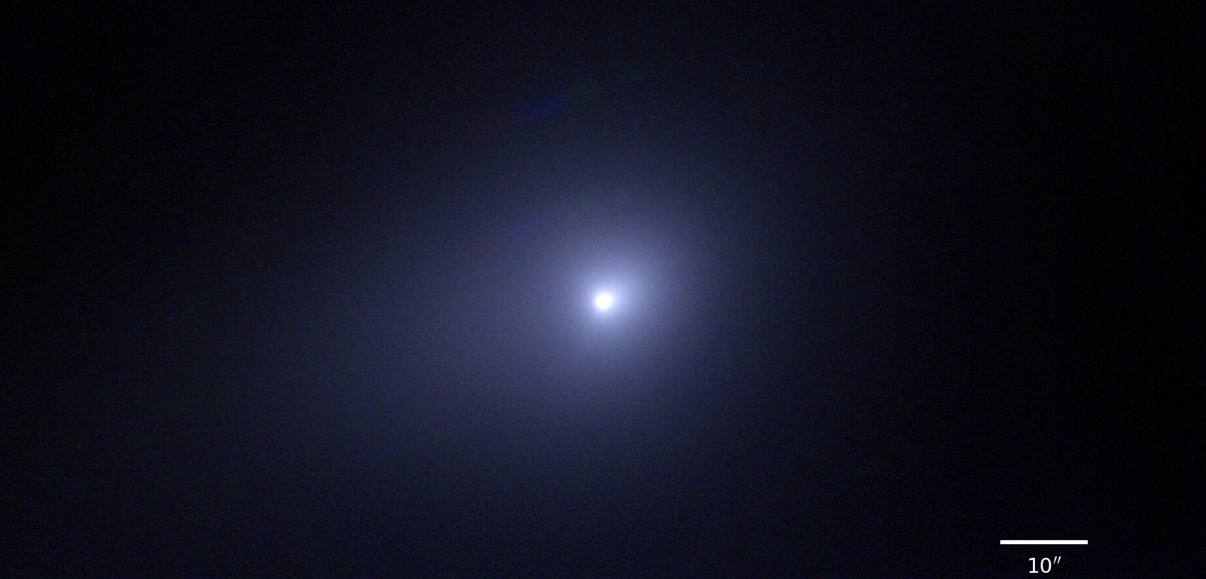
From the Subaru Telescope Public Information and Outreach:
The research team, led by Yoshiharu Shinnaka of the Koyama Space Science Institute at Kyoto Sangyo University, observed the comet with the Subaru Telescope on January 7, 2026 (UT), after its closest approach to the Sun. By analyzing light from the comet’s coma — the cloud of gas and dust surrounding its nucleus — the team estimated the ratio of carbon dioxide to water in material escaping from the comet. That ratio was lower than values inferred from earlier space-telescope observations, suggesting that different layers of the comet began releasing gas as solar heating changed conditions on and within the nucleus.
For astronomers, that change is especially important because the coma acts as a window into the comet’s nucleus, the frozen central body of the object. If the chemistry seen before and after the comet’s closest solar pass is different, it may mean the outer and inner parts of the comet are not the same. That gives researchers a rare opportunity to learn how small bodies formed and evolved around other stars.
“By applying the observational and analytical techniques we have developed through studies of Solar System comets to interstellar objects, we can now directly compare comets hailing from both inside and outside the Solar System and explore differences in their composition and evolution,” Shinnaka said in the official release from Subaru Telescope.
The findings were published in The Astronomical Journal on April 22, 2026, in a paper titled “A post-perihelion constraint on the CO₂/H₂O ratio of interstellar comet 3I/ATLAS from [O I] forbidden lines.” The official announcement says the work was supported in part by grants from the Japan Society for the Promotion of Science and by the Koyama Space Science Institute.
The discovery also highlights Hawaiʻi’s continued role in world-leading astronomy. Operated by the National Astronomical Observatory of Japan, the Subaru Telescope is one of the premier optical-infrared observatories in the world and conducts observations from Maunakea, a place of deep cultural, historical, and natural significance in Hawaiʻi. In its official statement, Subaru Telescope expressed gratitude for the opportunity to observe the universe from Maunakea.
With the full operation of LSST, a powerful survey telescope, astronomers expect to discover more interstellar visitors like 3I/ATLAS. Each one offers a rare chance to compare the building blocks of other planetary systems with those of our own, and observations from Hawaiʻi are helping lead that effort.
