
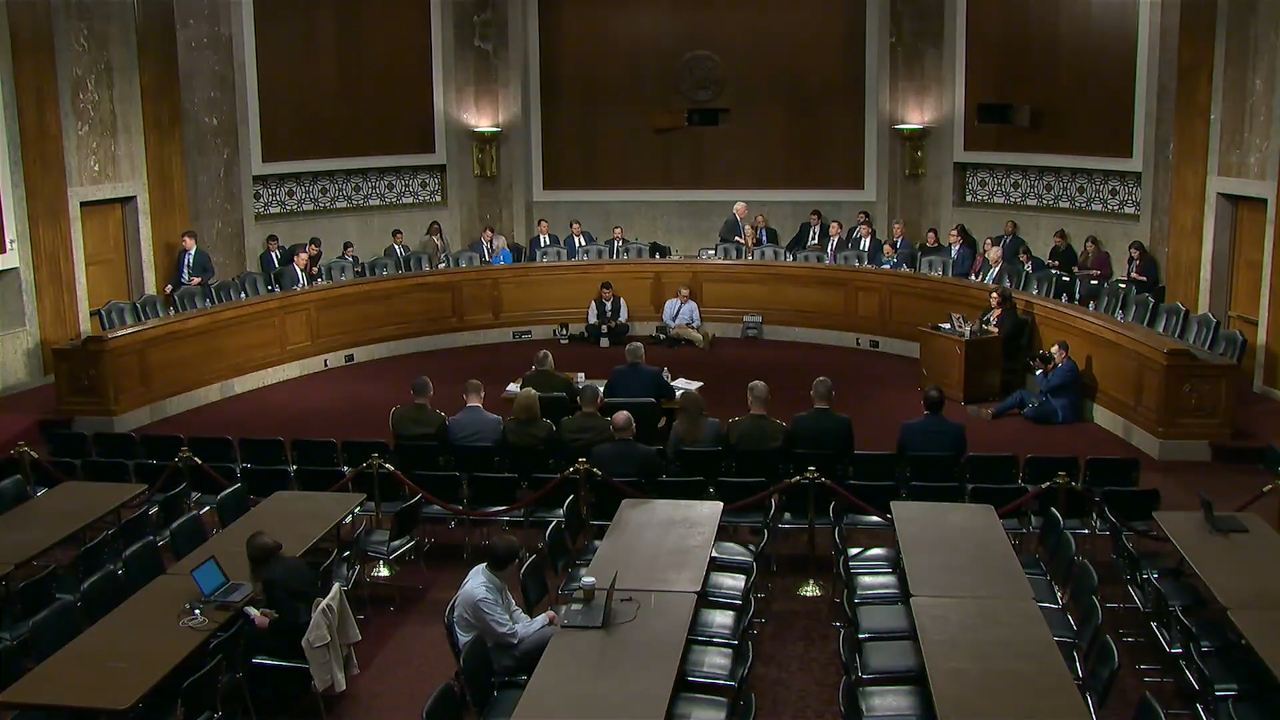

(BIVN) – U.S. Senator Mazie Hirono (D, Hawaiʻi) on Tuesday questioned Secretary of the Army, Daniel Driscoll, about military land lease retention efforts in Hawaiʻi, and whether the negotiations are “in good faith”.
The Army is seeking to retain up to approximately 22,750 acres of State-owned land at Pōhakuloa, in order to continue the ongoing training activities at the facility. The lease is set to expire in 2029. There has been public opposition to the land retention based on numerous environmental and cultural concerns.
Negotiations between Secretary Driscoll and the State of Hawaiʻi have, at least in part, been documented on the Engage Hawaiʻi pubic website.
During the Senate Armed Services Committee hearing, Senator Hirono focused much of her questioning on the Army’s possible use of condemnation to keep the lands under military use.
U.S. Senate video via Sen. Mazie Hirono on YouTube
From a transcript of the exchange:
Sen Hirono: Secretary Driscoll, I want to ask you about your approach to the negotiations surrounding Hawaii’s military plans consisting of 25,000 acres. I understand the importance of these lands for Army readiness. I also understand the importance of this land, of these negotiations to the people of Hawaii and the Native Hawaiian community and that is why I have engaged with leaders about how these negotiations will proceed, expressing the need for a community input for a number of years.
During a confirmation hearing you committed to negotiating in good faith with the state and the community. So, it was concerning that instead of what I would consider open communication and transparency, the Army last year pursued unilateral condemnation language as shown by your attempt to add last-minute language to support condemnation and Congress responded by reinforcing a continuing need for good faith negotiations.
A unilateral decision to condemn state lands would bypass the community, the state government and the Congressional delegation. The relevant condemnation statute requires the army to exhaust all available options before starting condemnation proceedings so I don’t see how the Army can meet that requirement when it has not even resubmitted corrected EISs to address the deficiencies noted by the Board of Land and Natural Resources which may lead to their disapproval of the Army-submitted EISs.
It has been a year. I hope this is not the case that the Army is trying to run the clock and leave unilateral condemnation as the only viable course of action. I want to say for the record that I oppose unilateral condemnation. What we need is a negotiated approach to each of these lands. I have taken that position for years and we are at the point where the leases are almost up, and final negotiations need to occur with meaningful community engagement and input especially from the Hawaiian Native community.
Secretary Driscoll, I have a number of questions about your plans going forward.
You previously committed to negotiating in good faith. Do you still stand by that commitment?
Secretary Driscoll: Yes, unequivocally.
Sen. Hirono: The Army EISs were rejected by the Hawaii Land Board last summer because of several deficiencies including the failure to adequately assess the cultural and historical impacts of continued training.
Mr. Secretary, can I get your commitment that the Army will resubmit their EISs to address these deficiencies?
Secretary Driscoll: When you talk to our soldiers and families who spend their lives on the Hawaiian islands, they are grateful to the community. The community has been fantastic to them so we have been wanting to be respectful of the deep relationship that those people have with the land. I commit to following up with your office.
Senator Hirono: I hope that means that you will be resubmitting your EISs because to me, resubmitting EISs is part of even what the condemnation statutes require which is to exhaust all avenues of these negotiations.
Next question, what is the status of your negotiations with Hawaii and can you describe what steps you plan to take in the next 60 days? Time is running out on these leases to advance a negotiated agreement with the state.
Secretary Driscoll: We have aspired over the years before I was given the seat I think we have had a number of meetings and I can speak more to that. We have engaged with the delegation both to represent here in Washington, D.C. But we have also had conversations with state leadership and what we have tried to do is balance out fairness to the local population with this idea and this commitment that the United States Army must maintain this land. We need it for training, for the Indo-Pacific and with the timeline you are referencing coming up very soon.
Senator Hirono: Frankly, negotiations must occur with the State of Hawaii. That means negotiating with the governor basically. Those need to proceed in good faith.
I want to urge you again to resume these good-faith negotiations because that is what is going to take for us to come to a resolution that is going to be fair to all parties and that certainly includes the input of the Native Hawaiian community.
