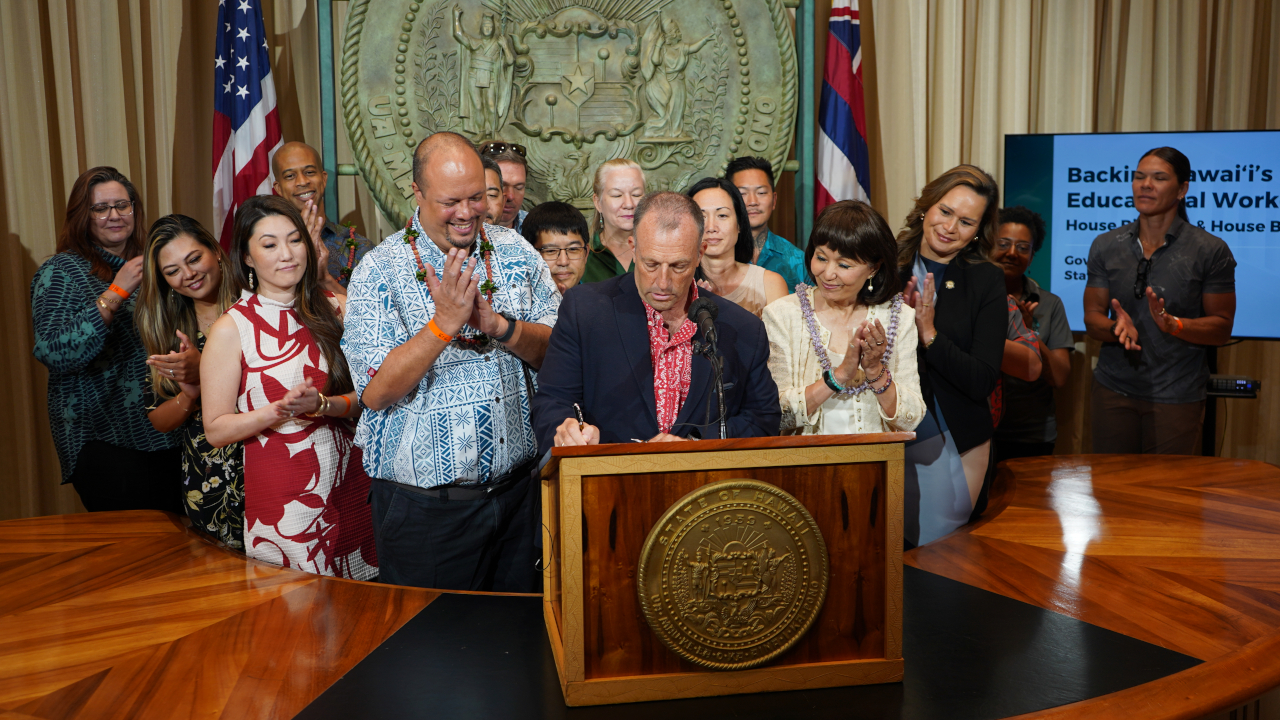

(BIVN) – Governor Josh Green signed numerous education-related bills into law on Monday, supporting salary increases and safety measures for teachers.
“If we want strong schools for our keiki, we have to support the people who make those schools work every day,” said Governor Green. “Our teachers and educational workers dedicate their careers to helping our children learn, grow and succeed. But we know that working in education in Hawaiʻi comes with real challenges. For our keiki, young adults and their families, we need to make education more affordable and accessible — and the same goes for meals in public schools. The bills we have enacted today will help educators, students and families statewide.”
The Office of the Governor focused on the signing of two measures relating to educational workers: House Bill 1890 and House Bill 1888.
“HSTA is excited to see House Bills 1890 and 1888 signed into law by Governor Green to address teacher compensation and educational worker harassment protections,” said HSTA President Osa Tui, Jr. “These two bills will go a long way toward addressing employee recruitment and retention in Hawaiʻi’s schools to better provide our keiki with the schools they deserve.”
From the State:
HB 1890: RELATING TO EDUCATION
Hawaiʻi educators are entrusted with caring for and shaping Hawaiʻi’s keiki, yet their compensation has not kept pace with the magnitude of that responsibility. Among other states, when adjusted for cost of living, Hawaiʻi teachers are paid the lowest. This is reflected in the state’s teacher retention crisis, with nearly half of Hawaiʻi’s teachers leaving the profession or the state within five years of starting.HB 1890, Act 233, Session Laws of Hawaiʻi (SLH) 2026, establishes a clear framework for annual salary step increases for teachers who perform satisfactory service, as well as longevity raises for those who have remained at the highest salary step for at least three years. These increases are subject to collective bargaining negotiations and appropriations within the Legislature. This incentive will better reflect experience and dedication in the compensation of Hawaiʻi’s educators and will allow students to grow alongside their teachers.
HB 1888: RELATING TO THE SAFETY OF EDUCATIONAL WORKERS
No teacher, counselor, administrator, coach, referee, or other educational worker should have to choose between a commitment to their students and their personal safety. Safeguarding educational workers from harassment and violence helps foster safer schools and supports the well-being of students, staff and the broader school community.HB 1888, Act 234, SLH 2026, strengthens protections for educational workers, including sports officials, in the Department of Education public schools and public charter schools, by establishing clear procedures for addressing harassment related to their work. It requires schools to investigate reported incidents, outlines response protocols and mandates that potential threats of physical harm be reported to law enforcement within 48 hours. The measure also calls for emergency safety planning and annual training on harassment response and de-escalation. It provides greater support for educational workers seeking temporary restraining orders, including court-related leave, assistance with certain service costs and potential help from the Department of the Attorney General.
Further, this measure enhances consequences for individuals who harass educational workers while they are performing their duties or are within an educational facility. HB 1888 is designed to ensure educational workers feel safe and supported while they are on the job, by providing legal safeguards and plans of action.
The Office of the Governor also highlighted two bills relating to education expenses:
HB 2338: RELATING TO THE HAWAIʻI COMMUNITY COLLEGE PROMISE PROGRAM
Hawaiʻi Promise was established to help eligible University of Hawaiʻi community college students close the gap in the cost of attending college, recognizing that the true cost of higher education extends beyond tuition and fees. Students must also cover housing, food, transportation and other everyday expenses that can affect their ability to remain enrolled. Under the program’s current structure, however, outside grants and scholarships may reduce a student’s Hawaiʻi Promise award, limiting the additional support those funds are intended to provide.
HB 2338, Act 235, SLH 2026, strengthens the Hawaiʻi Promise program by providing scholarships that cover 95 percent of a student’s unmet direct educational expenses and improving coordination with federal financial aid. These updates are intended to maximize available financial assistance, preserve access to federal support and allow other grants and scholarships to be applied toward indirect expenses, such as housing, food, transportation and other essential living costs that often influence a student’s ability to remain enrolled and complete their education.HB 2296: RELATING TO SCHOOL MEALS
As the cost of living continues to rise, affordable school meals remain an important source of support for many Hawaiʻi families. HB 2296, Act 236, SLH 2026, helps ease that burden by lowering the minimum portion of meal preparation costs that schools must recover from one-half to one-quarter, giving the Department of Education greater flexibility to reduce prices while still offering free and reduced‑price meals. This amendment reinforces a simple truth: every child deserves access to nutritious meals — and no student should face a financial barrier in order to be fed.
Together, these measures reflect Hawaiʻi’s commitment to building a stronger, more supportive education system for the future of Hawai‘i to succeed. From strengthening the educator workforce and promoting safer schools to expanding college affordability and improving access to nutritious meals, these actions help ensure that students, families and educators have the resources they need to thrive.