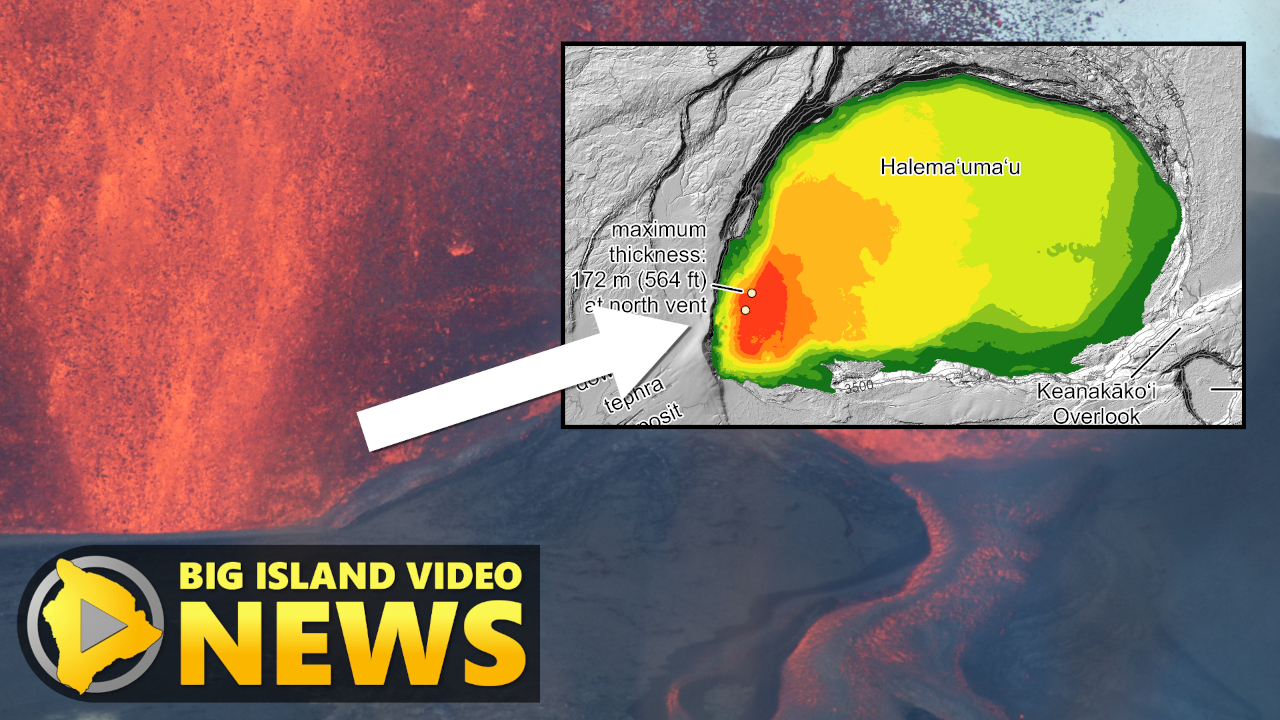

(BIVN) – 51 episodes in the current Kīlauea summit eruption; each episode brings the floor of the Hawaiʻi island volcano crater a little higher.
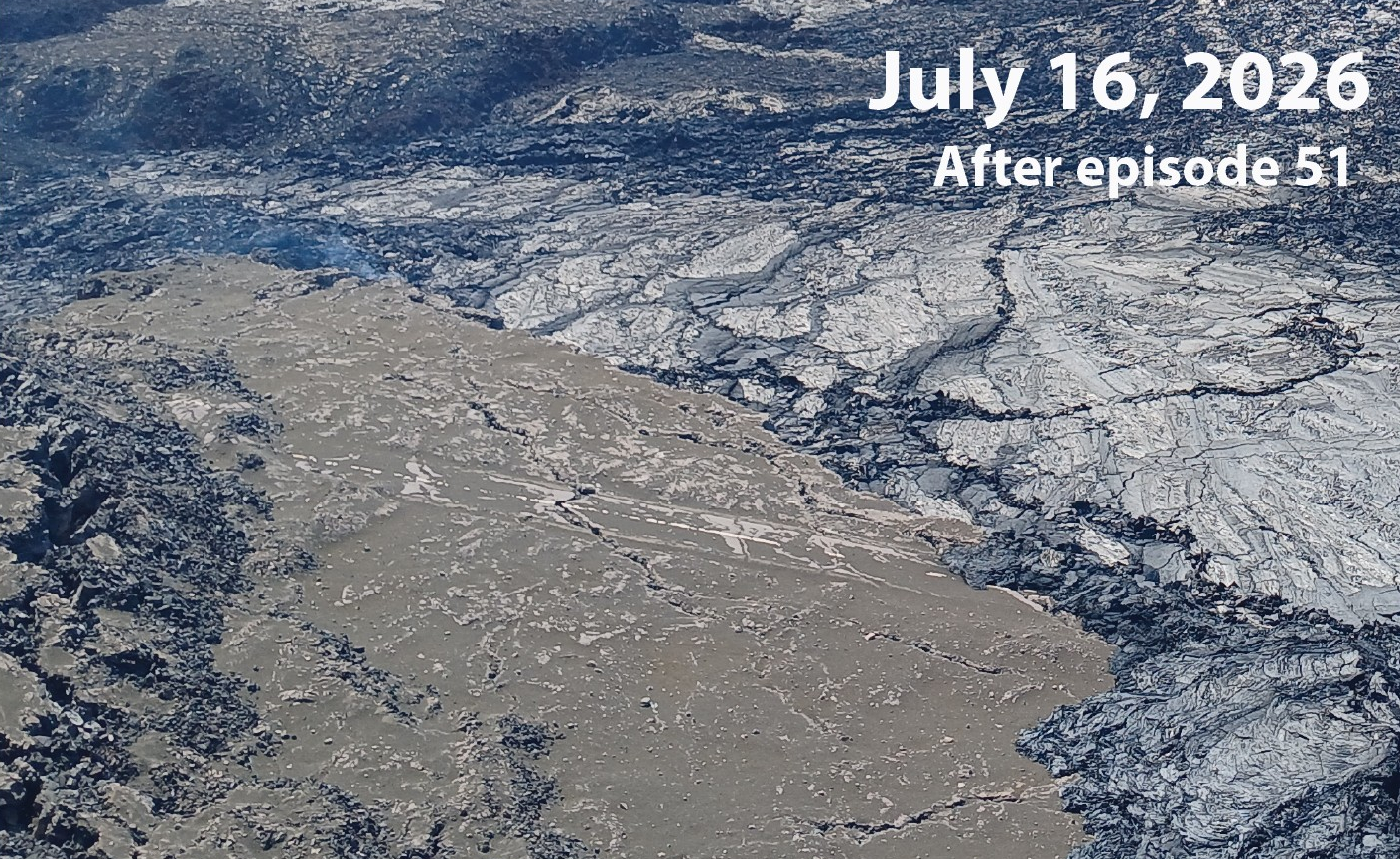
This photo shows how lava flows have reached a remaining section of Crater Rim Drive, portions of which fell into the crater eight years ago.
Drone video taken after the summit collapse in 2018 shows a clear view of where the old roadway crumbled into the void. The video also shows how much the volcanic activity at the summit has changed the landscape since.
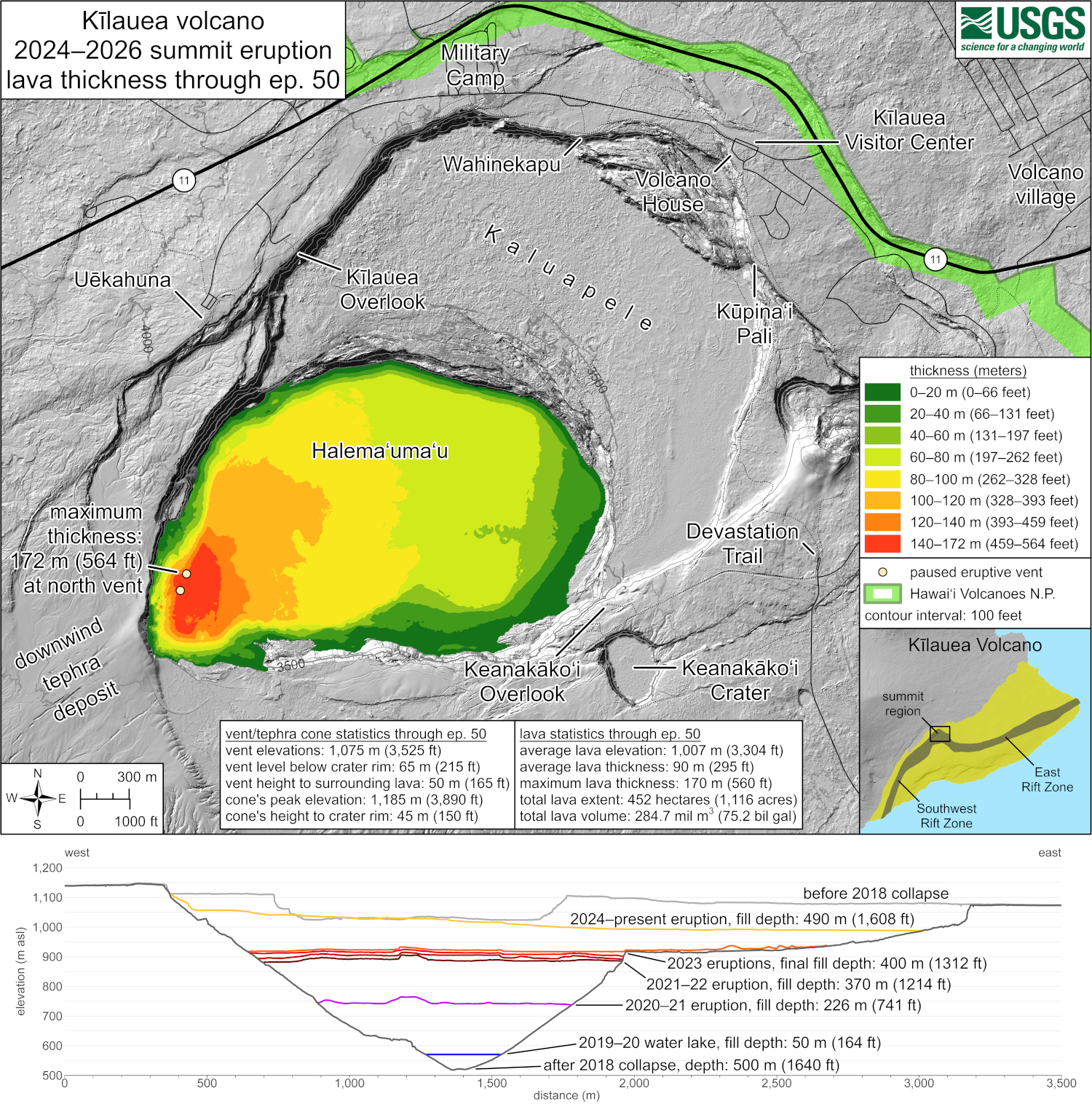
This graphic by the USGS shows the topography of the caldera over recent years, starting with the summit collapse in 2018. The collapse event was the caldera at its deepest; the base was 2,395 feet – or 730 meters – lower than Uēkahuna bluff, which is the highest point on the Kīlauea summit, at an elevation of 4,091 feet – 1,247 meters.
For a few years, the volcano was quiet. The only thing to fill the bottom was an unusual water lake. That water lake was vaporized when Kilauea suddenly erupted in late 2020, and the crater floor was raised 741 feet, or 226 meters.
Additional eruptions over the following years raised the lava level further. In January 2022, geologists provided visual context using the Empire State Building.
The five eruptions within between 2020 and 2023 filled in about 25-percent of the 20-18 collapse volume, raising the crater floor by 1,313 feet – or 400 meters.
The current, episodic eruption that began in December 2024 has raised the floor of the crater another 300 feet, or 90 meters. Basically to the level of the deepest part of the crater floor before the collapse in 2018.
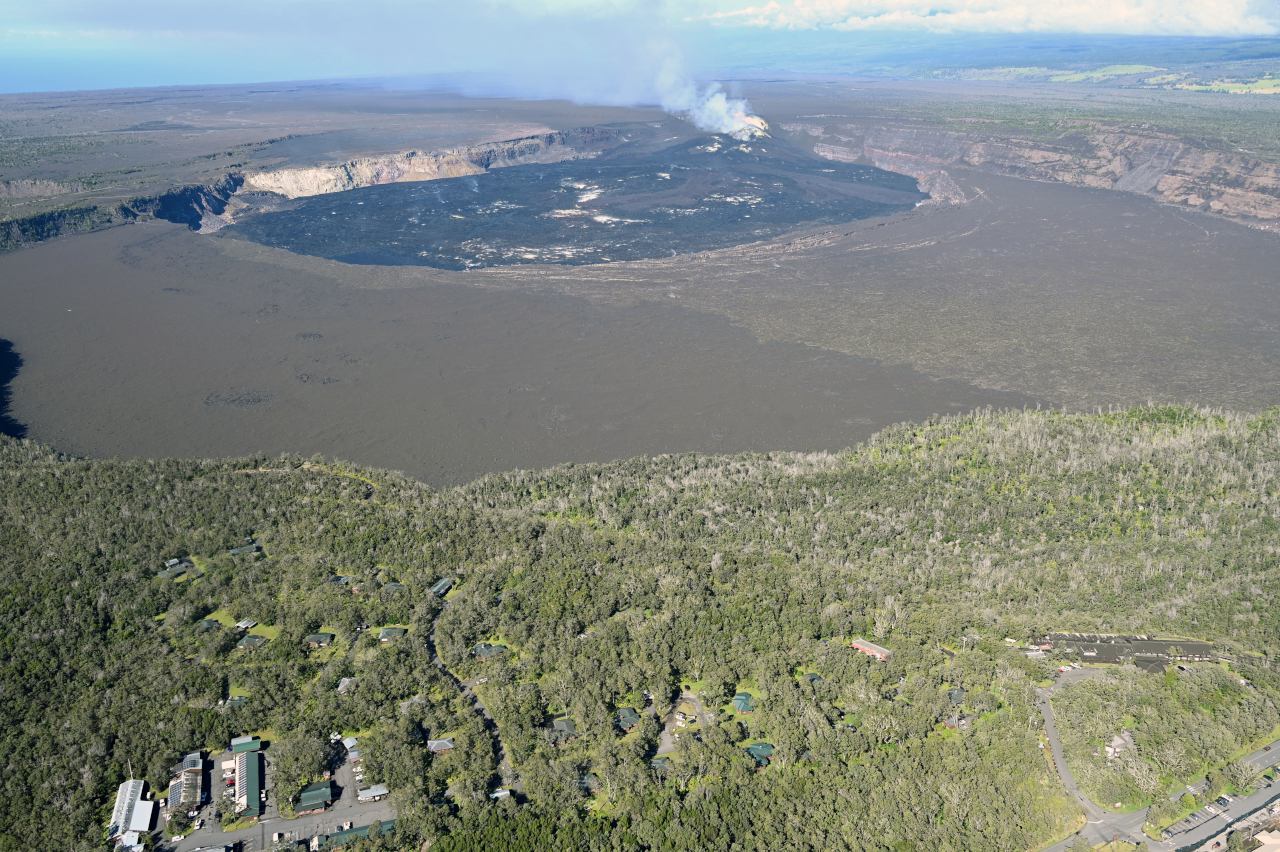
Many have wondered if lava will one day fill the entire caldera, and flow over the top. And if so, when?
This question is tackled in a recent Volcano Watch article written by Hawaiian Volcano Observatory scientists and affiliates. They say the answer is complicated.
In an audio version of the Volcano Watch article, a new USGS feature called Volcano Minute, Katie Mulliken explains when we might actually see lava reach the main part of the caldera, or beyond:
If the current eruption continues at the same pace, the volume that collapsed in 2018 could be almost completely filled by late 2027. After that, lava would begin spilling onto the main caldera floor—something we haven’t seen in over 50 years.
But filling the main part of the caldera will take much longer: many, many years.
There’s another twist: the active vents are still about 200 feet below the crater rim in Halemaʻumaʻu. If they continue to grow higher and reach above the crater rim, lava could flow downslope out of the caldera and to the southwest, staying within Hawaiʻi Volcanoes National Park and posing no threat to communities. Or, depending on vent geometry, lava could keep filling the caldera. Whichever way lava flows, it will be down the path of least resistance.
So, the simplest answer to whether lava will flow out of the caldera is: it depends—on how long this eruption lasts, how much lava is produced, and whether new activity starts somewhere else on Kīlauea.
For now, there are no signs that the current eruptive pattern is about to change. The Observatory says with the preliminary forecast for episode 52 is between July 24th to August 1st.