
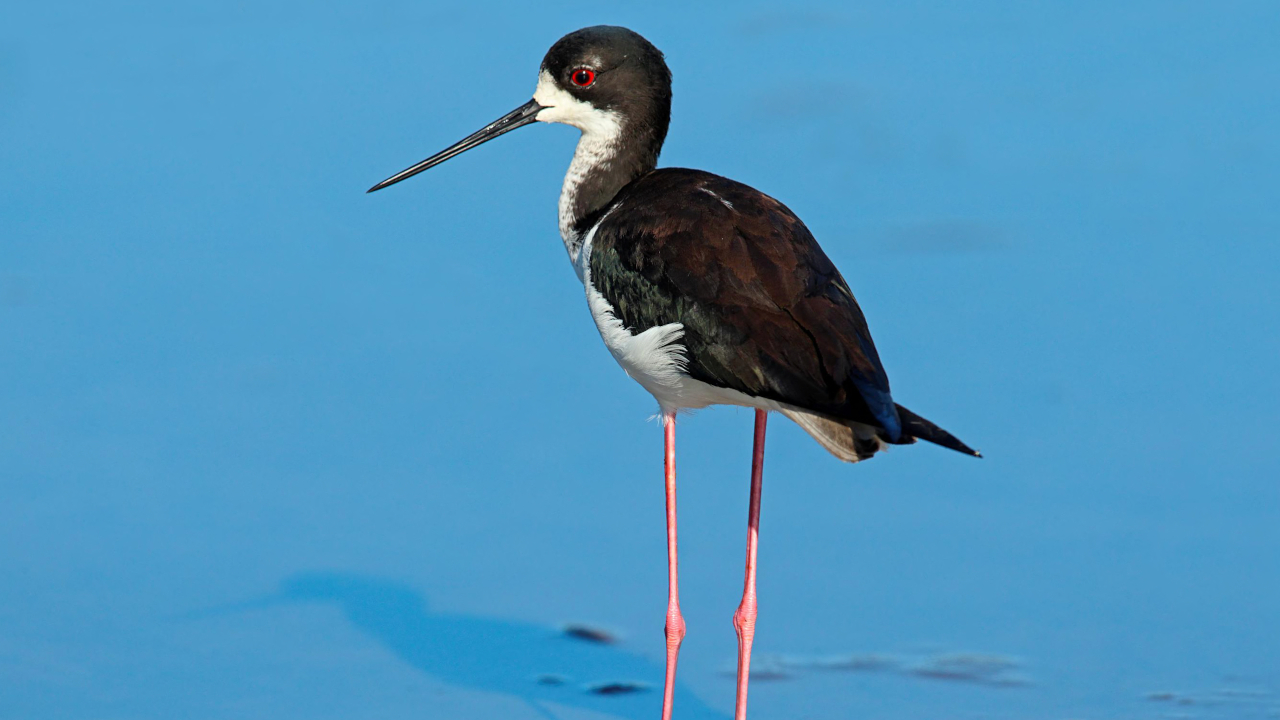

(BIVN) – The ae‘o, or Hawaiian stilt (Himantopus mexicanus knudseni), has been reclassified from endangered to threatened under the Endangered Species Act.
The U.S. Fish and Wildlife Service announced the downlisting on July 16, and said the move “is accompanied by a 4(d) rule under the Act that facilitates greater flexibility for conservation and management of the species, encouraging support for habitat management and reducing human-wildlife conflicts.”
The U.S. Fish and Wildlife Service said the action “aligns with efforts by President Donald J. Trump’s administration to reduce regulatory burdens in accordance with executive orders while continuing to advance wildlife conservation.”
“The downlisting of aeʻo is a huge achievement,” said Bridget Fahey, the Service’s acting regional director for the Pacific Region. “While there is still more work to be done to sustain the aeʻo’s recovery, today we want to celebrate the efforts of our conservation partners, including the State of Hawai`i, the U.S. military, private landowners and local organizations.”
The University of Hawaiʻi also reported on the downlisting, calling it “a rare and hopeful milestone for a native Hawaiian species” that “reflects more than 50 years of conservation work that has brought the long-legged waterbird back from the brink.”
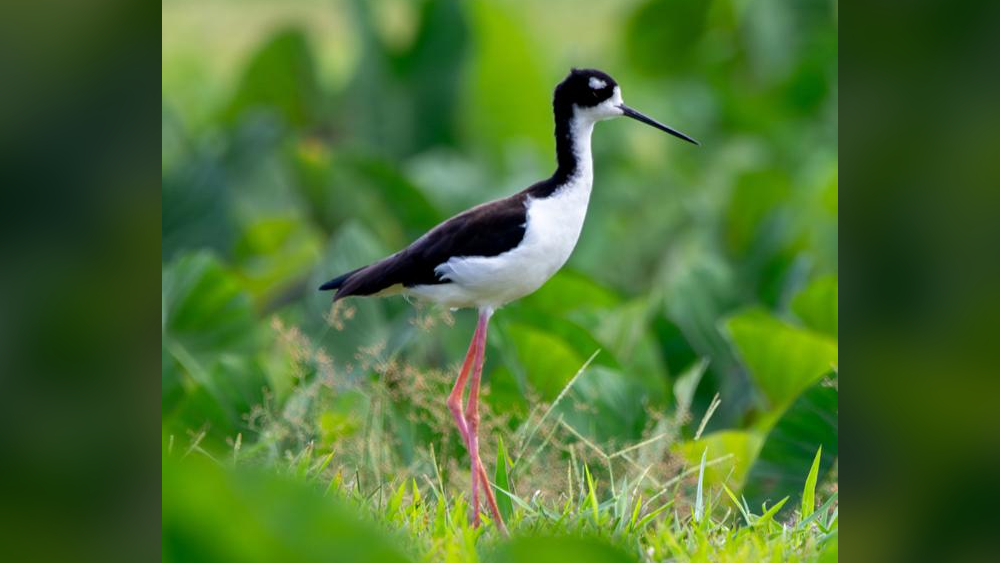
The University said recovery of the ae‘o is documented in a new study led by researchers from UH Mānoa’s College of Tropical Agriculture and Human Resilience and their partners, published in Ornithological Applications.
From the University news release on the reclassification:
Once abundant across the Hawaiian Islands, the Ae‘o dwindled to roughly 200 birds in the 1940s after decades of overhunting, the loss of wetlands to agriculture and development, and the spread of invasive predators. Following its listing as endangered in 1973 and sustained conservation efforts, the population has since climbed to more than 1,500 birds today.
Community partnering with conservation managers
The team analyzed more than five decades of data, representing more than 2,000 nests across nine wetlands on Oʻahu from 1963 to 2020. They found that nesting success and chick fledging success improved measurably over time, providing evidence that management actions such as predator control and habitat restoration are working.
“This is a bright spot story,” said Melissa Price, associate professor in CTAHR’s Department of Natural Resources and Environmental Management. “So many species across Hawaiʻi are in decline. The ae‘o demonstrates how community can work in partnership with conservation managers to achieve recovery and rebuild relationships with our native species.”
A promising path
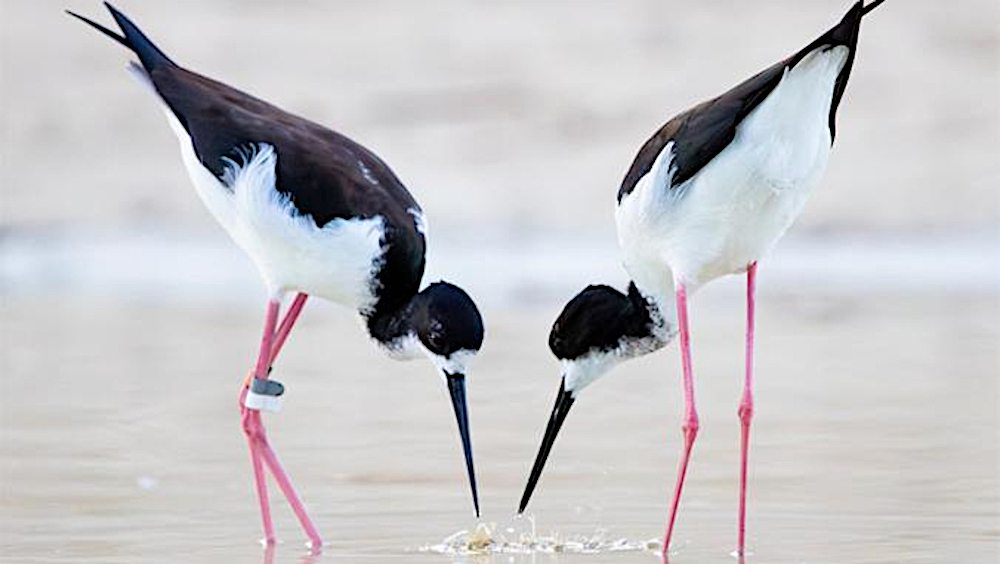
Expanding managed wetland habitat is the key to increasing the Ae‘o population. Ae‘o readily colonize restored and managed wetlands, and recent work has documented the birds nesting in restored Indigenous wetland agro-ecosystems. As sea-level rise threatens existing coastal wetlands, these community- and culturally-grounded restoration efforts offer both new habitat and a model for stewardship.
The new rule accompanying the reclassification is designed to keep the momentum going. It allows certain activities that benefit the Aʻeo to continue, including habitat management and restoration work, even where such activities would otherwise be restricted under the Act. This flexibility is intended to sustain the partnerships and on-the-ground care that the species still depends on as it progresses toward full recovery.
The authors are careful to call the Ae‘o a “conservation success story in progress.” Like many native Hawaiian species, it remains conservation-reliant: dependent on ongoing predator control, water management and habitat protection.
“Downlisting doesn’t mean the work is done,” said lead author Jessica Idle, a manager with the UH Mānoa Pacific Cooperative Studies Unit. “It means the work is paying off. Continued monitoring and management, especially expanding protected wetland habitat, will be essential to keep the population growing.”
The research was a collaboration among UH Mānoa, the U.S. Fish and Wildlife Service, the Hawaiʻi Department of Land and Natural Resources, Tufts University and other partners, reflecting the coordinated, cross-agency effort behind the bird’s recovery.
The U.S. Fish and Wildlife Service noted the ae‘o continues to be threatened by nonnative animal predation (e.g., mongooses, cats, and rats), habitat loss and modification due to human activities, type C botulism, and future sea level rise.
