
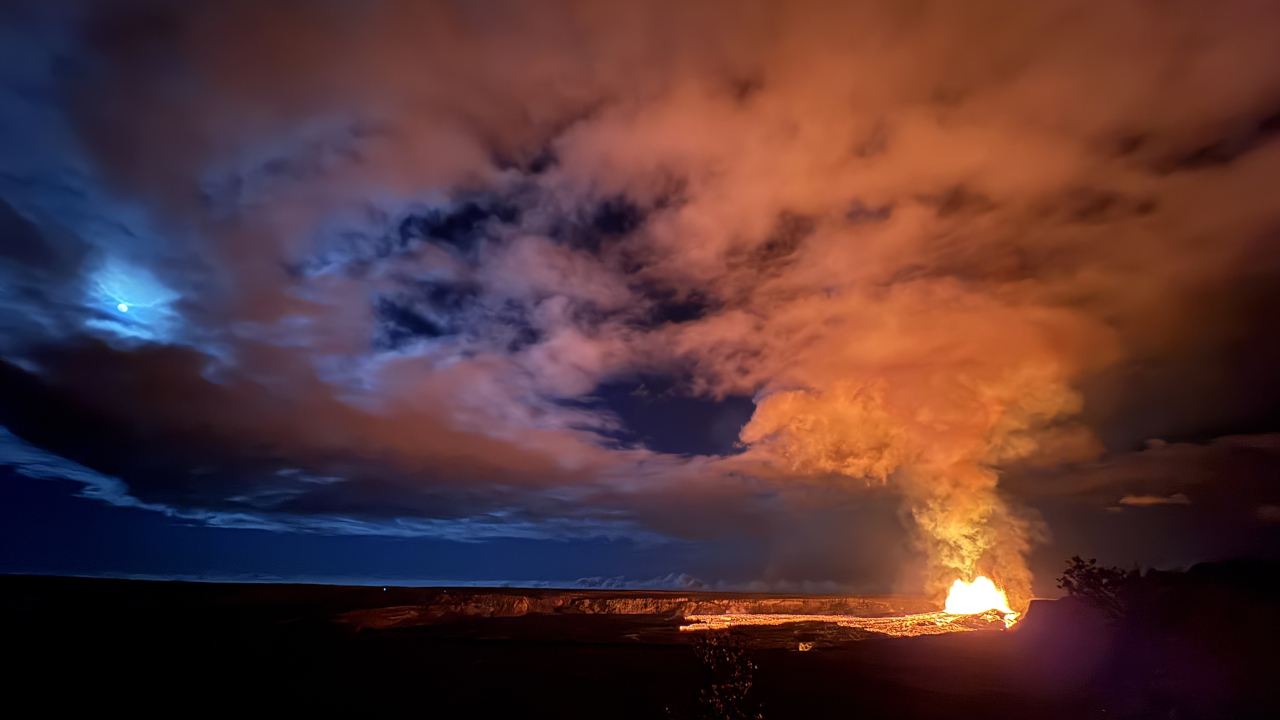

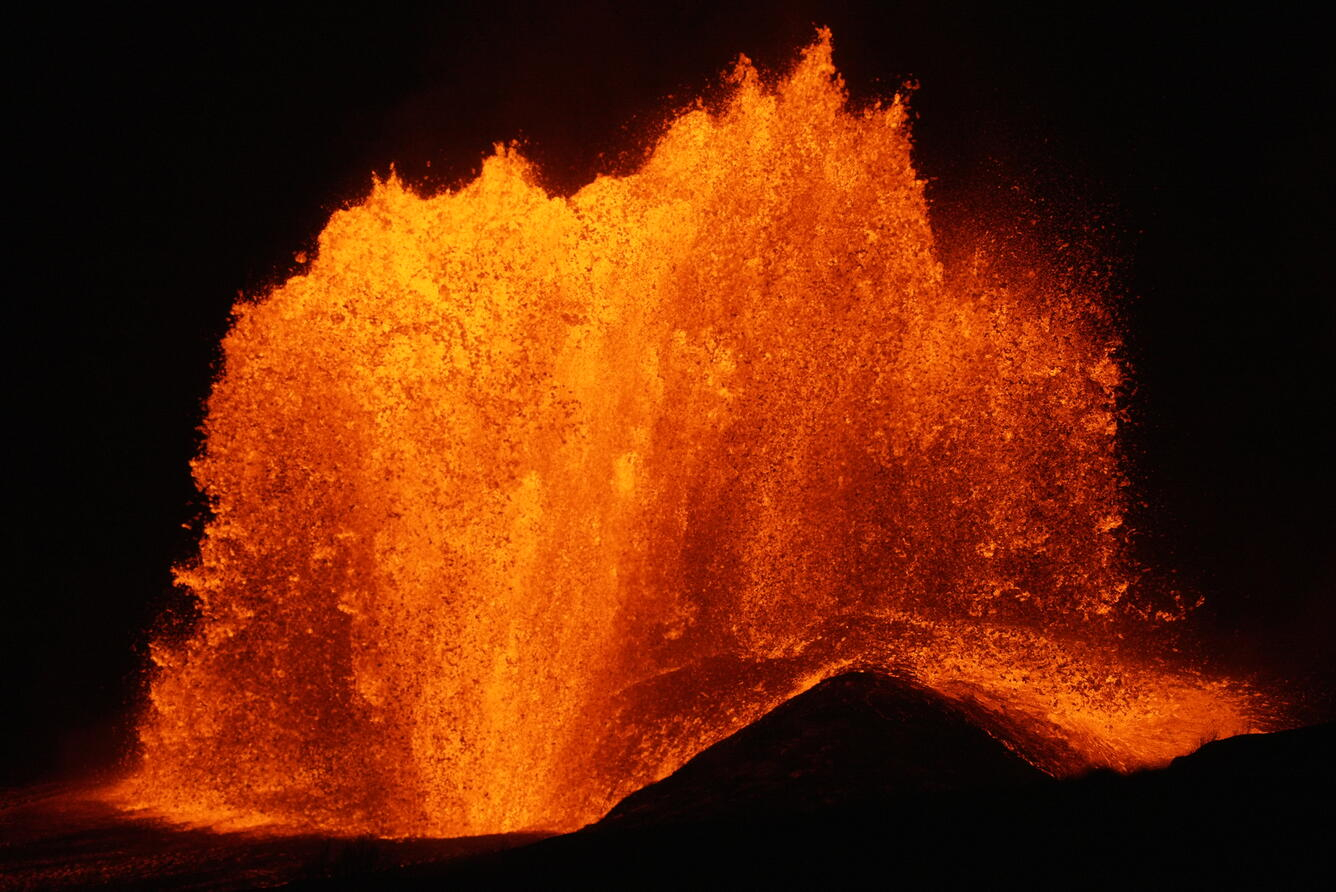
(BIVN) – The ongoing eruption at the summit of Kīlauea is once again paused following Tuesday’s episode of high lava fountaining.
On Wednesday, the USGS Hawaiian Volcano Observatory reported the reinflation that started after episode 52 ended at 2:36 a.m. early Wednesday morning indicates another episode is likely. However, the scientists need more data to determine the forecast.
“Low-frequency seismic pulsing began with the cessation of episode 52 and continues this morning, which is typical during the onset of pauses between eruptive episodes,” the Observatory reported Wednesday. “Eight shallow earthquakes, broadly dispersed within the summit, have been recorded since around the end of episode 52. The largest was a magnitude-2.2 at 2:22 a.m. this morning, beneath the eastern edge of Halemaʻumaʻu.”
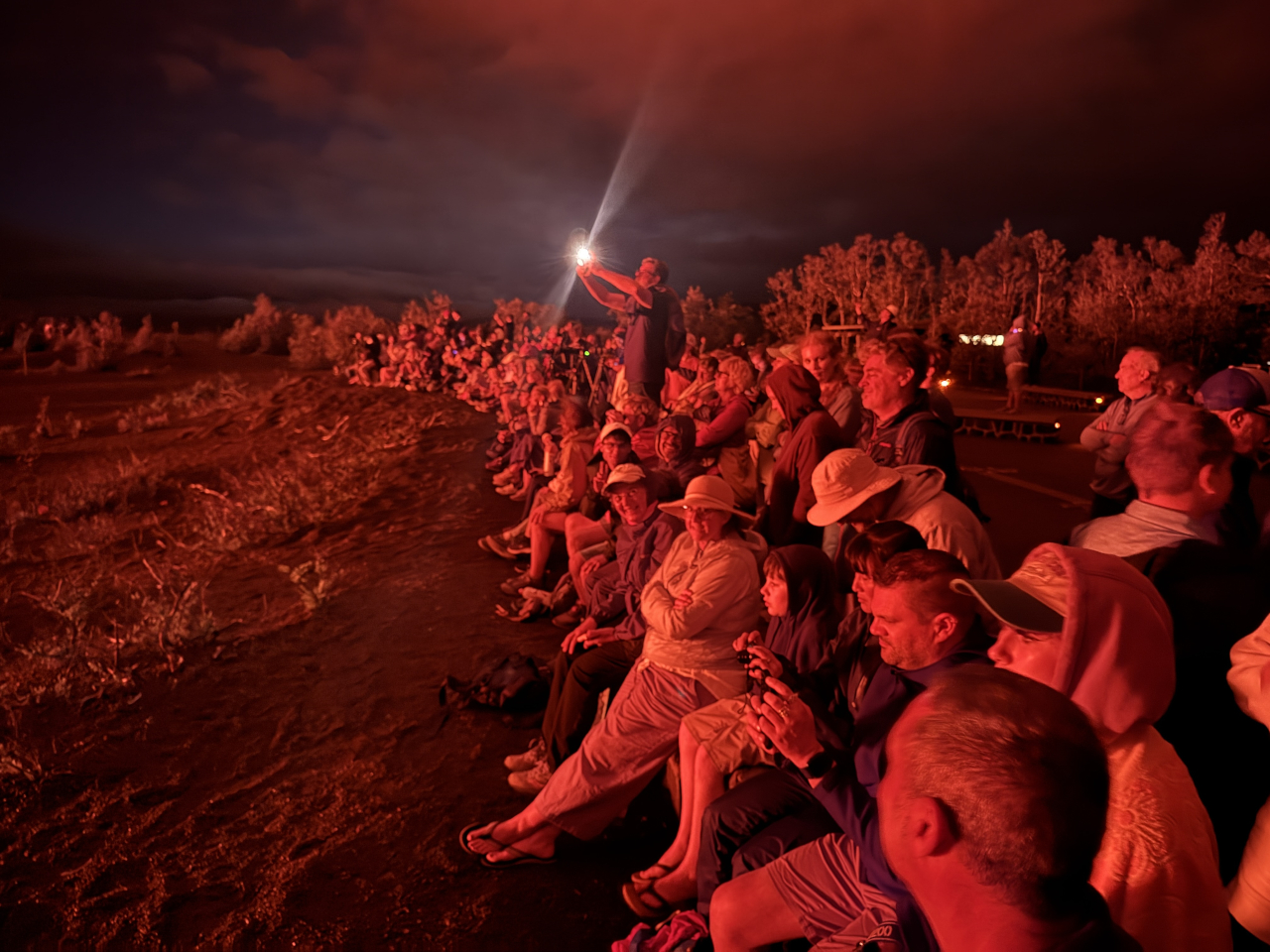
Tephra fall during episode 52 was restricted mostly to the closed area of Hawaiʻi Volcanoes National Park to the southwest of the active Halemaʻumaʻu vents, making for a safe viewing experience for park visitors during the event.
The USGS HVO provided this episode 52 chronology after the lava fountains ended:
Lava fountaining episode 52 in Halemaʻumaʻu at the summit of Kīlauea began around 7:10 p.m. HST July 28 and ended at 2:36 a.m. HST on July 29, 2026, after 7.4 hours of continuous fountaining from the north vent. The last 4 minutes were marked by gas jetting and flames from the north vent. The south vent never fountained during this episode but did emit flames at the end of the episode. The instantaneous effusion rate peaked at about 350 cubic yards (270 cubic meters) per second at approximately 9:15 p.m. HST, with an average effusion rate of 250 cubic yards (190 cubic meters) per second for the entire fountaining episode. An estimated 6.1 million cubic yards (4.7 million cubic meters) of lava erupted and covered about 40-50% of the Halemaʻumaʻu crater floor. Seismicity followed the normal change in tremor patterns seen after most fountain episodes. The Uēkahuna tiltmeter (UWD) recorded about 14.4 microradians of deflationary tilt during episode 52.
Precursory activity began from the north vent on the morning of July 28 with 6 overflows between 10:22 a.m. HST and 1:53 p.m. HST, the longest lasting over 30 minutes. These were immediately followed by the onset of a vigorous overflow fed by 10-30 foot (3-10 meter) high dome fountains from the north vent at 1:56 p.m. HST which continued until the onset of episode 52 fountaining at 7:10 p.m. HST. The transition was marked by increasing height of the dome fountain, greater eruptive volume, increased deflation and rapidly increasing tremor.
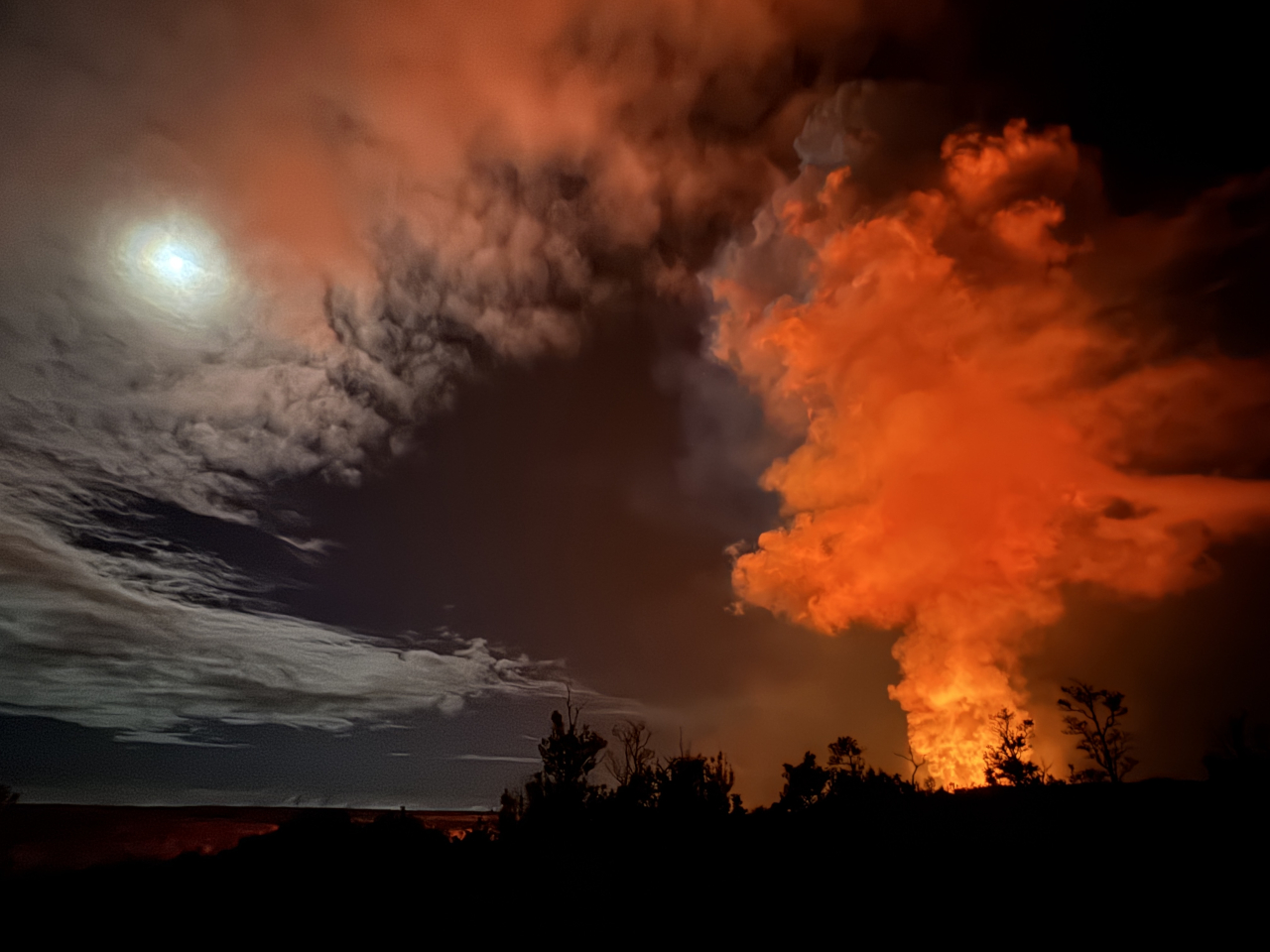
The north vent lava fountain reached a peak height of approximately 500 feet (150 meters) around 9:00 p.m. HST and produced significant heat and ash, feeding a plume cloud that reached a maximum height of about 19,000 feet (5,600 meters) above sea level based on radar data reported by the National Weather Service (NWS). Winds were out of the northeast during the initial hours of fountaining and caused the plume to move toward the south during the most energetic part of the episode. Later in the evening the lower level winds died and the plume became more vertical but did not spread over populated areas. The plume track largely remained within Hawaiʻi Volcanoes National Park with most tephra falling in the closed area.
Fountain and plume heights gradually decreased in height to about 400 feet (120 meters) AGL and 10,000 feet (3,000 meters) AMSL, respectively, by 11:00 p.m. HST July 28. Episode 52 ended abruptly at 2:36 p.m. HST on July 29. Fine ash was noted within public areas of Hawaiʻi Volcanoes National Park. No tephra was reported from any other populated areas.
