
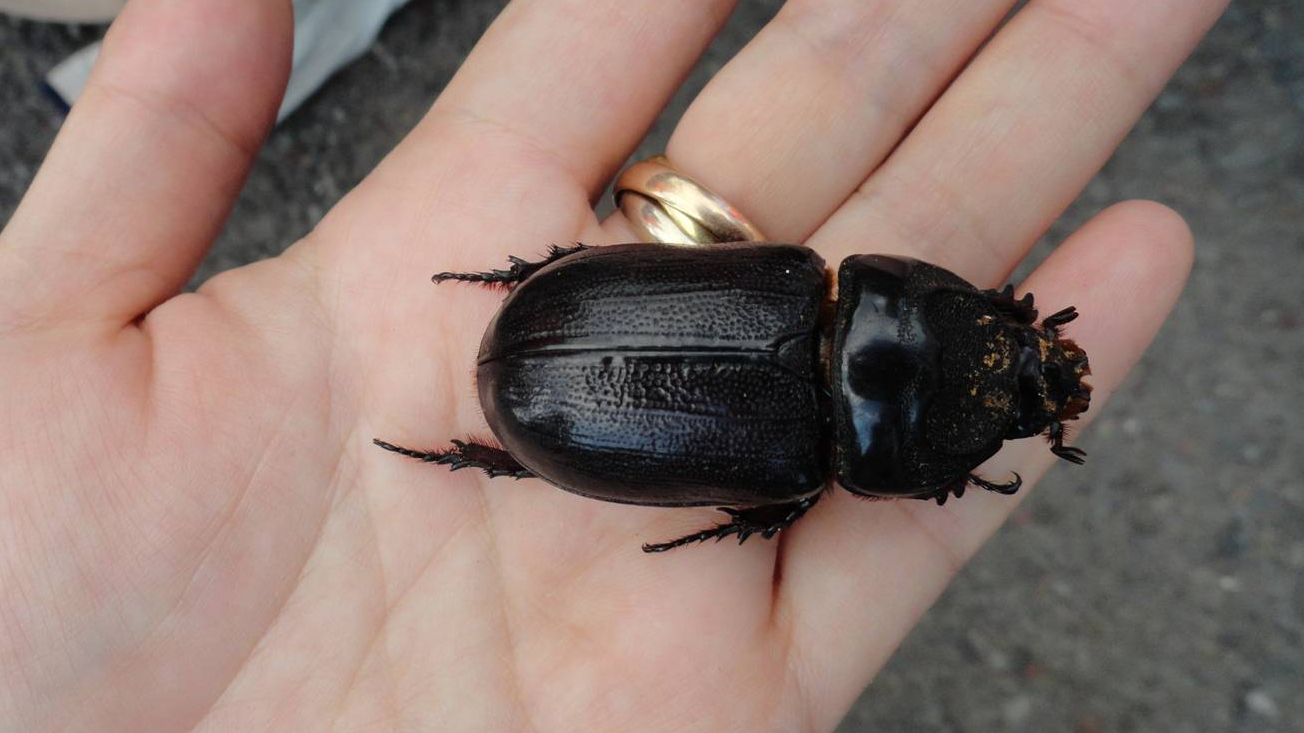

(BIVN) – The designated area in West Hawaiʻi that is infested with coconut rhinoceros beetle, or CRB, was officially expanded on Tuesday.
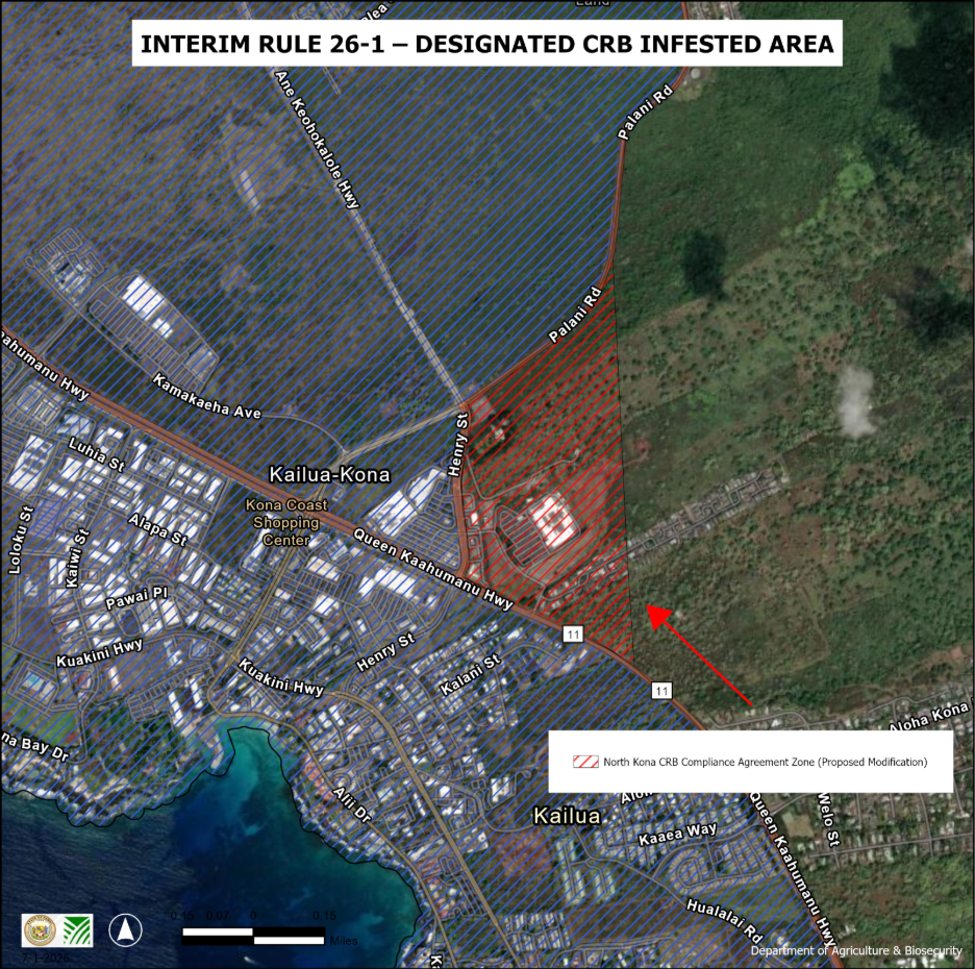
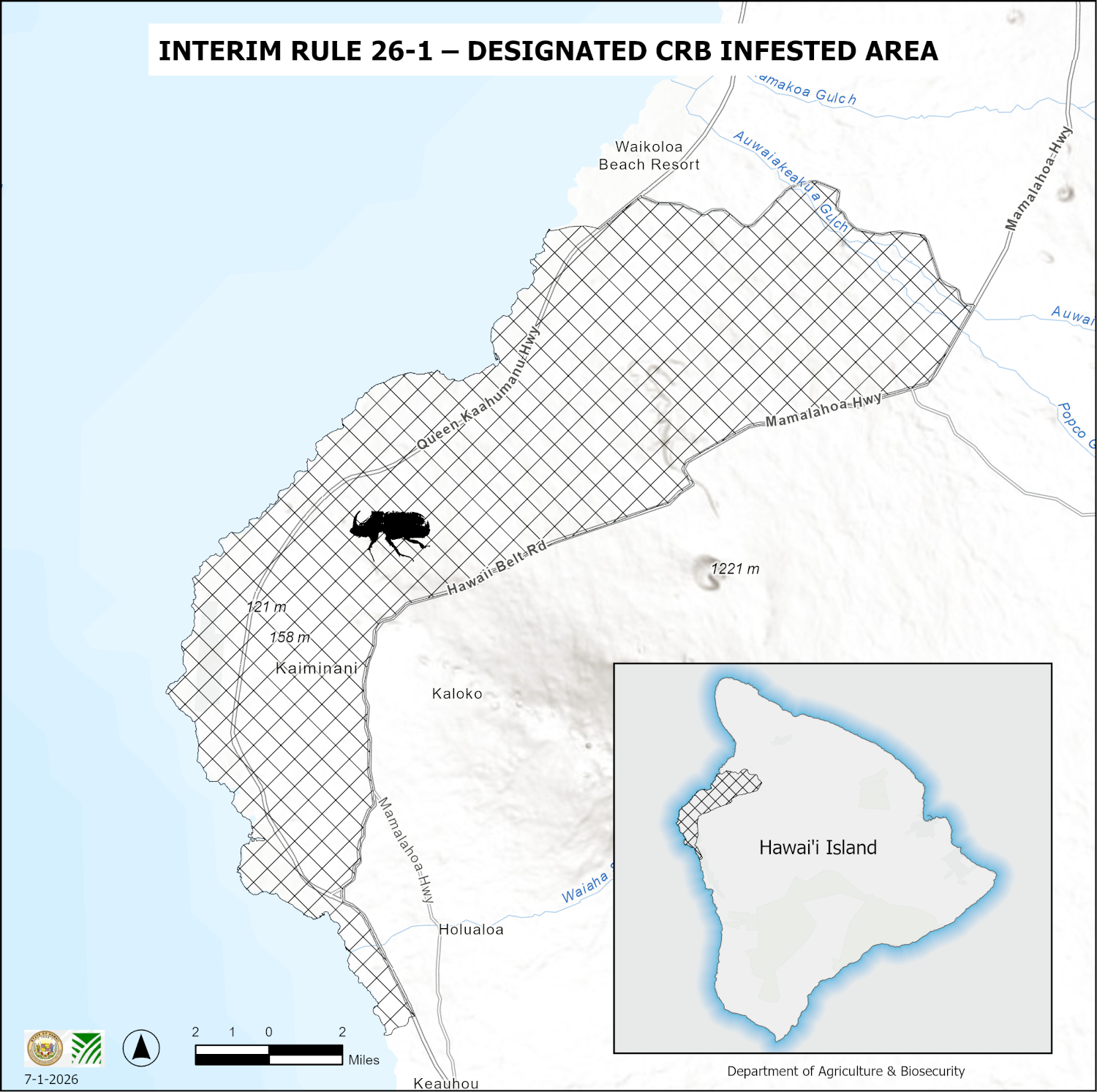
The Hawaiʻi Board of Agriculture and Biosecurity approved a request to expand the designated CRB infested area to include the geographic area between Henry Street, Palani Road, and Queen Kaʻahumanu Highway. The expanded designation follows the initial March 2026 designation of the CRB-infested area in West Hawaiʻi. The expanded designation goes into effect on July 29, 2026.
The CRB (Oryctes rhinoceros) is an invasive insect originally native to Southeast Asia. The beetle is known to cause widespread damage to coconut palms and other palms. On Hawaiʻi island, CRB larvae were first detected in the Waikoloa area in October 2023, and detections expanded to multiple sites in West Hawaiʻi beginning in March 2025.
Within the officially designated CRB-infested areas, “all organizations, companies, or any other person who transport, generate, process, collect, sell, or grow CRB host materials in the expanded area must conduct these activities under a valid compliance agreement issued by the Department of Agriculture and Biosecurity.”
The State says that as a prerequisite to obtaining a compliance agreement, organizations must complete a required training session provided by the Big Island Invasive Species Committee (BIISC). From the Department of Agriculture and Biosecurity:
To sign up for compliance agreement training, go to the BIISC website at biisc.org, click the link for a training session and fill out the required information. The training session should be approximately one hour and BIISC staff will coordinate directly with participants for scheduling. Upon completion of the training, BIISC staff will collect and submit to DAB a copy of the compliance agreement application verifying training completion.
The State’s role in finalizing the compliance agreements recently came under scrutiny during a Hawaiʻi County Council committee meeting. The council advanced Resolution 603, urging the State Department Of Agriculture And Biosecurity to implement and enforce regulations on the transportation of CRB host material on Hawaiʻi island. The measure was introduced by councilmembers James Hustace and Holeka Goro Inaba.
At the same Board of Agriculture and Biosecurity meeting on Tuesday, members also approved Interim Rule 26-2 (IR 26-2), restricting the transportation of CRB host materials from any other area in the state to the islands of Maui and Lānaʻi. CRB host materials include “live plants of any size, if there are any organic materials attached to the roots; untreated decomposing plant material such as compost, wood, tree chips and untreated mulch; and plant propagation media and other items comprising decomposing organic plant material such as landscaping material or erosion control socks.”
