
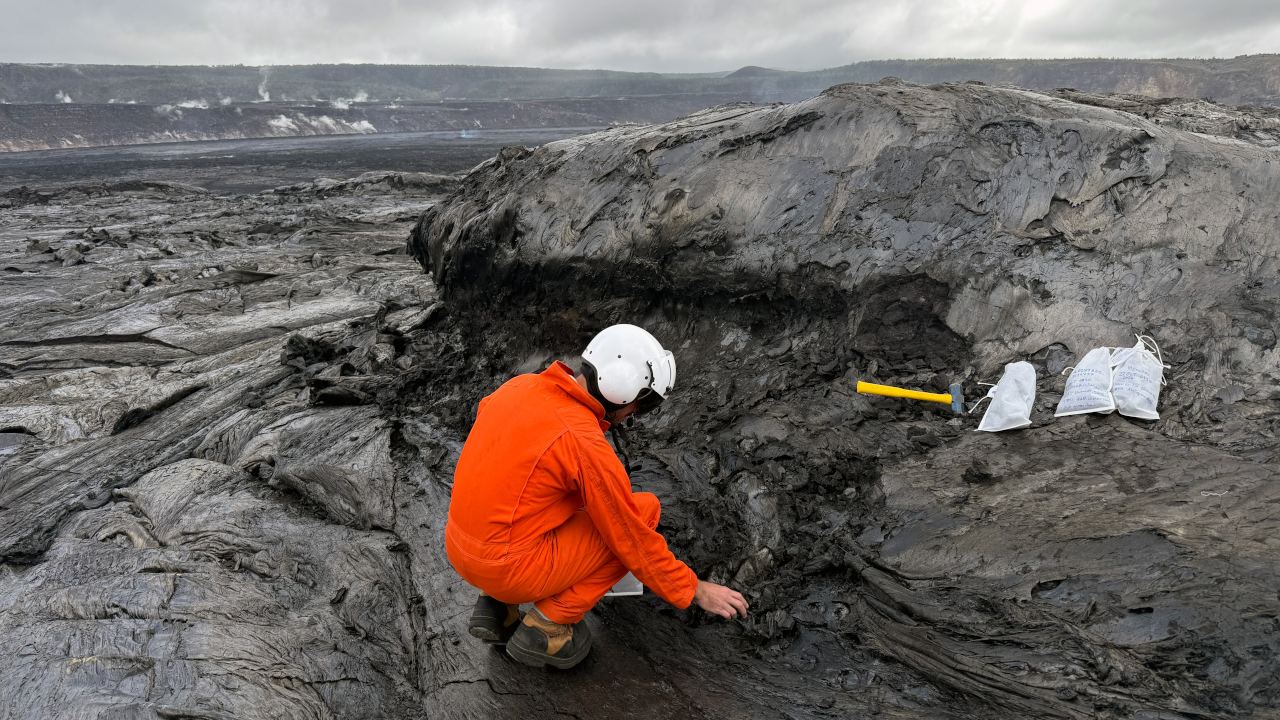

(BIVN) – The ongoing eruption at the summit of Kilauea remains paused, and summit reinflation has essentially plateaued over the last 24 hours, scientists report.
The rate of inflation has pushing the forecast for the next episode of high lava fountaining, episode 56, to between October 31 and November 6, 2026. That is assuming the magma chamber inflation has returned to the pattern established in the past, the USGS Hawaiian Volcano Observatory notes.
The most recent episode of high lava fountains, episode 55, occurred on October 17, 2026.
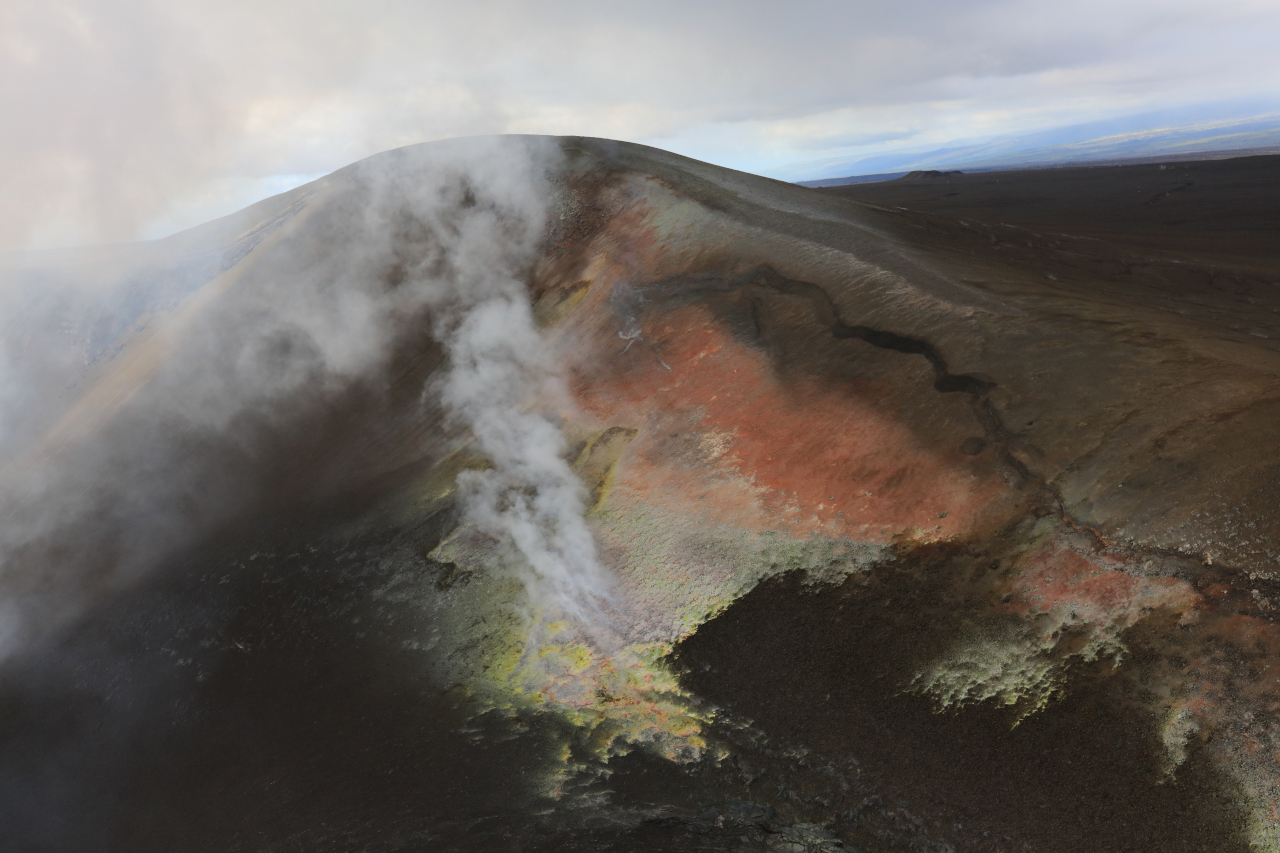
From the USGS HVO update issued on Monday morning:
Summit Observations:
Continuous moderate-to-strong glow was observed overnight from the west vent and weak glow from the north vent within Halema’uma’u. No glow was visible from the south vent, which was covered in a layer of tephra during episode 55.
Continuous, low-level seismic tremor continued over the past day with occasional pulses of stronger seismic tremor. These types of seismic signals are both typical during inter-episode pauses. Three earthquakes were recorded in the summit area in the past 24 hours.
Over the past day, summit tilt has been mostly flat with slight deflation this morning. The UWD tiltmeter has recovered a total of 13.2 microradians of inflationary tilt since the end of episode 55. Deflationary tilt measured at a summit tiltmeter at Uēkahuna (UWD) totaled 21 microradians during episode 55. Post-fountaining tilt patterns have been similar to those seen prior to episode 54.
During inter-episode pauses, the sulfur dioxide (SO2) emission rate from the summit typically varies between 1,000 to 5,000 tonnes per day. Winds are forecast to be light from the northeast, which will push the gas plume to the southwest over the Kaʻū Desert today.
Rift Zone Observations:
Rates of seismicity and ground deformation remain low in the East Rift Zone and Southwest Rift Zone. SO2 emissions from the East Rift Zone remain below the detection limit. No significant ground deformation was recorded in either rift zone.
Analysis:
Initial magma chamber reinflation followed the normal, predictable pattern seen after most fountain episodes. Inflation remained steady with the rate of inflation slowing gradually, which is the normal pattern during the start of repose periods between fountains. In the last 24 hours, tilt has flattened with minor deflation this morning. This flattening has pushed the forecast window for episode 56 to occur between October 31 and November 6, 2026. Given the differences in the run-up to episode 55, there is still uncertainty in whether inflation will remain regular and predictable allowing forecasts with reasonable precision.
Kīlauea has been erupting episodically between December 23, 2024, and August 25, 2026, from two vents (north and south) in Halema‘uma‘u at the summit. Lava fountaining episodes generally lasted for less than 12 hours and were separated by pauses of two or more weeks. The onset of episode 55 departed from the pattern established from previous episodes, with summit tiltmeters recording inflationary tilt indicating additional pressurization of the summit magma chamber beyond levels typically seen before fountaining. The prolonged period of inflationary tilt was not steady, being marked by extended periods of irregular deflationary tilt or no tilt. The episode was also preceded by 39 days of intermittent overflows, a record for the length of precursory activity prior to fountaining. During this prolonged interval, a series of short-lived vents opened within Halemaʻumaʻu and a shallow dike was emplaced beneath Kaluapele.
HVO continues to closely monitor Kīlauea and is in contact with Hawai‘i Volcanoes National Park and the Hawai‘i County Civil Defense Agency about eruptive hazards. Kīlauea volcano alert level and aviation color code remain at ADVISORY/YELLOW.
