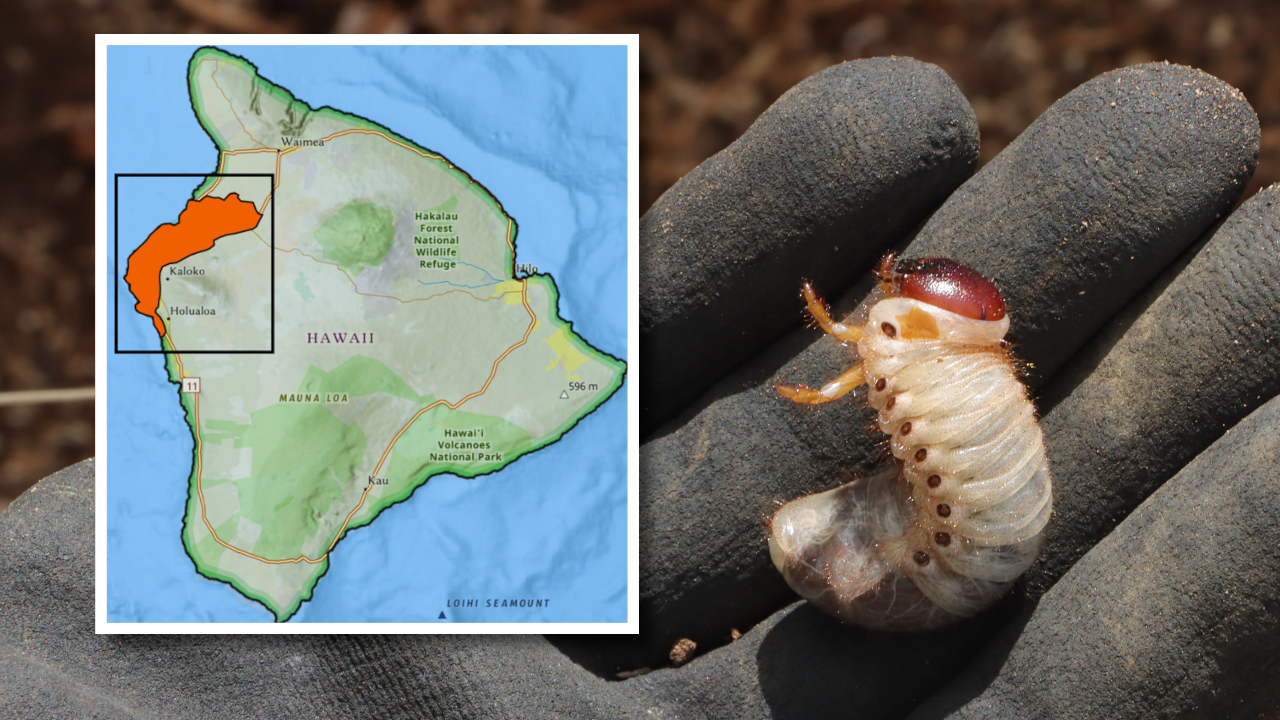
(BIVN) – The County of Hawaiʻi is extended its voluntary compliance order concerning the transportation of coconut rhinoceros beetle (CRB) host materials in an area of West Hawaiʻi.
The voluntary order was first enacted in June 2025, and applies to parts of West Hawaiʻi where CRB has been detected. The voluntary order has been extended through April 30th, while the Hawaiʻi Department of Agriculture and Biosecurity drafts interim rules concerning CRB for Hawaiʻi Island.
“CRB is a destructive invasive species that already has had a huge impact in other parts of the state,” said Mayor Kimo Alameda. “By following best management practices and containing host materials, we can all do our part to stop the spread and protect our island.”
The County provided a map showing the area under the voluntary compliance order.
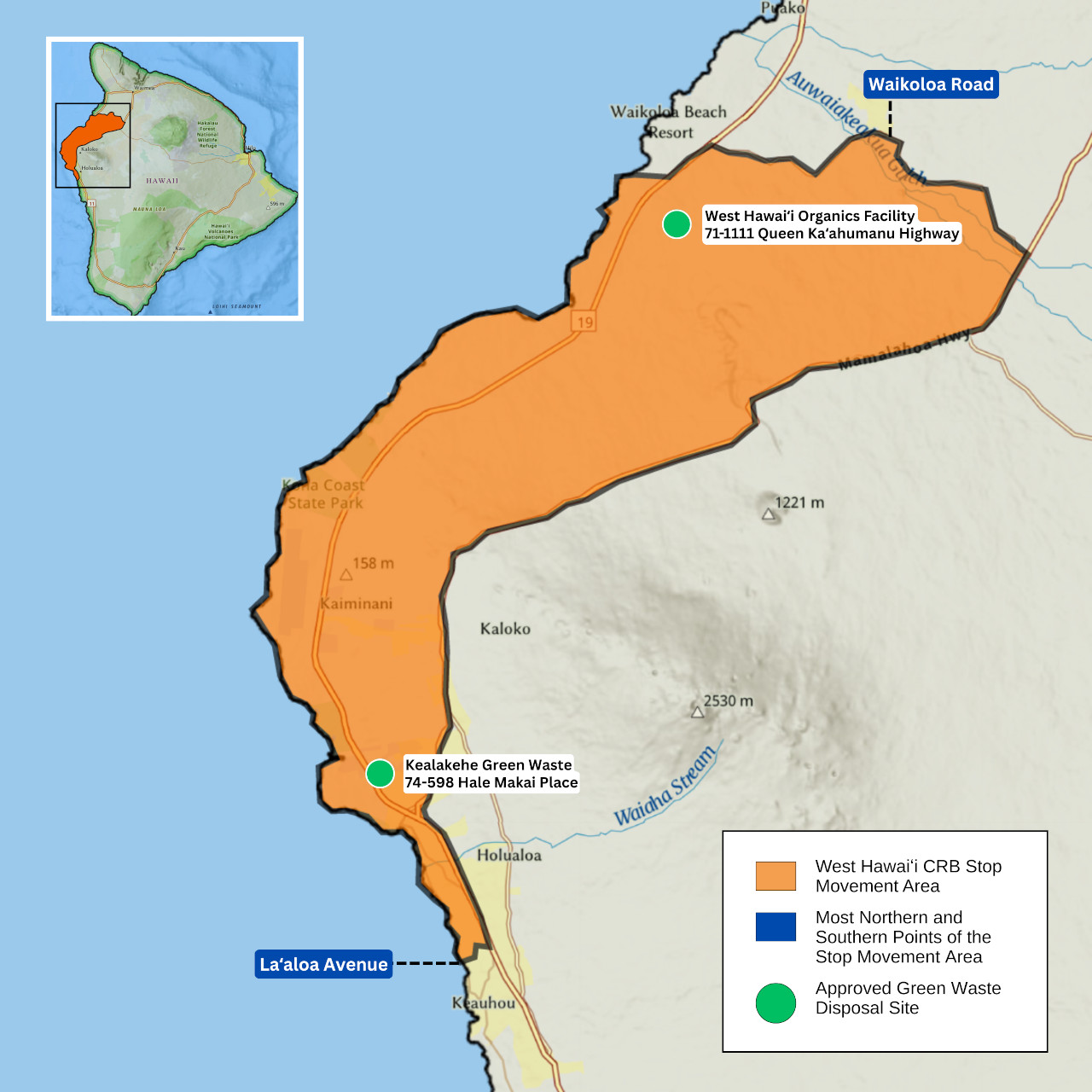
Map showing the location of the voluntary compliance order area, provided by Hawaiʻi County
Residents and business operators in this area are asked not to transport CRB host materials that include:
- Decomposing plant material such as compost, wood or tree chips, and mulch.
- Plant propagation material.
- Other items, such as landscaping material, that are comprised of decomposing organic plant material.
- All live palm plants in the genera Cocos (Coconut palm), Livistona (Fountain palm or Chinese fan palm), Phoenix (Date palm, Canary Island date palm), Pritchardia (Loulu), Roystonea (Royal palm), and Washingtonia (California fan palm, Mexican fan palm) — except unsprouted seeds of these palms.
Green waste should be taken to proper disposal sites located at the West Hawaiʻi Organics Facility at 71-1111 Queen Kaʻahumanu Highway and Kealakehe Transfer Station at 74-598 Hale Makai Place, officials say. “These facilities, located within the compliance area, heat compost piles to at least 131 degrees to kill CRB larvae,” the County says.
From the County news release:
Host materials, such as decomposing plant material, can contain CRB eggs, larvae, and adults. Moving such infested materials outside the compliance area could unintentionally spread CRB far beyond its current range, complicating eradication efforts and hindering control measures.
CRB primarily targets coconut and other palm species. However, it will feed on other important crops such as ʻulu, banana and kalo when the palm food sources are eliminated.
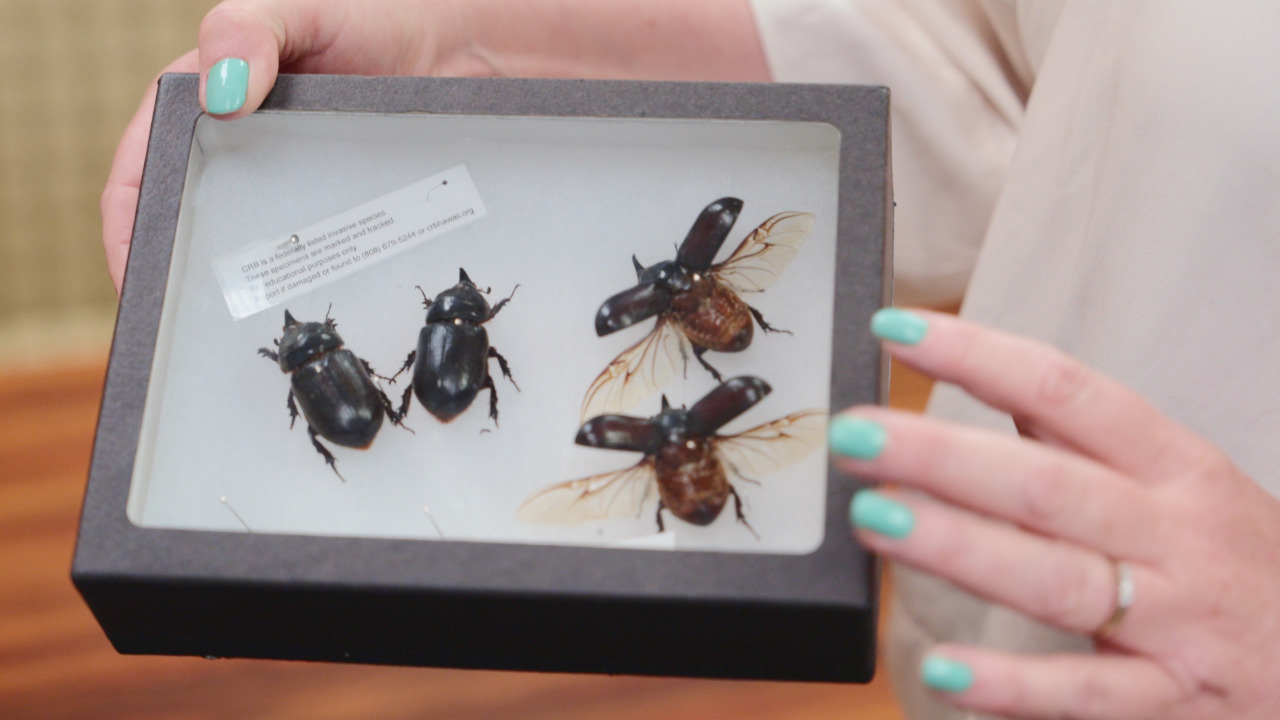
Photo of CRB courtesy County of Hawaiʻi
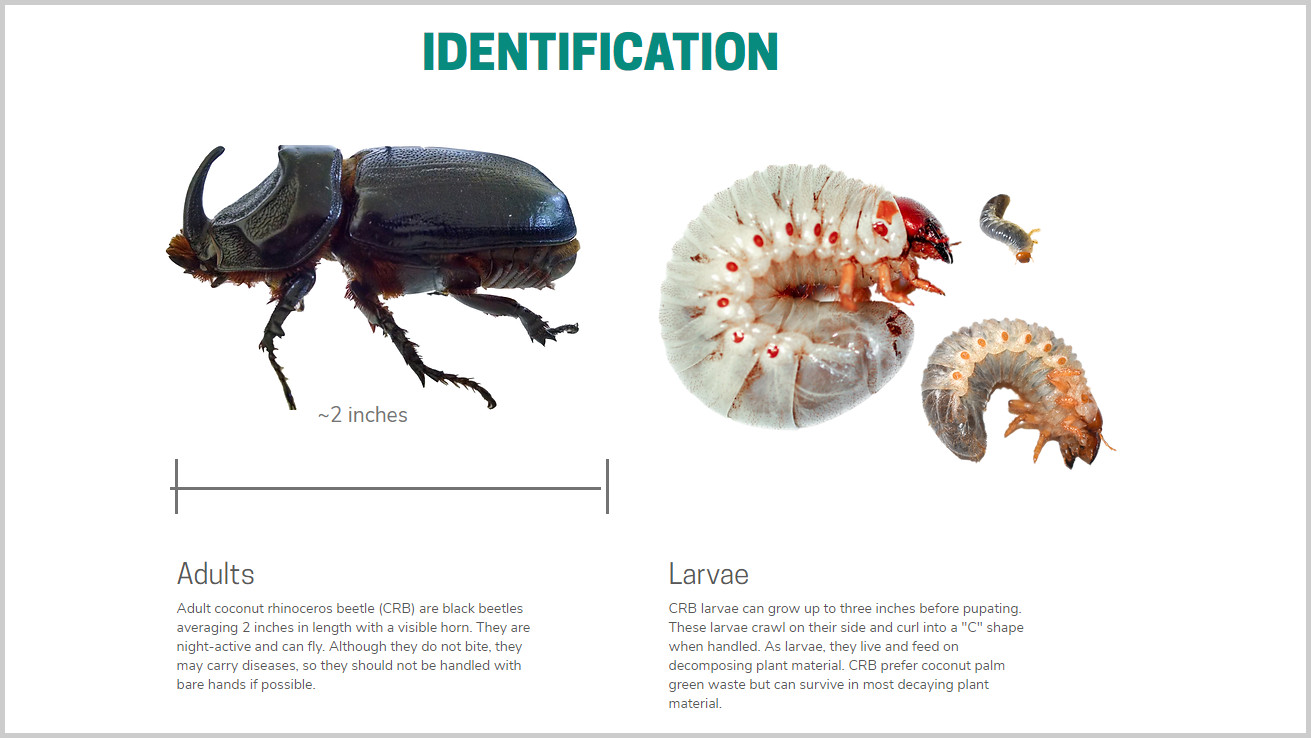
image from Hawaiʻi Department of Agriculture website
Best Management Practices for CRB Host Materials
Residents can take the following steps to minimize the risk of spreading CRB:
Inspect and Report
- Inspect CRB host materials at least every 4 months, especially finished compost and nearby host palms, for signs of CRB or damage.
- Examine incoming CRB host materials before accepting them to ensure they are not infested with CRB.
- Collect any suspected CRB and report findings or visible CRB damage to HDAB at 808-643-PEST (7378) or the Big Island Invasive Species Committee (BIISC) at 808-933-3340. Reports can also be made online at 643pest.org.
- If you cannot inspect CRB host materials yourself, contact BIISC, CRB Response (808-679-5244), or HDAB for assistance.
Properly Manage Materials
- Chip incoming CRB host materials within 48 hours.
- Properly compost CRB host materials by heating piles to at least 131 degrees Fahrenheit.
- Monitor finished materials at least every 4 months (visual during turnover). Once compost cools to around 110 degrees Fahrenheit, it can be infested and is a good breeding material for CRB.
- Do not stockpile or keep a mound of CRB host material. Routinely distribute around plants or thinly spread up to 4 inches in depth to enable it to dry completely.
Prevent the Spread
- Utilize or process CRB host materials that are already on-site for end use, eliminating the need to move potentially infested materials.
- Safeguard CRB host materials that have been properly composted or treated in completely sealed containers that prevent CRB entry. Containers made of metal, concrete or glass are acceptable. CRB can chew through many plastics.
- Ensure CRB host materials are still at acceptable temperatures or are subjected to effective treatment before being transported off site.
- Profume, a restricted use pesticide, is one option for treating certain CRB host materials, such as compost. Call HDAB for additional information about the use of this chemical.
- If you receive CRB host materials, ensure it comes from a reputable source that follows CRB Best Management Practices. Ask suppliers to provide documentation of their CRB prevention efforts.
For questions about moving CRB host materials, officials say please contact Glenn Sako, County Economic Development Specialist, at 808-961-8811.

by Big Island Video News
on at
STORY SUMMARY
ISLAND OF HAWAIʻI - The County of Hawaiʻi continues to ask residents and businesses to avoiding transporting CRB host materials within parts of West Hawaiʻi.