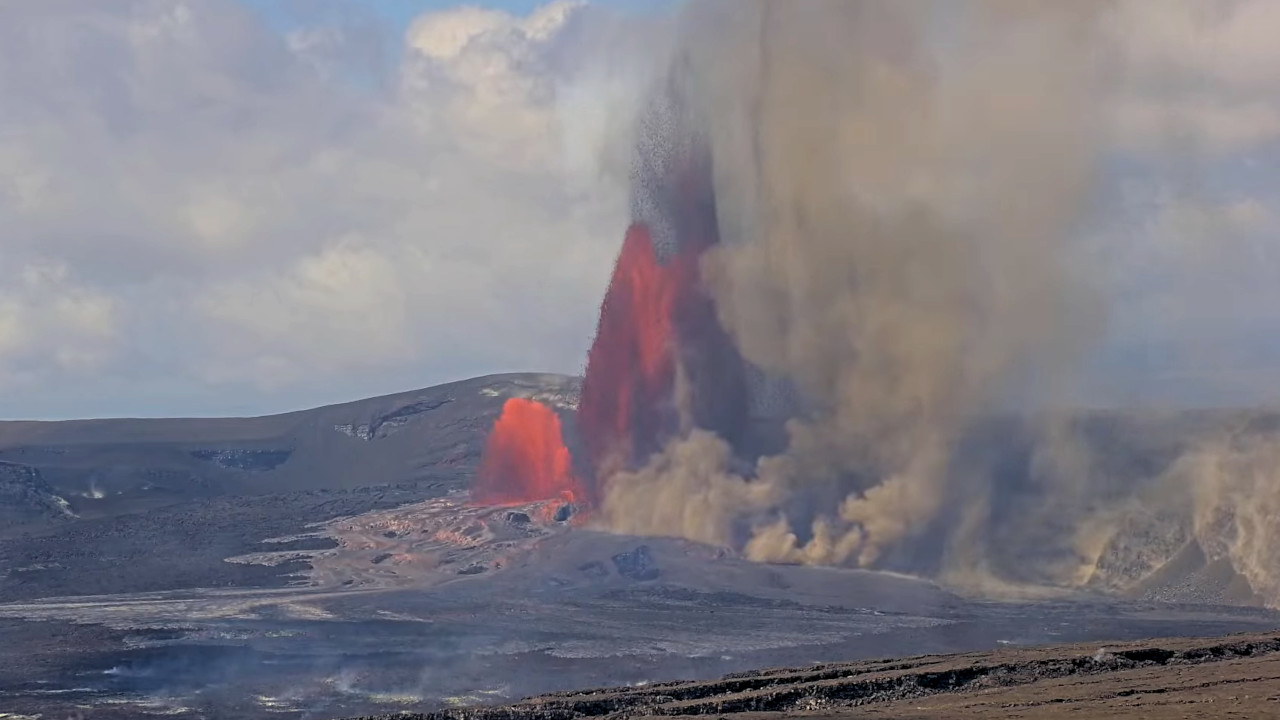
UPDATE – (11:15 a.m.) – The USGS Volcano Alert Level for Kīlauea was raised from WATCH to WARNING, and the Aviation Color Code raised from ORANGE to RED, as voluminous tephra from the eruption of Kīalauea is spreading to the north. “Golf course housing and highway 11 are being hit with tephra up to 5 inches,” the USGS Hawaiian Volcano Observatory says.
“Highway 11 has been closed between the 24 and 40 mile markers due to dangerous conditions including tephra falling on the roadway,” the Hawaiʻi County Civil Defese announced. “Sensitive individuals affected by volcanic gases should shelter indoors or leave the area. Minimize exposure to the glass particles and larger tephra. Disconnect water tank connections form the gutters to limit contamination from tephra.”
(BIVN) – The USGS Hawaiian Volcano Observatory issued a new Volcanic Activity Notice on Tuesday morning, as episode 43 in the ongoing Kīlauea summit eruption got underway.
Episode 43 began at 9:17 HST on March 10, 2026, when volcanic tremor doubled and tilt accelerated downward. Precursory lava flows began about an hour earlier.
“Ground-level sensors near the eruptive vents indicate that winds are light and variable, which suggests that volcanic gas emissions and volcanic material may be distributed unpredictably from Halemaʻumaʻu,” the Observatory stated. Tephra may fall around the summit and into communities to the north and east of Hawaiʻi Volcanoes National Park.
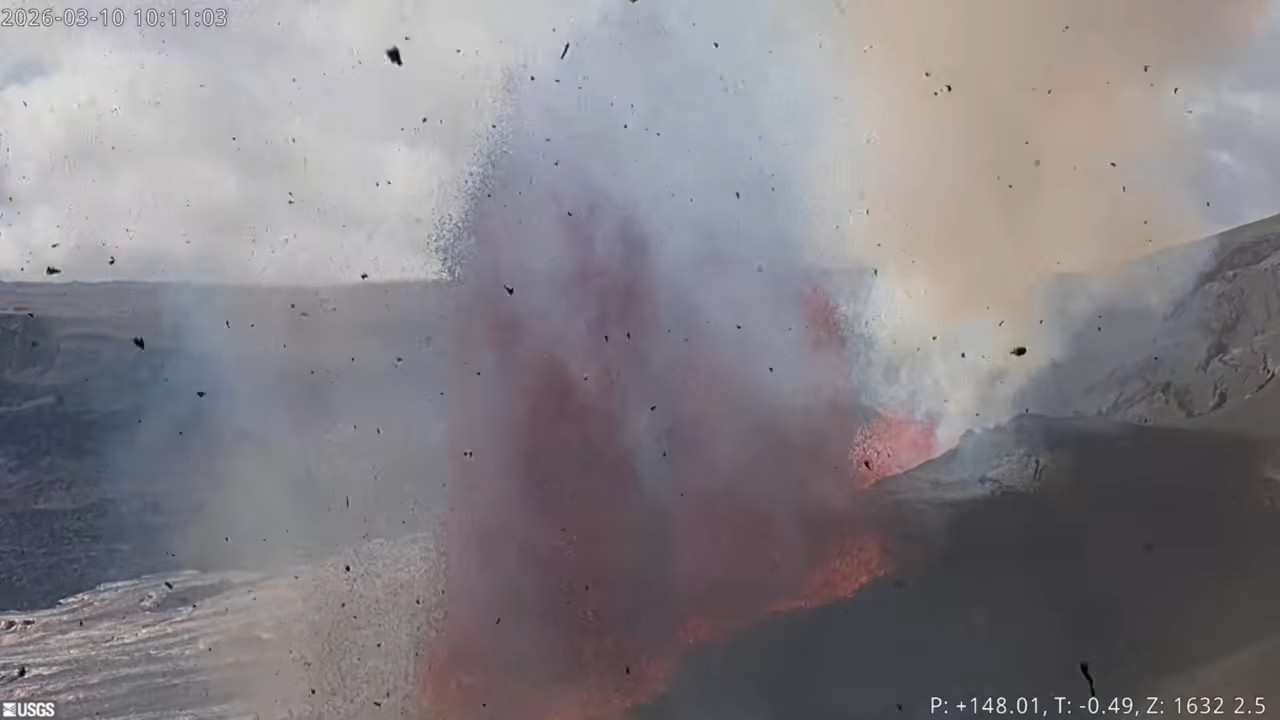
USGS webcam shows tephra raining down during episode 43 in the Kīlauea eruption
Just before 10 a.m., the Observatory noted the north vent fountains were just over 300 feet (100 meters) high. “Plume is rising vertically, some falling tephra observed near V1 camera north of the vents,” the scientists said. A newly installed microphone attached to the V1 camera was picking up the sound of the raining material.
The south vent began overflowing lava just before 10 a.m.
The USGS Volcano Alert Level for Kīlauea remains at WATCH and the Aviation Color Code is ORANGE.
The USGS Hawaiian Volcano Observatory also issued its reformatted Volcano Observatory Notice for Aviation (VONA):
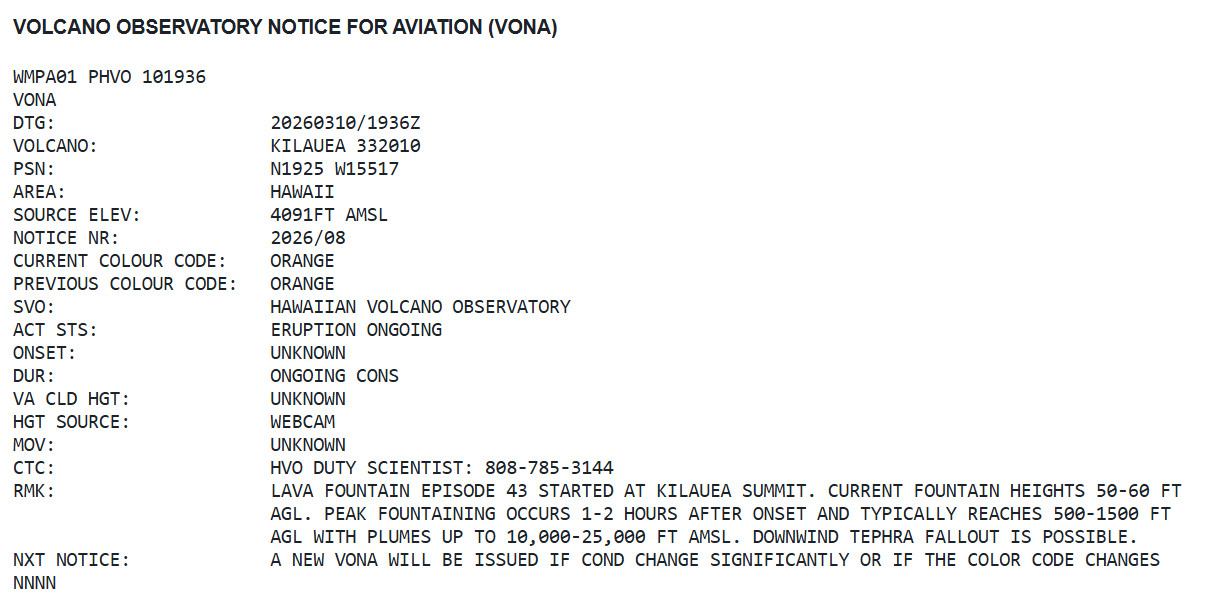
As explained in a recent Volcano Watch article, the VONA “is a notification product used by volcano observatories globally to inform the aviation community (pilots, air traffic managers, dispatchers, meteorologists, and airlines) of volcanic activity that could pose a hazard to aviation.” The change in message formatting is designed to improve the way that the aviation community gets this information.
This story will be updated as the eruptive episode progresses.

by Big Island Video News
on at
STORY SUMMARY
HAWAIʻI VOLCANOES NATIONAL PARK - Light and variable winds suggest volcanic gas emissions and volcanic material may be distributed unpredictably from Halemaʻumaʻu.