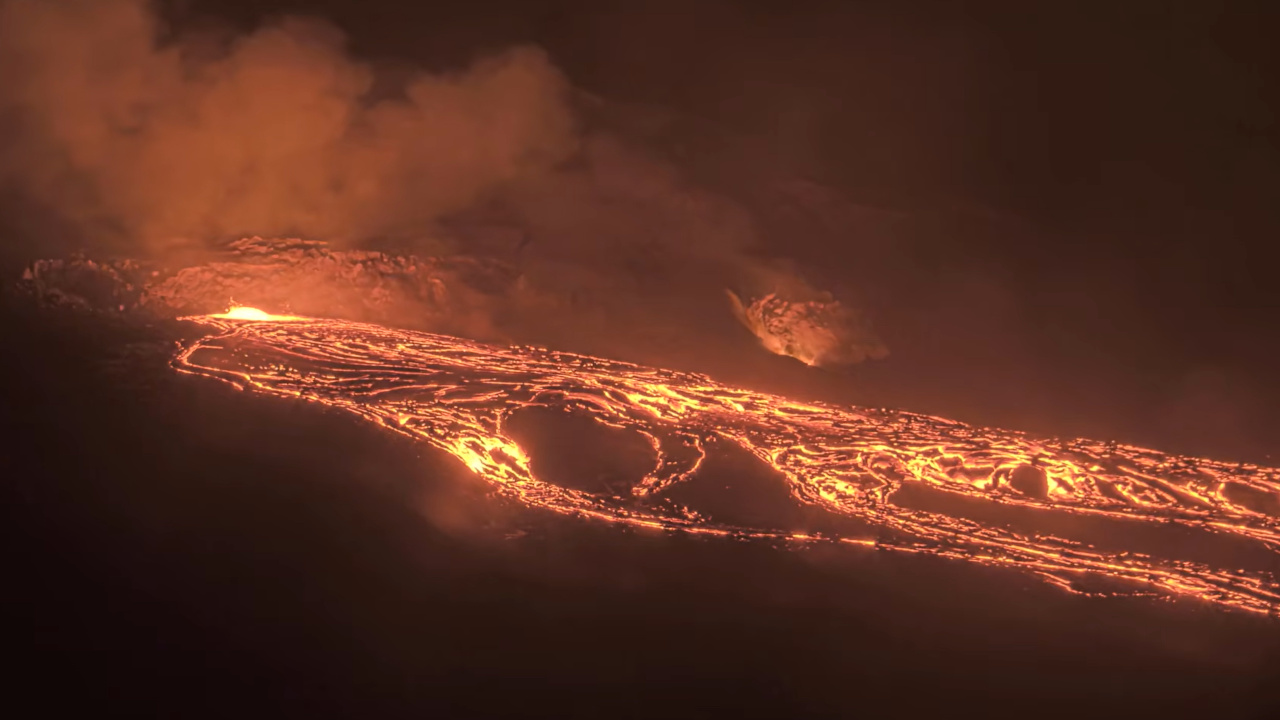
(BIVN) – Hawaiʻi island awaits the start of episode 44 lava fountaining in the ongoing Kīlauea summit eruption, but a recent swarm of earthquakes may have delayed the event.
The USGS Hawaiian Volcano Observatory reported on Sunday that the forecast window for episode 44 is April 6th to April 14th. That day, scientists noted a brief change to deflation at around 6 a.m. HST during a swarm of small earthquakes below Kīlauea summit between 1:50 a.m. to 7 a.m. HST.
At the time, the Observatory wrote:
Seismic tremor is continuous with frequent small, poorly-defined bursts possibly related to rise and fall of magma in the vents. Seventy-four small-magnitude earthquakes were recorded at the summit during the past day. Most were smaller than magnitude-2 and occurred between 1:50-7 a.m. this morning, at depths of 3.7-5 miles (6-8 km) below sea level. This activity does not appear to have had an effect on the episode 44 precursory activity, and HVO will continue to closely monitor it.
Since that time, deflation has continued. The Observatory is expected to issue another update today, providing their interpretation on how the deformation trend might impact the forecast window.
Lava flows were observed at the summit early Monday morning.
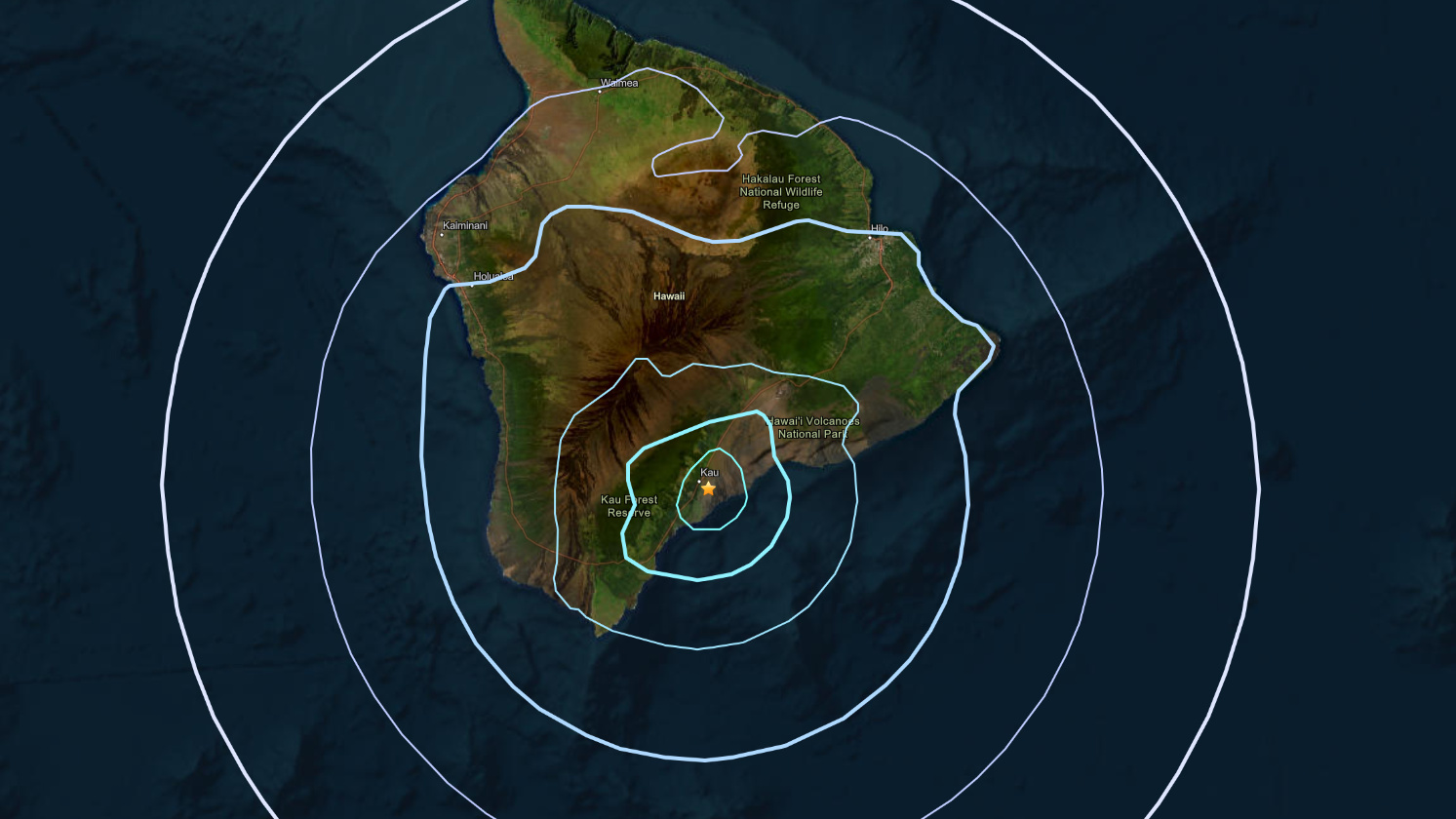
USGS map shows the location of the magnitude-3.9 earthquake on Sunday
The USGS also issued a separate information statement on a stronger earthquake that occurred far from the summit area. At 11:41 a.m. HST on Sunday, a magnitude-3.9 earthquake occurred 2 miles east-northeast of Pāhala, at a depth of 2 miles below sea level. The earthquake had no apparent impact on either Mauna Loa or Kīlauea volcanoes.
“This earthquake is likely related to the seismic swarm under the Pāhala area, which has been going on since 2019,” the Observatory stated. “Earthquakes in this region have been observed at least as far back as the 1960s.”
The earthquake was not strong enough to cause damage or generate a tsunami threat.
Meanwhile, the National Weather Service has maintained a Special Weather Statement in anticipation of episode 44.
“If an eruption occurs, varying levels of ash, Pele’s hair, and other lightweight tephra may fall downwind of the eruption,” the weather forecasters said. “Smaller particles can travel farther from the eruption site and may affect communities at greater distances.”
“If you live downwind of the Kilauea summit, or plan to visit the summit area, stay informed about current volcanic activity and weather conditions,” the National Weather Service said. “Be prepared to take precautions if needed, such as disconnecting water catchment systems. Follow all guidance from the National Park Service and the County of Hawaii. Be aware that road or park closures may occur.”

by Big Island Video News
on at
STORY SUMMARY
HAWAIʻI VOLCANOES NATIONAL PARK - The eruption window was set to begin today, although the summit has been on a deflationary trend since Sunday's earthquakes.