
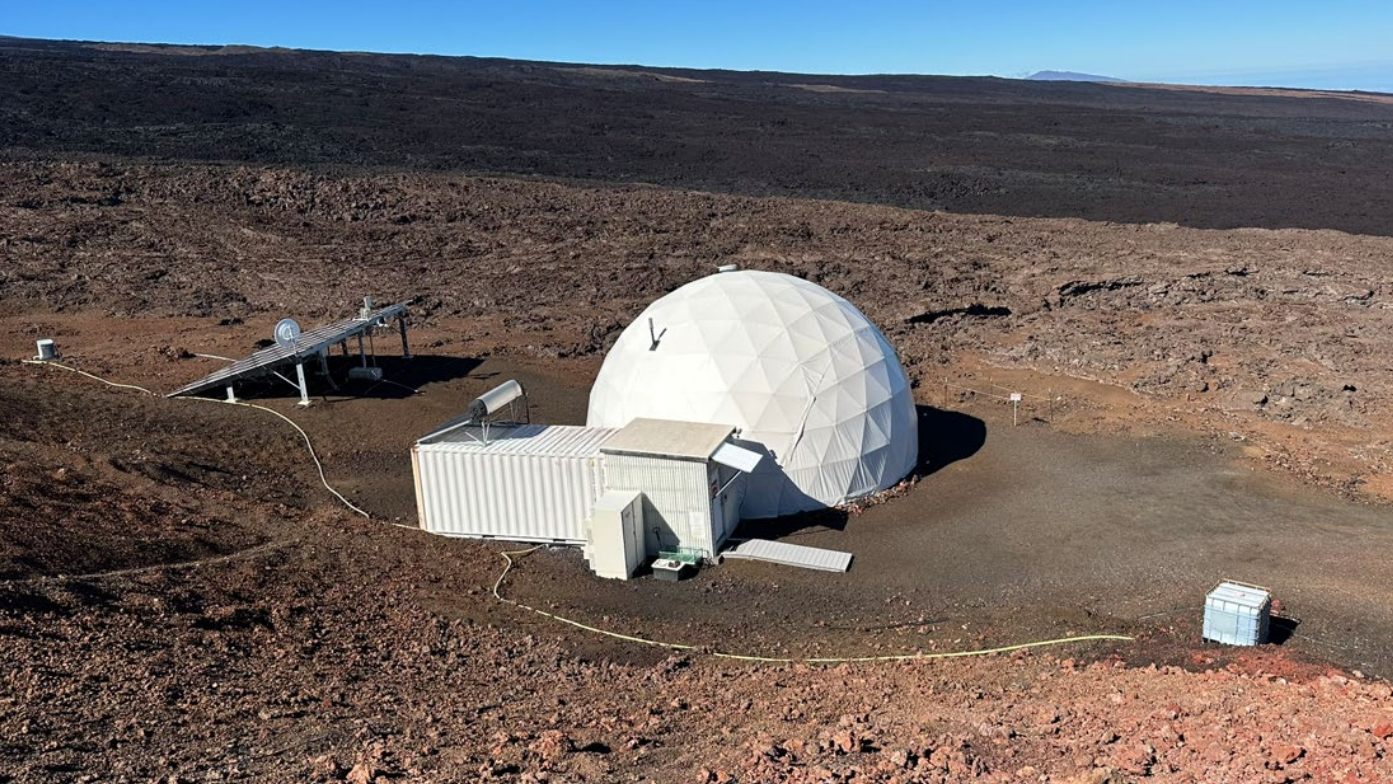

(BIVN) – Long-term space exploration research could soon return to the slopes of Mauna Loa volcano on Hawaiʻi island.
The University of Hawaiʻi at Mānoa, with support from NASA, is seeking a permit to bring the HI-SEAS (Hawaii Space Exploration Analog and Simulation) habitat back to the remote site where previous studies were conducted.
A Draft Environmental Assessment for the project was published in the April 23rd issue of The Environmental Notice.
Under a Conservation District Use Permit approved by the Hawaiʻi Board of Land and Natural Resources in 2013, researchers isolated themselves at the HI-SEAS Habitat to study “the operational and psychological issues astronauts will experience as they explore the solar system,” the Draft EA explains. “The missions involved a crew of researchers living in the habitat for months at a time, where mission length, distance from Earth, the size and functionality of the living space, communication delays and latency, and the characteristics of in-flight and surface extravehicular activities were simulated.”
FILE VIDEO: HI-Seas Mission V (Sept. 22, 2017)
The Draft EA provides the following summary of the events leading up to the need for a new environmental assessment and Conservation District Use Permit:
The original plan in the EA and CDUP was that five years after approval (i.e., in 2018), the project would terminate, the habitat would be removed, the site would be cleared of any debris or traces of the experiment and renaturalized, and monitored to prevent establishment of invasives. UHM applied to DLNR for a 5-year time extension in 2019, which was granted. The focus of the project began to evolve to encompass similar projects such as the International MoonBase Alliance, led by long-term HI-SEAS partner Henk Rogers, which could conduct shorter-term studies designed to mimic missions to the Moon. It was determined by DLNR in 2023 that because of the change in the nature of activities, the original CDUP was no longer applicable. UHM then decided to prepare another CDUA and EA, which has taken until the present to complete. In the meantime, the site was secured.
The EA describes some of the new features proposed for the continued project:
The project would retain/modify all the features that are already onsite from the original habitat project and construct very limited new features including a 1,000-gallon propane tank to help supplement solar power when necessary, modular plant-growth chambers for food and oxygen production, and a low solar angle illumination set up to simulate lunar conditions for 1- to 3-hour EVA night missions up to 12 times a year. UHM has coordinated with DLNR and the UH Institute for Astronomy on measures to avoid impacts to seabirds and dark skies. The lights will be shielded from shining upwards and will utilize a low-blue spectrum that minimizes scattering. The project would also increase the fidelity of the mission analog by introducing greywater recycling for plant growth and other non-consumption purposes.
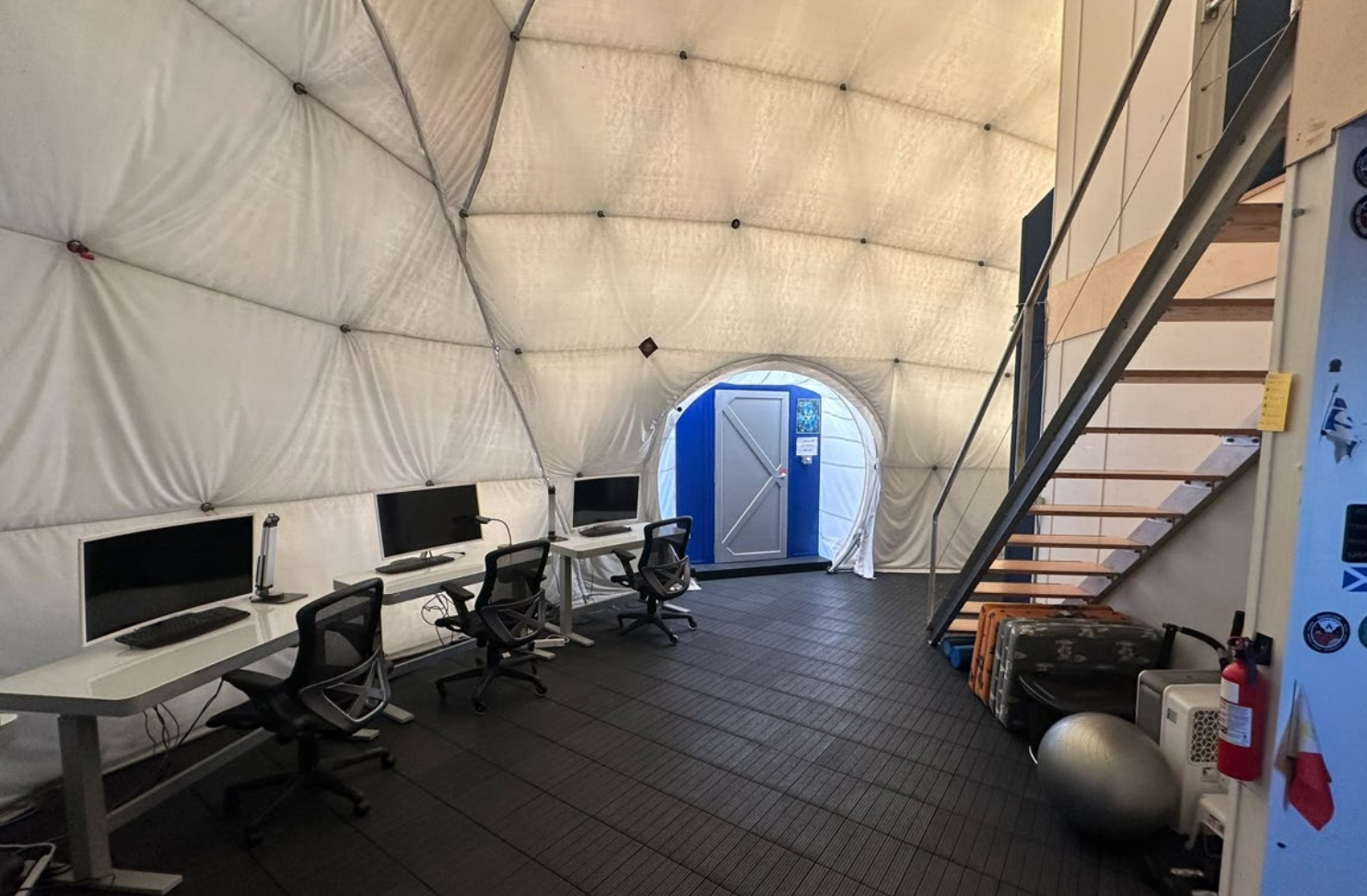
The documents states the enhanced facility will be designed to simulate, as accurately as possible:
- Mission length
- Distance from Earth
- Size and functionality of the living space
- Communication delays and latency, and
- Characteristics of in-flight or surface extravehicular activities (EVAs, also known as spacewalks)
“After five years, this second phase of the project is scheduled to terminate,” the Draft EA stated. “Unless (the University of Hawaiʻi at Mānoa) determines that it would be useful to continue the project as described or in an altered form, and applies for an extension and any needed permits, the habitat would be removed. The site would be cleared of any debris or traces of the experiment.”
The EA consultant is the Hilo-based Geometrician Associates. The 30-day public review and comment period is now underway, with comments due by May 26, 2026.
