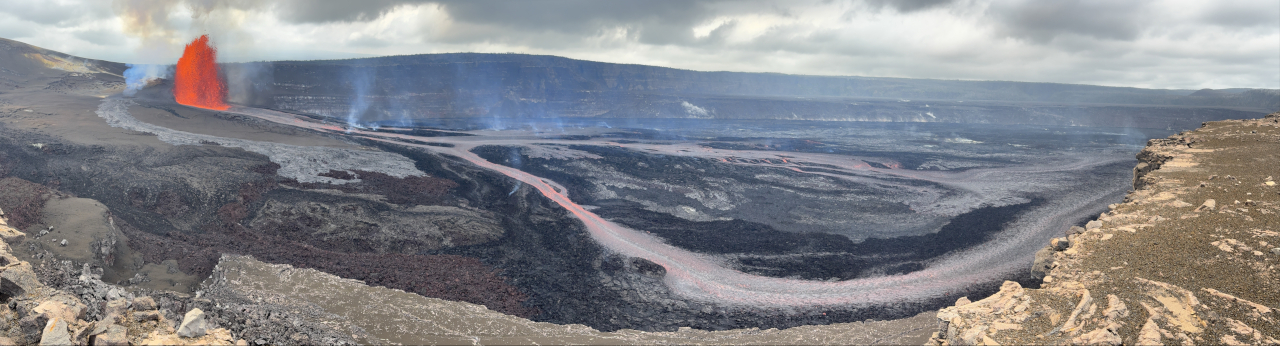
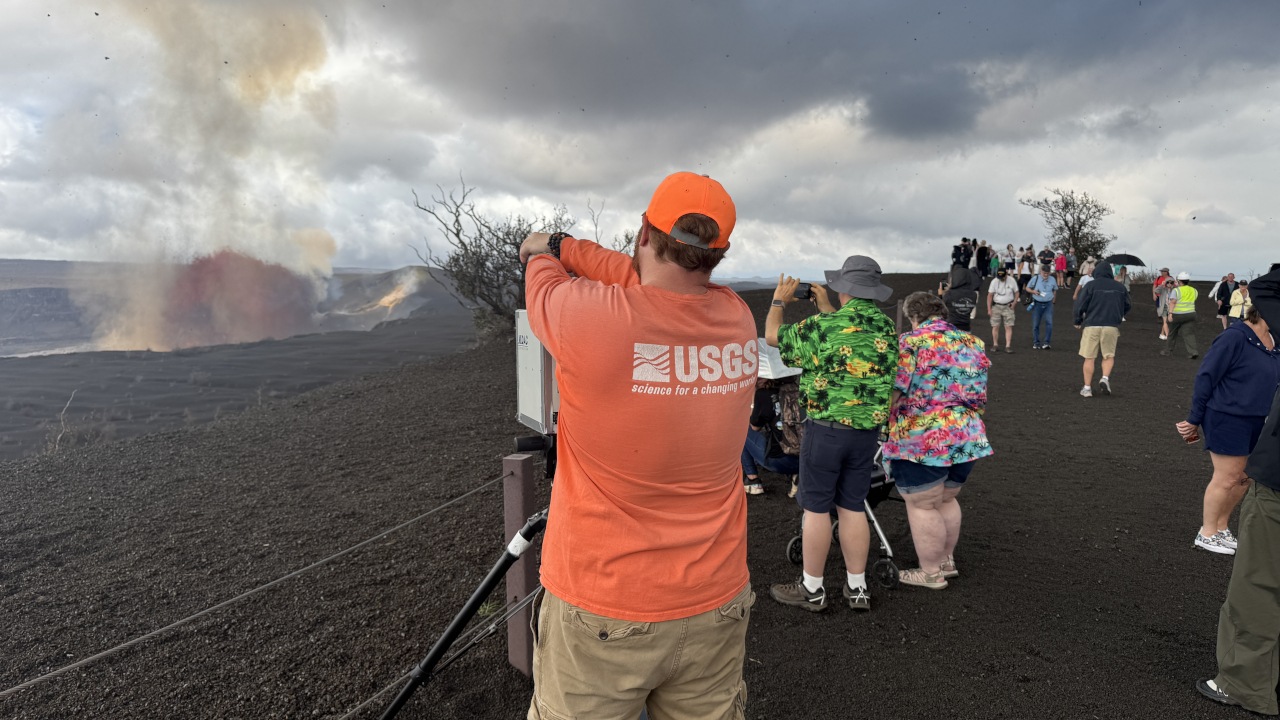

(BIVN) – Episode 46 in the ongoing eruption at the summit of Kīlauea ended Tuesday evening after 9 hours of lava fountaining.
The eruption is now pused, and USGS Volcano Alert Level for Kīlauea has been lowered to ADVISORY. The Aviation Color Code has also been lowered to YELLOW.
The USGS Hawaiian Volcano Observatory reports tephra fell outside of the closed area of Hawaiʻi Volcanoes National Park along the north rim of Kīlauea caldera, on Highway 11 between mile markers 30 and 34, and in adjacent communities.
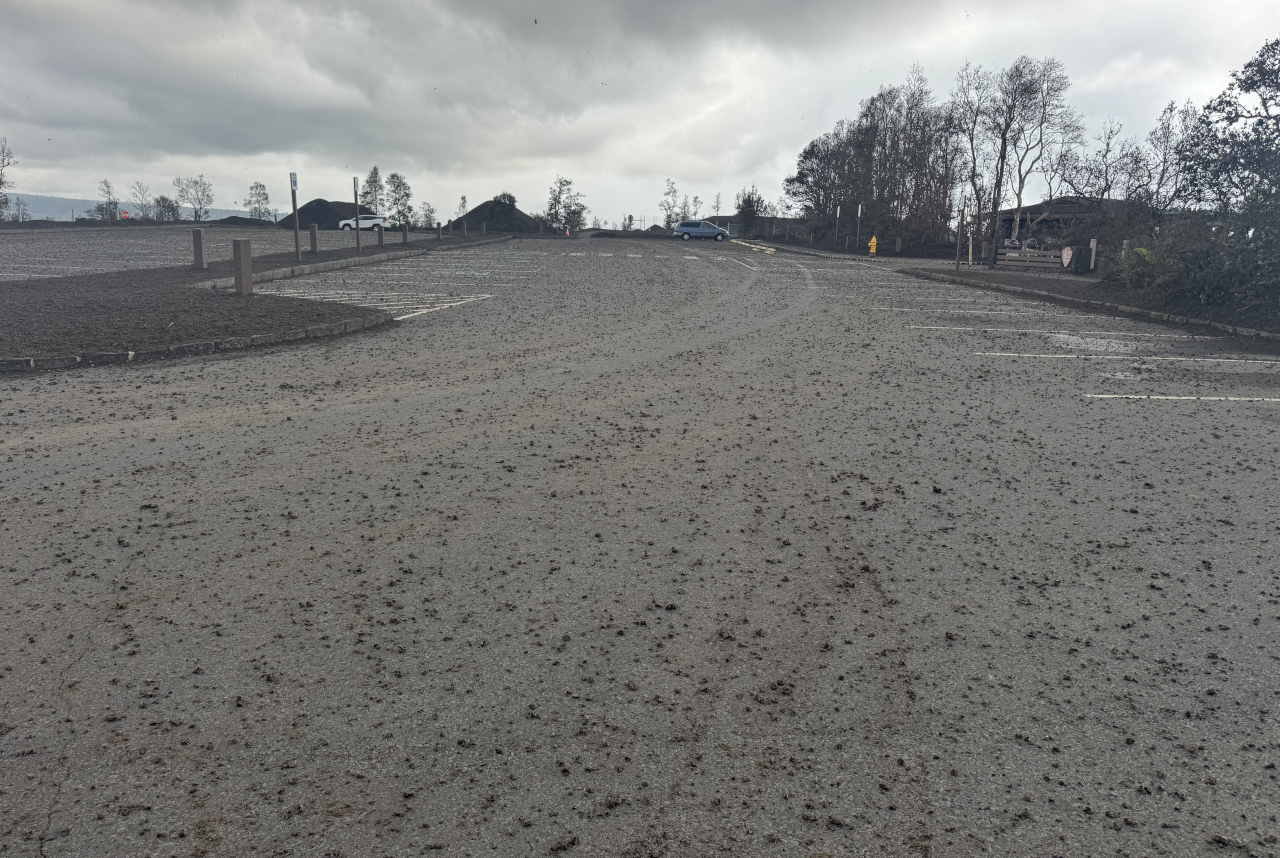
“Tephra as large as 6 inches (15 centimeters) was observed falling on Highway 11 in the national park, and fine ash and Peleʻs hair were reported as far away as Mountain View,” the Observatory stated.
The Ashfall Advisory issued by the National Weather Service for East Hawaiʻi is no longer in effect.
The episode ended at 5:22 p.m. HST on Tuesday, May 5th. The USGS HVO posted this information in an evening status report:
Episode 46 of lava fountaining in Halemaʻumaʻu at the summit of Kīlauea began at 8:17 a.m. on May 5 and stopped at 5:22 p.m. HST the same day, after 9 hours of continuous lava fountaining from the north vent. The south vent never fountained during this episode, but it displayed periodic gas jetting and flames. The highest peak of instantaneous effusion rate of just over 310 cubic yards (240 cubic meters) per second occurred around 9:50 a.m. HST on May 5. Episode 46 saw an average effusion rate of 180 cubic yards (140 cubic meters) per second. An estimated 6 million cubic yards (4.6 million cubic meters) of lava erupted and covered about 60% of the Halemaʻumaʻu crater floor. The Uēkahuna tiltmeter (UWD) recorded about 14 microradians of deflationary tilt during episode 46.
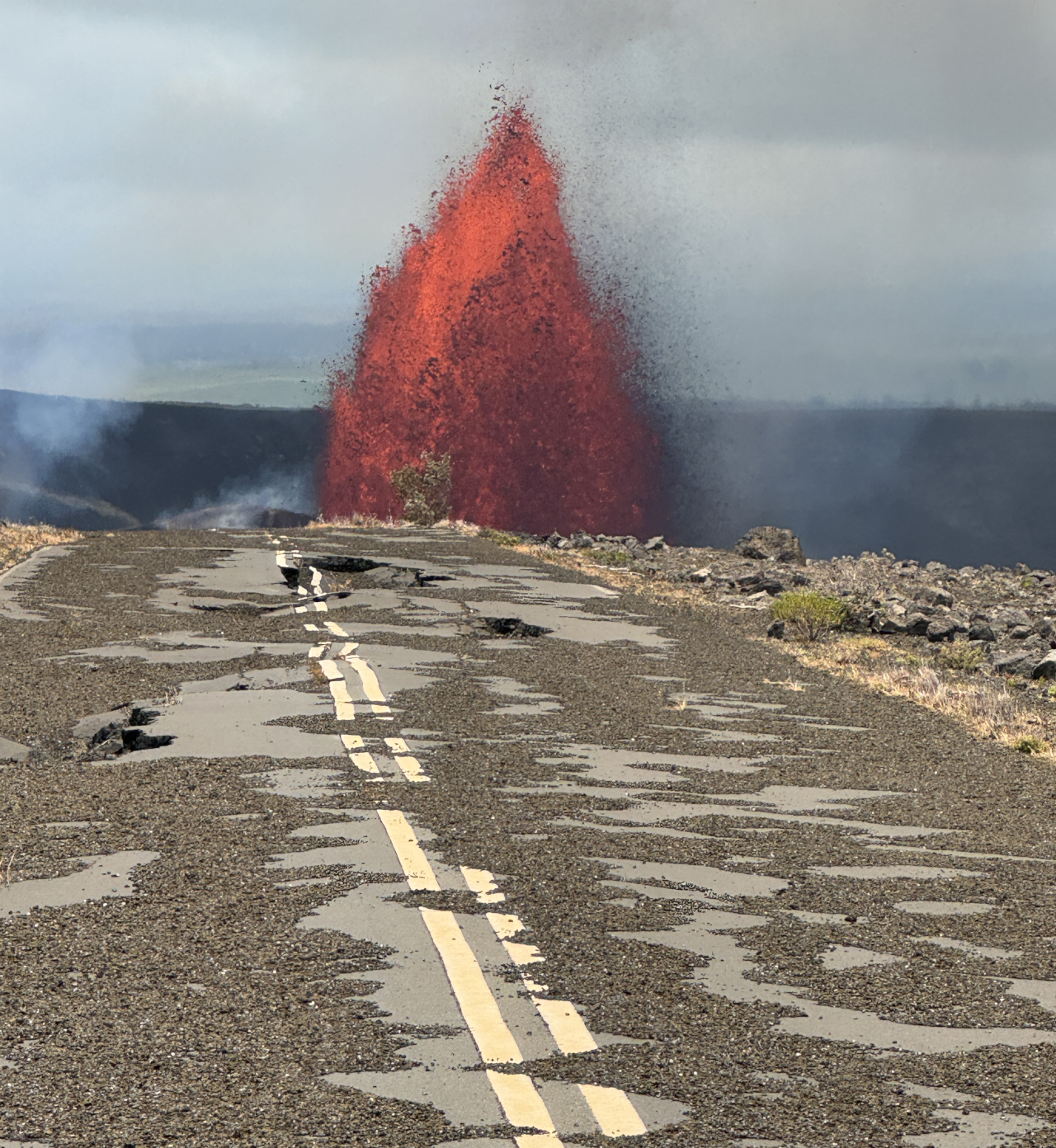
Episode 46 lava fountaining began approximately 19 hours after the onset of precursory lava overflows on afternoon of May 4. There were about 45 precursory overflows including about 24 from the north vent and about 21 from the south vent. Low-level dome fountaining from the north vent began at 8:17 a.m. HST this morning, and grew in vigor and height. South vent had one short-lived dome fountain and overflow after the onset of north vent fountaining, and subsequently had periodic gas jetting and flames. North vent fountains grew steadily until their peak between 10 and 10:30 a.m. HST. The main body of the fountains reached heights of 650 feet (200 m). After their peak, fountain height gradually decreased and were about 160 feet (50 meters) high just before the episode ended abruptly at 5:22 p.m. HST.
The north vent lava fountain produced significant heat and ash, feeding a plume that reached a maximum height of about 20,000 feet (6,000 meters) above sea level based on radar data reported by the National Weather Service and Washington Volcanic Ash Advisory Center. Light winds from the southeast directed the lower plume and tephra fall toward the north and northwest of Halemaʻumaʻu. Higher level winds directed the upper plume toward the north and northeast. At 8:52 a.m., the National Weather Service issued an ashfall advisory for Hawaiʻi Volcanoes National Park and areas to the north and northeast, including the communities of Volcano and Mountain View. This ashfall advisory is currently in effect until 8:00 p.m. HST. Tephra fell outside of the closed area of Hawaiʻi Volcanoes National Park along the north rim of Kaluapele (Kīlauea caldera), on Highway 11 between mile markers 30 and 34, and in adjacent communities. Tephra as large as 6 inches (15 centimeters) was observed falling on Highway 11, and fine ash and Peleʻs hair were reported as far away as Mountain View.
Earthquake activity during episode 46 was minor. Levels of seismic tremor rose and fell with fountaining and are now at typical levels for eruption pause.