

UPDATE – (8:30 a.m.) – The USGS Hawaiian Volcano Observatory provided the following update on Sunday morning:
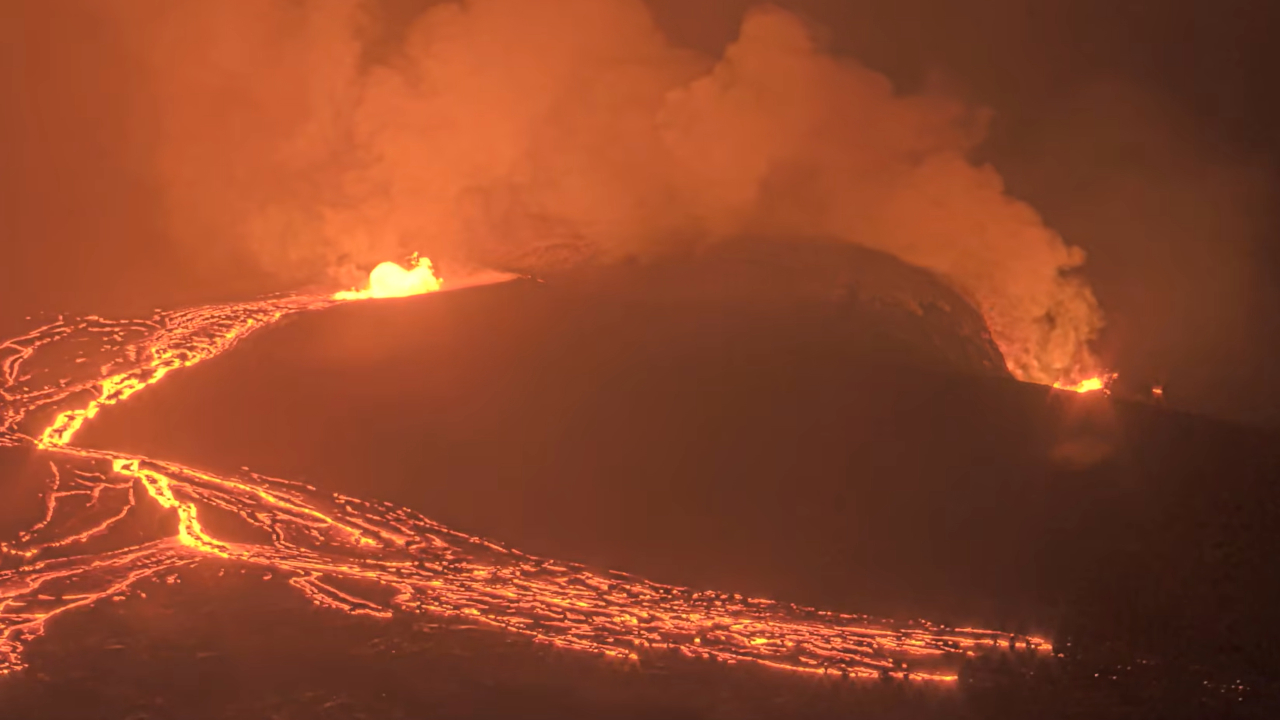
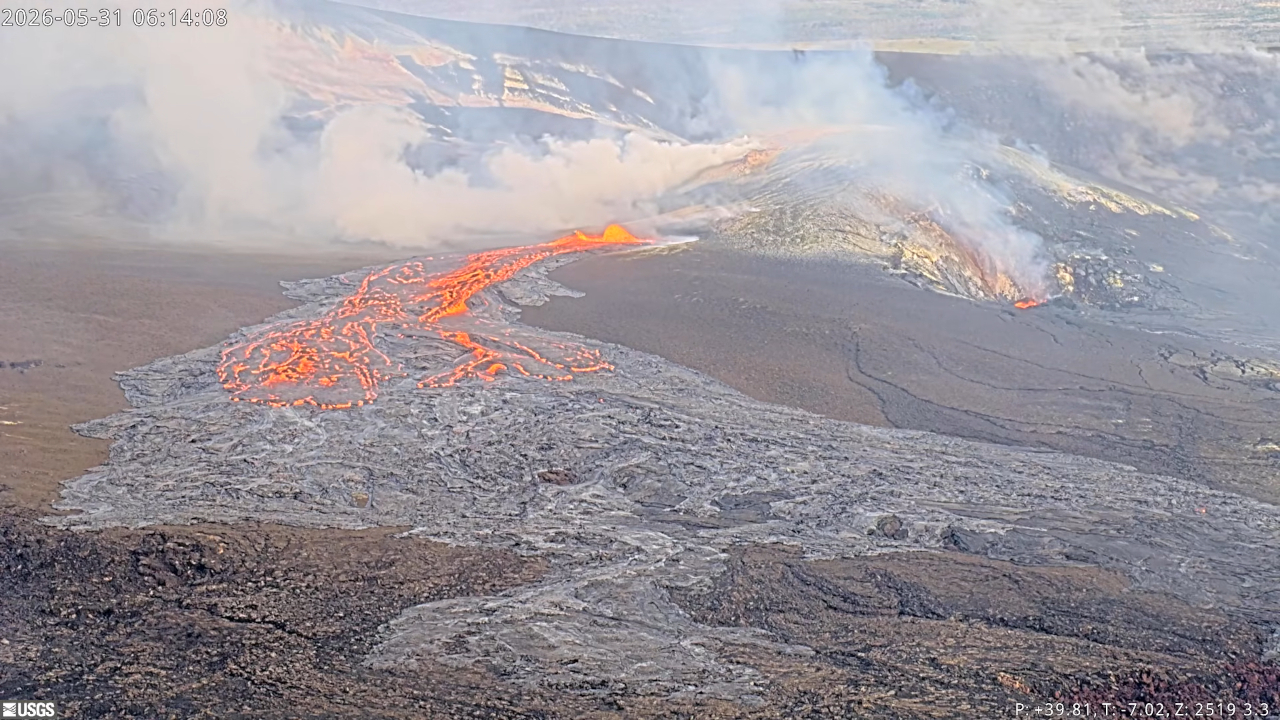
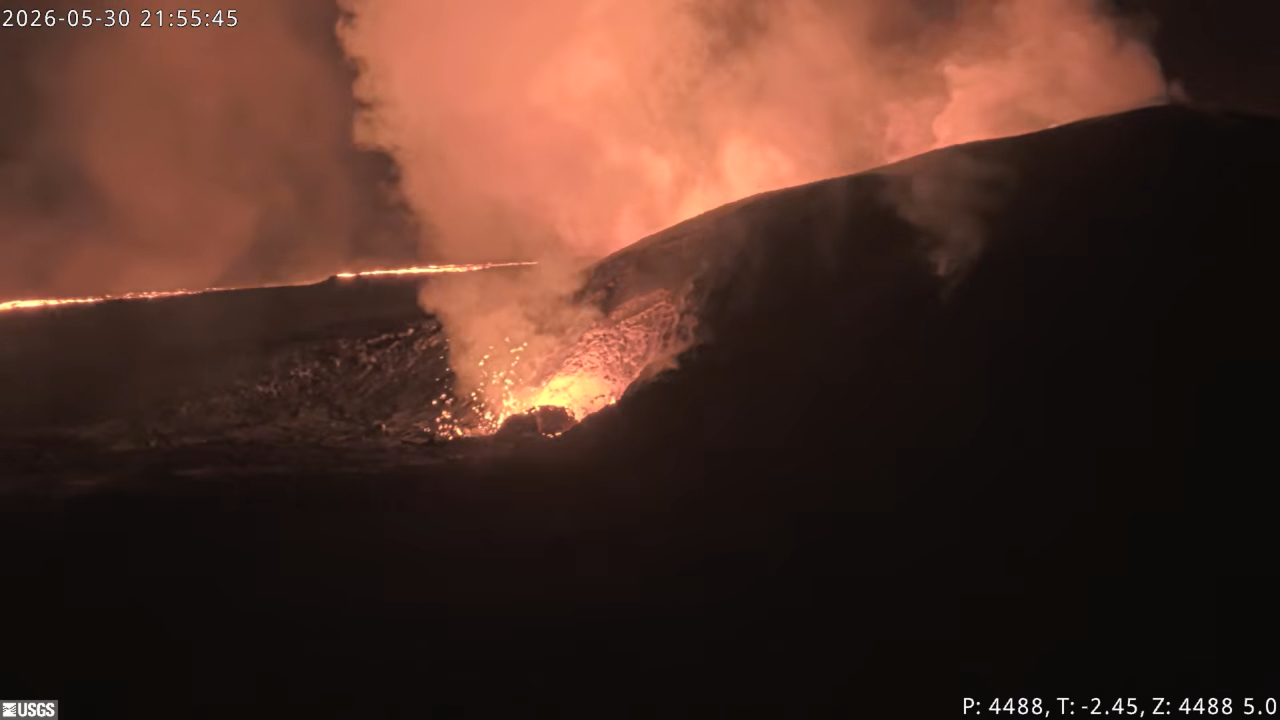
Precursory overflows of degassed lava began from the south vent at 5:41 p.m. HST yesterday May 30. The overflows are generally small and stay within a few hundred meters of the vent. There have been 29 overflows so far that typically last 5-10 minutes and are spaced 15-30 minutes apart. Low dome fountains (5-10 ft or 1-3 m high) feed the passive overflows. The end of events is marked by vigorous drainback of lava and a drop in lava level within the vents. Spattering continued throughout the night building the small cone within the north vent. The vigor of spattering within the north vent greatly increased around 7:51 a.m. HST this morning (May 31) and lava appears to be coming out of the back wall vent and draining into the main vent. No precursory overflows have occurred from the north vent.
Seismic tremor continues but changed to well (d)efined gas pistoning with the first overflow. Low tremor characterizes the overflow followed by a sharp increase associated with drainback of lava. Earthquake activity beneath Kīlauea summit remains low with 6 earthquakes located around Halemaʻumaʻu in the last 24 hours. The largest was a magnitude 1.83 at 6:53 a.m. HST today (May 31) in the center of Halemaʻumaʻu.
Kīlauea summit inflation continues very slowly this morning, after flattening out with the onset of the first overflow. Since the end of lava fountaining episode 47 on May 15, the Uēkahuna tiltmeter (UWD) has tracked about 17 microradians of inflationary tilt (a small tilt offset was due to the M6 earthquake on the west side of the island on Friday evening). This instrument recorded 15.6 microradians of deflationary tilt during episode 47.
With the eruption now paused, the sulfur dioxide (SO2) emission rate from the summit is likely now varying within a typical range of 1,000 to 5,000 tonnes per day. Measurements on Friday, May 22, indicated emission rates of about 2,000 tonnes per day. Surface winds are out of the northeast at the summit this morning with higher level winds forecast out of the west southwest.
(BIVN) – Precursory lava activity began Saturday evening at the summit of Kīlauea, as the Hawaiʻi island volcano builds to the 48th episode of high fountaining in the ongoing eruption.
The USGS Hawaiian Volcano Observatory has raised the Volcano Alert Level from ADVISORY to WATCH, and the Aviation Color Code from YELLOW to ORANGE, ahead of the anticipated lava fountaining event.
“The first overflow was sluggish and only made it about 100 m from the vent and lasted about 5 minutes,” the Observatory wrote at 6:34 p.m. HST. “A second overflow began at 6:27 pm HST. Spattering continues at the north vent and tremor shows clear gas pistoning.”
The National Weather Service in Honolulu issued a Special Weather Statement for the entire Big Island, saying:
WHAT…An episodic fountaining eruption is expected within the Kilauea summit caldera. The Hawaiian Volcano Observatory has indicated a potential eruption window between now and May 31st. Fountaining episodes typically last less than 12 hours but ash can remain in the air longer depending on wind and weather.
IMPACTS…If an eruption occurs, varying levels of ash, Pele`s hair, and other lightweight tephra may fall downwind of the eruption. Smaller particles can travel farther from the eruption site and may affect communities at greater distances. Should a higher plume develop during this episode, south- southwesterly winds aloft could result in an easterly or northeasterly dispersion of ashfall instead.
PRECAUTIONARY/PREPAREDNESS ACTIONS…
If you live downwind of the Kilauea summit, or plan to visit the summit area, stay informed about current volcanic activity and weather conditions. Be prepared to take precautions if needed, such as disconnecting water catchment systems. Follow all guidance from the National Park Service and the County of Hawaii. Be aware that road or park closures may occur.
The Hawaiʻi County Civil Defense issued a radio message after the alert level was raised.
“If an eruption occurs, varying levels of ash, Pele’s hair, and other lightweight tephra may fall downwind of the eruption,” the civil defense message stated. “Small particles can travel farther from the eruption site and may affect communities at greater distances.”
“If you live downwind of Kilauea Summit, be prepared to take precautions if needed, such as disconnecting water catchment systems,” the emergency officials advised.
