
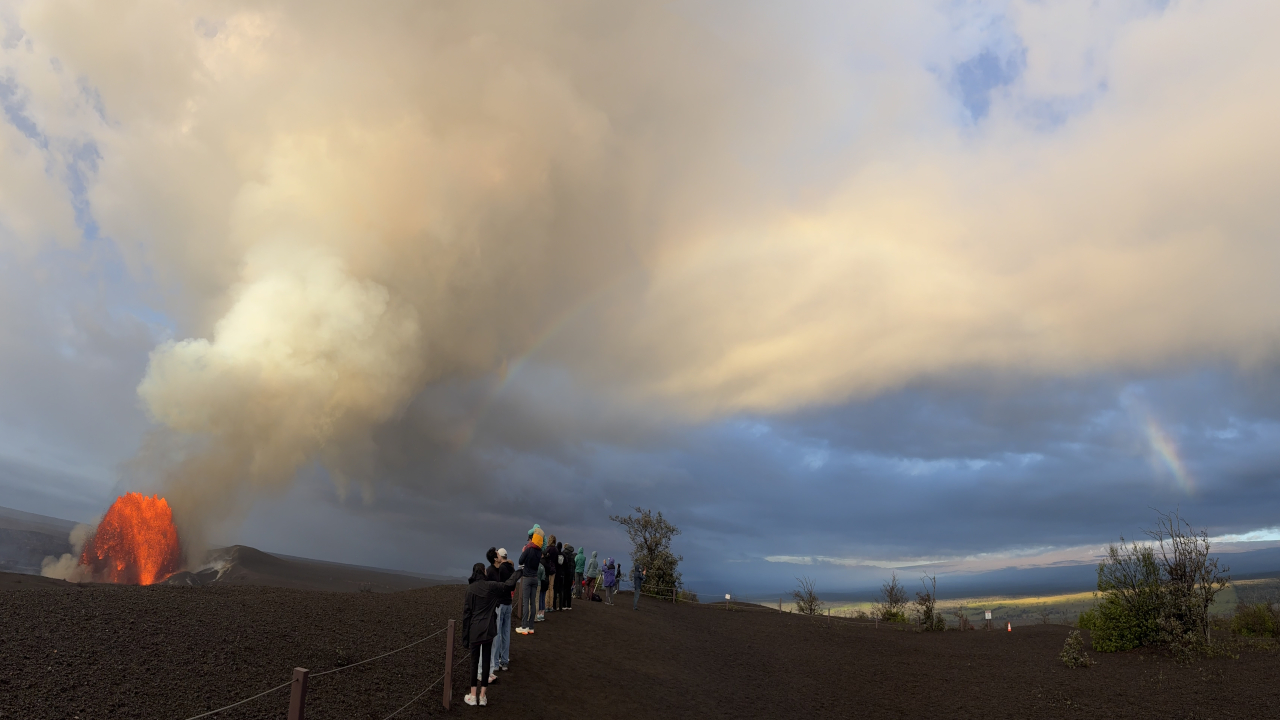

(BIVN) – The ongoing eruption at the summit of Kīlauea volcano is once again paused, following nine-hours of episode 48 lava fountaining.
The event ended abruptly at 1:37 p.m. HST. The USGS Volcano Alert Level for Kīlauea has dropped down from WATCH to ADVISORY, and the Aviation Color Code has returned from ORGANGE to YELLOW.
There was some tephra-fall reported with the episode. The tephra fell within the closed area of Hawaiʻi Volcanoes National Park, “but sparse reticulite up to 1 inch (2 centimeters) in size fell at both the Uēkahuna overlook and on Highway 11 west of Nāmakanipaio campground,” the USGS Hawaiian Volcano Observatory said. “Fine ash and Peleʻs hair was reported from Hawaiʻi Volcanoes National Park in communities to the northeast, including Mauna Loa Estates, Ohia Estates, Volcano village, and Royal Hawaiian Estates.”
“A commercial pilot reported a sulfur and ash cloud off of Laupāhoehoe that resulted in cancellations and diversions of several morning flights to Hilo,” the Observatory noted.
The Observatory made note of the record-breaking nature of the episode:
The Halemaʻumaʻu eruption now has the most fountaining episodes ever recorded for an episodic fountaining eruption, edging out the Pu‘u‘ō‘ō eruption which had 47 fountain episodes. Other eruptions have had additional episodes related to changes in vent activity and location, this only applies to episodic fountains.
This “Episode 48 Chronology” was provided by the USGS HVO following the conclusion of the event:
Lava fountaining episode 48 in Halemaʻumaʻu at the summit of Kīlauea began at 4:40 a.m. HST on June 1 and stopped abruptly at 1:37 p.m. HST on June 1, after just under 9 hours of continuous fountaining from the north vent. The last minute was marked by gas jetting at the north vent. The south vent never fountained during this episode, but it periodically spattered and had a few episodes of jetting. The instantaneous effusion rate peaked at about 415 cubic yards (320 cubic meters) per second just before 6:00 a.m. HST, with an average effusion rate of 245 cubic yards (185 cubic meters) per second for the entire fountaining episode. An estimated 7.3 million cubic yards (5.6 million cubic meters) of lava erupted and covered about 40% of the Halemaʻumaʻu crater floor. The Uēkahuna tiltmeter (UWD) recorded about 17.1 microradians of deflationary tilt during episode 48.
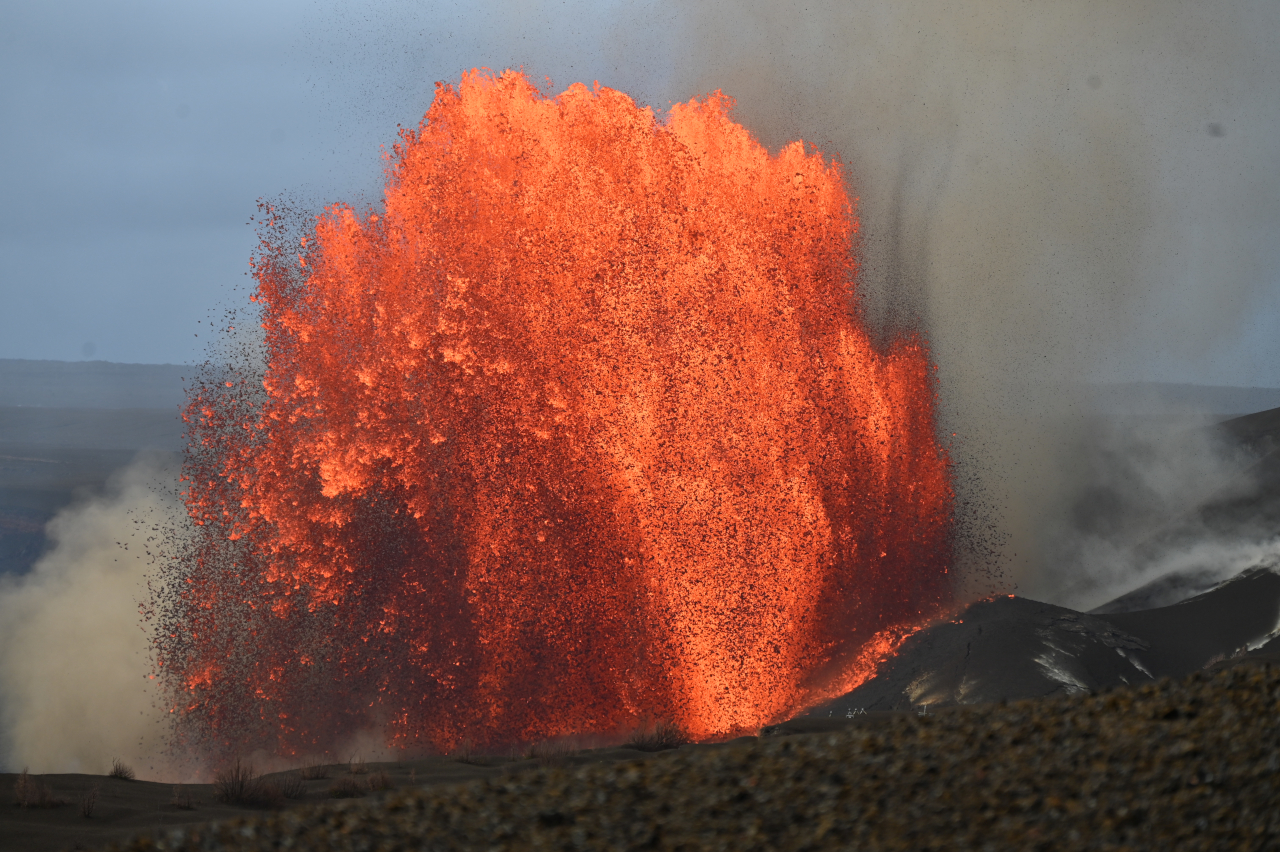
Episode 48 lava fountaining began approximately 35 hours after the onset of precursory lava overflows at 5:41 p.m. HST in the evening of May 30. These continued throughout the next day and were amazingly uniform in duration (5-10 minutes) and interval (15-30 minutes). There were 95 precursory overflows erupted only from the south vent, though spattering was visible at the north vent throughout most of this time. North vent spattering preceded the overflows starting with 2 very small spatter events on the evening of May 27. No additional spatter was visible until the evening of May 28, when the north vent began sporadic spattering that continued until the north vent overflowed at 3:46 a.m. HST June 1. North vent dome fountaining then steadily escalated in vigor and height until it transitioned to episode 48 fountaining at 4:40 a.m. HST June. After the north vent became active, the south vent continued overflowing cyclically, but over the next hour its activity diminished to only spattering as the north vent fountains grew. Meanwhile, the north vent lava fountain grew steadily until reaching a maximum height of around 650 feet (200 meters) by about 5:50 a.m. HST. Over the next several hours the fountain height gradually declined, and it was estimated under 300 feet (90 meters) high about 1 hour before the episode ended at 1:37 p.m. HST on June 1.
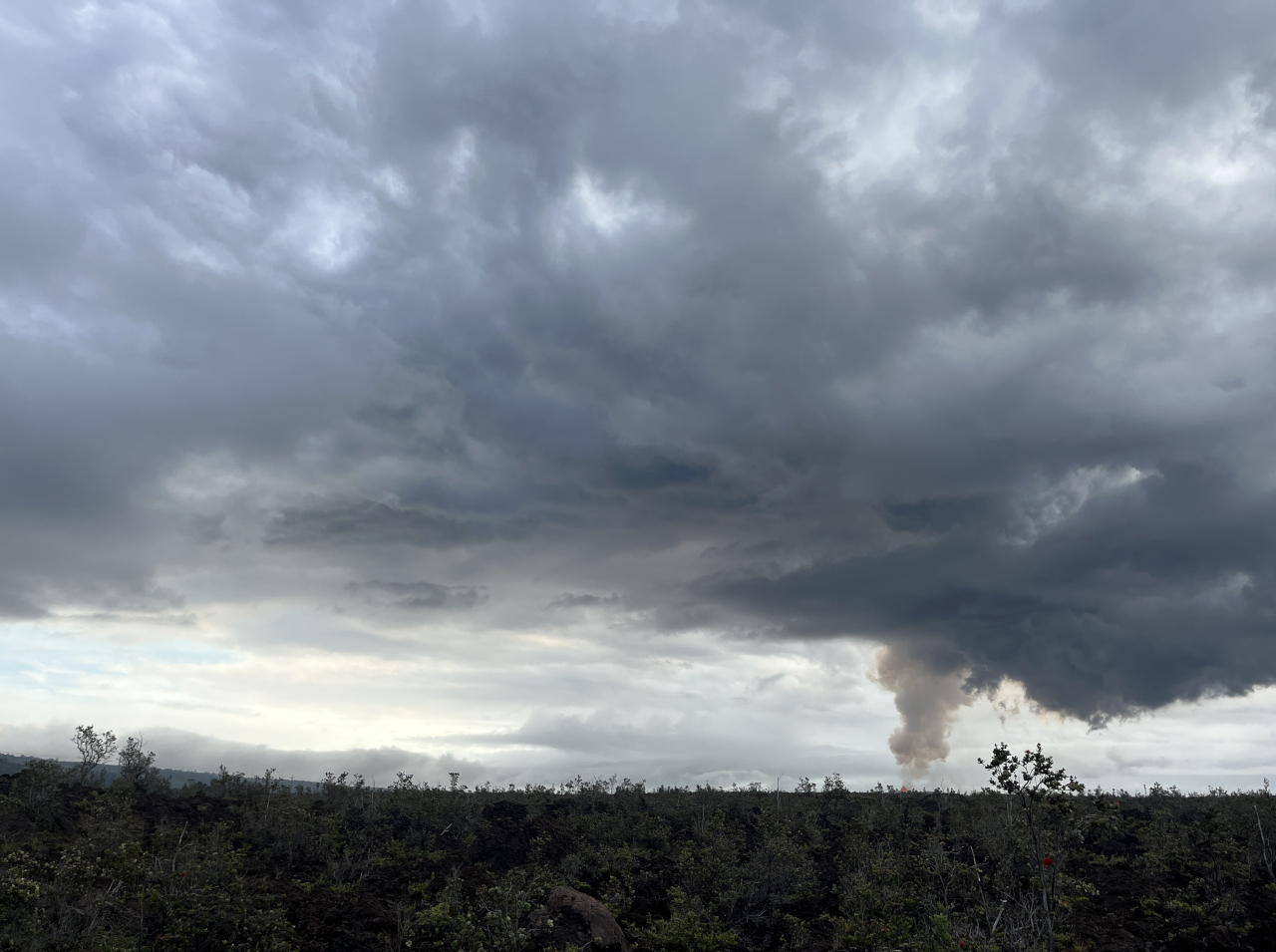
The north vent lava fountain produced significant heat and ash, feeding a plume that reached a maximum height of about 25,000 feet (7,600 meters) above sea level based on radar data reported by the National Weather Service and Washington Volcanic Ash Advisory Center. At first, lower-level trade winds from the northeast pushed most tephra from the lava fountaining to the southwest of Halemaʻumaʻu. As the plume cloud grew, winds from the south at higher elevations between 10,000 feet and 20,000 began moving the plume northward. This allowed tephra to spread out and fall at a number of locations around the rim of Kaluapele (Kīlauea caldera). At 5:31 a.m. HST, the National Weather Service issued an ashfall advisory for the southeast and northeast of Island of Hawaiʻi, including Hawaiʻi Volcanoes National Park. Sparse pumice up to 1-2 inches (2-5 centimeters) in size fell at the Uēkahuna overlook and Nāmakanipaio campground along with Highway 11 west to the 34-mile marker. Fine ash and Peleʻs hair were deposited around Kīlauea Visitor Center and outside Hawaiʻi Volcanoes National Park in communities to the northeast, including Mauna Loa Estates, Ohia Estates, and Volcano village as well as to the west of the caldera between the 34- and 36-mile markers. Very sparse, fine ash was reported as far as Mountain View. A commercial pilot reported a sulfur and ash cloud off of Laupāhoehoe that resulted in cancellations and diversions of several morning flights to Hilo.
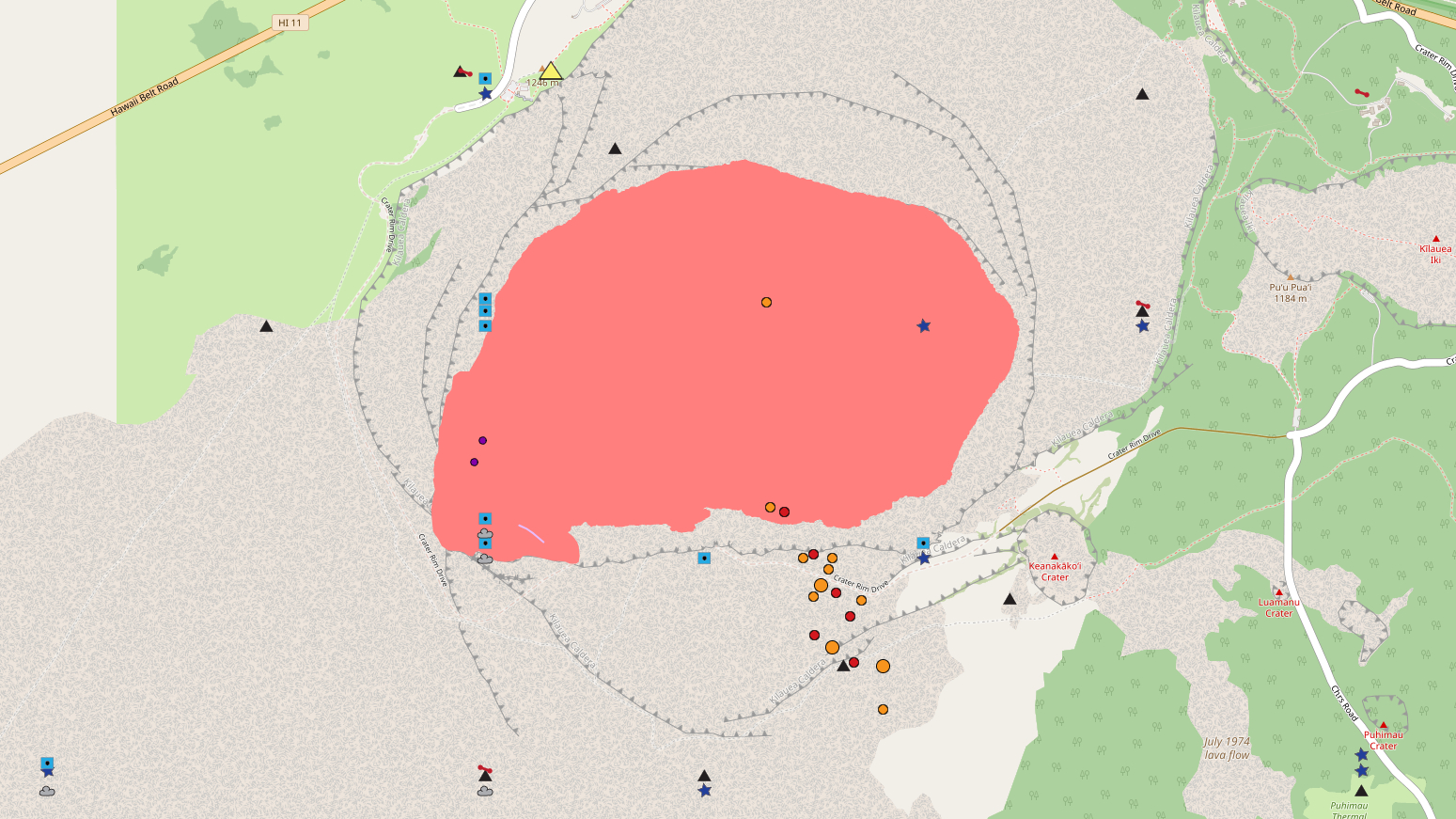
A small swarm of earthquakes along the southwest side of Halemaʻumaʻu crater just preceded the end of episode 48. The earthquakes began around 12:15 and have continued sporadically for several hours following the end of episode 48. There were approximately 15 locatable earthquakes varying from just under magnitude 1 to magnitude 2.2. Three of the earthquakes were magnitude 2 or greater, 8 were between magnitude 1 and 2 and 4 were less than magnitude 1. The earthquakes had no visible impact on the eruption or Halemaʻumaʻu crater.
