
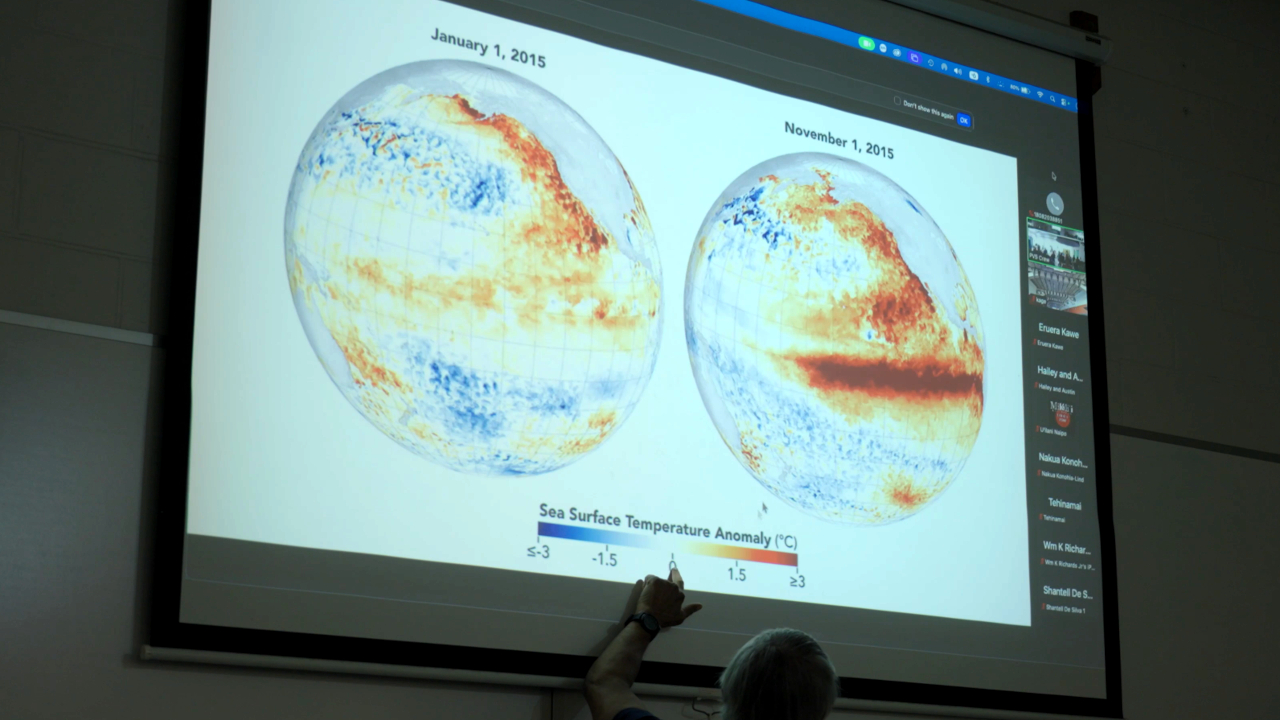

(BIVN) – The Polynesian Voyaging Society is changing plans due to the potential for a strong El Niño weather pattern this summer, which is known to coincide with above-normal precipitation for the islands, and an uptick in Pacific cyclones.
The National Oceanic and Atmospheric Administration recently issued its 2026 Dry Season Outlook, covering the months of May through September. The May 28th report notes the NOAA Climate Prediction Center’s latest ENSO forecast “favors (~80% chance) El Niño conditions emerging by early summer and a greater than 90% chance of El Niño persisting through the 2026/2027 winter.”
“While uncertainty in El Niño strength remains, there is a greater than 60% chance for at least a strong El Niño (Relative Oceanic Niño 3.4 Index ≥ 1.5°C) for late fall through winter,” NOAA says.
The wayfinders are heeding the signs. The Polynesian Voyaging Society on Sunday announced that the Hōkūleʻa and Hikianalia canoes will adjust the next phase of the Moananuiākea Voyage, the circumnavigation of the Pacific.
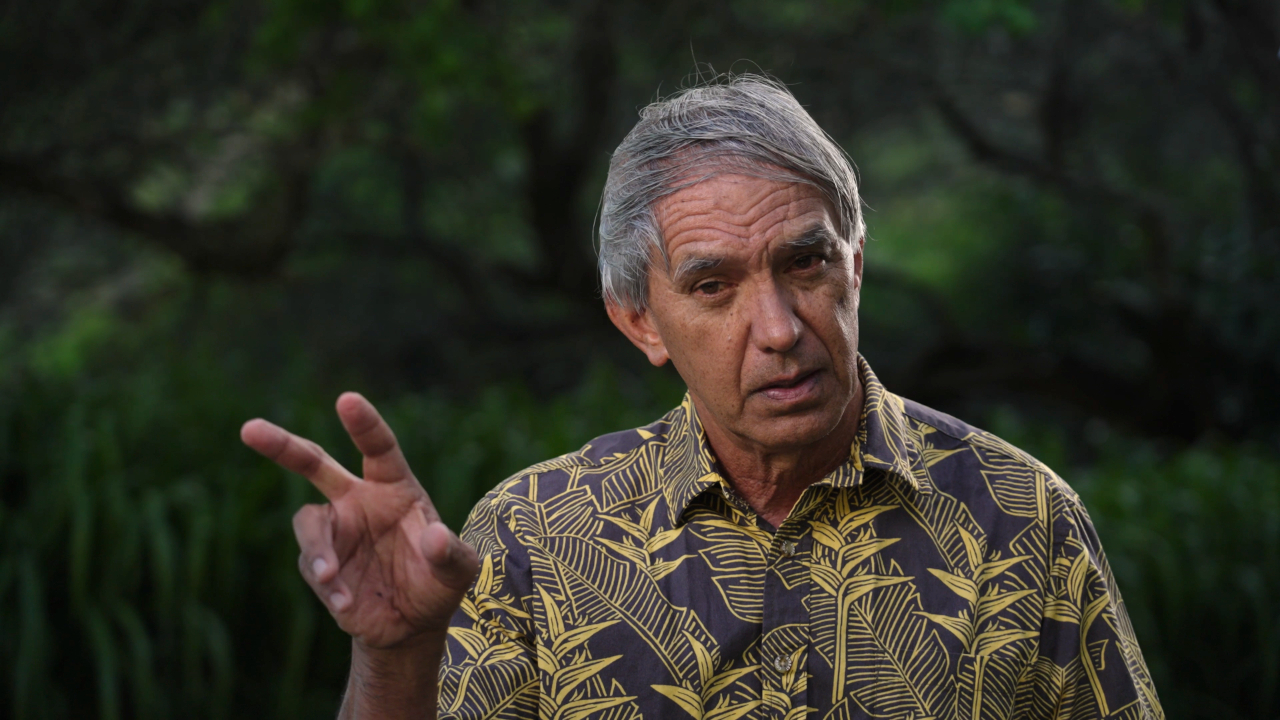
“Our sail plans are based on our historical knowledge and understanding of the general weather patterns in the Pacific,” said Pwo Navigator and PVS CEO Nainoa Thompson. “This year is turning out to be anything but general or average or usual. It’s really quite different.”
According to a PVS news release, “the greatest concern centers on long ocean passages north and west of Fiji later in the voyage, where unstable weather systems, weakened trade winds, and expanding storm zones may create unsafe conditions for deep-sea voyaging canoes.”
The Hōkūleʻa and Hikianalia have spent the past six months in Aotearoa (New Zealand). The news release states:
PVS now plans to depart Aotearoa during the third week of August 2026, with the intention of sailing north to Tonga, American Samoa, Samoa and Fiji, arriving in Fiji around mid-October to participate in Pre-COP, an international ocean protection gathering held approximately one month before the annual United Nations Climate Change Conference (COP).
“We want all the islands and communities that are hosting and caring for our canoes and crews to understand that the original sail plan will most likely change,” Thompson said. “We are watching carefully, and we will continue making decisions based on safety and what nature allows.”
Hawaiʻi is bracing for an above-normal hurricane season this year, driven by the expected El Niño conditions in the Pacific. “Tropical cyclones and their remnants can be significant contributors to summertime rainfall in Hawaiʻi”, NOAA added.
Hawaiʻi has already had plenty of rain coming out of the wet season.
Drought conditions were eliminated across the State of Hawaiʻi by the time the 2025-26 Wet Season had ended. Weak La Niña conditions coincided with above average rainfall , including “several significant storm systems with widespread heavy rain and catastrophic flooding”, the NOAA summary stated.
ENSO-neutral conditions were present as of March 2026. The NOAA Climate Prediction Center issued an El Niño Watch on April 9th.
The anticipated summer rainfall may not be enough the prevent drought development as the climatological wet season begins this fall. There could also be increased wildfire risk, with rain-driven vegetation growth in the wet summer turning into added fire fuel during a dry winter.
