

(BIVN) – Hawaiʻi agriculture officials this week issued a reminder that anyone handling coconut rhinoceros beetle (CRB) host materials in the CRB-infestation zone of West Hawaiʻi must have a valid compliance agreement issued by the state.
The Hawaiʻi Department of Agriculture and Biosecurity (DAB) says the rule is intended to slow the human-assisted spread of CRB on Hawaiʻi Island.
To obtain a compliance agreement, “organizations, companies and persons must participate in and complete a training session provided by the Big Island Invasive Species Committee (BIISC). Failure to sign up and complete the training in a timely fashion may result in penalties, including a fine of up to $10,000.00,” the DAB says.
The training is available on the BIISC website. “The training session should be approximately one hour and BIISC staff will coordinate directly with you to schedule,” a DAB news release stated. “Upon completion of the training, BIISC staff will collect and submit to DAB a copy of the compliance agreement application verifying training completion.”
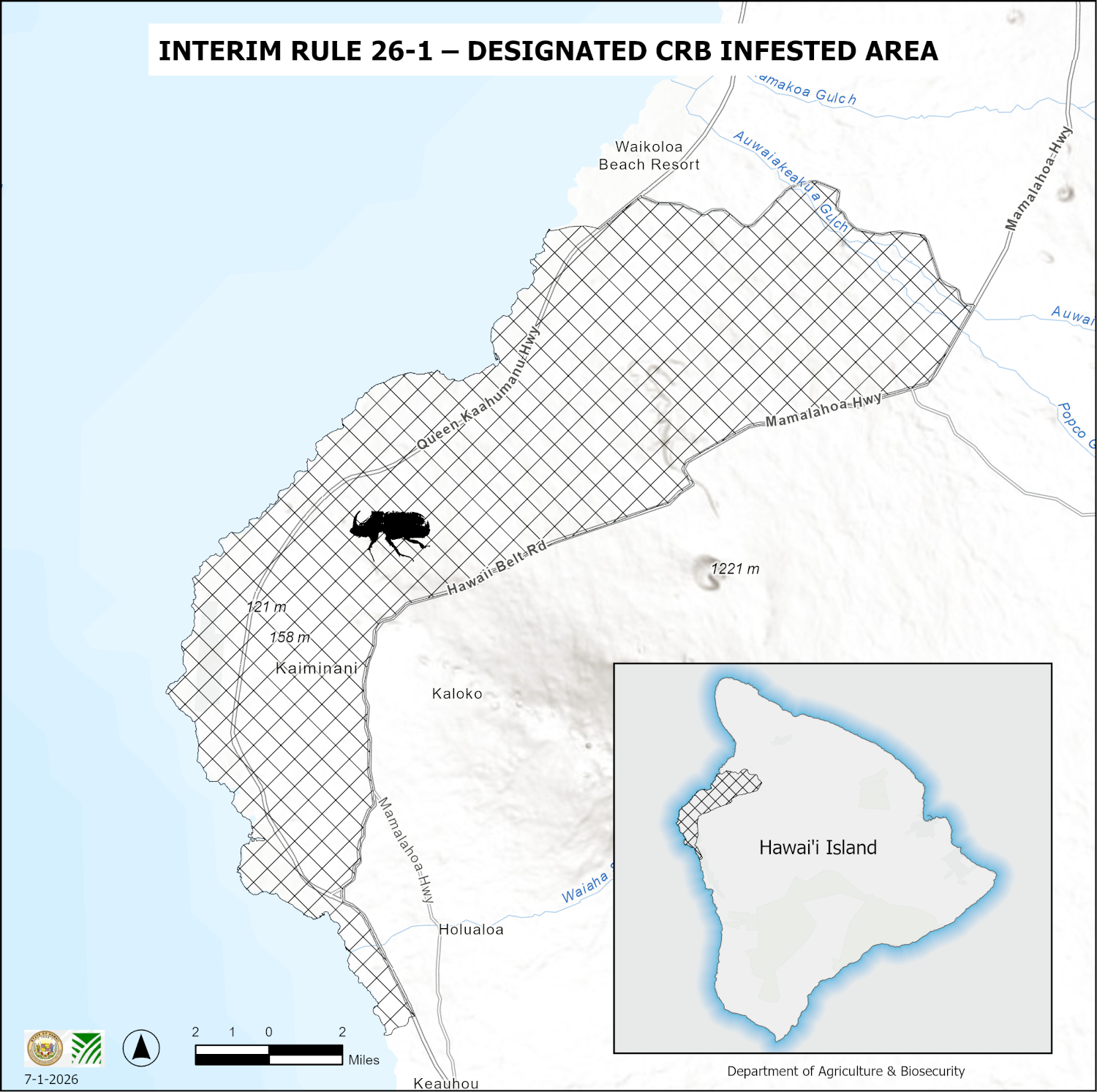
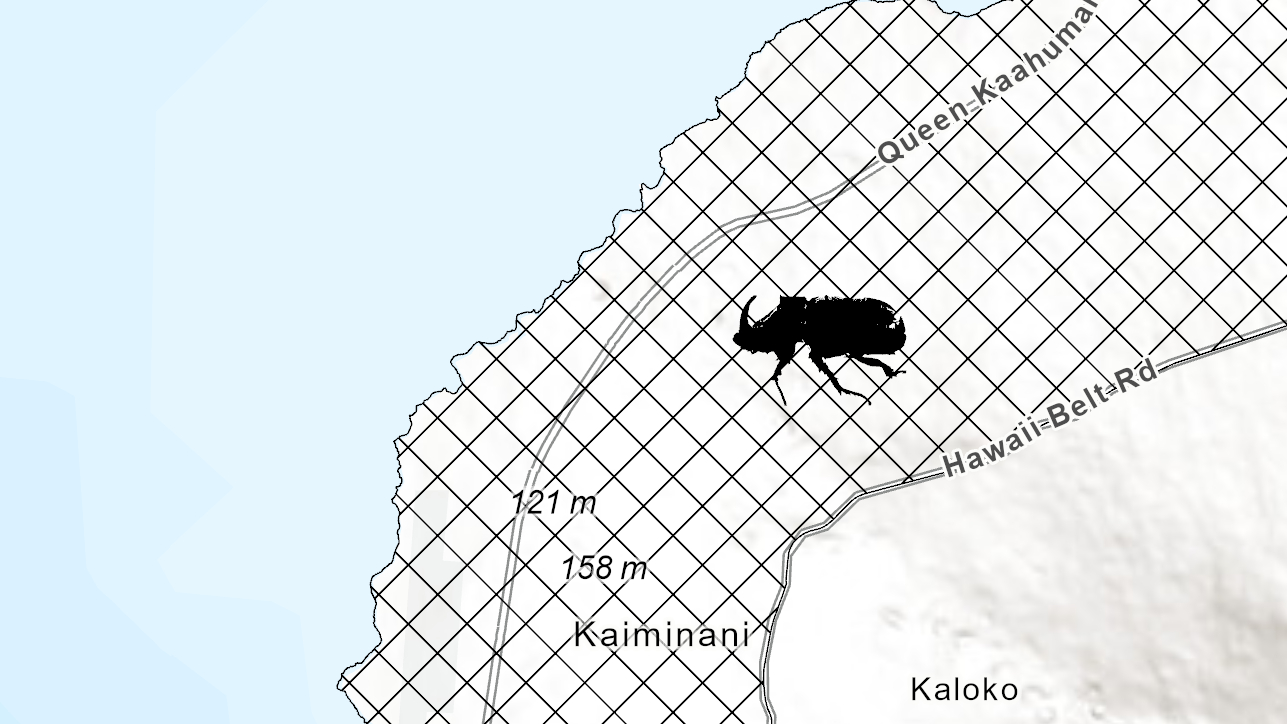
The designated the CRB-infested area on Hawaiʻi Island is the geographic area generally bound by the following: Waikoloa Road from Highway 190 to the coast, continuing south to Laʻaloa Avenue and from the coast to its intersection with Highway 11 to the east.
Interim Rule 26-1 was approved by the Board of Agriculture and Biosecurity on March 24, 2026. It restricts the transportation of CRB host materials including bare-root CRB host palms, other live plants of any size if there is any organic material attached to the roots, such as potted plants or sod. The restriction also includes decomposing plant material, such as mulch, trimmings, wood or tree chips, stumps, compost, plant propagation media, including commercially bagged plant propagation media, as well as other items comprising or containing decomposing plant material such as landscaping material, or erosion-control socks from and within the designated CRB-infested area on Hawaiʻi Island, to minimize the human-assisted spread of the CRB, Oryctes rhinoceros.
The interim rule restrictions do not apply to plant products intended for consumption, such as coconuts, fruits, nuts, edible leaves, leaves used for cooking, or spices. It does not apply to plant products preserved from decay by treatment or use, such as lumber, woven hats, dried and painted coconuts, wooden posts, wood carvings or firewood; seeds for planting, cut flowers and foliage for decoration, such as lei, floral bouquets, or arrangements. Also not included are rock, coral and sand not mixed with any CRB host material; live bare-rooted plants that are not CRB host palms, including propagative cuttings; or tissue, cultured, or other micropropagated live plants in sterile media.
If you need more information about Interim Rule 26-1, please contact DAB Plant Quarantine Branch Acting Plant Specialist, Ms. Techie Lancaster, by phone at 808-832-0566, or via email at DAB.PQSPEC@hawaii.gov.
