
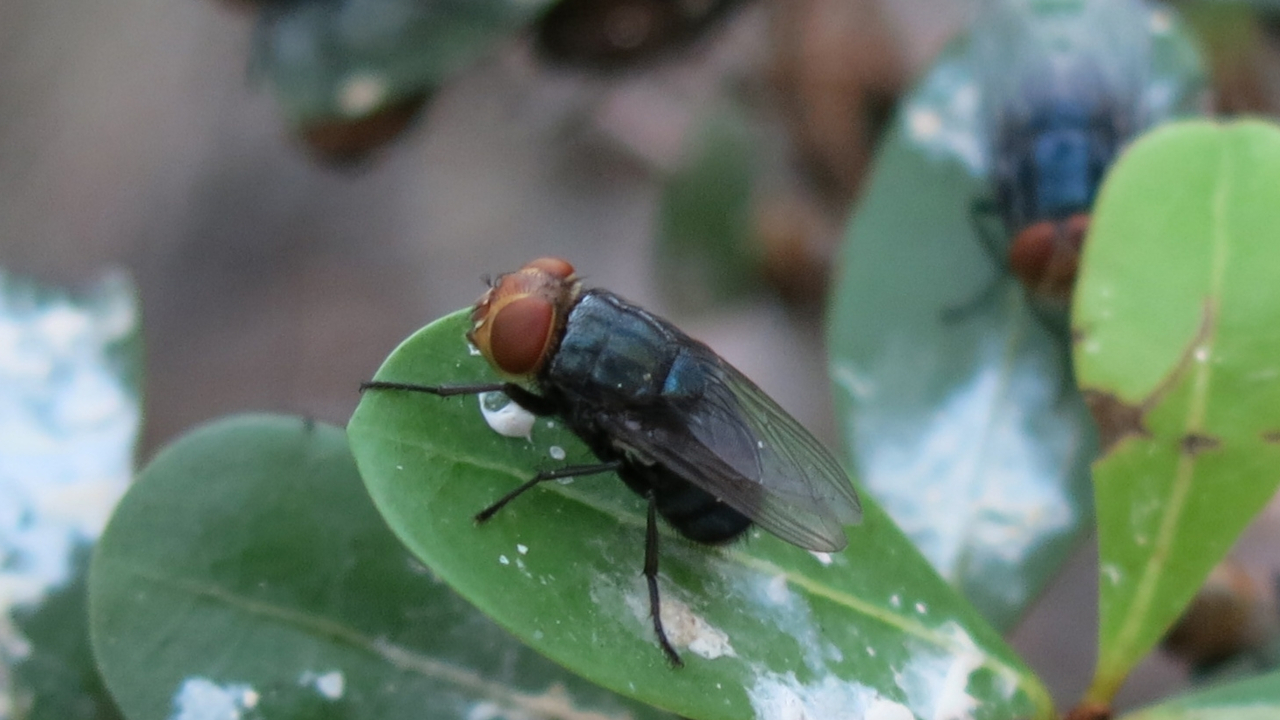

(BIVN) – There have been no reported cases of New World screwworm, or NWS, in either animals or people in Hawaiʻi, but health officials are monitoring recent detections of the pest on the U.S. mainland.
NWS (Cochliomyia hominivorax) is a parasitic fly that affects livestock, pets, and wildlife. Less commonly, it can affect people and birds.
As of July 3, 2026, federal agencies reported 16 domestically acquired animal cases of NWS. There have been no domestically acquired human cases reported, nationally. The pest does not impact food safety.
This week the Hawai‘i Department of Agriculture and Biosecurity (DAB) and the Hawai‘i Department of Health issued a news release, reassuring residents that “the risk to Hawai‘i remains very low and that proactive protective measures are underway.”
“Hawai‘i’s strong import rules, inspections, surveillance and rapid‑response systems is built for exactly these situations,” said Sharon Hurd, DAB chairperson. We are fully engaged in preventing NWS from entering the state.”
The Hawaiʻi DAB says has updated its animal import requirements to include inspection and certification that animals are free of NWS. DAB recommends the following for animal owners:
- Keep all wounds on people and animals clean and covered until healed.
- Inspect livestock and pets regularly for cuts, sores, or unusual irritation.
- Seek veterinary care promptly for any non‑healing animal wounds.
- Follow all import and quarantine requirements for animals traveling to Hawai‘i.
People traveling to areas where NWS flies have been reported (such as Texas and new Mexico) can take the following additional actions to protect themselves:
- Sleep indoors with closed windows or screened open windows. If sleeping outside, sleep under a bed net or inside a screened tent.
- Protect your skin from insects by using an EPA-registered insect repellent, treating clothing and gear with products containing 0.5% permethrin, and wear loose-fitting, long-sleeved shirts and pants, hats and socks.
The State of Hawaiʻi provided this information about New World screwworm:
The NWS, which is a parasitic fly, lays eggs in wounds or body openings, which causes an infestation of larvae (maggots) in tissue through a process called Myiasis. Unlike common maggots that feed on dead tissue, NWS maggots feed on living tissue, leading to injury and health complications. The presence of NWS does not impact food safety.
Insect identification by an entomologist is required to determine whether it is NWS. Infestations are treatable in people by physically removing all larvae and managing the wound while in animals they are treated with larval removal plus systemic antiparasitic agents.
NWS can affect animals and people, but the risk to Hawaiʻi is currently very low. The first detection in the U.S. was found in a Texas calf on June 3 and has since been detected in other cattle, goats, sheep and one dog. There was also a detection in one dog in New Mexico.
Symptoms of myiasis include a lump in tissue beneath the skin. If you are experiencing symptoms, contact your healthcare provider. Call the Disease Outbreak Control Division Disease Reporting Line at 808-586-4586.
Current NWS case updates and information are available from the USDA APHIS website (here).
Although the risk of infestation in Hawaiʻi is considered low, pet and livestock owners are encouraged to contact their private veterinarian if they have any health concerns or observe unusual wounds or signs of possible infestation.
