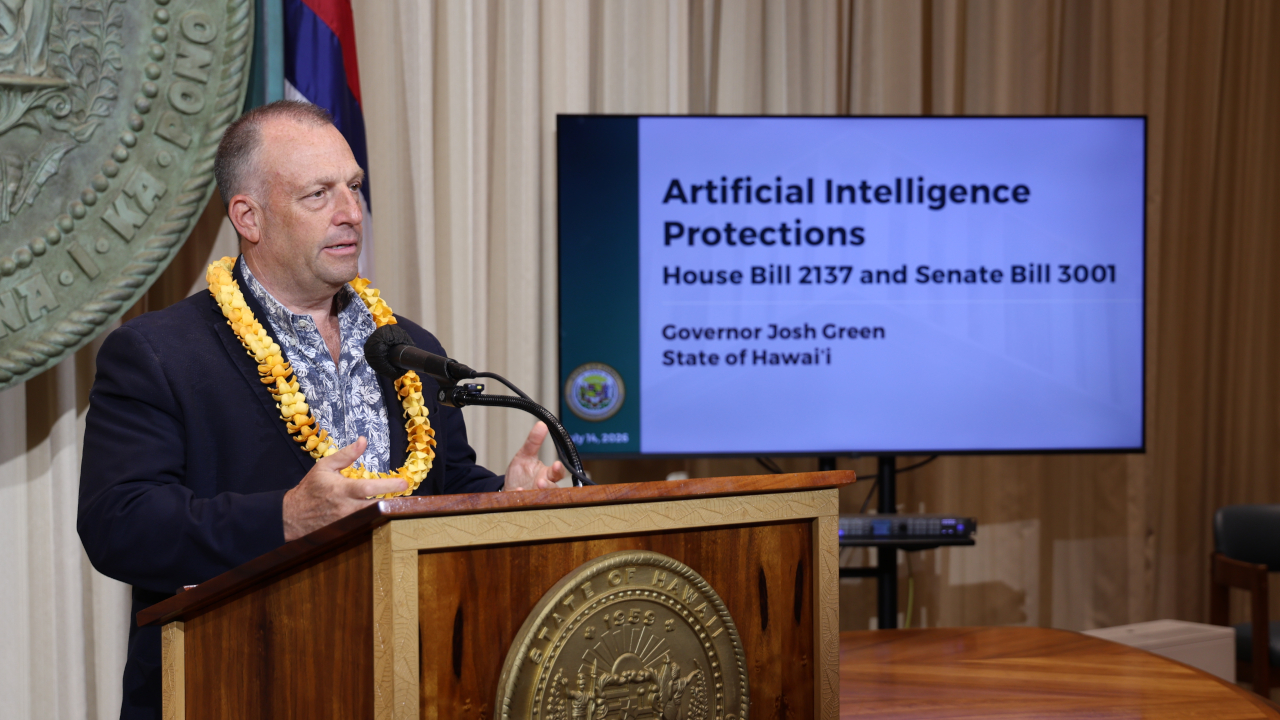

(BIVN) – Lawmakers are taking steps to establish safety measures and protections for the use of artificial intelligence, or AI, in the State of Hawaiʻi.
Governor Josh Green on Tuesday signed two bills relating AI; House Bill 2137, targeting the harmful use of “deepfake” technology, and Senate Bill 3001, dealing with disclosure for AI companions.
The bill signing was livestreamed over Facebook.
“AI presents fascinating opportunities for technological breakthroughs and has become a daily tool for many here in Hawaiʻi,” Governor Green said. “By being intentional with our approach and recognizing potential dangers, we will be better suited to use AI to our advantage. These pieces of legislation build upon significant findings that will allow us to protect the people of Hawaiʻi during times of rapid development.”
The Office of the governor provided this information on both bills:
HB 2137: RELATING TO ARTIFICIAL INTELLIGENCE, Act 247
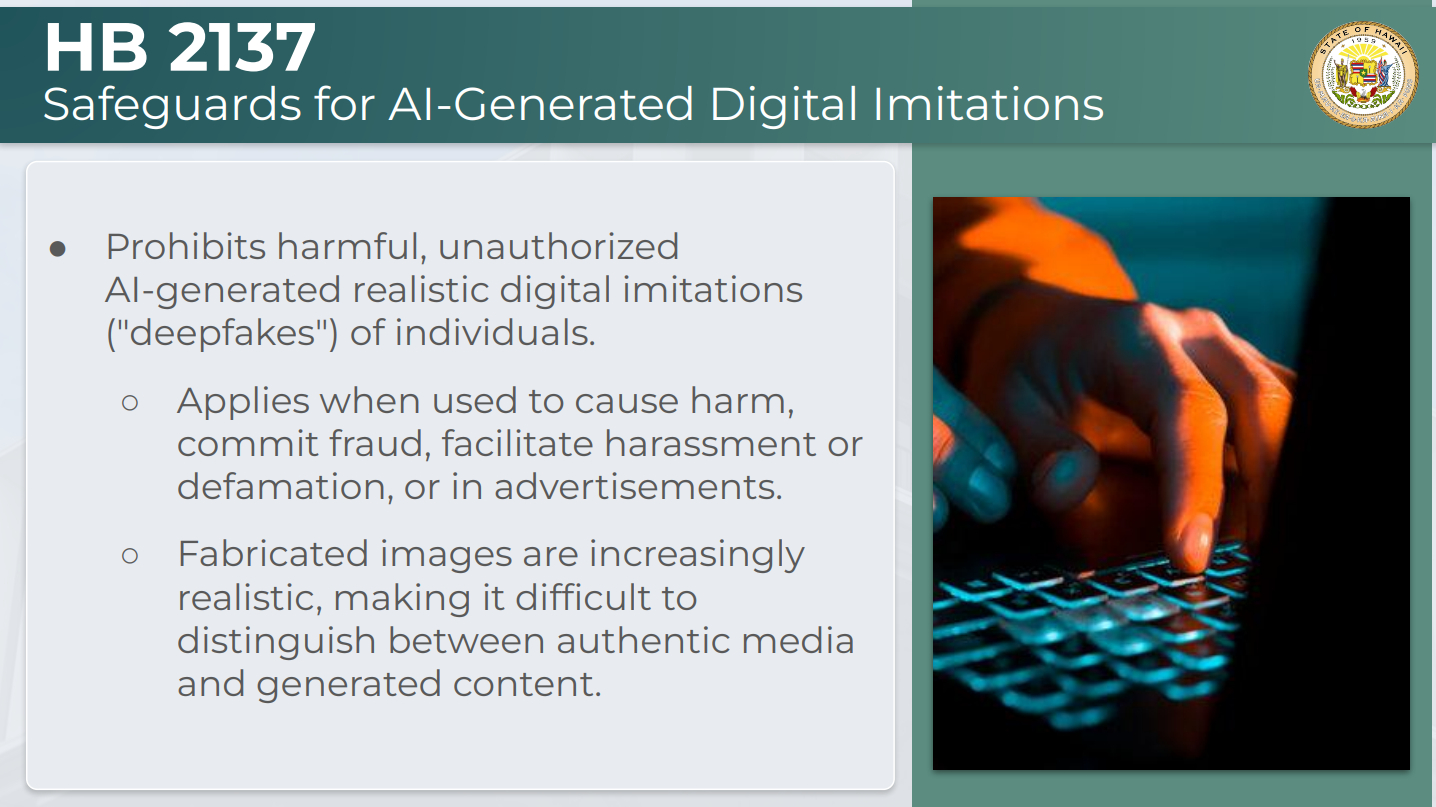
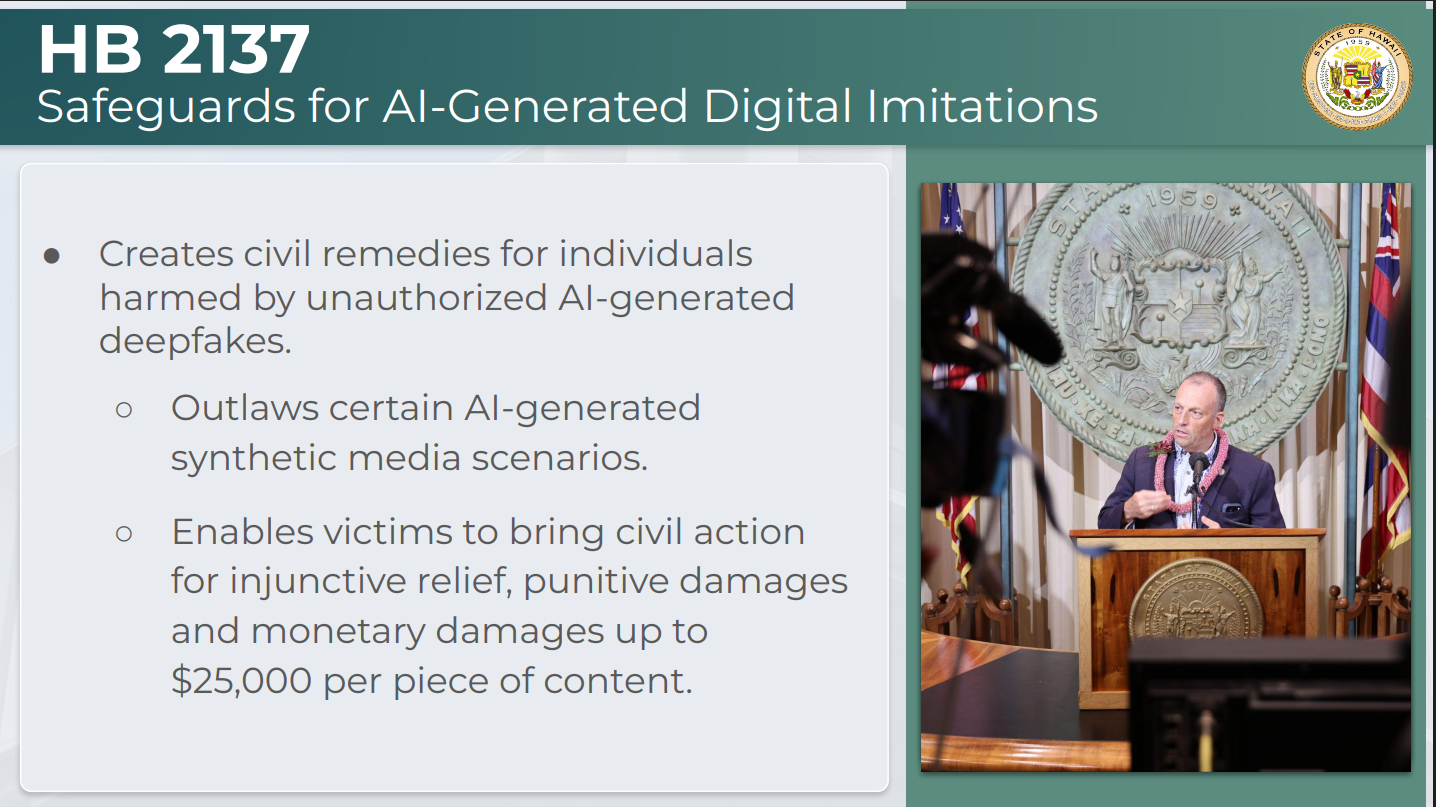
A function of AI, referred to as “deepfake” technology, enables the realistic digital imitation of an individual’s voice, face, likeness and performance. Deepfake technology has been linked to identity theft, fraud, election interference, cyberbullying and non-consensual pornography, causing irreparable damage and lasting harm. These fabricated images are increasingly realistic, making it difficult or even infeasible to distinguish between authentic media and generated content.HB 2137, Act 247 establishes consumer protection standards for deepfake technology and other similar AI functions, defining harmful use and providing civil remedies for individuals injured by unauthorized AI-generated realistic digital imitations. Expanding upon federal statutes that outlaw certain deepfake scenarios, the measure clarifies malicious deepfake use and enables victims of deepfake content to bring civil action for injunctive relief, punitive damages and monetary damages up to $25,000 per piece of content.
SB 3001: RELATING TO ARTIFICIAL INTELLIGENCE, Act 248
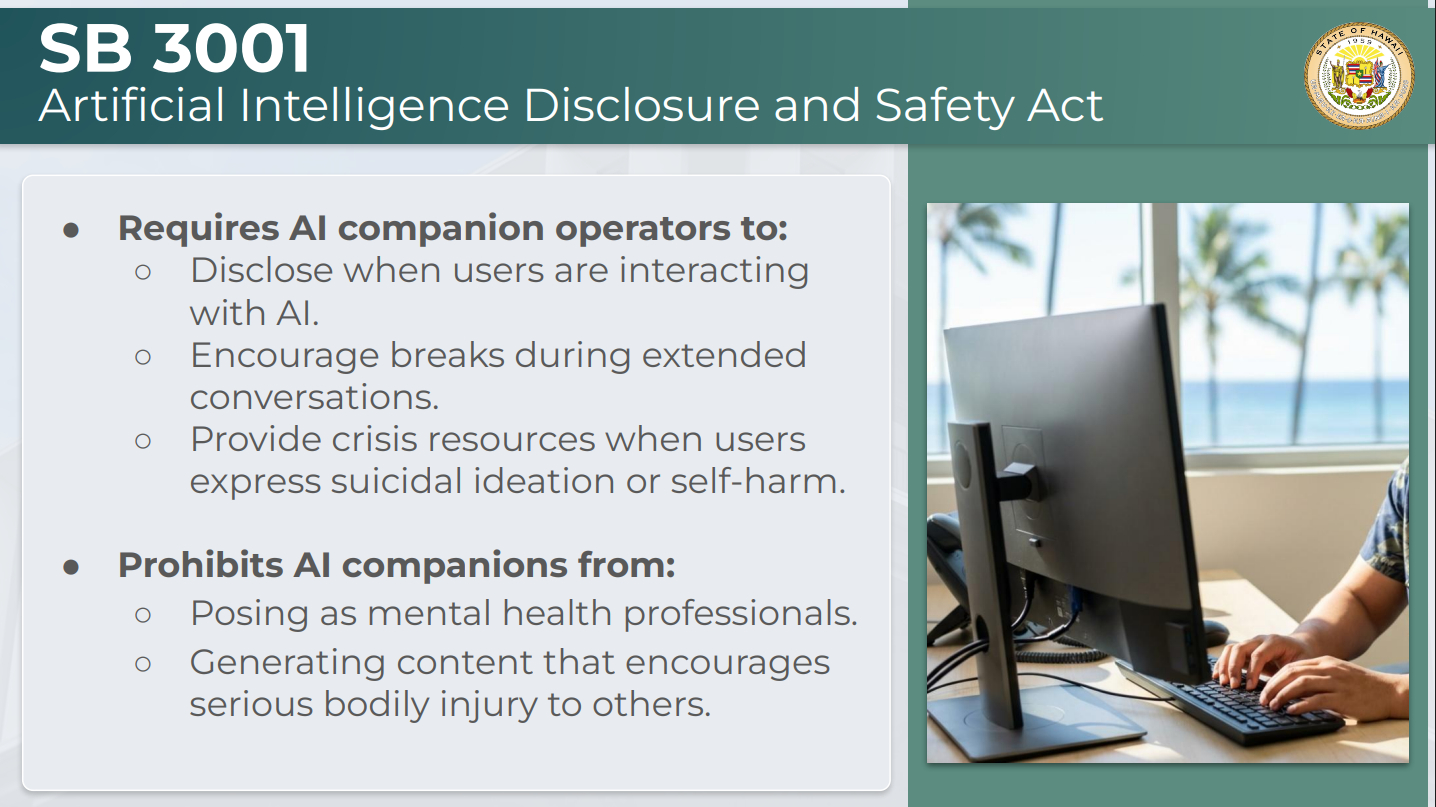
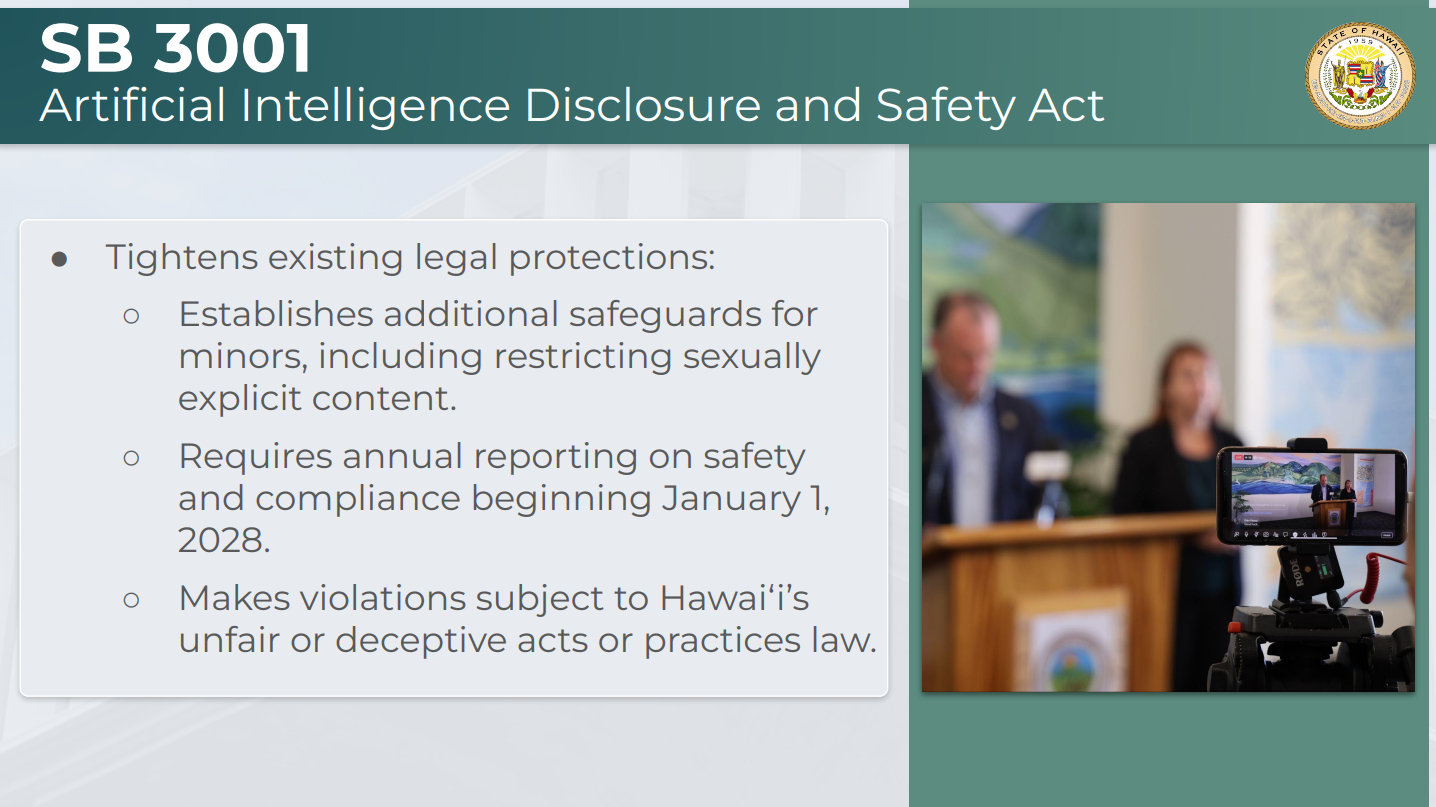
Conversational AI systems are increasingly accessible to consumers, particularly children and minors. Often referred to as generative AI, these systems are capable of outputting text, images, audio, video and interactive dialogue and are now embedded into nearly every corner of the internet. Reliance on generative AI for emotional and psychological support is dangerous, especially when in the hands of keiki.SB 3001, Act 248, requires operators of AI companions to issue certain disclosures, develop comprehensive response protocols for user prompts regarding suicidal ideation or self-harm, as well as make annual reports to the Behavioral Health Administration of the Department of Health. Citing a previous case brought against Meta, this measure establishes guidelines to prevent addictive software patterns targeted at minors and misrepresentations that a chatbot is of human likeness.
“Our keiki and young people carrying trauma, including those with histories of abuse, neglect or instability, are probably among those most likely to seek connection from AI companions, but may be the least equipped to recognize when technology-mediated interactions are unhealthy,” said Tia L. Roberts Hartsock, director of the Office of Wellness and Resilience. “The bill takes an evidence-based, trauma-informed approach to emerging technology, by preventing harm before it occurs.”
“Every person’s control over their voice is sacrosanct,” said Senator Jarrett Keohokālole, co-introducer of the bill and chair of the Senate Committee on Commerce and Consumer Protection. “HB 2137 makes sure individuals in Hawaiʻi do not fall victim to technology that could take control and put it in the hands of bad actors. AI is not coming, it is here. HB 3001 sets guardrails on AI platforms to protect children from harm while we all learn to adjust to life with AI.”
“Our keiki are growing up in a world where artificial intelligence is becoming part of everyday life, and it is our kuleana to put the right protections in place,” said Representative Trish La Chica, vice chair of the House Committee on Education. “Building on the groundwork we laid two years ago, these measures establish important safeguards by requiring AI companions to identify themselves as non-human, strengthening protections for minors, connecting young people in crisis with trained professionals and protecting individuals from the unauthorized use of AI-generated digital imitations. Together, these laws reflect our commitment to ensuring artificial intelligence is used responsibly and never comes at the expense of a person’s identity, privacy or safety.”